
Practice question, Question 1 of 50
Passing target: 80% (40/50)
At 11 p.m. you drive into a highway work zone. The orange signs and barrels are still in place, but you see no workers or moving equipment. What should you do?
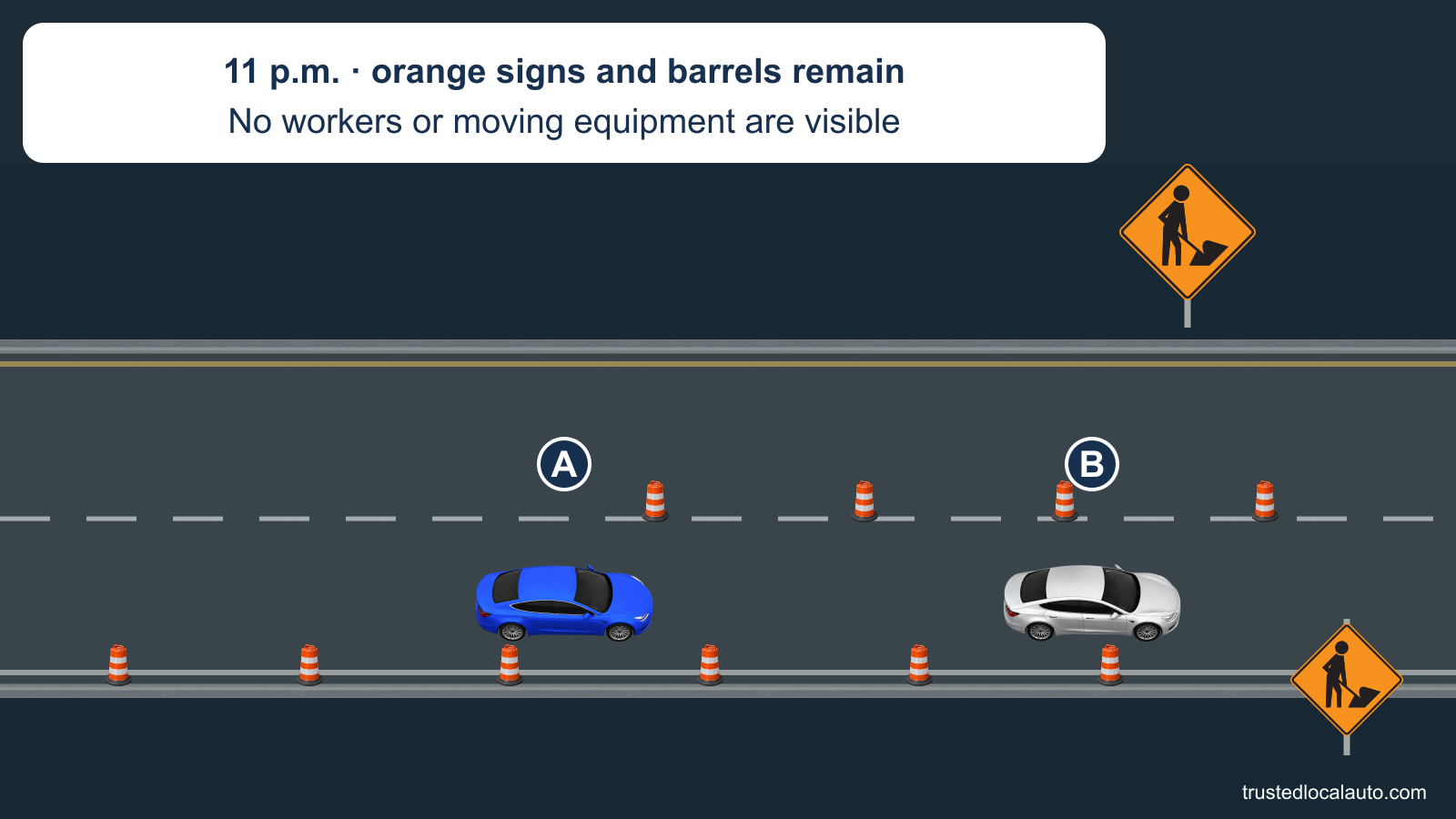
Correct answer: Slow down, keep extra following distance, and obey the signs until END ROAD WORK
Why
Most people who are killed or hurt in work-zone crashes are drivers, passengers and pedestrians, not workers. Work-zone signs have an orange background with black letters or symbols. Utah courts double the speeding fine in a marked work zone where workers are present, but the safe way to drive does not change when the workers go home. If you can, use a different route to avoid the work zone.
Verified against Utah Driver Handbook · G. Highway Work Zones · p. 69
Is this question correct and clear?
Continue learning
Related Utah questions
- You drive north on a divided highway with a raised median and two lanes each way. On the southbound side, a school bus stops with its red lights flashing. What should you do?
- You approach a work zone. The traffic signal ahead is green, but a flagger holds a STOP paddle toward your lane. What should you do?
- You are stopped at a railroad crossing with two tracks. A long freight train passes, and its last car clears the road. The gate arms stay down, and the red lights keep flashing. What should you do?
- Traffic is stopped just past a railroad crossing with one track. The gap between the far rail and the last car in the line is about 18 feet. Your car is 16 feet long. The gate arms are up. What should you do?
- You are stopped at the correct place before a railroad crossing with gates and red lights. A train has passed. The gate arms are now fully up, but the red lights still flash. What should you do?
- You are 80 feet from a railroad crossing. The red lights start to flash, and the gate arm starts to come down. You think that you can clear the tracks before the arm is down. What should you do?