
Practice question, Question 1 of 50
Passing target: 80% (40/50)
You parallel park on a street near a fire hydrant. There are no signs and no painted curb. What is the closest that your vehicle may be to the hydrant?
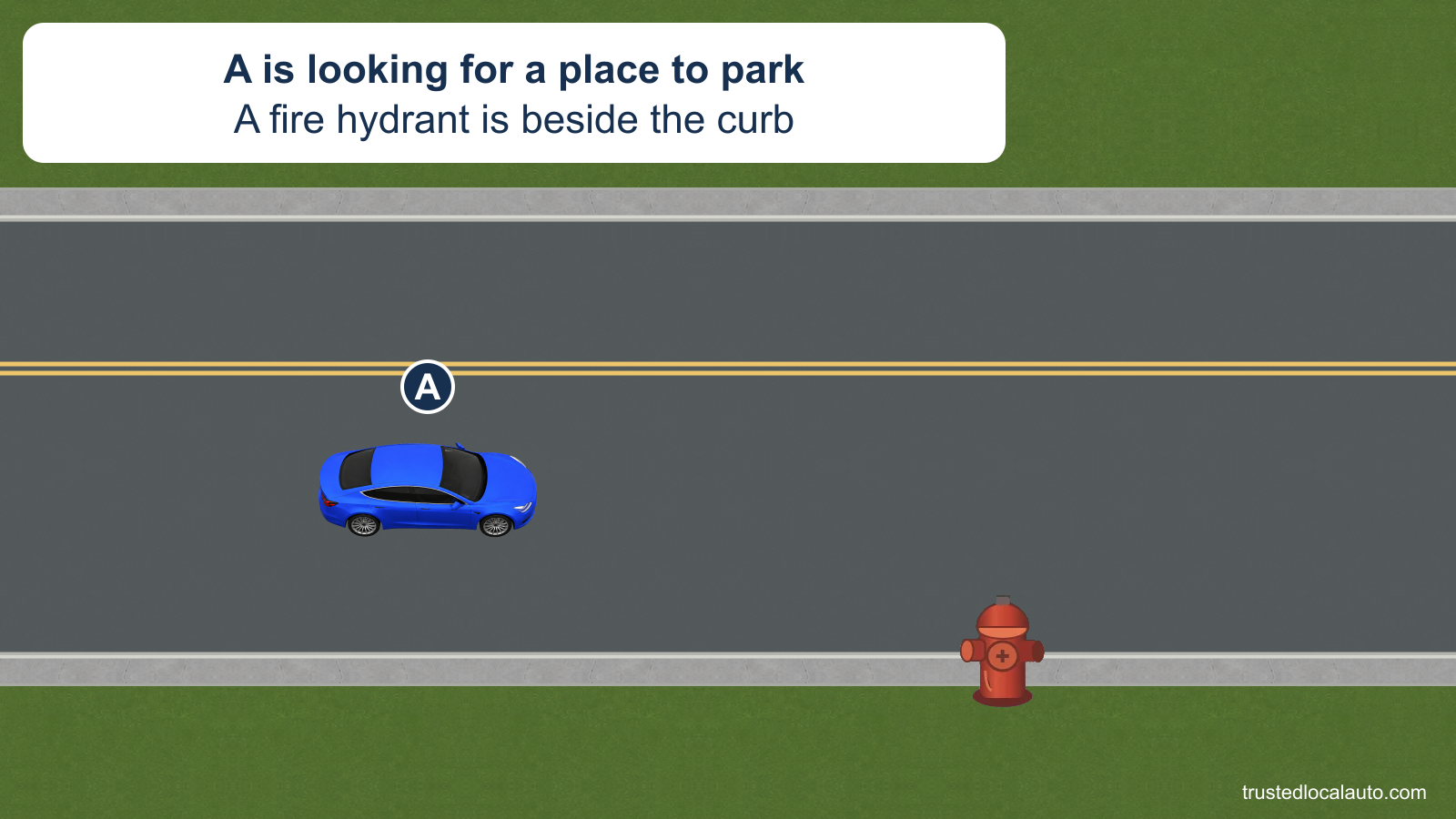
Correct answer: 15 feet
Why
Utah law does not let you stand or park within 15 feet of a fire hydrant, except for a moment to let a passenger get in or out. The rule applies whether or not the curb is painted or a sign is posted. Firefighters must get to a hydrant quickly and connect a hose, and a parked car can block them. Other distances to remember: 20 feet from a crosswalk and 30 feet before a stop sign or traffic signal.
Verified against Utah Driver Handbook · Parking · p. 42
Is this question correct and clear?
Continue learning
Related Utah questions
- You start to back out of a parking space in a busy lot. A car comes down the aisle behind you, and a shopper walks toward the rear of your car. What should you do?
- You parallel park on a two-way street with a curb. What is the farthest your right-side wheels may be from the curb?
- On a rural two-lane highway, outside any business or residence district, your engine fails and your car stops in your lane. The car cannot be moved, and you cannot push it off the roadway. Which statement about the rule against stopping on the roadway is correct?
- You stop at a store for two minutes and leave your car alone in the parking lot. Which set of actions meets Utah law?
- You pass your freeway exit by about 100 feet. The right shoulder is empty, and no cars are close behind you. Which statement about backing up to the exit ramp is correct?
- You want to park at the curb on the approach to a stop sign at the side of the road. What is the closest distance to the stop sign at which you may park?