
Vermont Operator License Permit Practice Test
Full test preview Question 1 of 20
0 answered 20 remaining
Passing target: 80% (16/20)
A driver sees a deer step onto the road and moves her foot to the brake pedal. How does her reaction distance at 50 mph compare with her reaction distance at 30 mph?
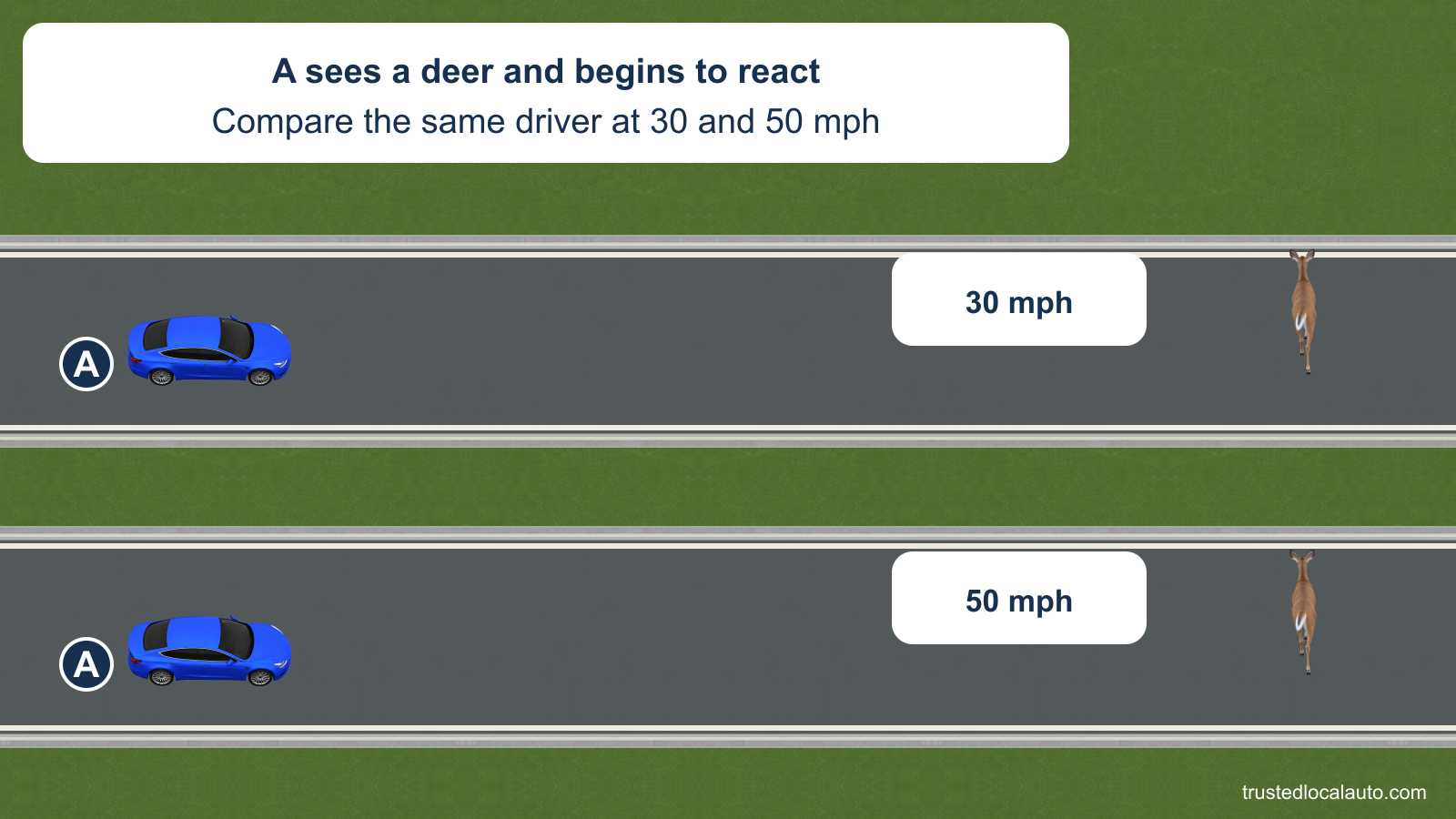
Two separate views show the same blue car A facing a deer ahead, once at 30 mph and once at 50 mph. Both start from the same position and no distance is marked.
Correct answer: It is longer, because the car covers more ground in the same reaction time.
Why
To stop, you must see the danger, decide to stop, move your foot to the brake, and have brakes that work. The distance that you travel from seeing the danger until you apply the brakes is the reaction distance; an average driver needs about three-quarters of a second for this. The car keeps its full speed during that time, so more speed means more distance before braking even starts. Braking distance comes after that, and it is much longer on wet, icy or gravel roads.
Verified against Vermont Driver's Manual · Stopping Your Vehicle · p. 27, 26
Report a question issueContinue learning