
West Virginia Class E Knowledge topic
West Virginia Class E Knowledge Sharing the Road
Drive safely around pedestrians, cyclists, buses, trucks, motorcycles and emergency vehicles.
19 questions, free with an account. 6 of them are hard. Each one has its answer, an explanation and its official source.
- 15 picture questions
- 4 text questions
- 6 of them hard
15 picture questions
Questions in this topic
Select a question to answer it. The answer and the explanation show after you answer.
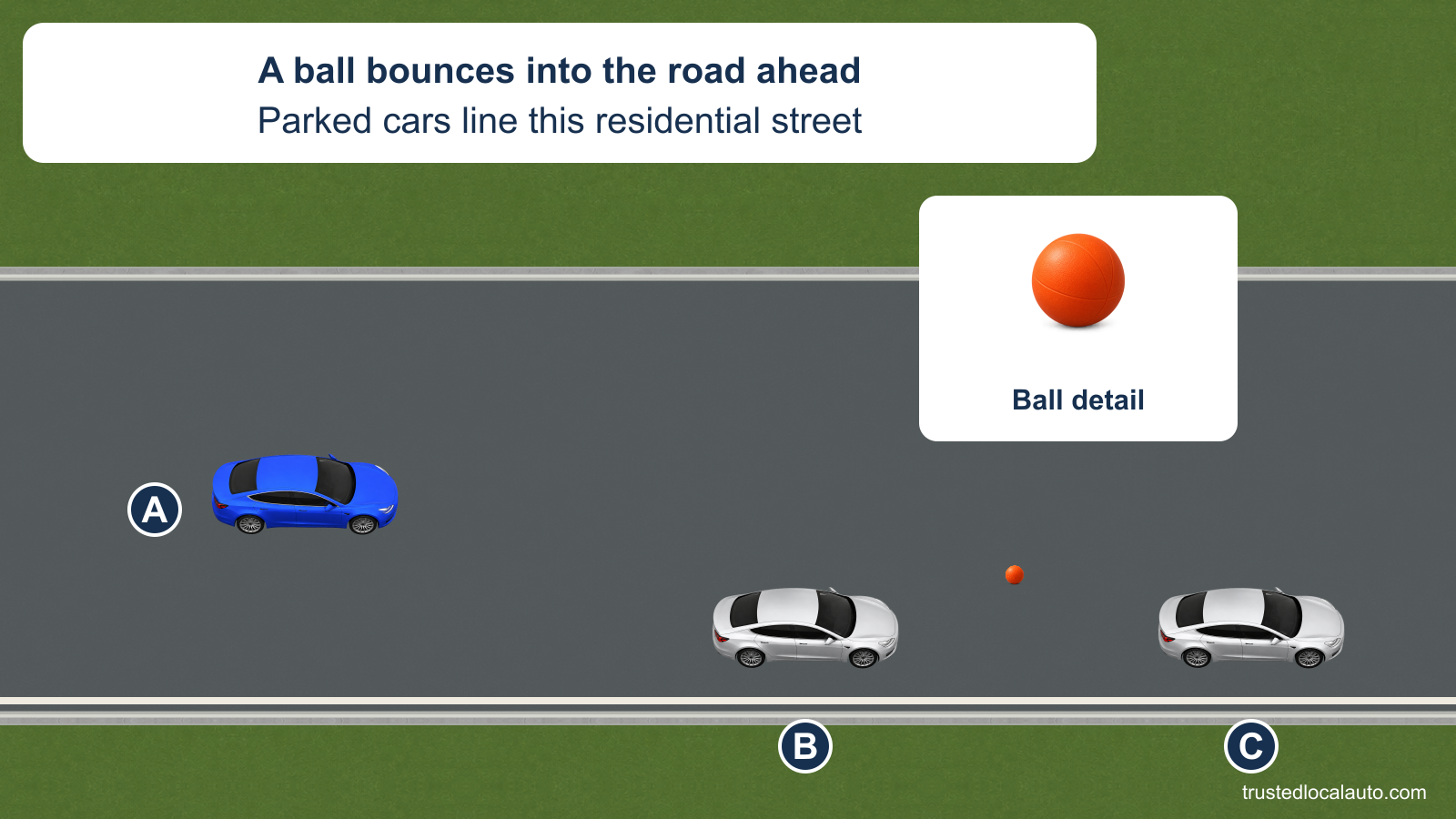 Ball bounces into a residential streetYou drive on a residential street lined with parked cars. A ball bounces into the road ahead of you. What should you do?Try this question
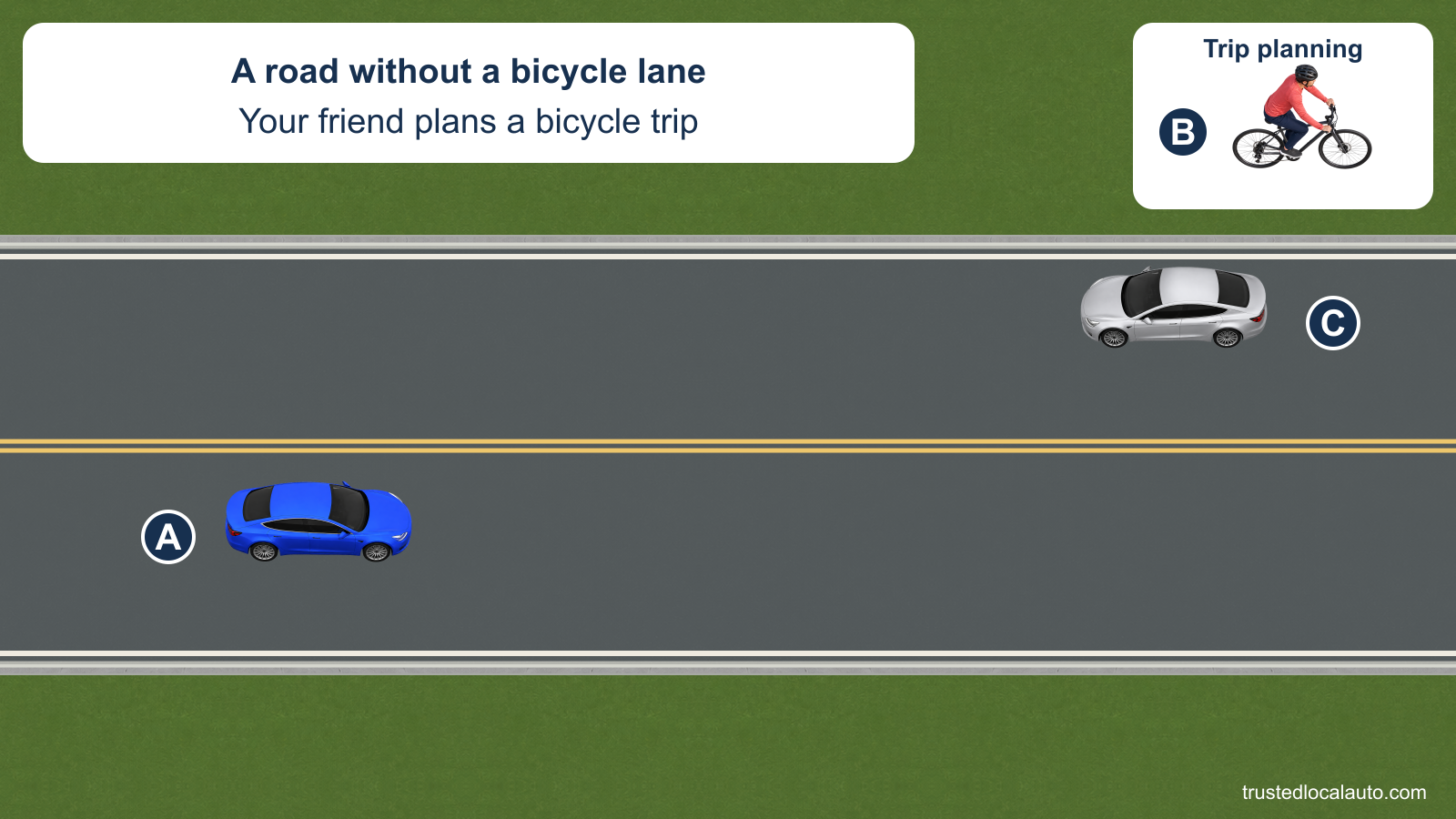 Bicycle direction of travelA friend asks you how to ride a bicycle on a two-lane road that has no bike lane. What is correct in West Virginia?Try this question
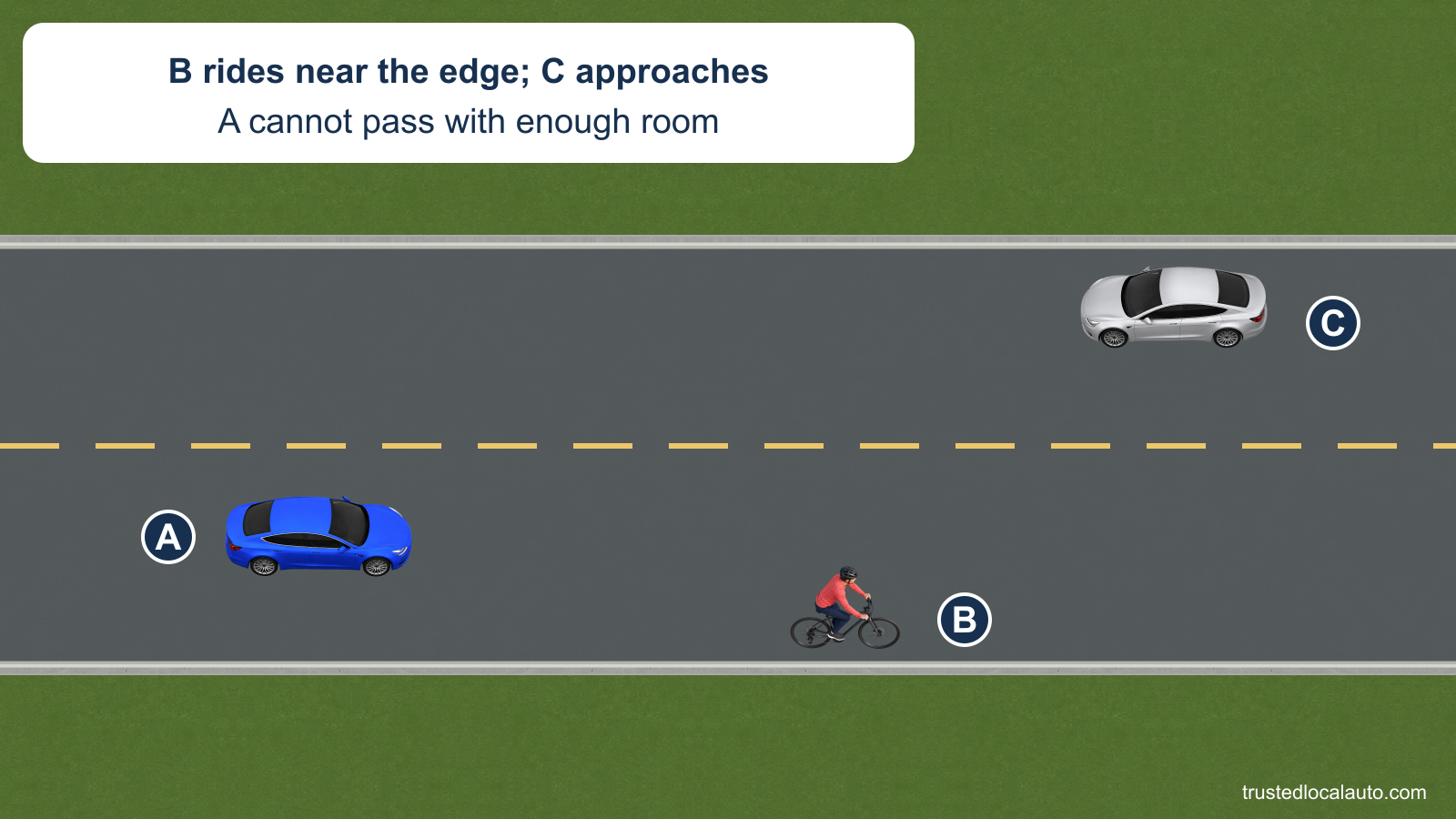 Bicyclists as road usersOn a two-lane road, you come up behind a bicyclist who rides near the right edge of your lane. A car approaches in the other lane, so you cannot pass with enough room. What should you do?Try this question
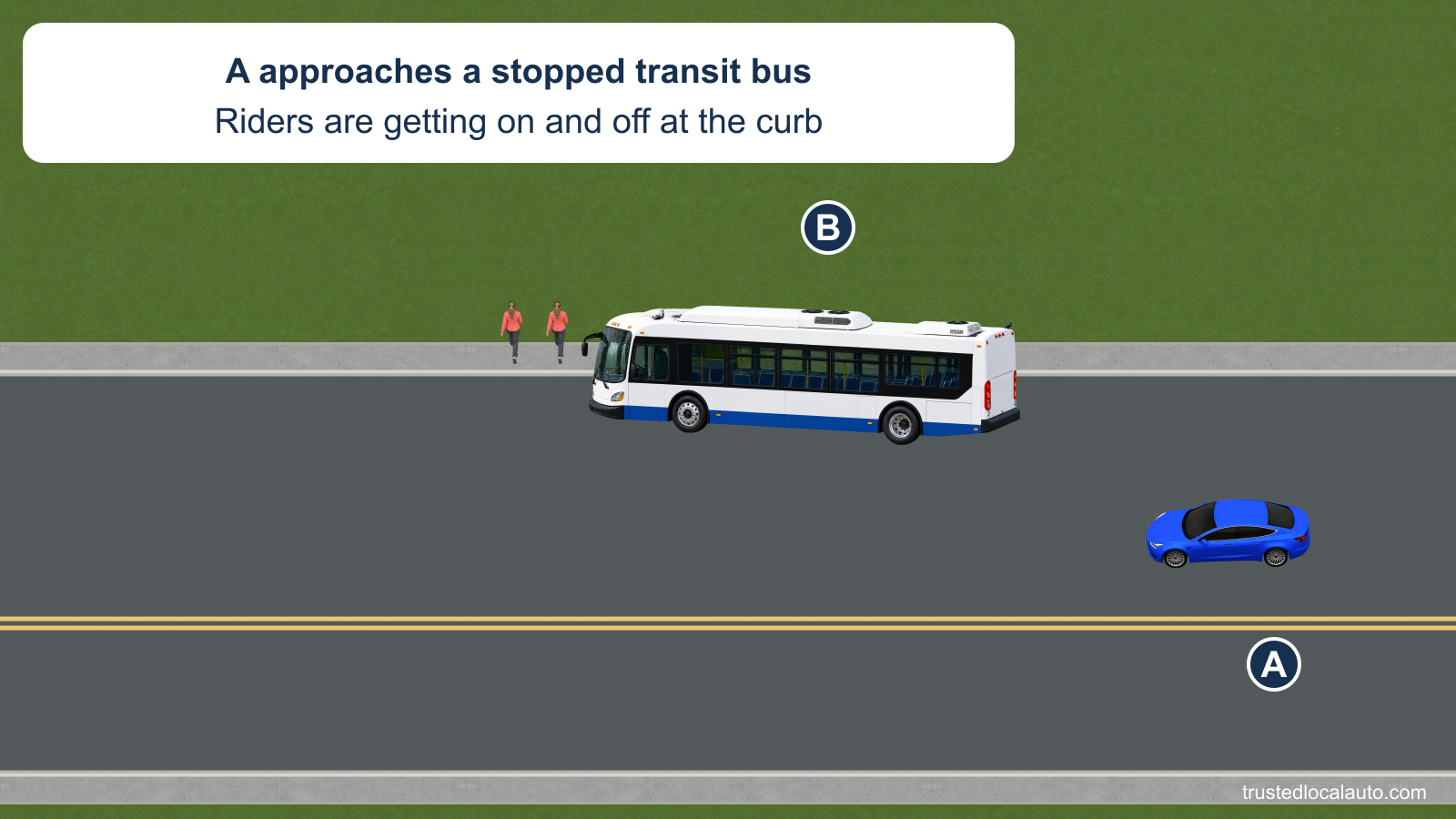 City transit bus stopped at a curbside stopA city transit bus, not a school bus, stops at a bus stop on your side of the street, and riders get off. What should you do?Try this question
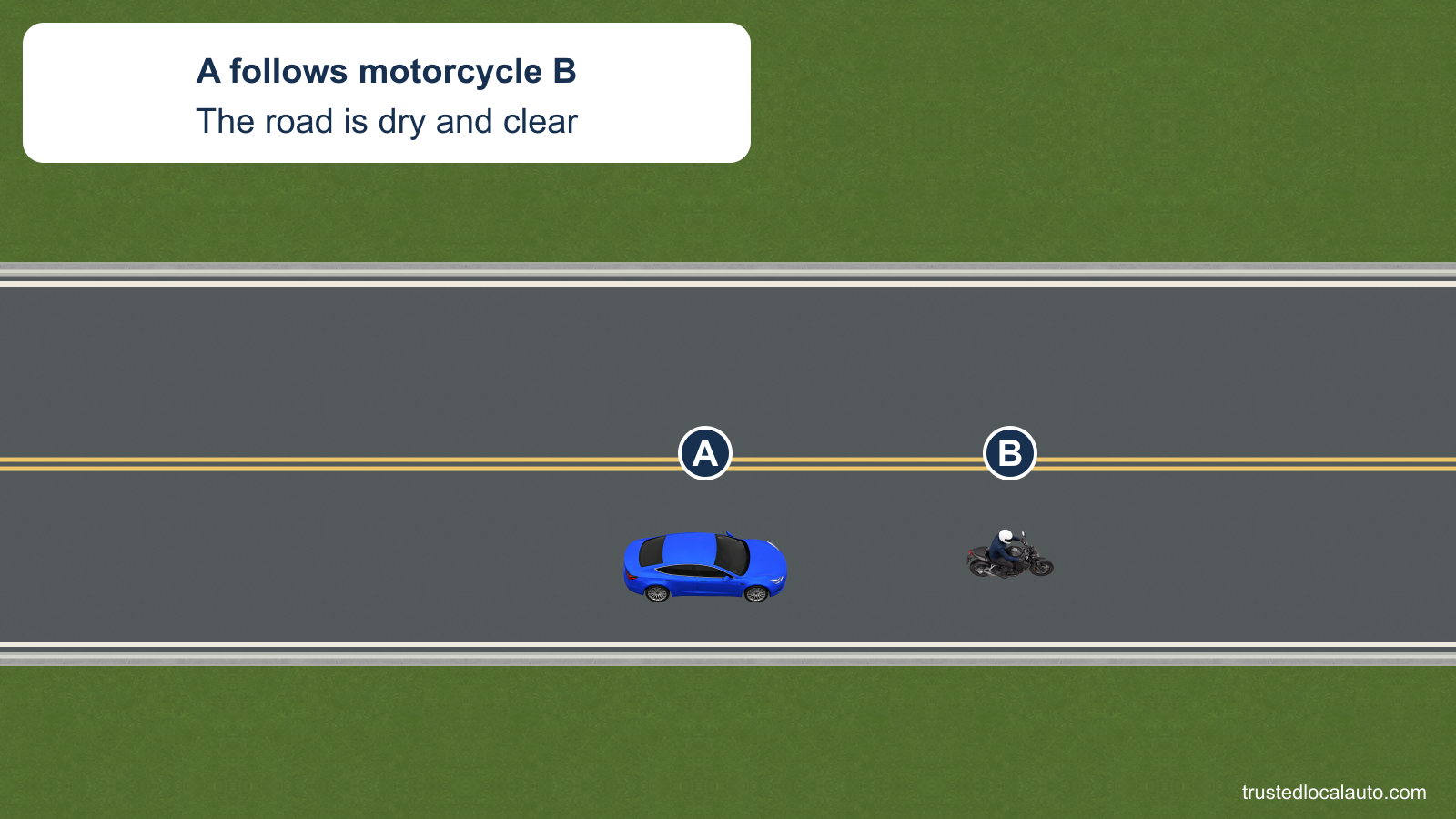 Following a motorcycle on a two-lane roadYou are driving behind a motorcycle on a two-lane road. How should your following distance compare with your distance behind a car?Try this question
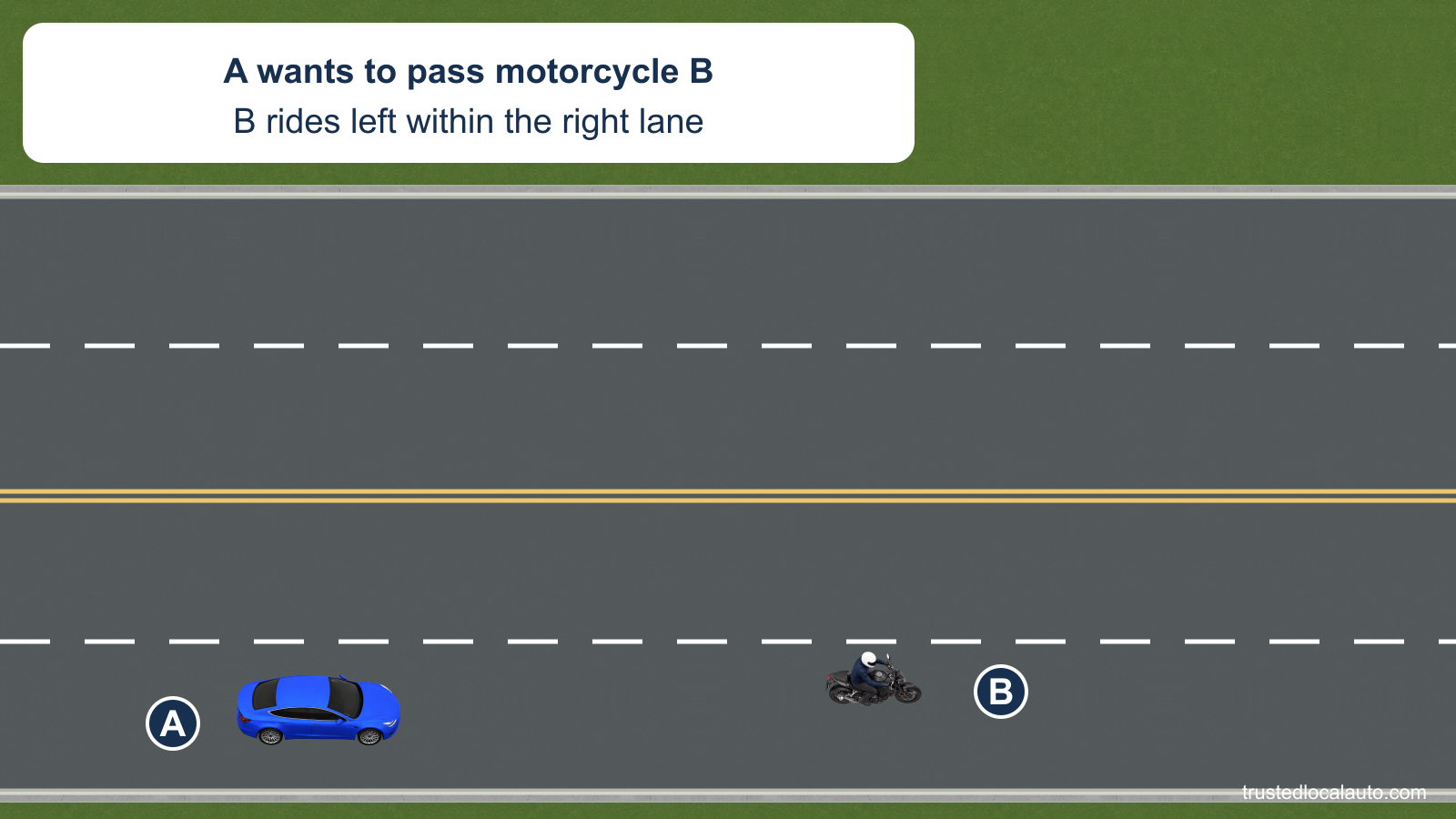 Motorcycle lane spaceOn a highway with two lanes in your direction, you want to pass a motorcycle. The rider is in the left part of the right lane, and the left lane is clear. What should you do?Try this question
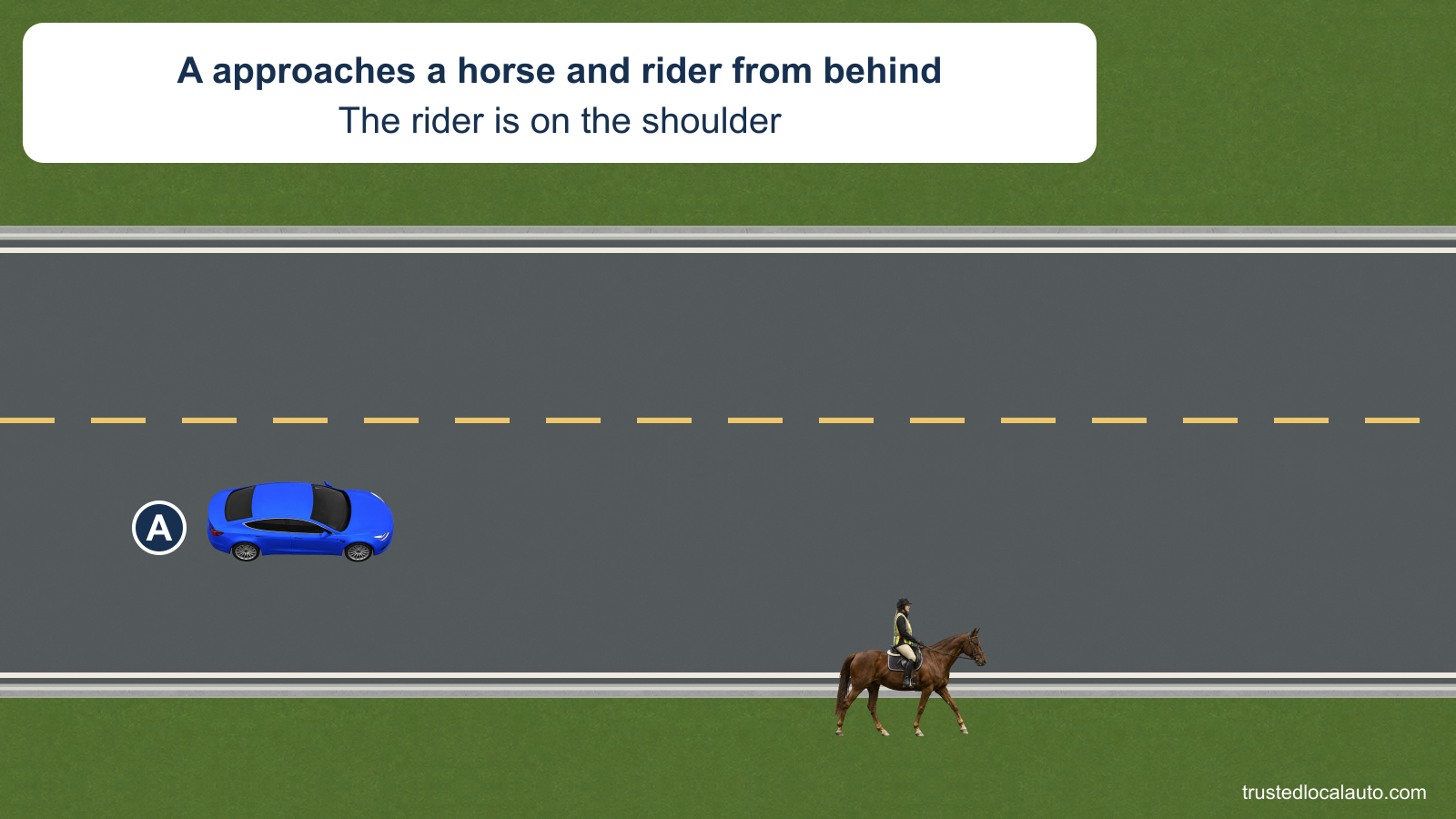 Horse and rider on the shoulder of a rural roadOn a rural road, you come up behind a person who rides a horse on the shoulder. What should you do?Try this question
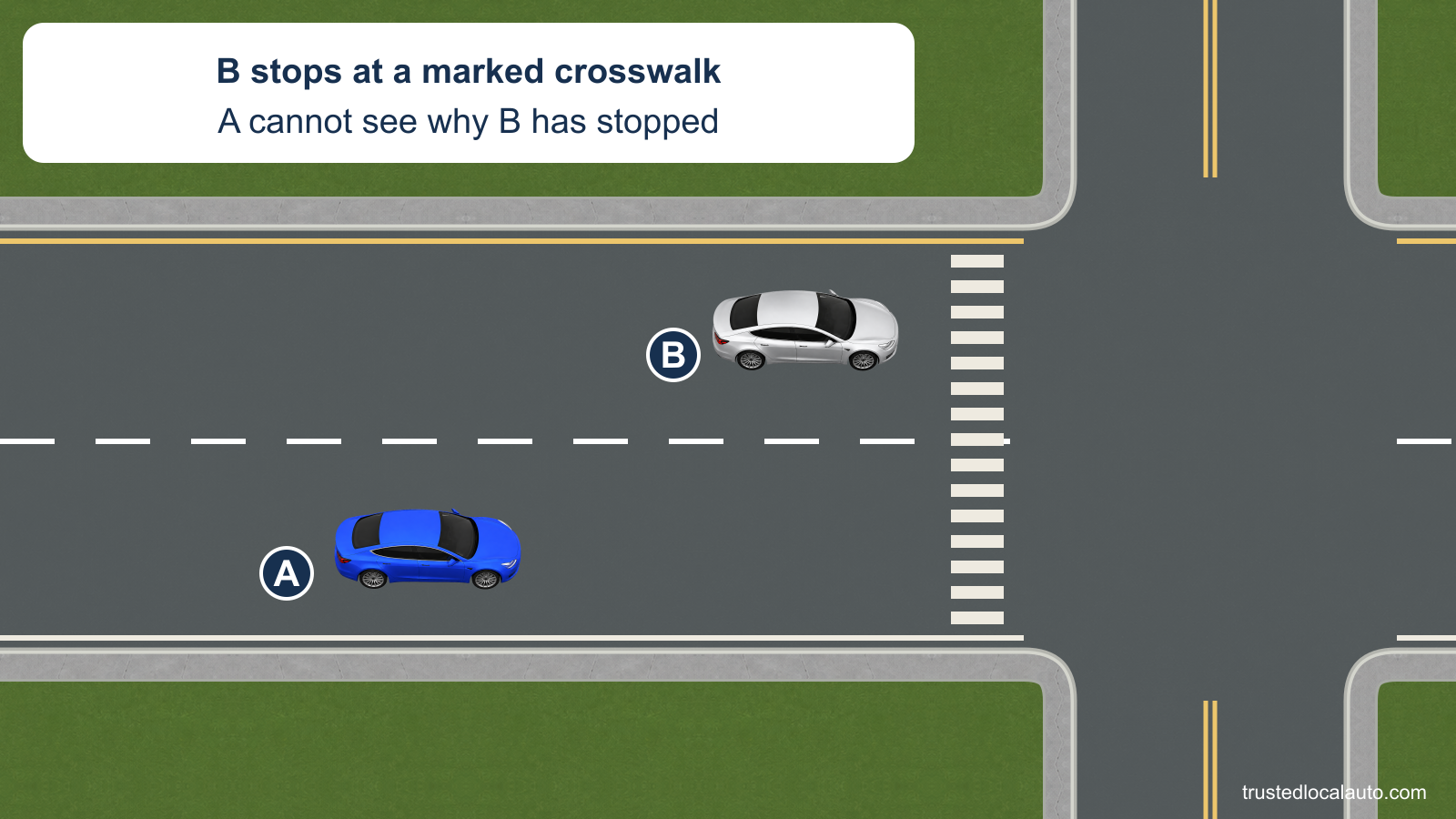 Passing a stopped vehicle at a crosswalkYou drive on a street with two lanes in your direction. The car in the lane next to you stops at a marked crosswalk, and you cannot see why. What should you do?Try this question
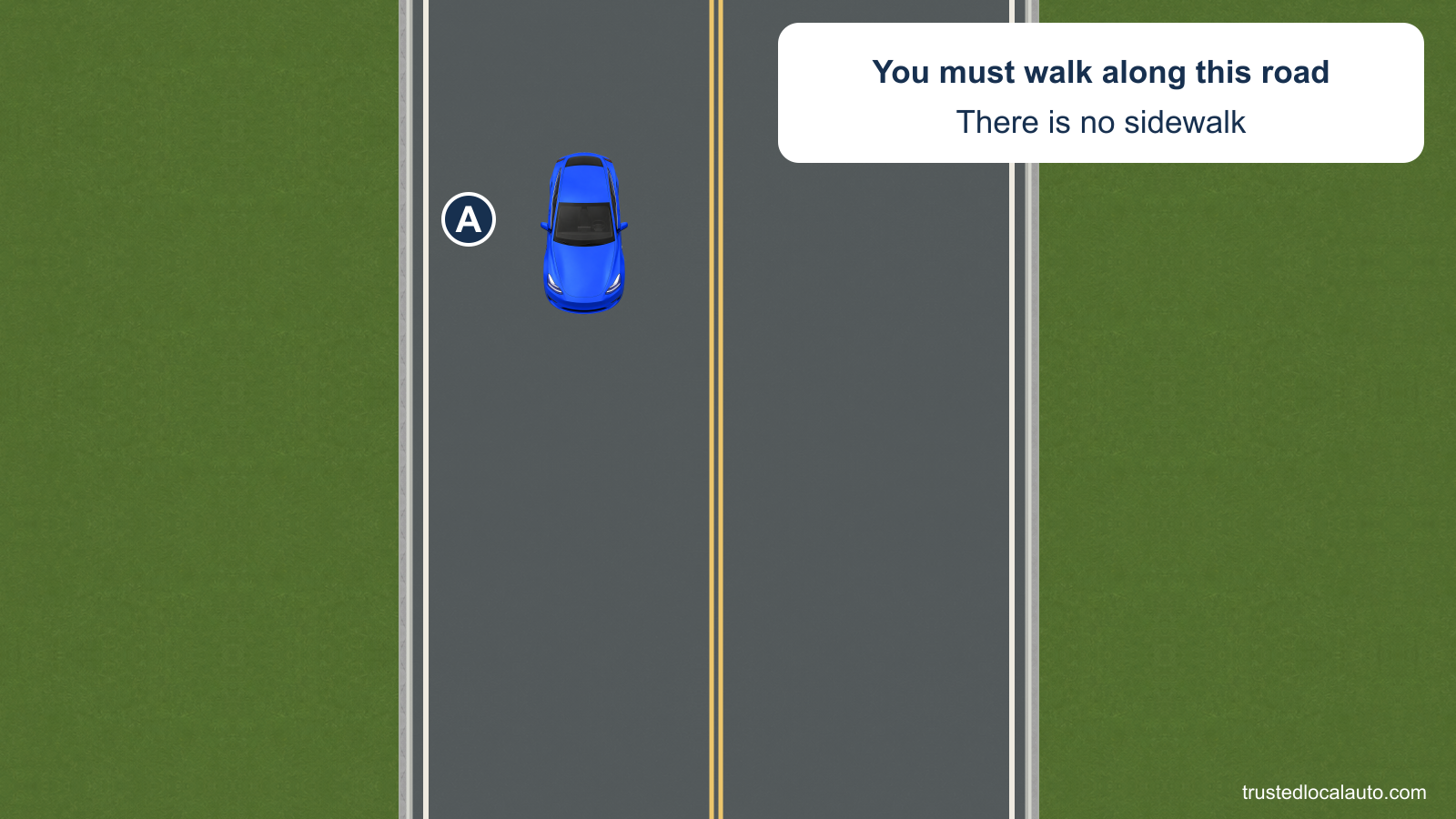 Pedestrian walking without a sidewalkYou must walk along a two-lane road that has no sidewalk. Where should you walk?Try this question
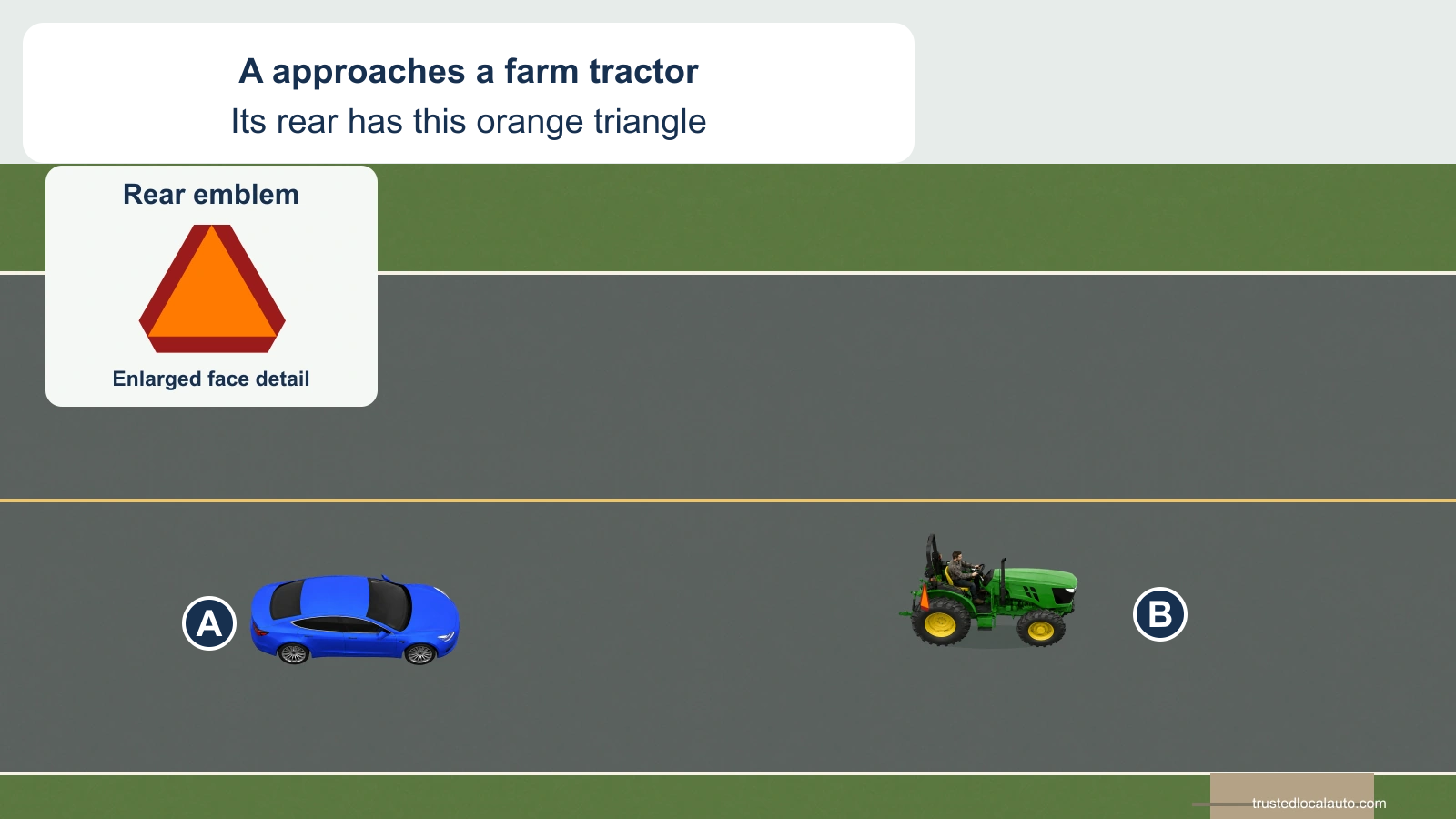 Orange triangle with red edges on farm equipmentOn a two-lane rural road, you come up behind a farm tractor. An orange triangle with red edges is on its rear. What does the emblem tell you, and what should you do?Try this question
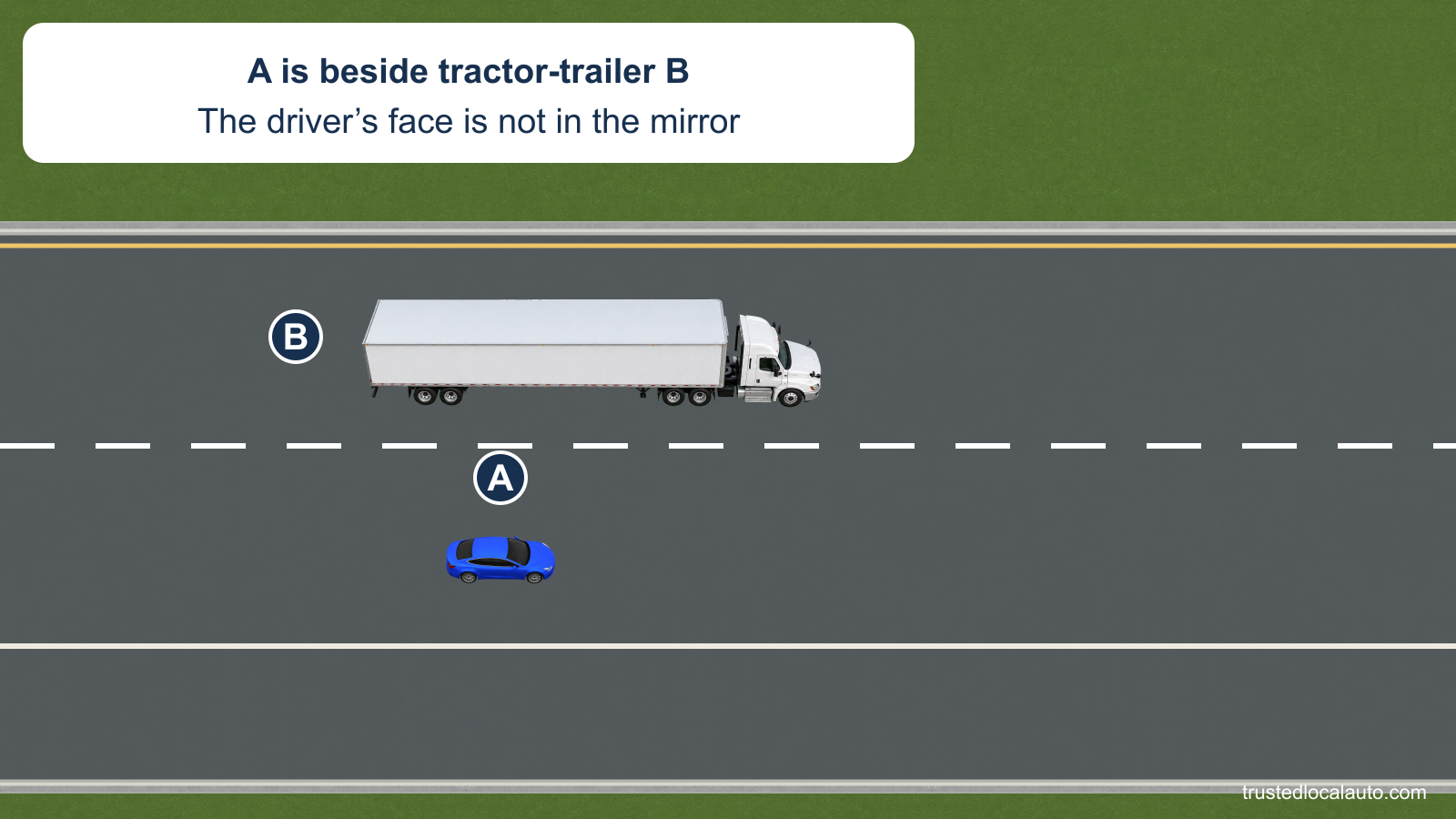 Truck blind areasYou drive in the lane beside a tractor-trailer on an Interstate. You cannot see the truck driver's face in the truck's side mirror. What should you do?Try this question
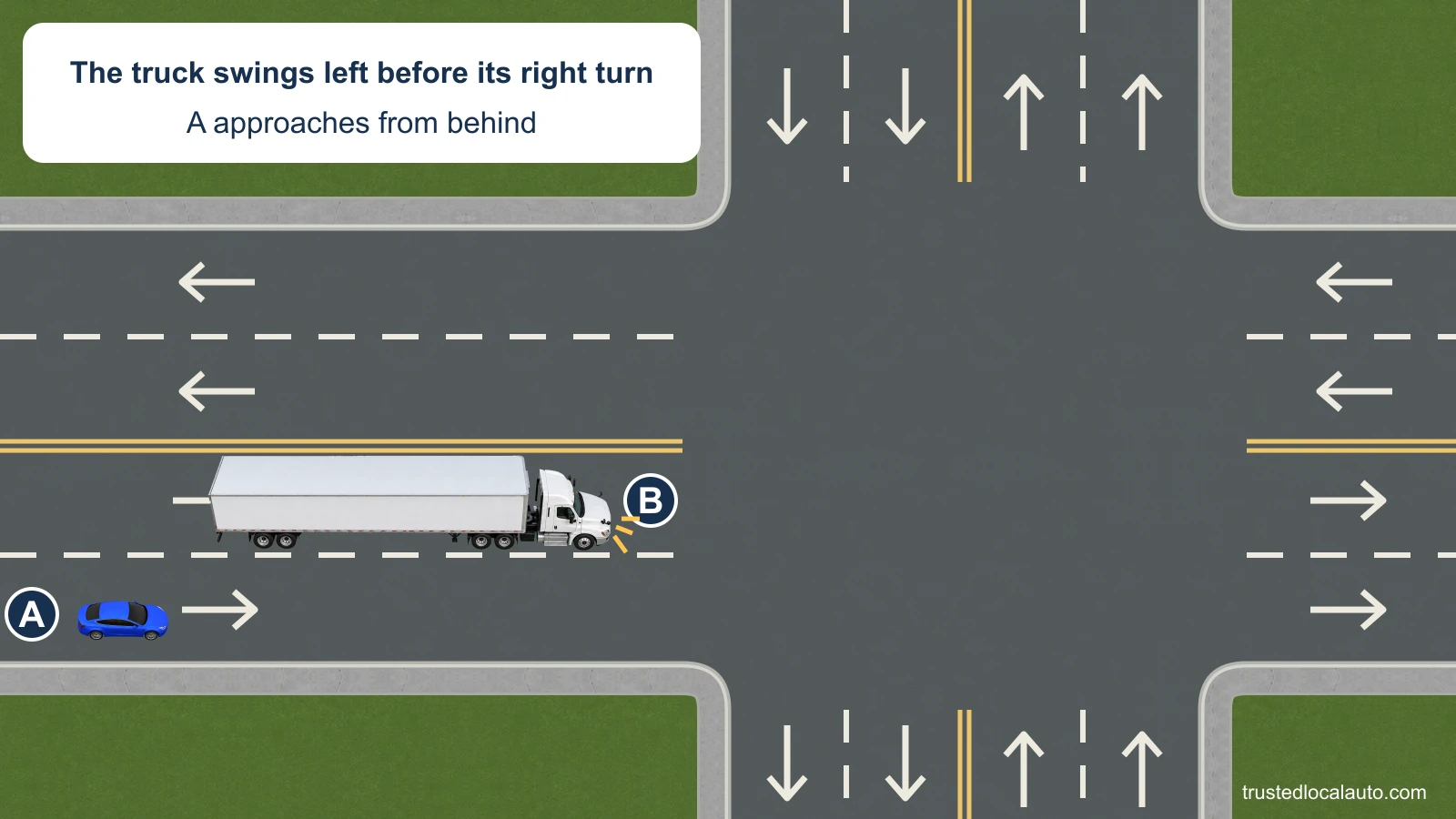 Tractor-trailer swings left before a right turnA tractor-trailer ahead of you signals a right turn at an intersection. It first swings to the left, which leaves a gap between the truck and the curb. What should you do?Try this question
- Farm tractor with an orange triangle HardOn a two-lane rural road, you come up behind a farm tractor. An orange triangle with red edges is on its rear. Which statement is correct?Try this question
- Orange triangle emblem: design speed HardOn a rural road, you come up behind a farm tractor. An orange triangle with red edges is on its rear. This emblem marks a vehicle that is designed to go no faster than a set speed. What is that speed?Try this question
- Where a bicyclist rides on a two-lane road HardA friend plans to ride a bicycle on a two-lane road with no bike lane. The friend rides slower than the other traffic. What does West Virginia say about where to ride?Try this question
4 text questions
More questions in this topic
- A bicyclist plans to ride home after dark. The bicycle has a red rear reflector. What must the bicycle have on the front?
- A bicyclist rides after dark. The bicycle has a red rear reflector and a white front lamp, but the lamp can be seen from only about 300 feet. Which statement is correct? Hard
- A bicycle will be ridden after dark. Which pair of devices does West Virginia law require on it? Hard
- On a two-lane road, you come up behind a bicyclist near the right edge of your lane. A car comes toward you in the other lane. If you pass now and stay in your lane, you can leave only about 2 feet of space. Which statement is correct? Hard
West Virginia Class E Knowledge
More Class E Knowledge topics
Road rules · 12 topics
- Licensing & Test Readiness28 questions
- Traffic Signals & Road Markings19 questions
- Observation, Speed & Space16 questions
- Intersections & Right-of-Way15 questions
- Turns, Lanes, Passing & Merging20 questions
- Parking, Reversing & Roadside Stops20 questions
- Sharing the Road19 questions · This topic
- Freeways & High-Speed Roads16 questions
- School Zones, Railways & Work Areas27 questions
- Weather, Visibility & Emergencies24 questions
- Vehicle Safety, Documents & Towing20 questions
- Safe & Responsible Driving24 questions
Each question page shows the answer, the explanation and the official source of the question.