
Illinois Class D Written topic
Illinois Class D Written Weather, Visibility & Emergencies
Handle darkness, poor weather, loss of traction, breakdowns, collisions and emergencies.
23 questions, free with an account. 7 of them are hard. Each one has its answer, an explanation and its official source.
- 3 picture questions
- 20 text questions
- 7 of them hard
3 picture questions
Questions in this topic
Select a question to answer it. The answer and the explanation show after you answer.
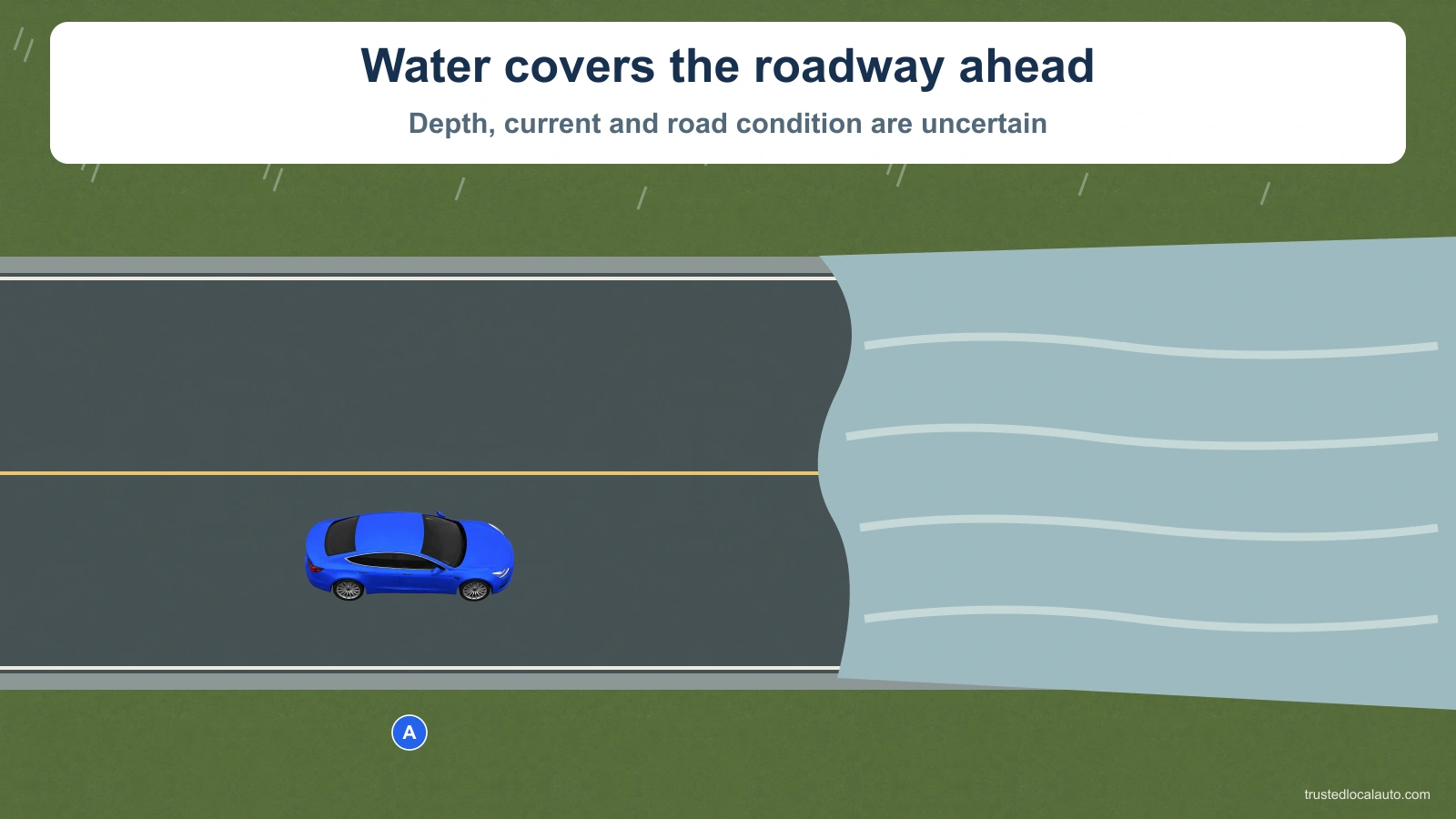 Flooded roadwayWater covers a roadway or viaduct and its depth and current are unknown. What should a driver do?Try this question
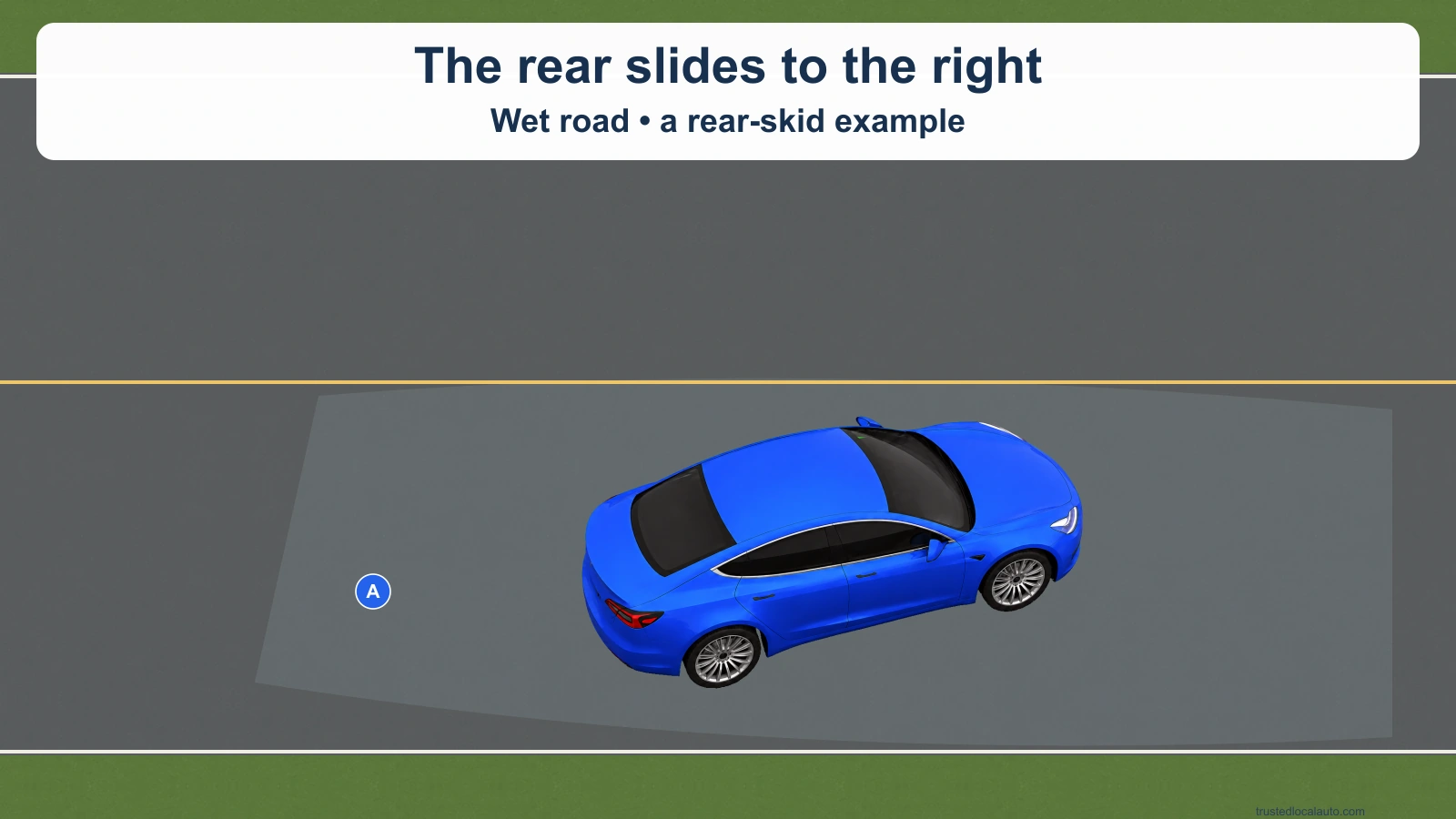 Recovering from a skidYour car’s rear wheels slide to the right on a slippery road. What should you do first to regain control?Try this question
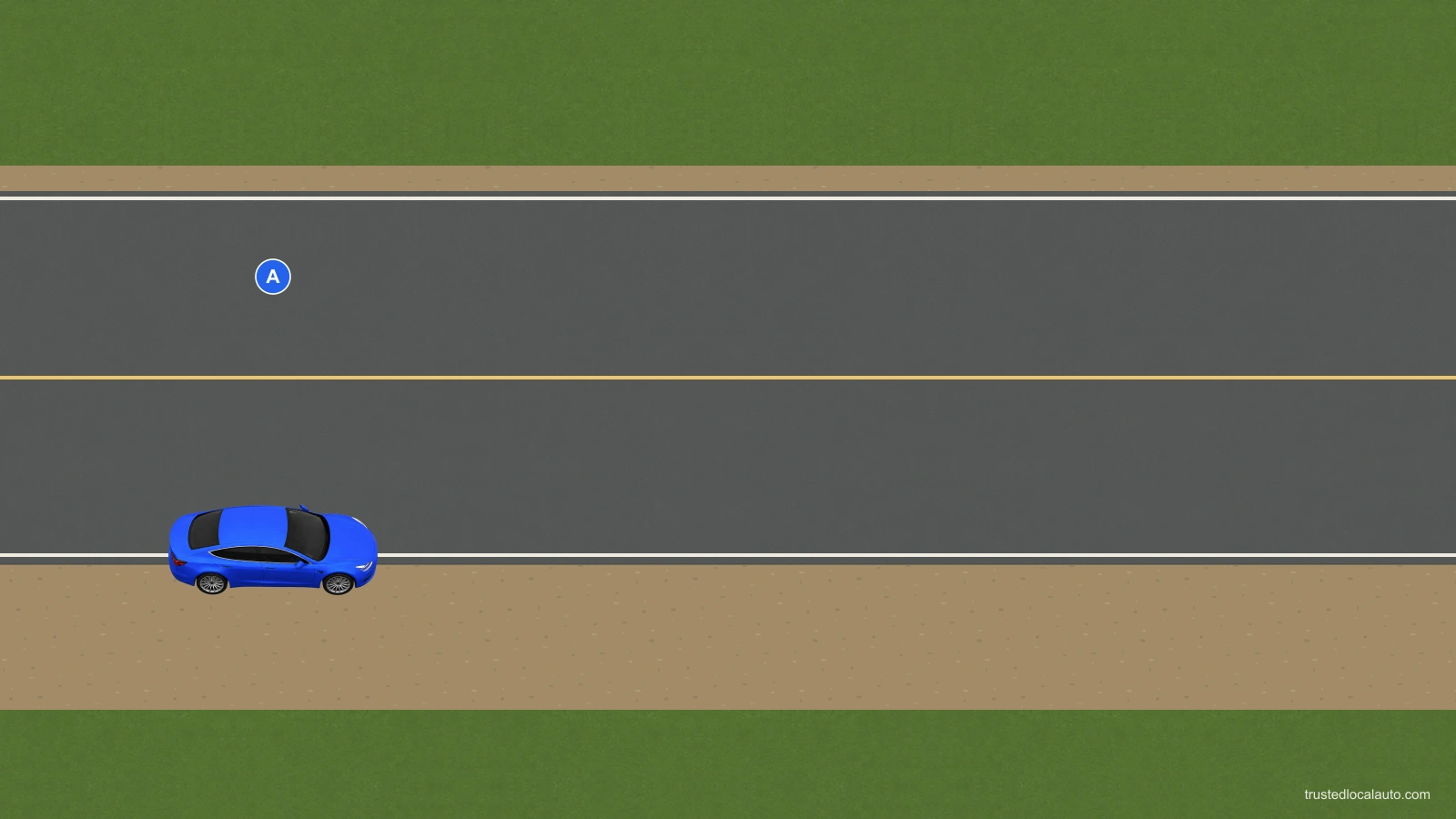 Wheels drop onto shoulderYour right wheels drift off the pavement onto a lower shoulder. What is the safest first response?Try this question
20 text questions
More questions in this topic
- The accelerator remains stuck and cannot be freed. What should you do?
- The brake pedal suddenly sinks to the floor and normal braking is lost. What should you try to help slow the car safely?
- Snow and ice cover a vehicle's windows and mirrors. What must the driver do before entering traffic?
- At night, how far before meeting an oncoming vehicle must a driver switch from high beams to low beams?
- At night you are following another vehicle 250 feet ahead. Your high beams are on. What should you do?
- Strong wind gusts strike your car as you leave a sheltered area beside a large truck. What should you do?
- What lighting rule applies when rain requires use of the windshield wipers?
- After a crash, a power line lies across your vehicle. There is no fire or other immediate danger inside. What should you do?
- You are stranded in snow and waiting safely inside your car. What precaution is important before running the engine briefly for warmth?
- Headlights fail while driving at night. What should the driver do?
- A tire suddenly blows out at speed. What should the driver do?
- Smoke begins coming from your car while you are driving. What should you do?
- Fog becomes too dense to see far enough to stop safely. What should a driver do?
- At night, your high beams are on, and a vehicle approaches from the opposite direction. The law sets the distance at which you must dim to low beams. What is that distance? Hard
- At night, you follow a vehicle that travels in your direction. You must dim your high beams when it is less than a set distance ahead. What is that distance? Hard
- At night, your high beams are on. A vehicle 250 feet ahead of you travels in your direction, away from you. No vehicle comes toward you. Which statement is correct? Hard
- At night, you must dim your high beams within a set distance of another vehicle. Which pair of distances is correct? Hard
- It is daytime. A light rain makes you use your windshield wipers from time to time, but not all the time. What lighting rule applies? Hard
- After a crash, a power line lies across your car. Then a fire starts in the car. What should you do? Hard
- You drive on a highway, and smoke starts to come from your car. What should you do? Hard
Illinois Class D Written
More Class D Written topics
Road rules · 12 topics
- Licensing & Test Readiness21 questions
- Traffic Signals & Road Markings19 questions
- Observation, Speed & Space15 questions
- Intersections & Right-of-Way19 questions
- Turns, Lanes, Passing & Merging21 questions
- Parking, Reversing & Roadside Stops25 questions
- Sharing the Road20 questions
- Freeways & High-Speed Roads10 questions
- School Zones, Railways & Work Areas31 questions
- Weather, Visibility & Emergencies23 questions · This topic
- Vehicle Safety, Documents & Towing20 questions
- Safe & Responsible Driving20 questions
Each question page shows the answer, the explanation and the official source of the question.