
Minnesota Class D Knowledge topic
Minnesota Class D Knowledge Parking, Reversing & Roadside Stops
Practise safe parking, backing, turnarounds and stopping beside the road.
16 questions, free with an account. 5 of them are hard. Each one has its answer, an explanation and its official source.
- 9 picture questions
- 7 text questions
- 5 of them hard
9 picture questions
Questions in this topic
Select a question to answer it. The answer and the explanation show after you answer.
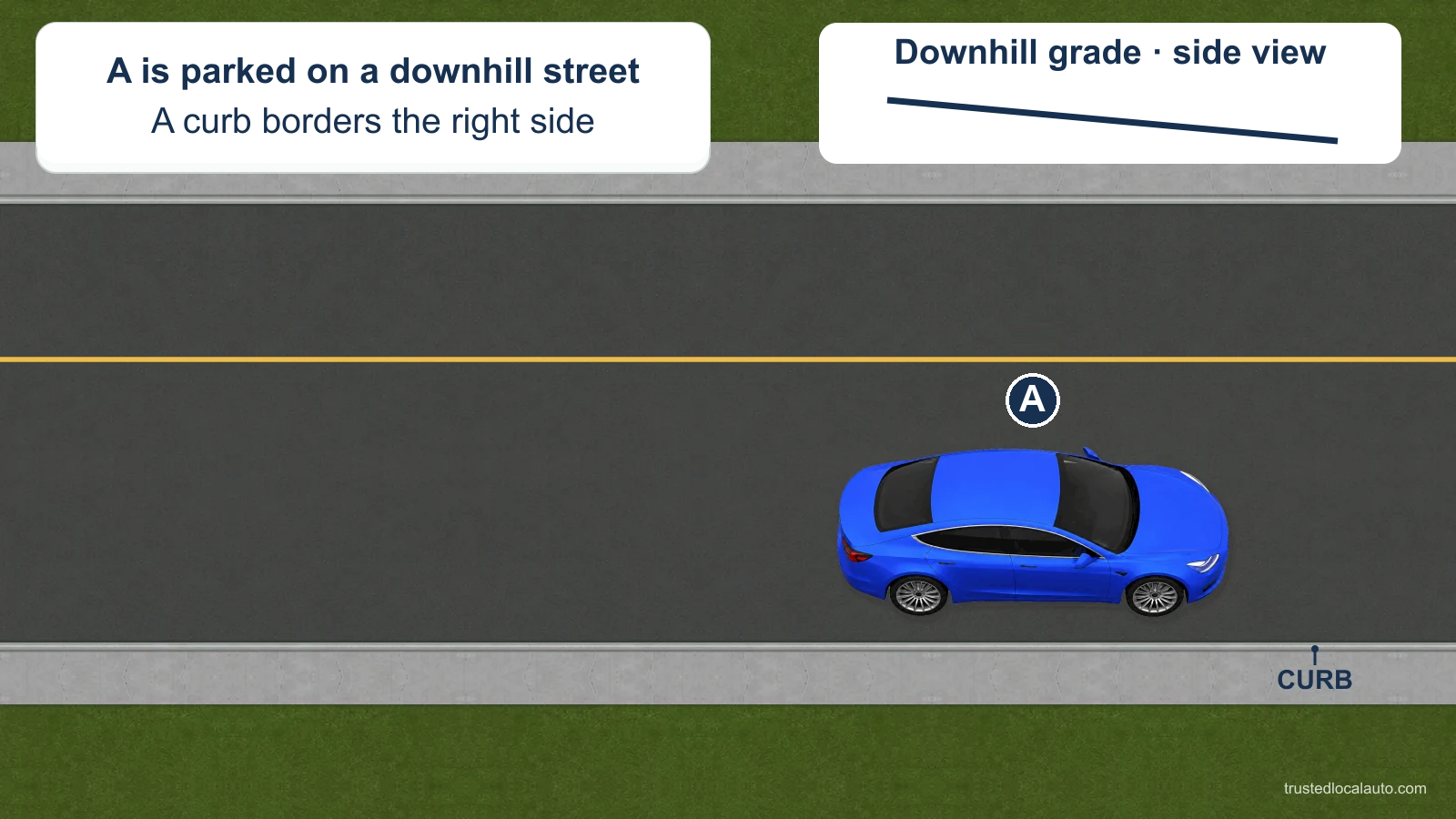 Parking facing downhill next to a curbYou park facing downhill on a street with a curb. How should you leave the front wheels?Try this question
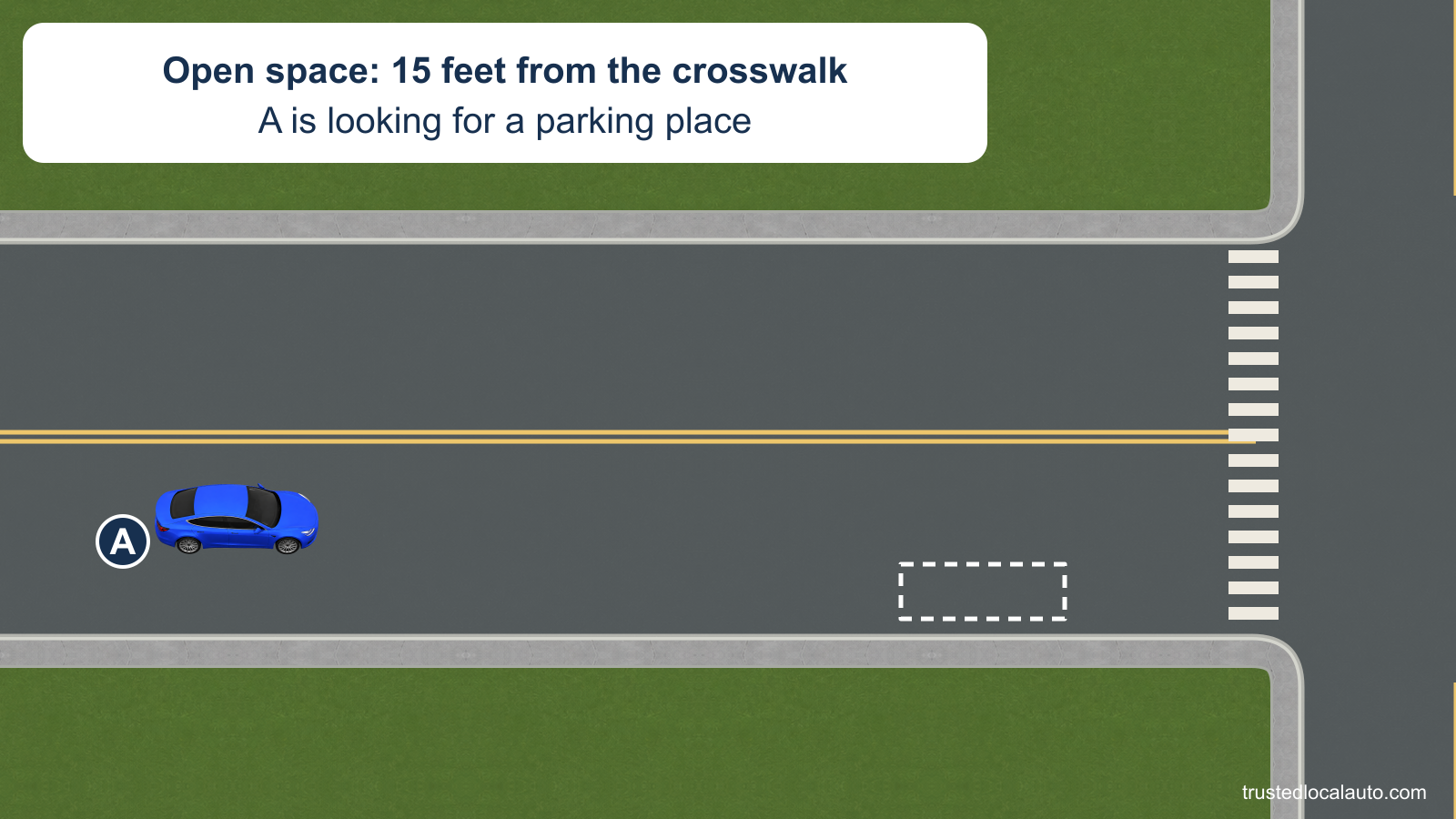 Parking near an intersection crosswalkYou find an open curb space on a city street. No signs are posted, but the front of the space is about 15 feet from a crosswalk at an intersection. May you park there?Try this question
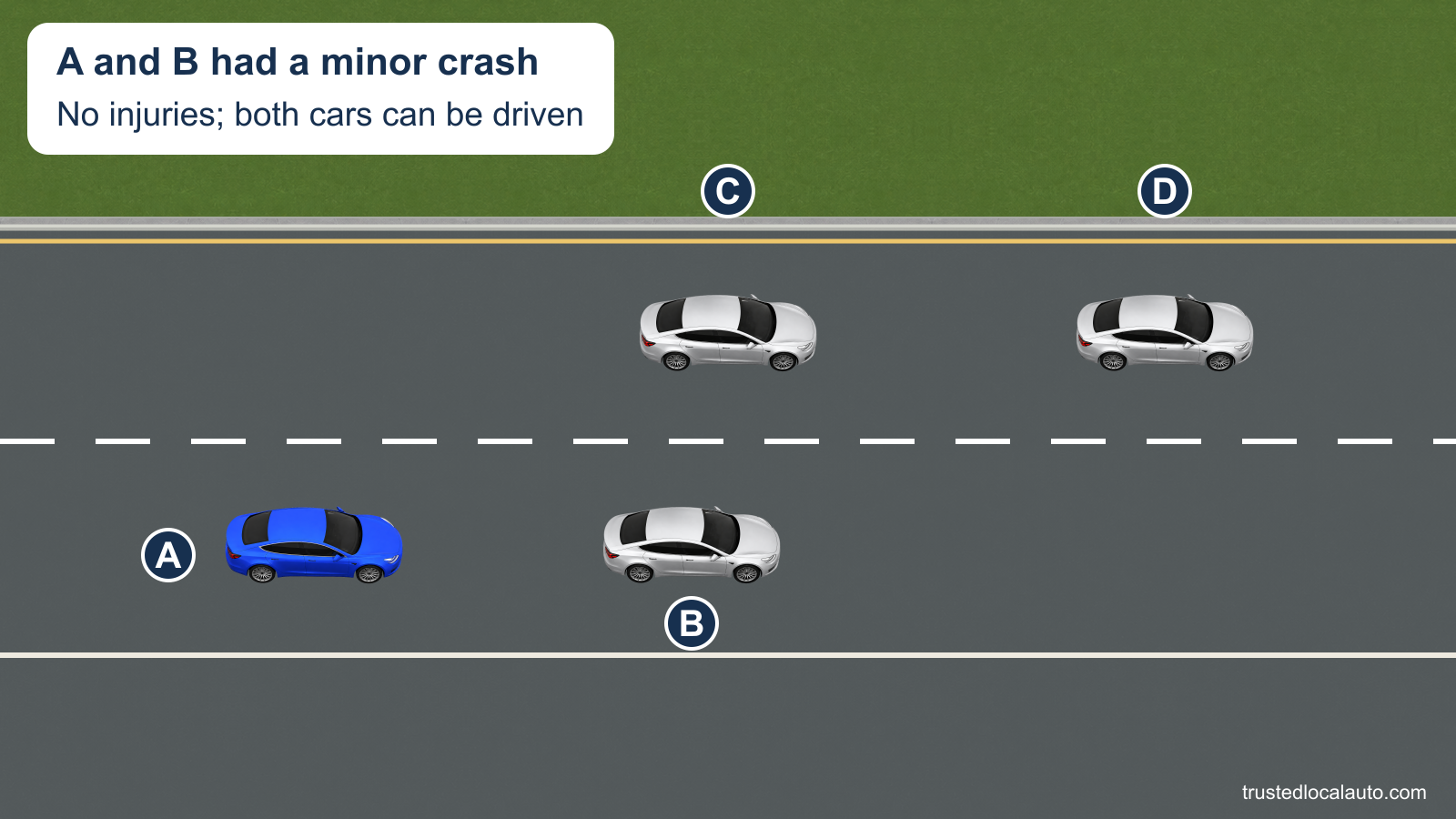 Minor crash in a traffic lane with no injuriesYou have a minor crash on a busy street. No one is hurt, and both cars can still be driven. What should you do?Try this question
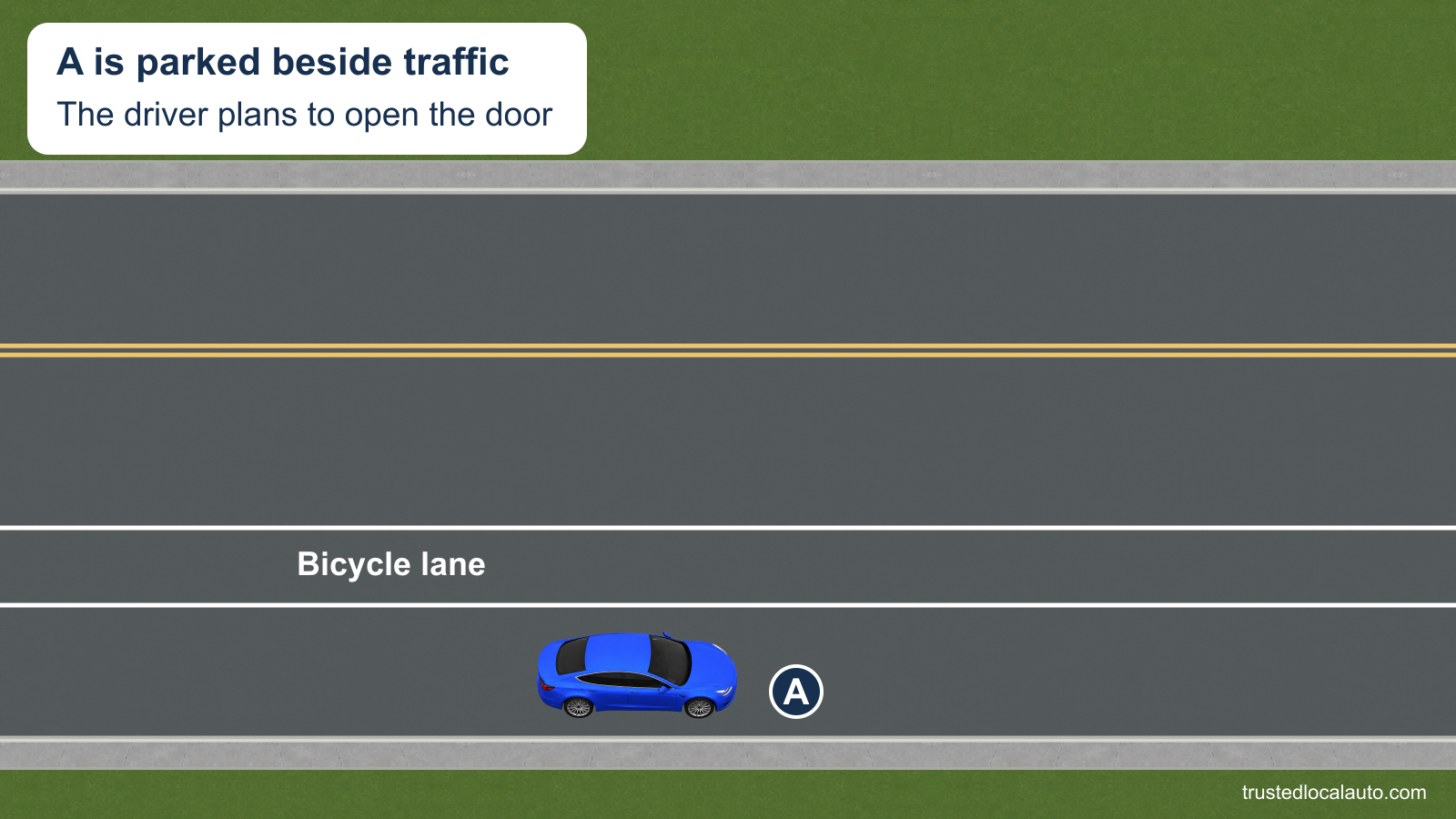 Opening your door on the traffic sideYou park at the curb on a busy street and want to get out on the driver's side, next to traffic. What should you do before you open the door?Try this question
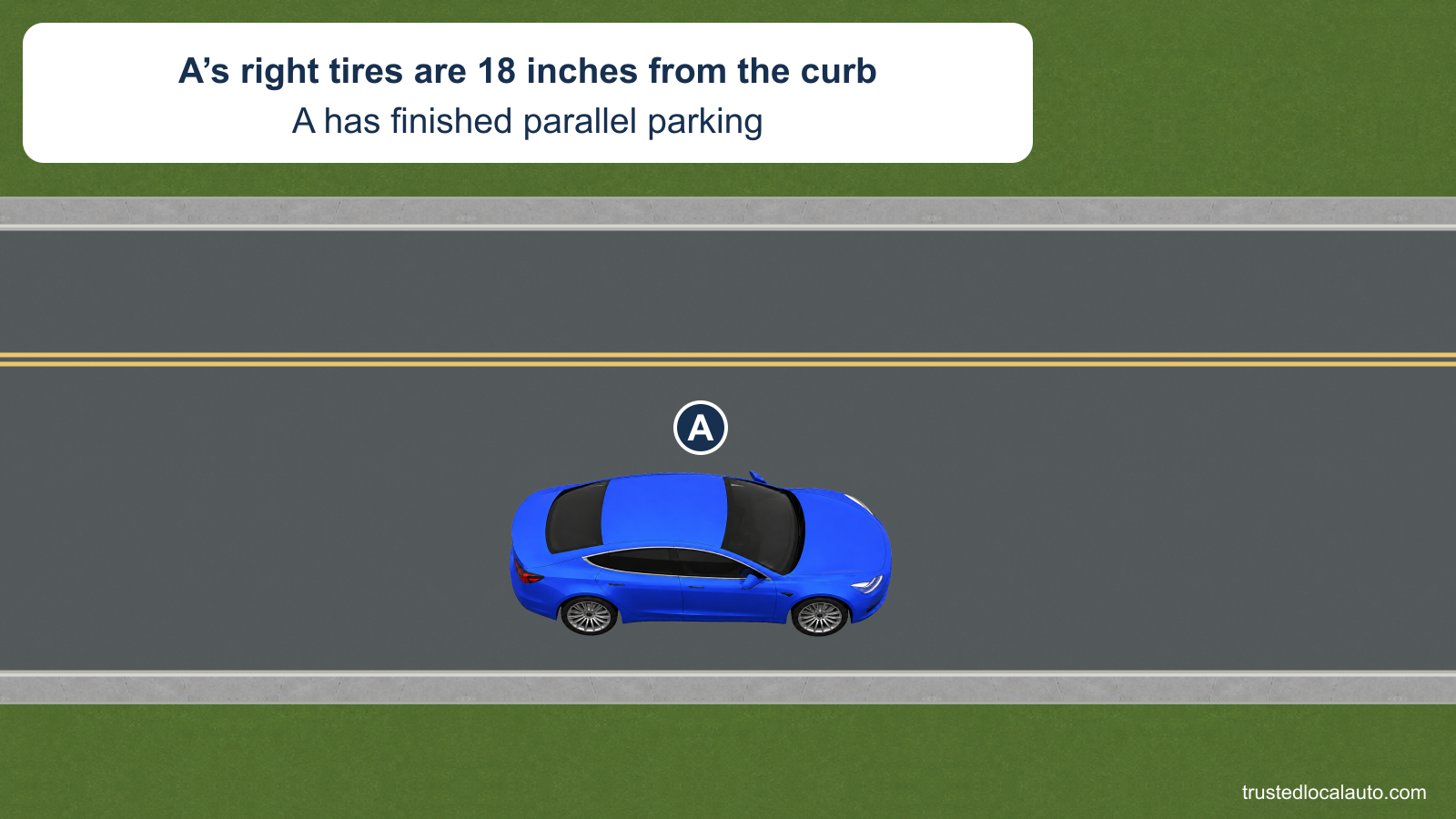 Parallel parking distance from the curbYou parallel park on a two-way street that has a curb. When you finish, your right-side wheels are about 18 inches from the curb. Is this legal?Try this question
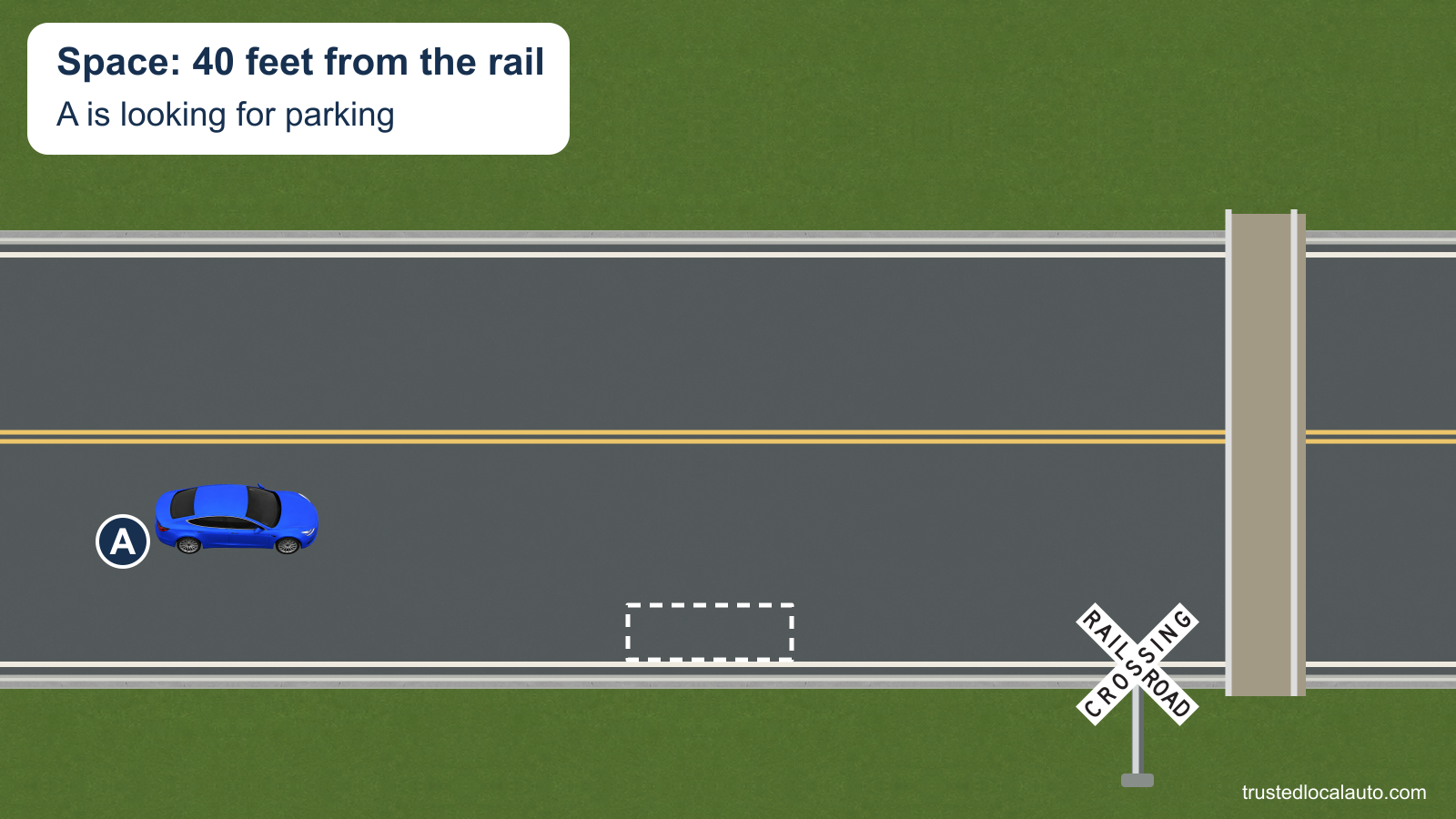 Parking near a railroad crossingYou want to park on a street near a railroad crossing. The open space nearest the tracks would put your car about 40 feet from the nearest rail. May you park there?Try this question
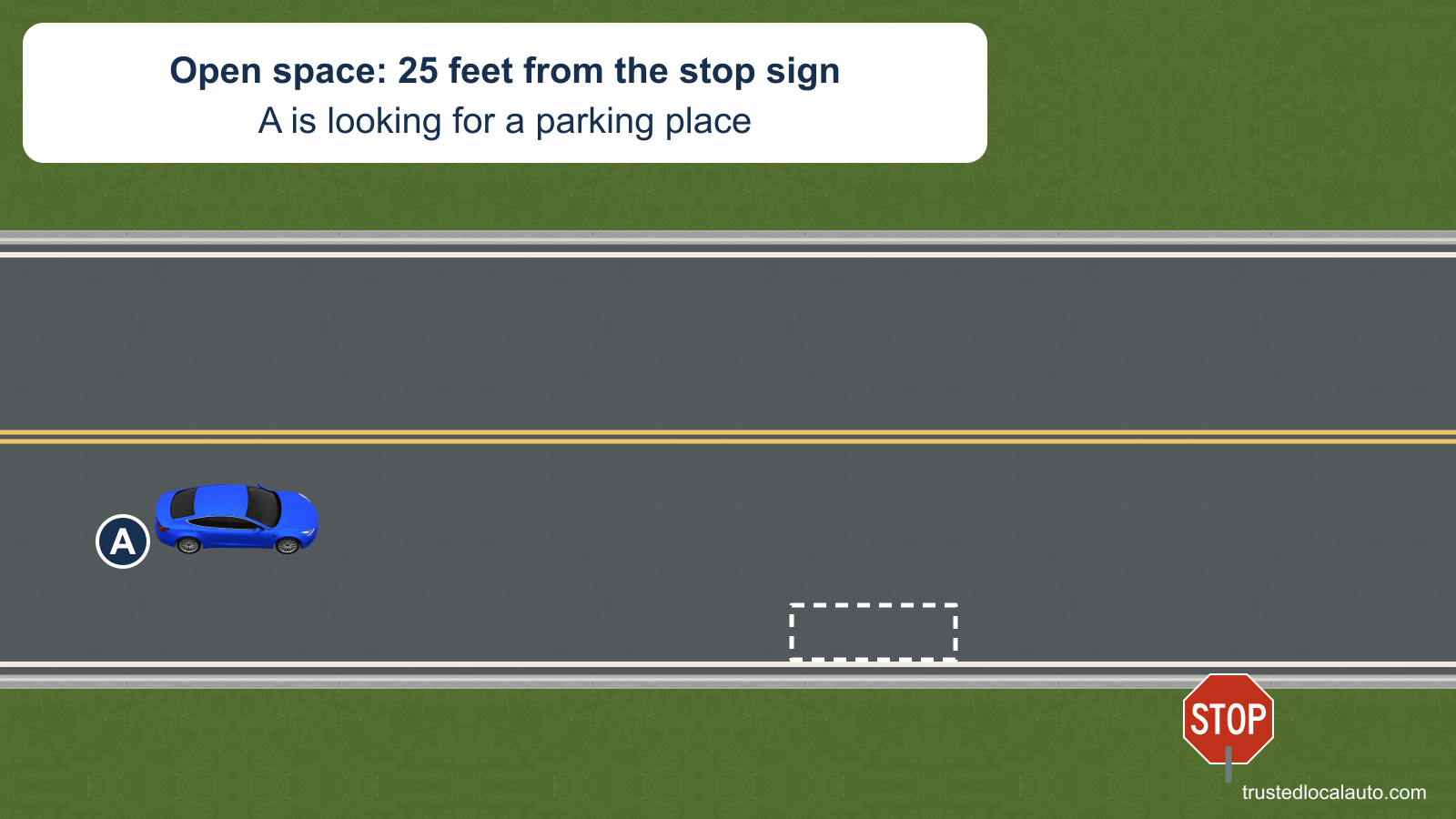 Parking near a stop signYou want to park on the approach side of a stop sign that stands at the side of the road. The only open space would put your car about 25 feet before the sign. May you park there?Try this question
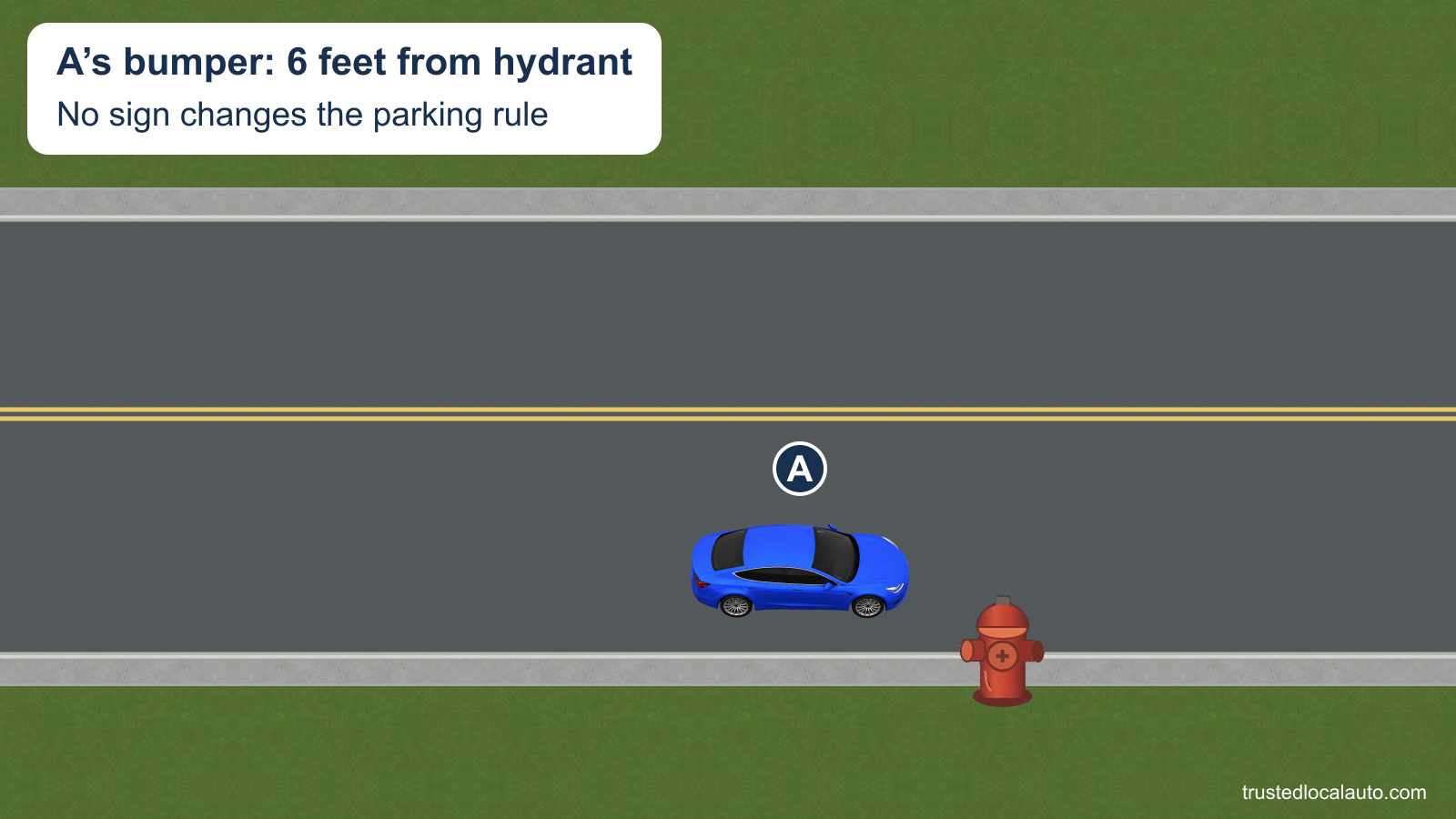 Parking space near a fire hydrantYou find an open parking space on a city street. If you park there, your front bumper will be about 6 feet from a fire hydrant. No sign is posted. May you park there?Try this question
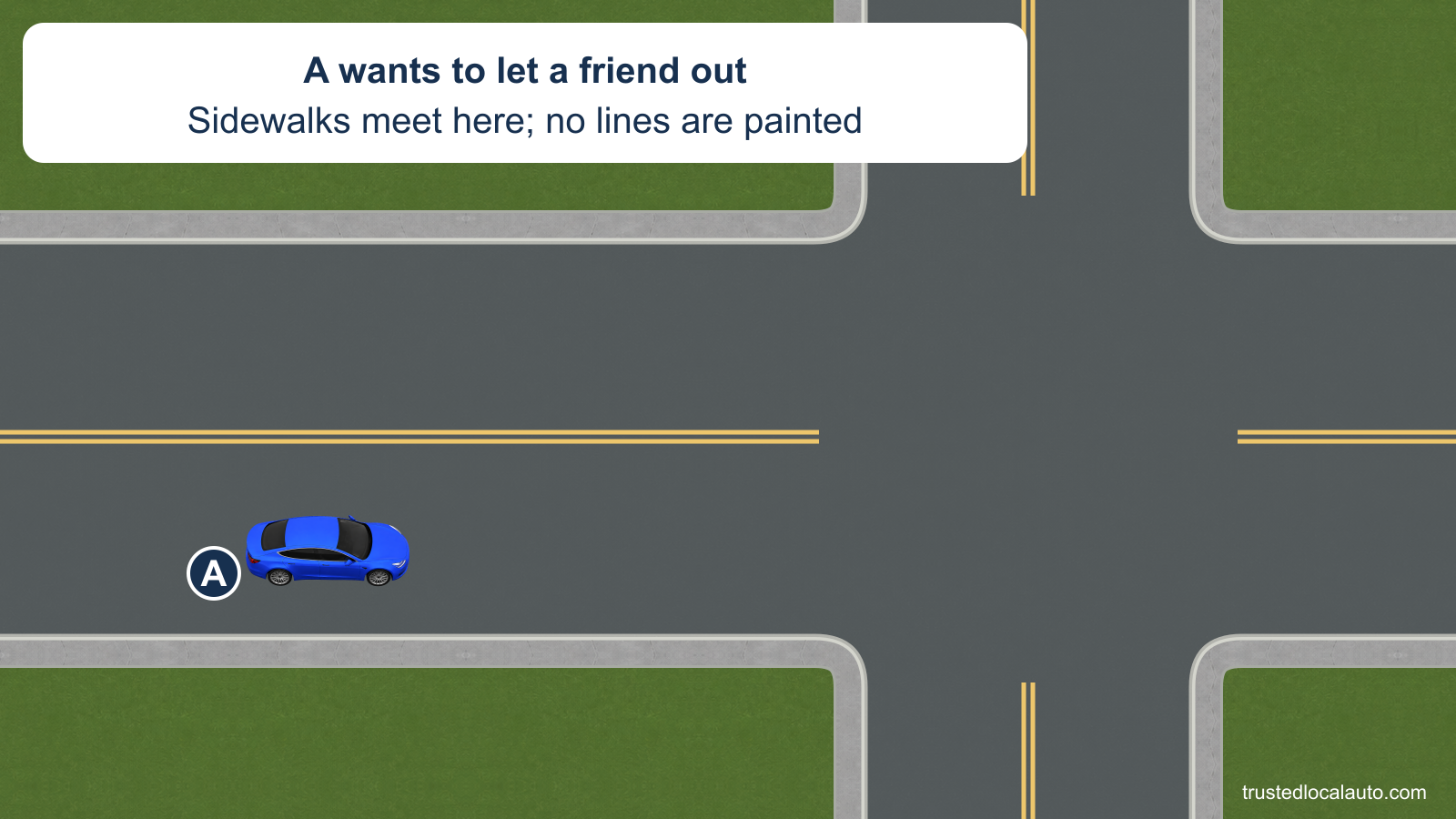 Stopping at a corner with no painted linesYou want to let a friend out at a street corner in town. The sidewalks meet the street there, but no crosswalk lines are painted. The only open space is where the sidewalk would continue across the street. Which statement is correct?Try this question
7 text questions
More questions in this topic
- Your car breaks down on a highway at night, and you cannot move it off the road. Which lights must the car show to other drivers?
- Your car has a backup camera. You are backing out of a driveway onto a street. How should you watch your path while the car moves?
- Your car breaks down on a highway at night. Which statement is NOT correct? Hard
- Your car breaks down on a highway at night, and you cannot move it off the road. Which lights must the car show, and what is the minimum distance from which each light must be visible? Hard
- For one of these, Minnesota law sets the minimum parking distance at 30 feet. Which one is it? Hard
- You parallel park on a two-way street that has a curb. When you finish, your right-side wheels are parallel to the curb and about 10 inches from it. Which statement is correct? Hard
- You want to park on the approach side of a traffic signal that stands at the side of the road. The only open space would put your car about 25 feet before the signal. Which statement is correct? Hard
Minnesota Class D Knowledge
More Class D Knowledge topics
Road rules · 12 topics
- Licensing & Test Readiness25 questions
- Traffic Signals & Road Markings21 questions
- Observation, Speed & Space13 questions
- Intersections & Right-of-Way19 questions
- Turns, Lanes, Passing & Merging25 questions
- Parking, Reversing & Roadside Stops16 questions · This topic
- Sharing the Road19 questions
- Freeways & High-Speed Roads15 questions
- School Zones, Railways & Work Areas32 questions
- Weather, Visibility & Emergencies26 questions
- Vehicle Safety, Documents & Towing19 questions
- Safe & Responsible Driving25 questions
Each question page shows the answer, the explanation and the official source of the question.