
Minnesota Class D Knowledge topic
Minnesota Class D Knowledge Weather, Visibility & Emergencies
Handle darkness, poor weather, loss of traction, breakdowns, collisions and emergencies.
26 questions, free with an account. 9 of them are hard. Each one has its answer, an explanation and its official source.
- 11 picture questions
- 15 text questions
- 9 of them hard
11 picture questions
Questions in this topic
Select a question to answer it. The answer and the explanation show after you answer.
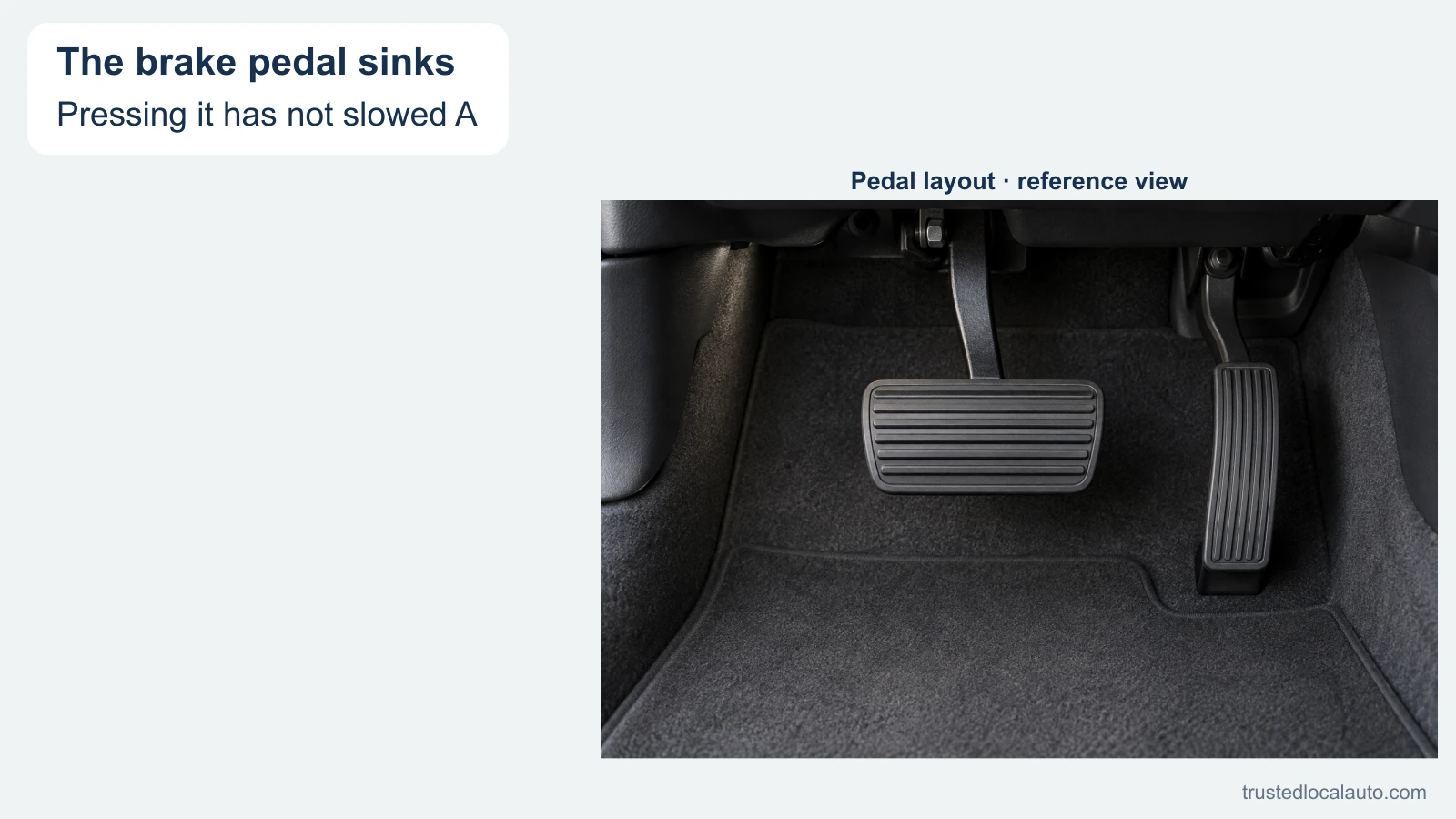 Brake pedal sinks to the floorYou press the brake pedal, and it suddenly sinks all the way to the floor. The car does not slow down. What should you try first?Try this question
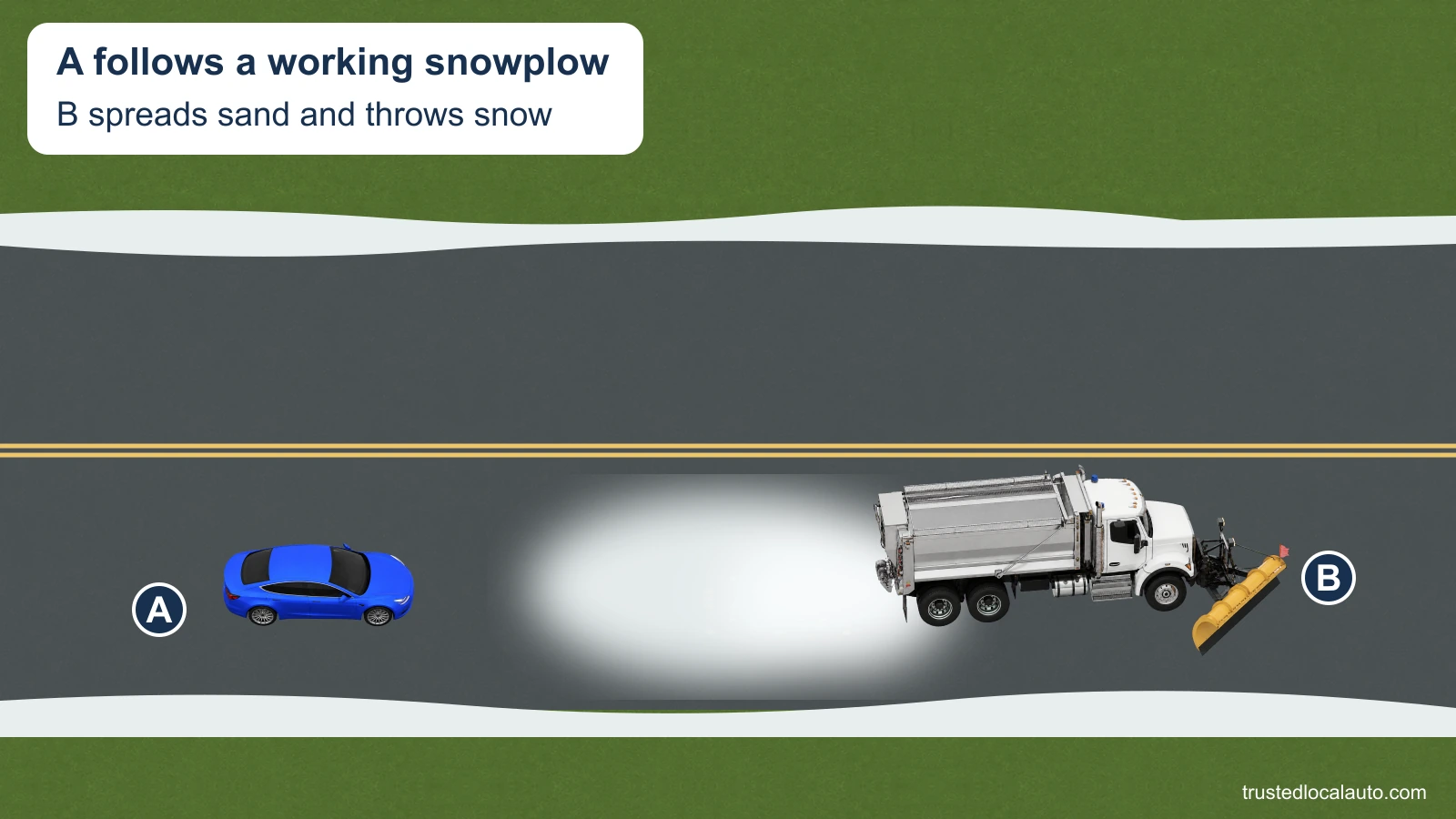 Snowplow ahead spreads sand on a two-lane highwayOn a snowy two-lane highway, you come up behind a snowplow that spreads sand and throws up a cloud of snow. What should you do?Try this question
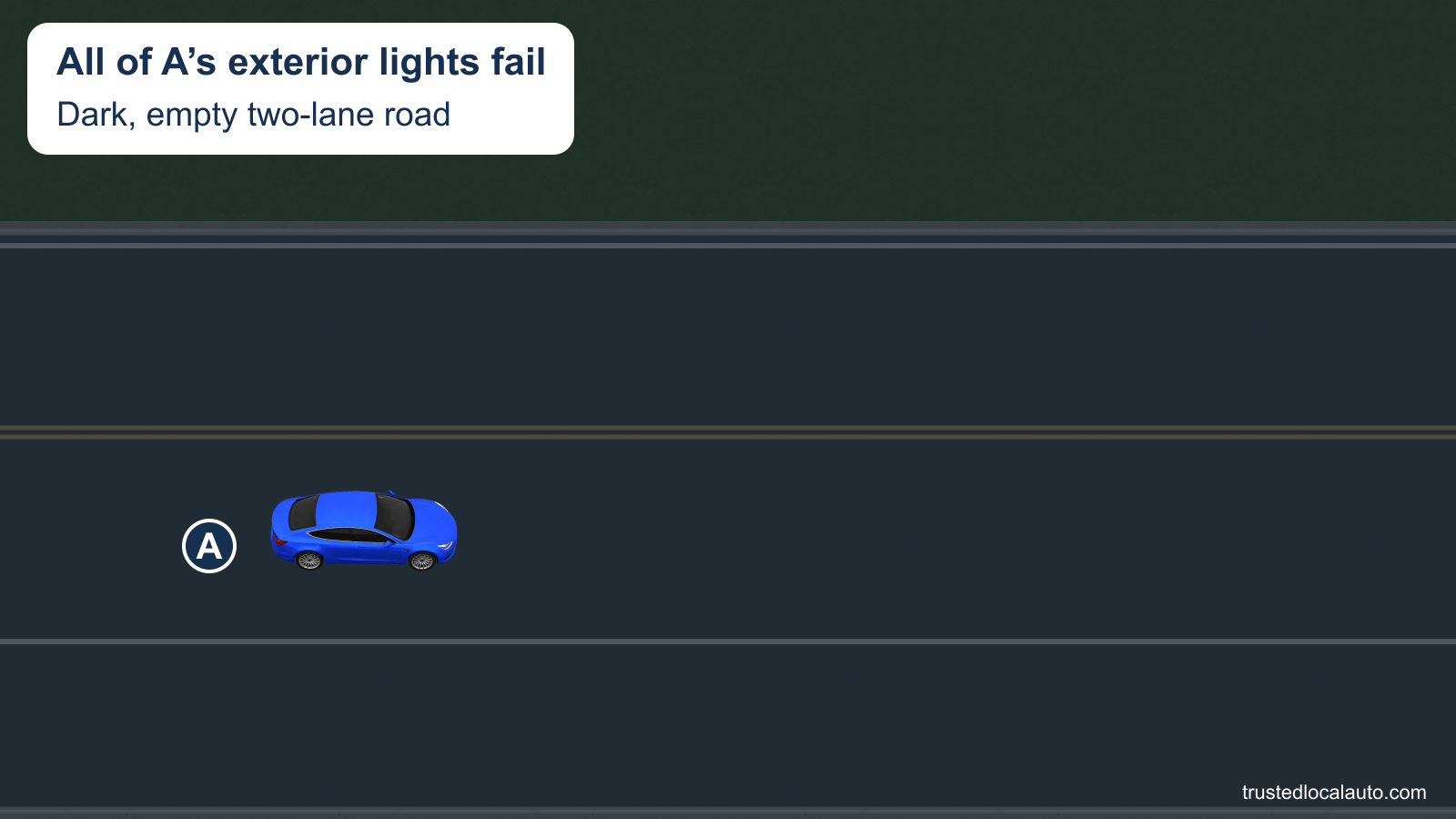 All lights fail on a dark rural roadAt night on a dark, empty two-lane road, your headlights suddenly go out. You try the parking lights, the hazard warning lights and the turn signals, but none of them work. What should you do?Try this question
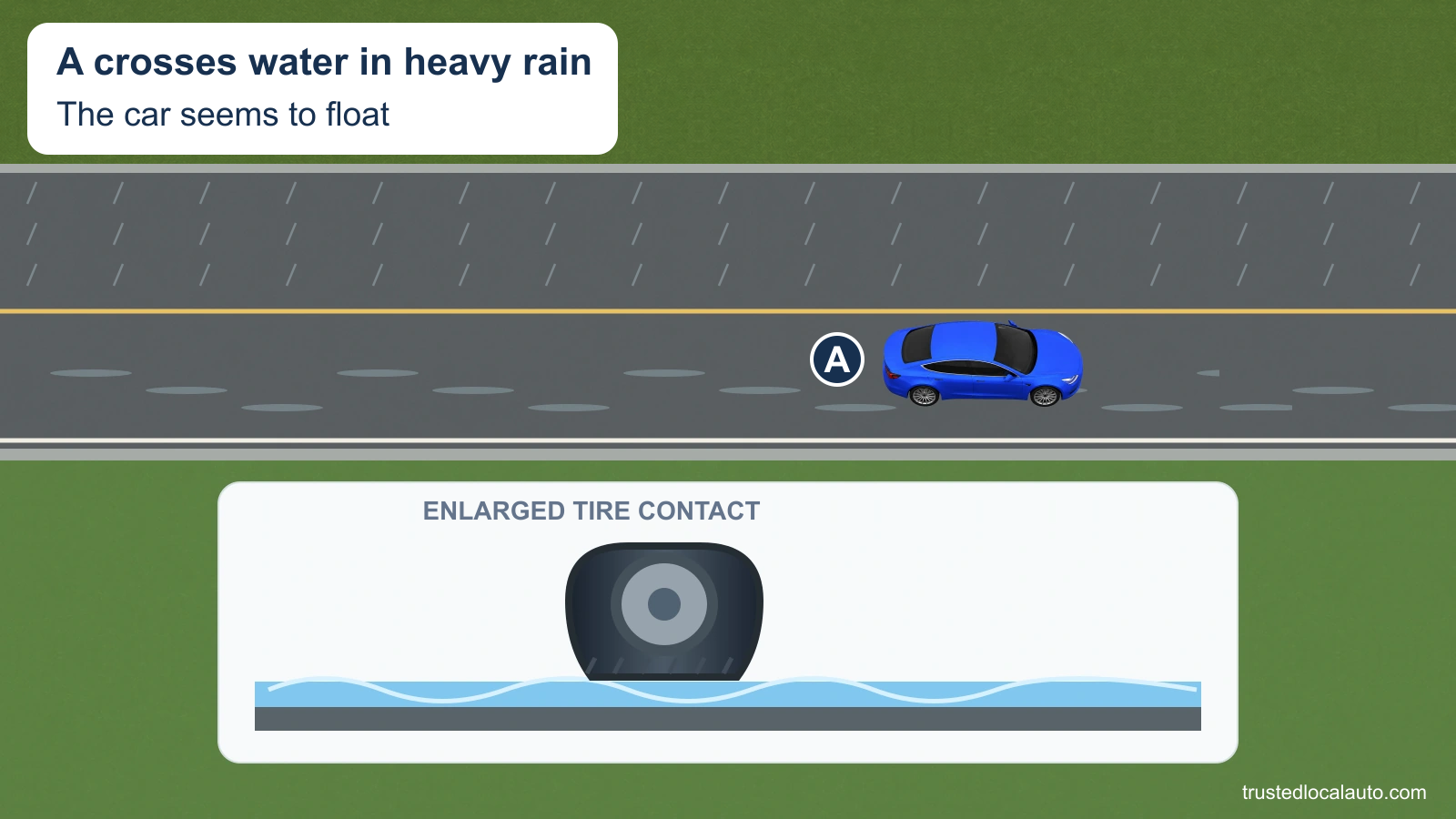 Steering feels light in heavy rain at highway speedYou are driving at 55 mph in heavy rain. Suddenly the steering feels light, and the car seems to float on the water. What should you do first?Try this question
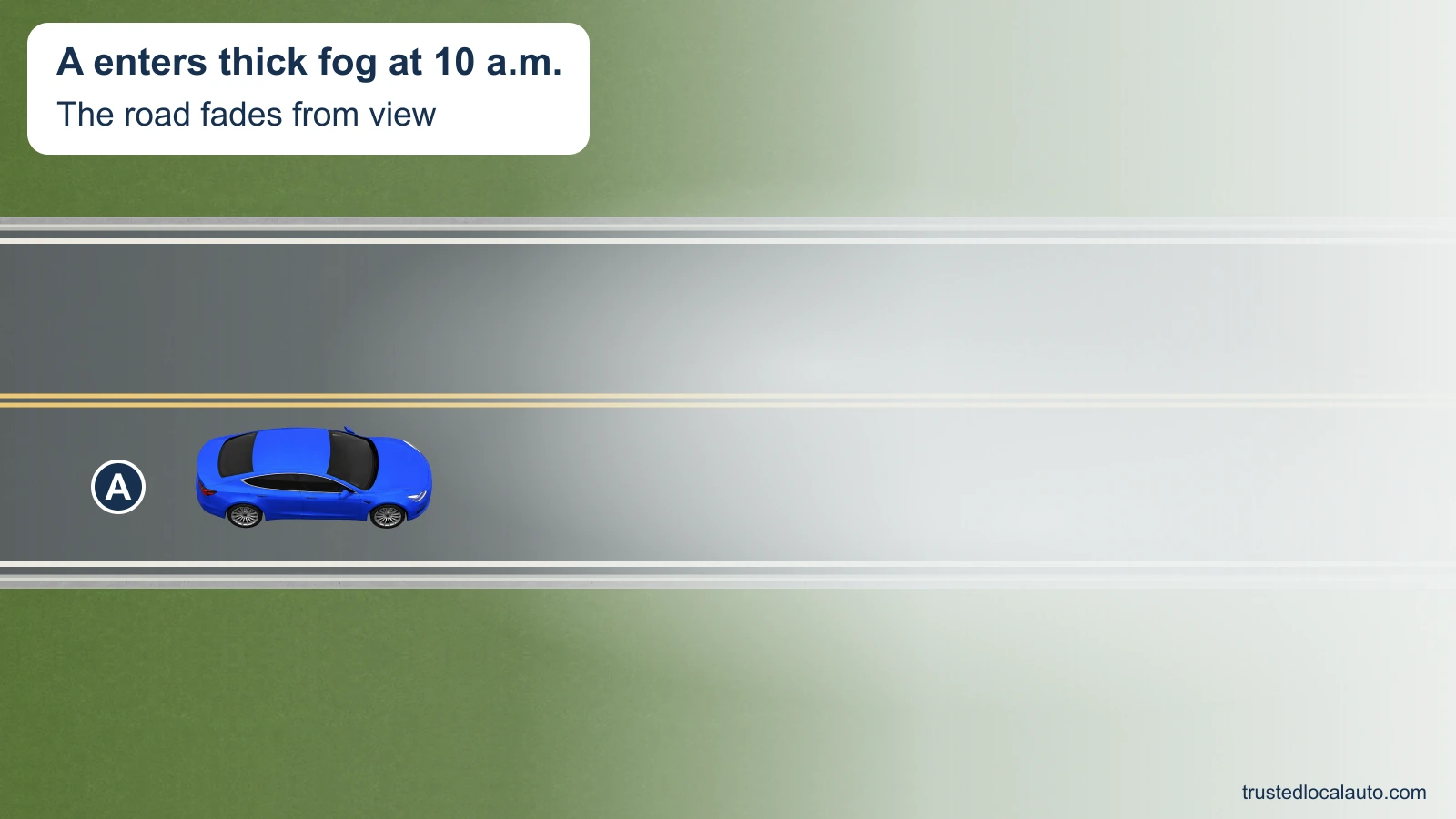 Thick daytime fog with a short view aheadAt 10 a.m., you drive into thick fog. You can see only about 300 feet ahead. How should you use your lights?Try this question
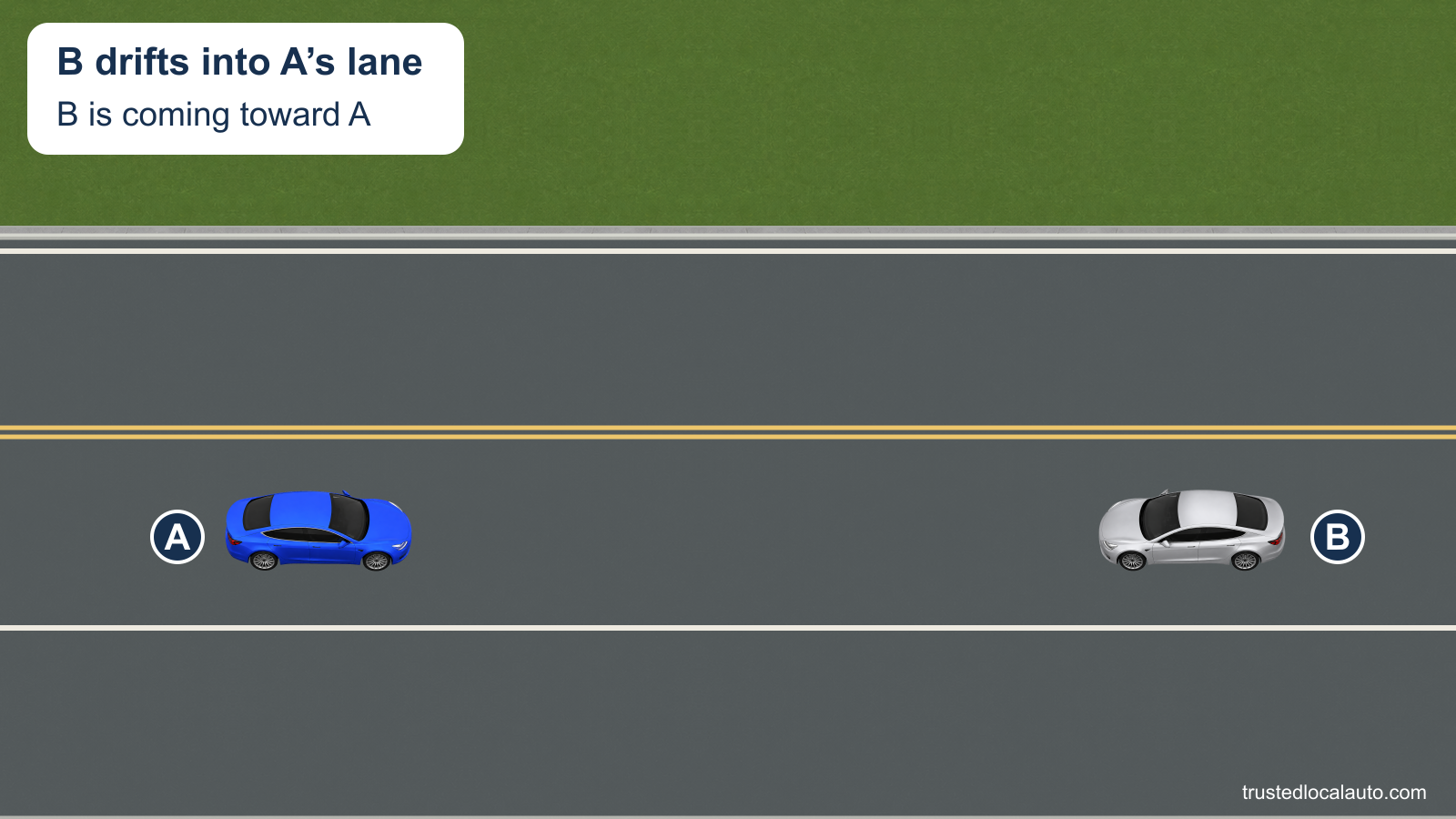 Oncoming car drifts into your laneOn a two-lane road, an oncoming car drifts across the center line and comes toward you in your lane. What should you do?Try this question
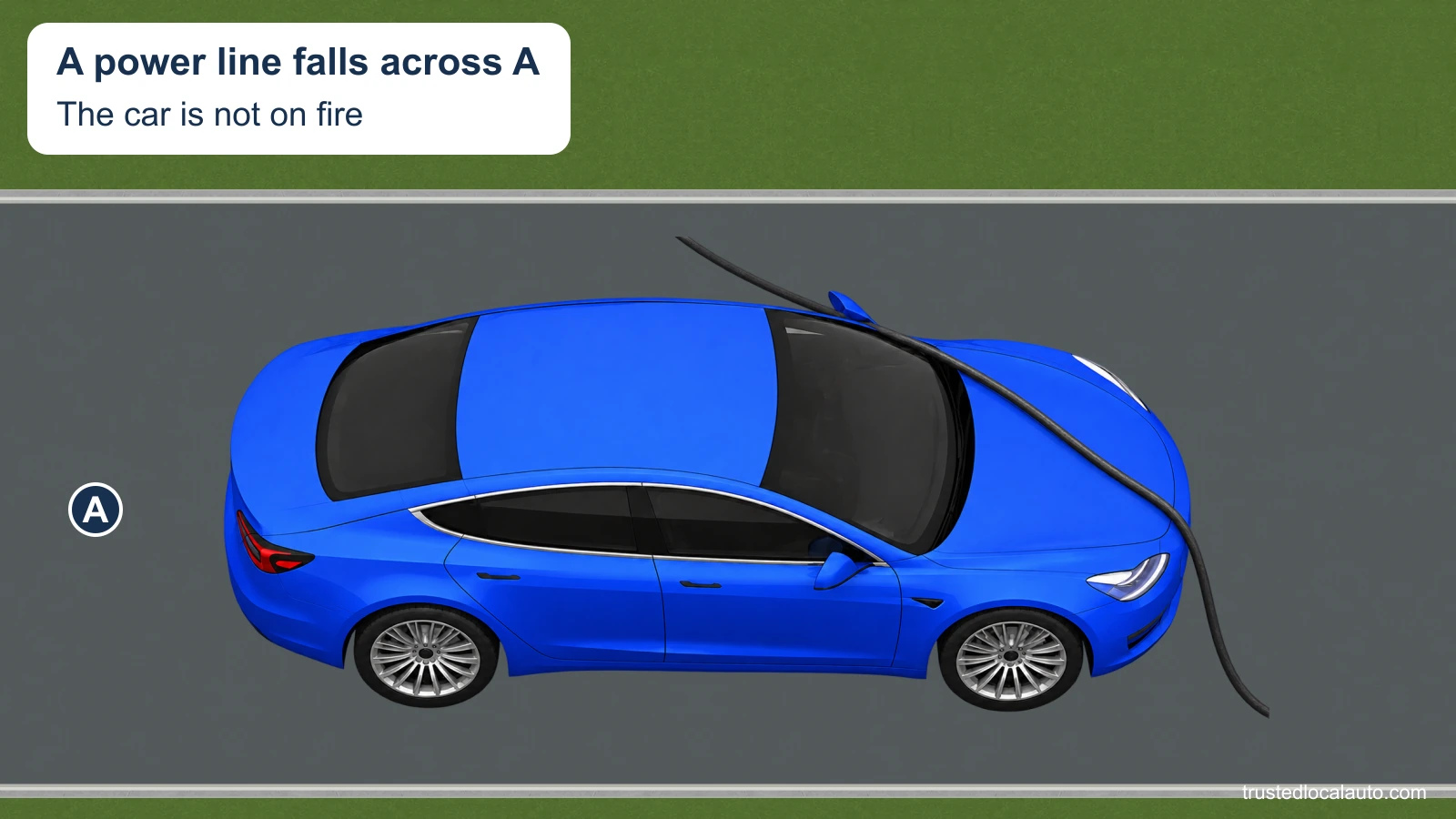 Power line falls on your car after a crashYour car hits a utility pole, and a power line falls across the car. The car is not on fire. What should you do?Try this question
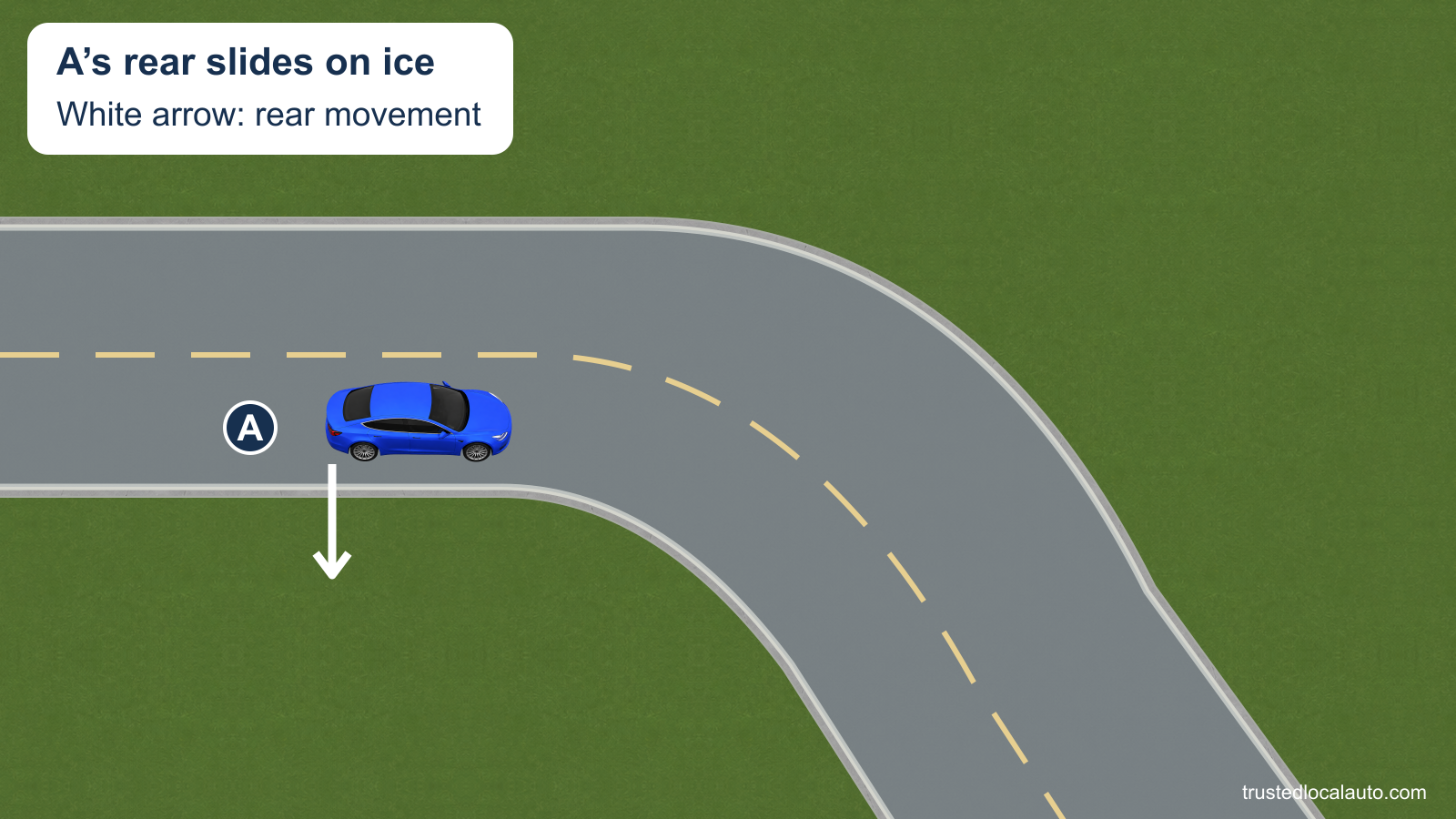 Rear of the car starts to slide on iceYou drive on an icy road, and the rear of your car starts to slide. What should you do?Try this question
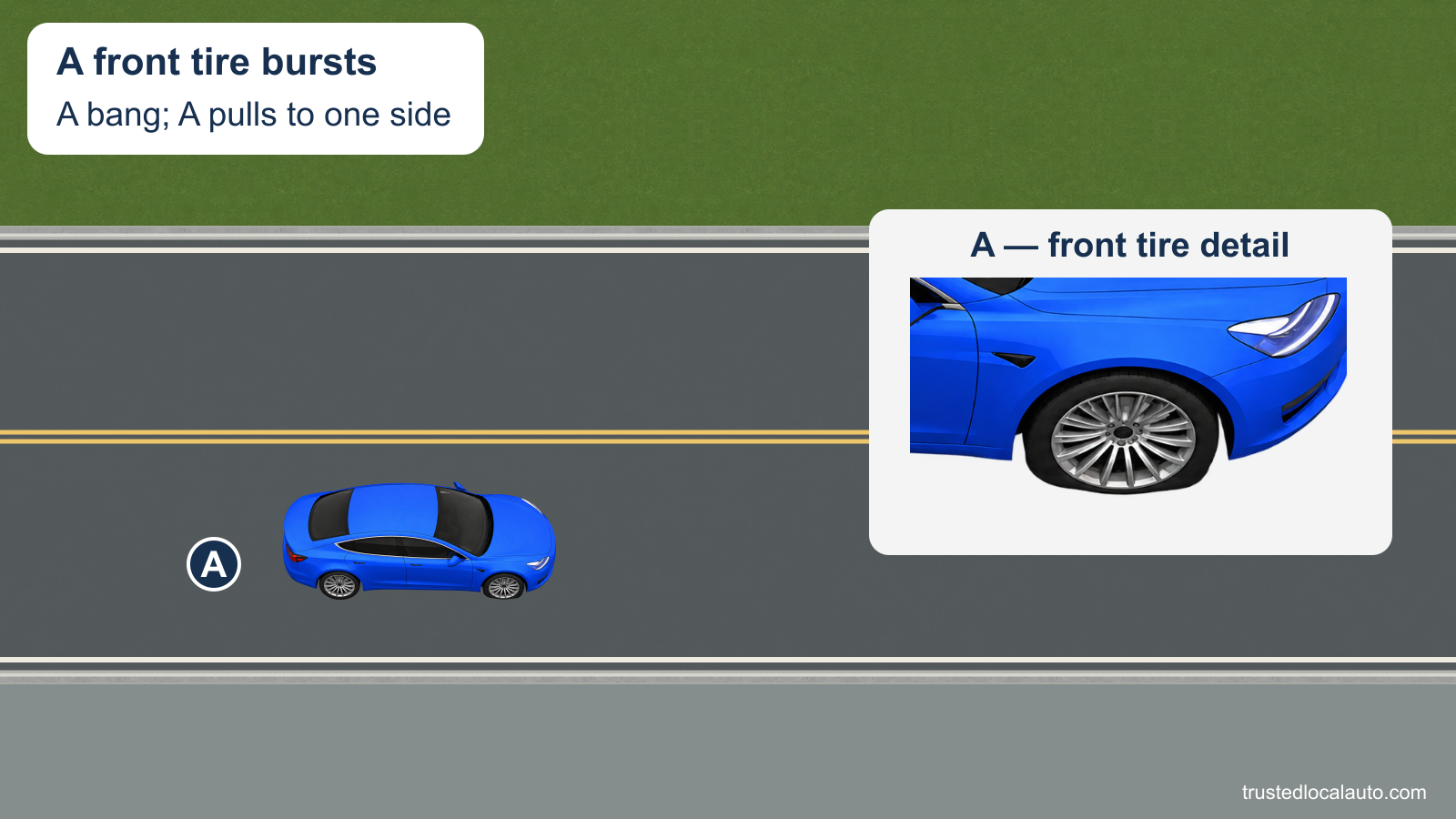 Front tire bursts at highway speedAt highway speed, you hear a loud bang, and the car pulls hard to one side. A front tire has blown out. What should you do first?Try this question
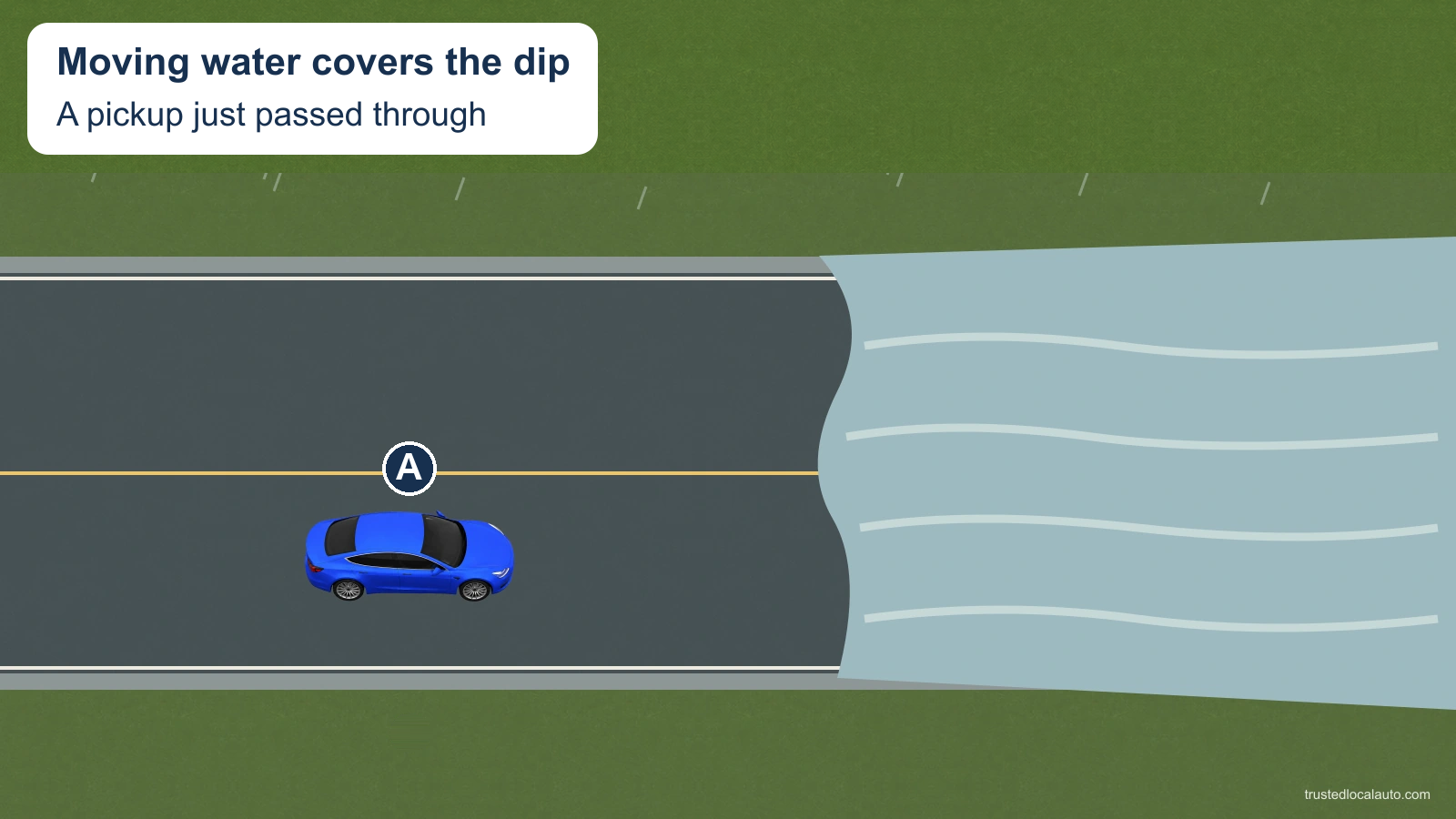 Moving water across a dip in the road aheadAfter a heavy storm, water covers a dip in the road ahead, and you can see it moving across the pavement. It looks only a few inches deep, and a pickup truck just drove through it. What should you do?Try this question
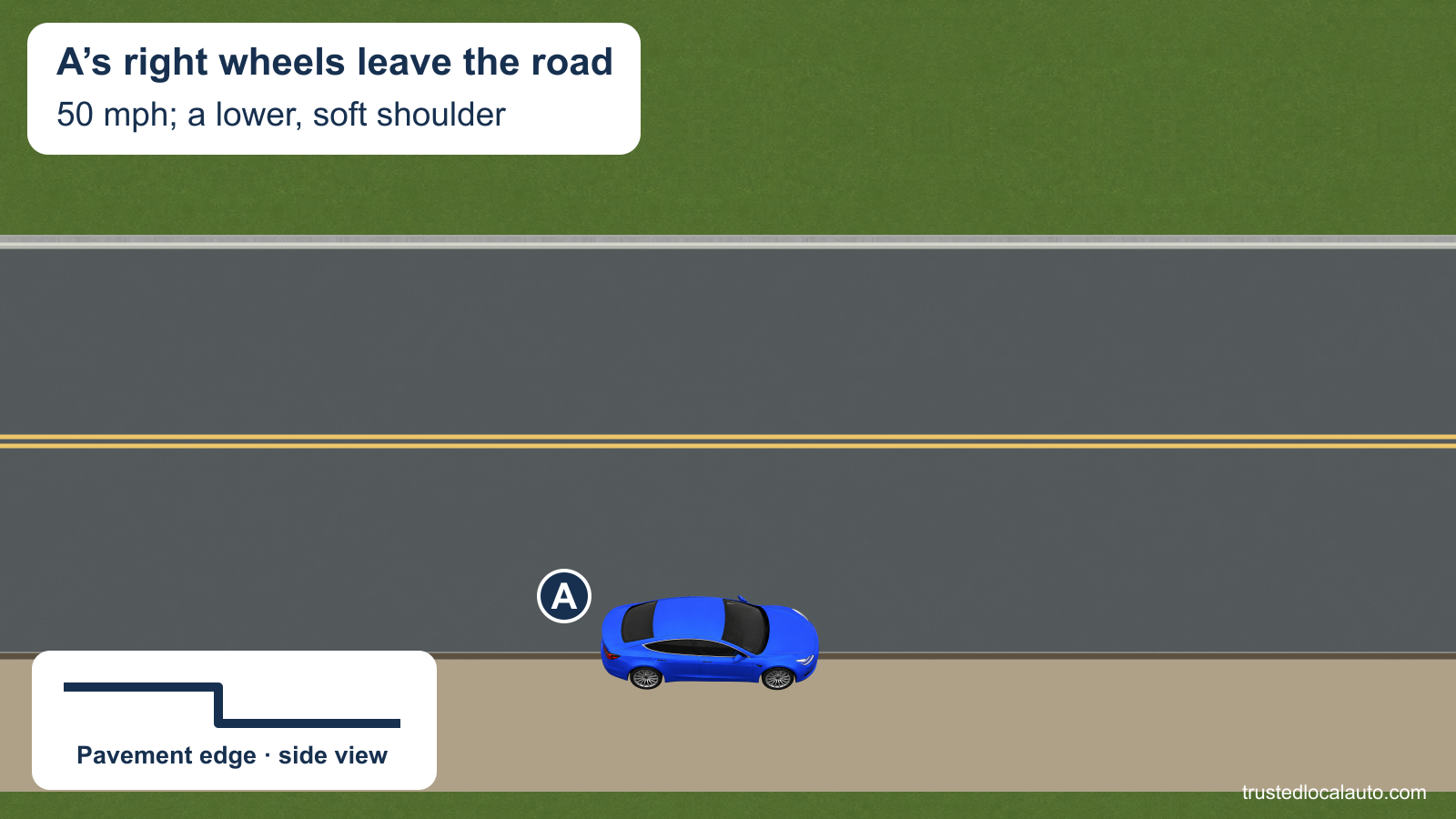 Right wheels drop off the pavement onto the shoulderAt 50 mph, your right wheels drift off the pavement onto a soft shoulder. There is a small drop at the edge of the pavement. What should you do?Try this question
15 text questions
More questions in this topic
- You sit in a parked car with the engine running and the windows closed. You suddenly feel tired and dizzy, and you have a headache. What should you do?
- After an overnight snowfall, you scrape a clear patch on the windshield and on the driver's window. Snow and ice still cover the hood, the other windows, the headlights and the taillights. What should you clear before you drive?
- You are driving on a rural highway at 55 mph with cruise control on. Freezing drizzle starts, and the road surface begins to look wet and shiny. What should you do?
- The car ahead of you stops suddenly. You press the brake pedal hard in your car, which has anti-lock brakes (ABS). The pedal pulses under your foot, and you hear a grinding sound. What should you do?
- At night on a dark rural highway, you use your high beams. A car comes toward you from the other direction. At what distance must you switch to low beams?
- During a blizzard, your car slides into a ditch on a rural highway. You are not hurt, the engine still runs, and you can see a farm light about a mile away. Help may take hours to arrive. What is the safest plan?
- At night, your high beams are on. You must switch to low beams within one distance of an oncoming vehicle and within another distance of a vehicle that you follow. Which pair of distances is correct? Hard
- The car ahead of you stops suddenly. You press the brake pedal hard in your car, which has anti-lock brakes (ABS). The pedal pulses under your foot, and you hear a grinding sound. What should you do? Hard
- At 10 a.m., you drive into fog. No rain or snow falls. You can see people and vehicles only about 450 feet ahead. Which statement is correct? Hard
- At noon, light snow falls. You can still see people and vehicles more than 500 feet ahead. Which lights does Minnesota law require? Hard
- At night on a dark rural highway, your high beams are on. An oncoming car is about 800 feet away. No vehicle is ahead of you in your lane. Which statement is correct? Hard
- Your car hits a utility pole, and a power line falls across the car. Then the car catches fire. What should you do? Hard
- Your car is stranded in a winter storm. Which statement about what to do is NOT correct? Hard
- Two brake problems: in a hard stop in a car with anti-lock brakes (ABS), the pedal pulses; in another car, the brake pedal suddenly sinks to the floor. Which pair of first actions is correct? Hard
- During a blizzard, your car slides into a ditch on a rural highway. You are not hurt, the engine still runs, and help may take hours. You stay in the car. How should you use the engine and the heater? Hard
Minnesota Class D Knowledge
More Class D Knowledge topics
Road rules · 12 topics
- Licensing & Test Readiness25 questions
- Traffic Signals & Road Markings21 questions
- Observation, Speed & Space13 questions
- Intersections & Right-of-Way19 questions
- Turns, Lanes, Passing & Merging25 questions
- Parking, Reversing & Roadside Stops16 questions
- Sharing the Road19 questions
- Freeways & High-Speed Roads15 questions
- School Zones, Railways & Work Areas32 questions
- Weather, Visibility & Emergencies26 questions · This topic
- Vehicle Safety, Documents & Towing19 questions
- Safe & Responsible Driving25 questions
Each question page shows the answer, the explanation and the official source of the question.