
Montana Class D Knowledge topic
Montana Class D Knowledge Weather, Visibility & Emergencies
Handle darkness, poor weather, loss of traction, breakdowns, collisions and emergencies.
26 questions, free with an account. 9 of them are hard. Each one has its answer, an explanation and its official source.
- 9 picture questions
- 17 text questions
- 9 of them hard
9 picture questions
Questions in this topic
Select a question to answer it. The answer and the explanation show after you answer.
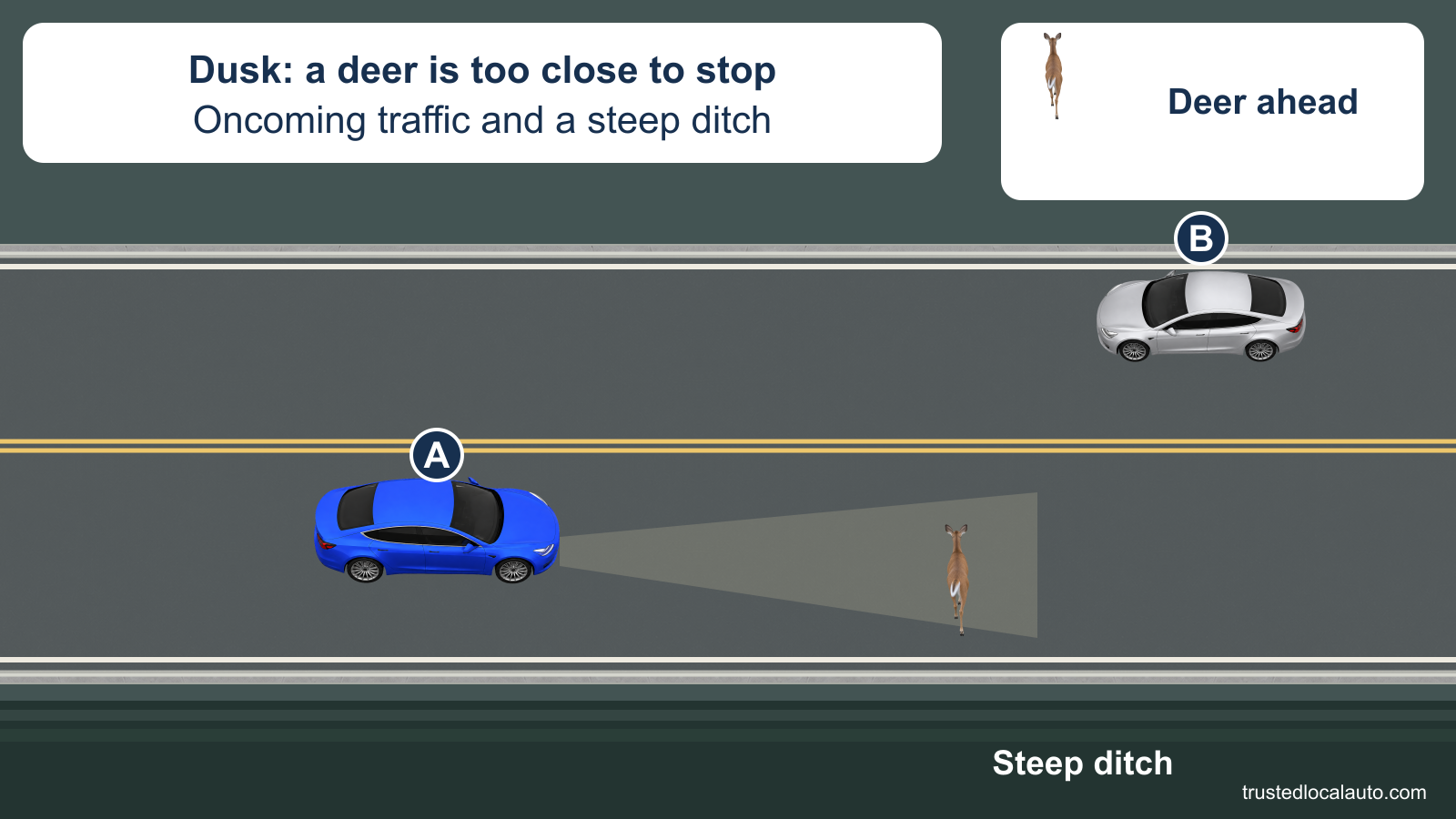 Deer jumps into your laneAt dusk on a two-lane highway, a deer jumps into your lane too close for you to stop. There is oncoming traffic in the other lane and a steep ditch on your right. What is the safest action?Try this question
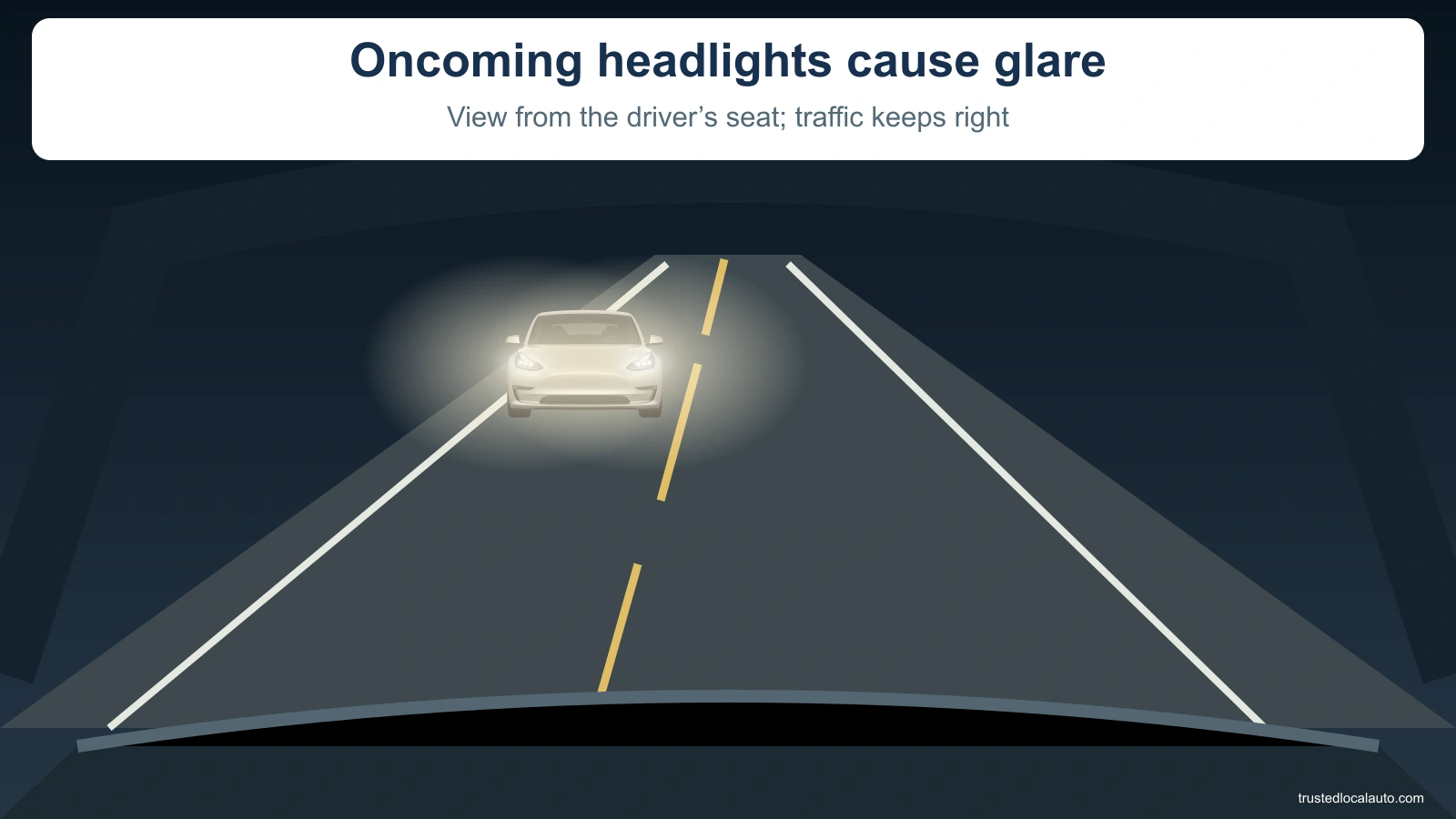 Where to look in oncoming glareAt night, the headlights of an oncoming car make it hard for you to see. Where should you look until the car has passed?Try this question
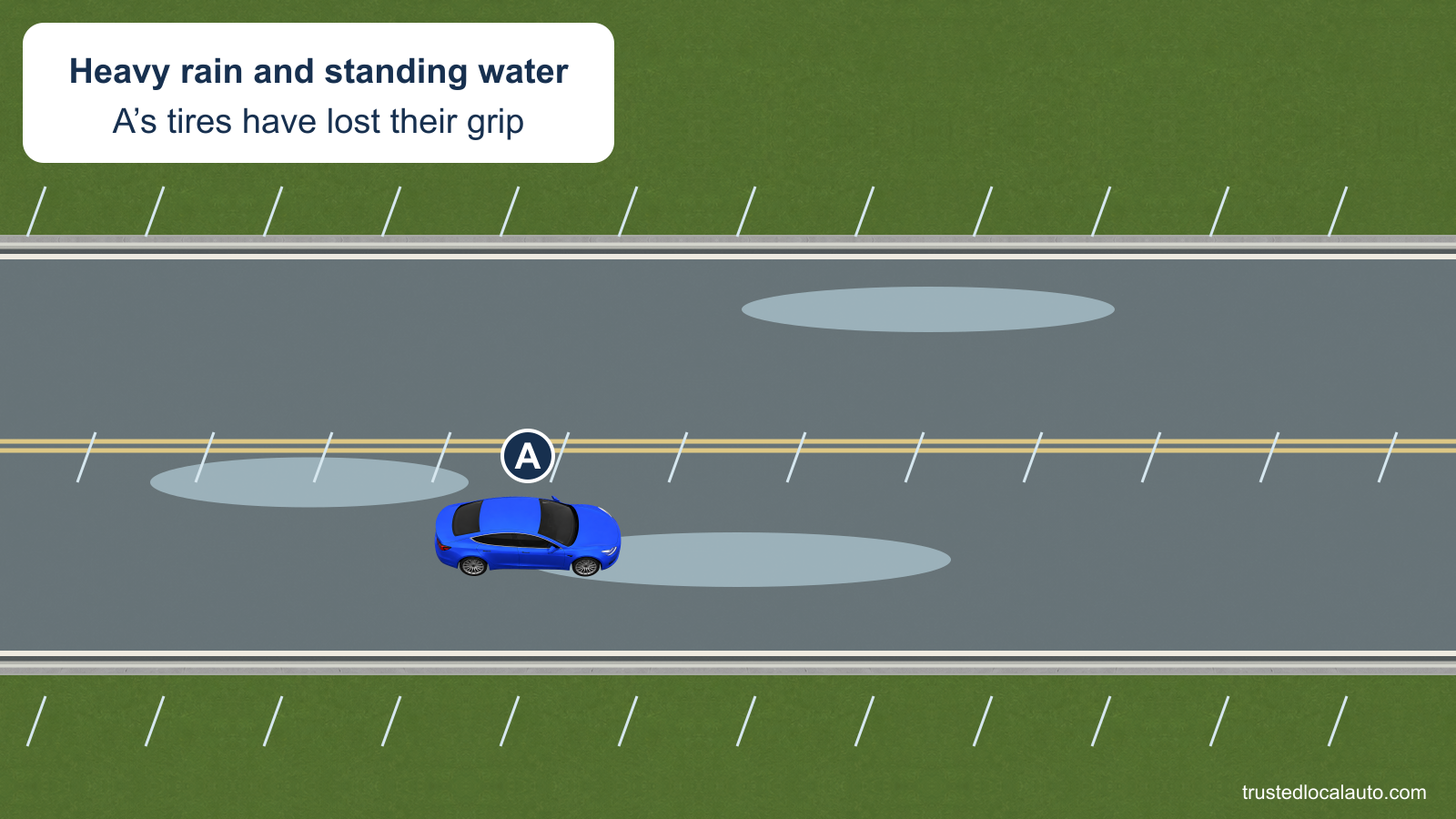 What to do when your tires hydroplaneYou are driving in heavy rain on a road with standing water, and you feel your tires lose their grip on the pavement. What should you do?Try this question
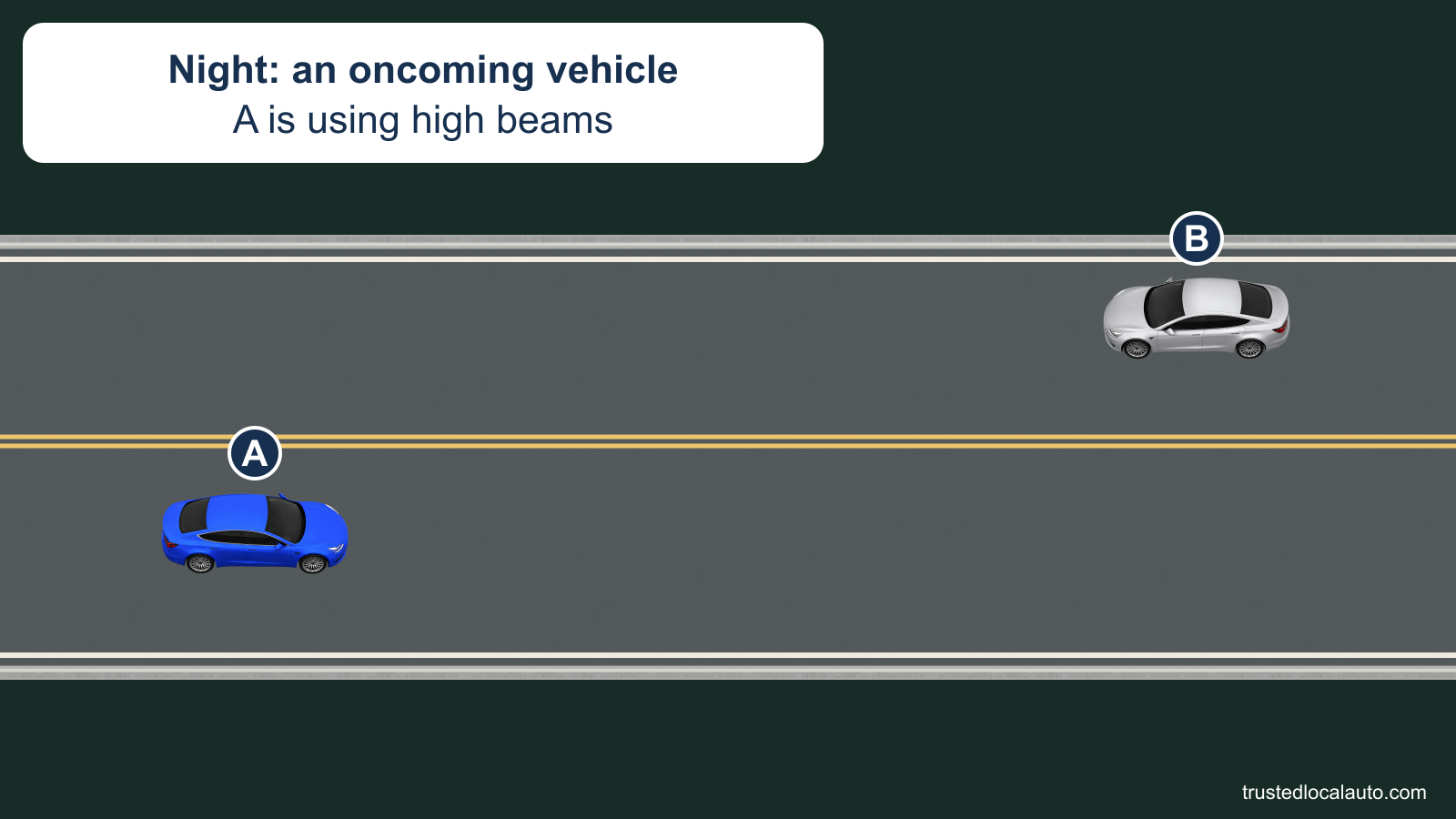 Dimming high beams for oncoming trafficYou are driving at night on a two-lane highway with your high beams on. A vehicle approaches from the opposite direction. When must you switch to your low beams?Try this question
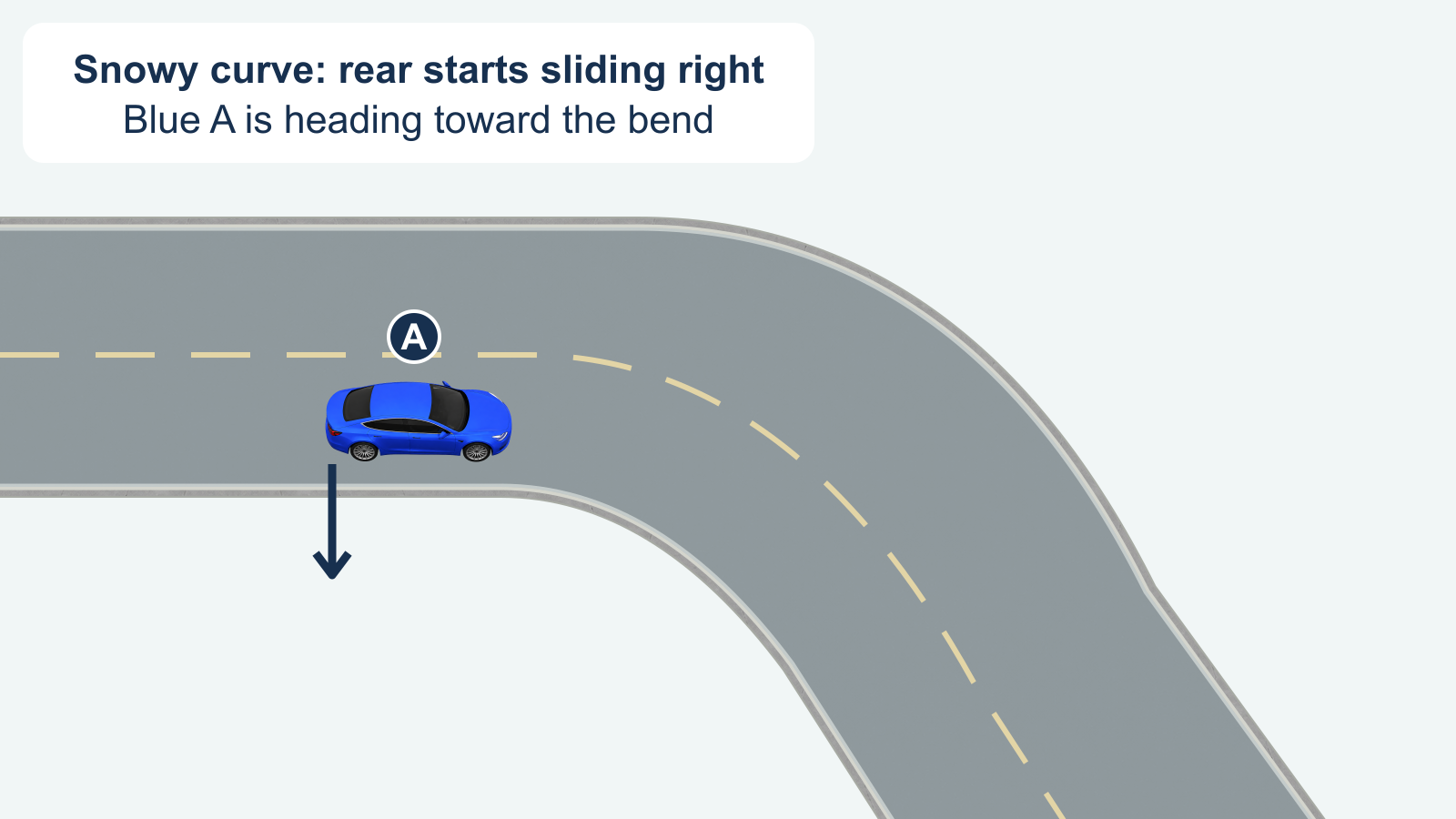 Recovering from a skidOn a snowy curve, the rear of your car starts to slide sideways. What should you do?Try this question
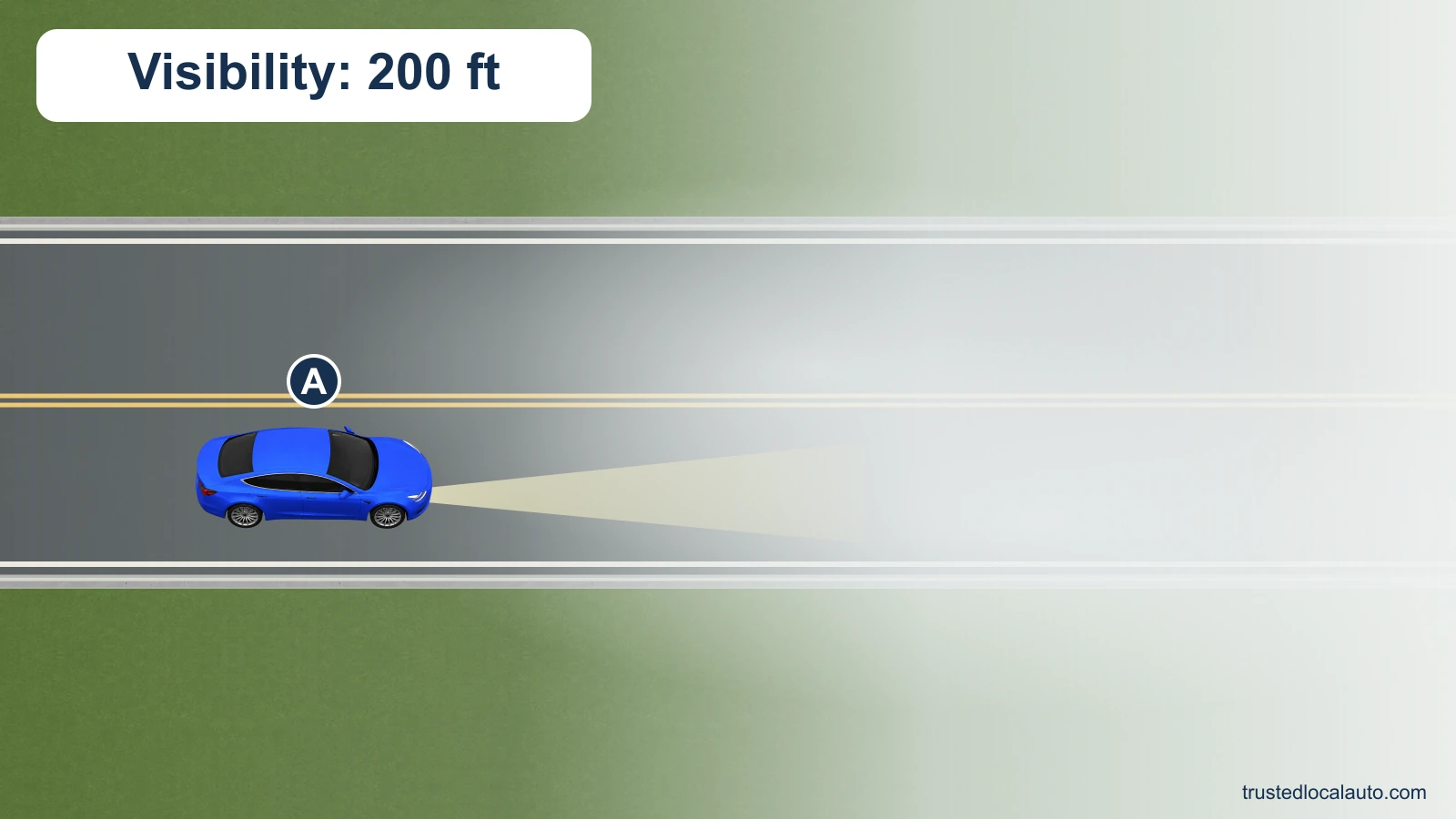 Safe speed when fog limits your viewYou are driving with your headlights on in thick fog, and you can see only about 200 feet ahead. What is the highest speed at which you can still drive safely?Try this question
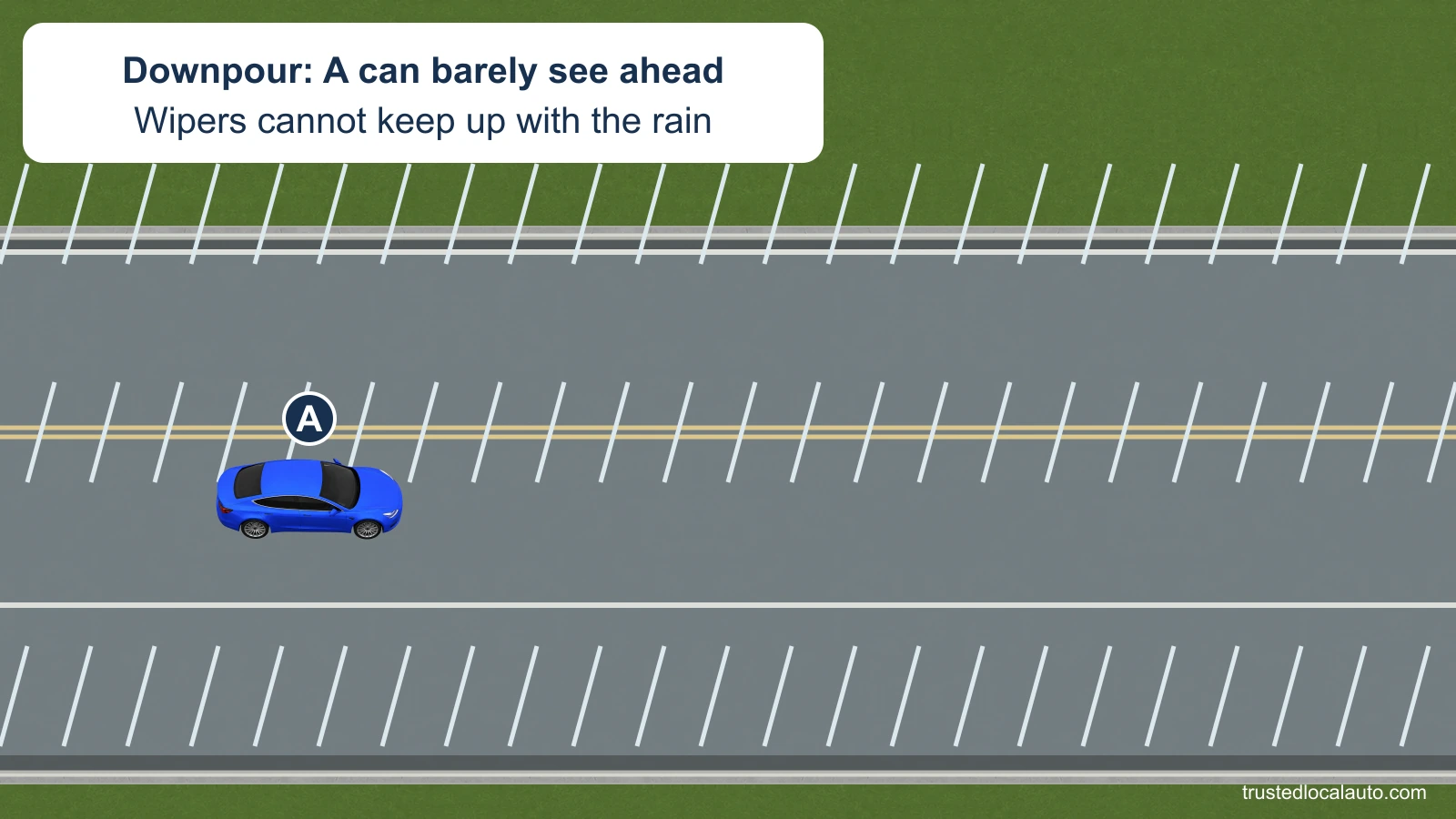 Rain too heavy to see the roadA sudden downpour is so heavy that you can barely see the road ahead, even with your wipers on high. What should you do?Try this question
- Downpour too heavy to see HardA sudden downpour is so heavy that you can barely see the road ahead, even with your wipers on high. A clear shoulder lies to your right. What should you do?Try this question
- Speed in thick fog HardYou are driving with your headlights on in thick fog, and you can see only about 200 feet ahead. Which statement is correct?Try this question
17 text questions
More questions in this topic
- Your car has anti-lock brakes (ABS). The vehicle ahead stops suddenly, and you must stop as fast as possible. How should you brake?
- While you are driving, the brake pedal suddenly sinks and the car barely slows. What should you try first?
- The highway ahead is covered with ice, and you cannot avoid driving on it. How should you adjust your speed?
- Rain starts to fall on a hot summer afternoon after a long dry spell. Why should you take extra care during the first few minutes?
- You turn off the pavement onto a dry, dusty gravel road. How should you change your driving?
- It is 2 p.m. Blowing snow is so thick that you cannot see other vehicles until they are about 300 feet away. What does Montana law require of your headlights?
- You are driving at night on a dark two-lane highway when your headlights suddenly go out. What should you do?
- You stop at a crash where a driver is hurt and still inside a car that is not on fire. Help has been called. What should you do while you wait?
- A front tire blows out while you are driving at highway speed, and the car pulls hard to one side. What should you do?
- On a cold, wet morning the highway looks only damp. Which part of the road is most likely to have ice before the rest of the pavement?
- A downpour is so heavy that you can barely see the road. Which statement is NOT correct? Hard
- Your car does not have anti-lock brakes (ABS). The vehicle ahead stops suddenly, and you must stop as fast as you can. How should you brake? Hard
- It is 2 p.m. Blowing snow is so thick that you can see other vehicles only when they are about 450 feet away. Which statement is correct? Hard
- At night on a two-lane highway, your high beams are on. No vehicle comes toward you, but you are about 400 feet behind another car. Which statement is correct? Hard
- At night your high beams are on. Within what distance must you use low beams for a vehicle that comes toward you, and for a vehicle that you follow? Hard
- In the middle of the day, a snowstorm keeps you from seeing 500 feet ahead. How should you use your lights? Hard
- On dry pavement with good tires and brakes, about how much distance does a car need to react and stop from 30 mph, and from 50 mph? Hard
Montana Class D Knowledge
More Class D Knowledge topics
Road rules · 12 topics
- Licensing & Test Readiness20 questions
- Traffic Signals & Road Markings21 questions
- Observation, Speed & Space17 questions
- Intersections & Right-of-Way16 questions
- Turns, Lanes, Passing & Merging14 questions
- Parking, Reversing & Roadside Stops16 questions
- Sharing the Road15 questions
- Freeways & High-Speed Roads13 questions
- School Zones, Railways & Work Areas32 questions
- Weather, Visibility & Emergencies26 questions · This topic
- Vehicle Safety, Documents & Towing16 questions
- Safe & Responsible Driving22 questions
Each question page shows the answer, the explanation and the official source of the question.