
New York Class D Permit topic
New York Class D Permit Safe & Responsible Driving
Understand fitness, impairment, distraction, legal duties and responsible driving decisions.
46 questions, free with an account. 16 of them are hard. Each one has its answer, an explanation and its official source.
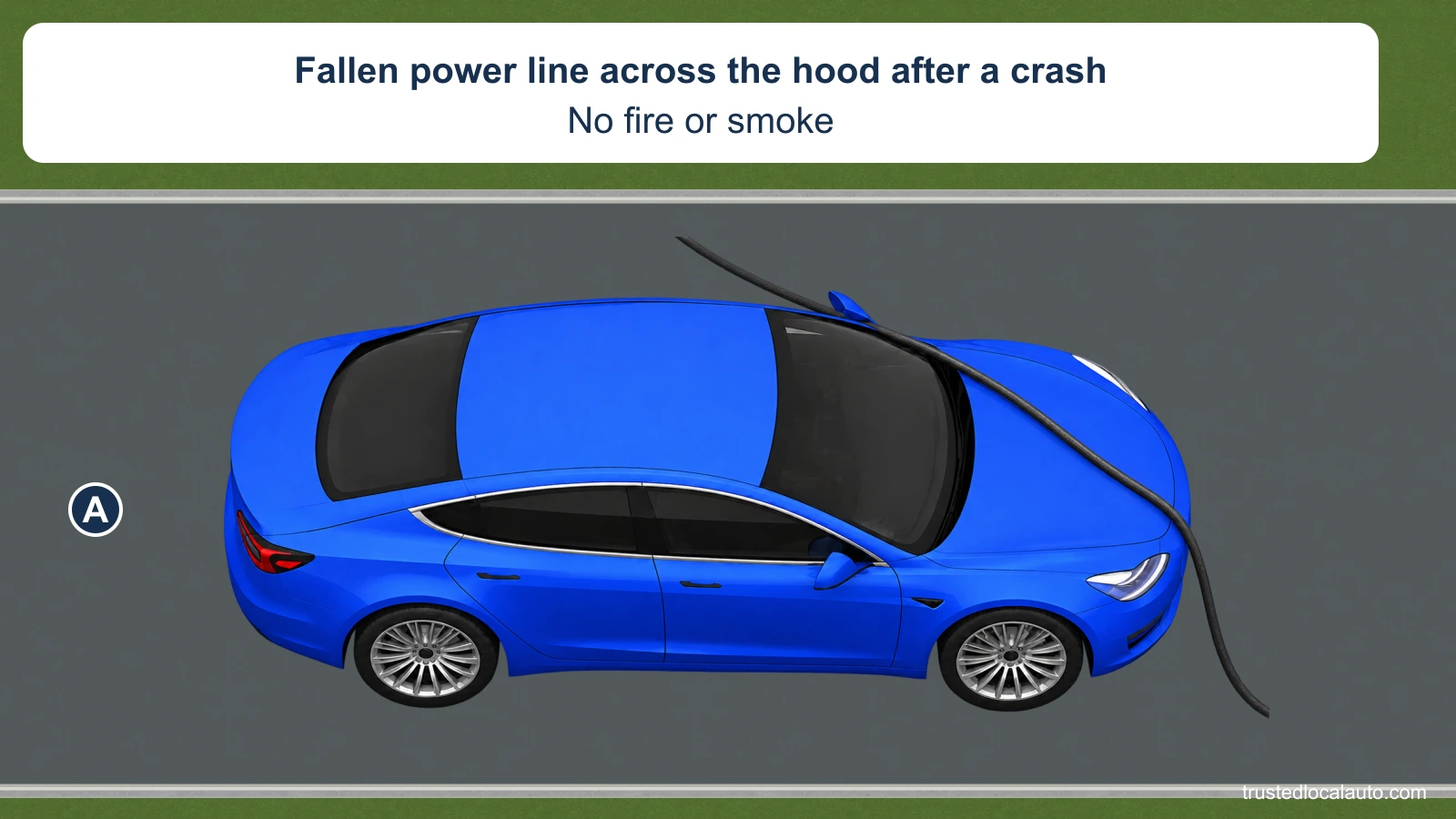
- 1 picture question
- 45 text questions
- 16 of them hard
1 picture question
Questions in this topic
Select a question to answer it. The answer and the explanation show after you answer.
45 text questions
More questions in this topic
- A 35-year-old driver is stopped, and a chemical test shows a BAC of 0.07 percent. Under New York law, which alcohol offense does this level point to?
- For an adult driving a car (not a commercial vehicle), at what BAC does a chemical test result alone show driving while intoxicated (DWI) in New York?
- In New York, aggravated driving while intoxicated (Agg-DWI) carries tougher penalties than a regular DWI. At what BAC does Agg-DWI begin?
- You have a job interview at 9:00 a.m. The drive takes 30 minutes when traffic is light. Which plan best keeps you from driving aggressively?
- Mark finished his fourth beer at 10 p.m. Since then he has had two cups of coffee and a cold shower. At 10:45 p.m. he says that he feels sober and is ready to drive. Which statement is correct?
- A breath test shows that a driver's BAC is 0.06 percent. What does that number describe?
- At a party, Dana drinks three 12-ounce cans of beer and Lee drinks three 1½-ounce shots of 80-proof liquor over the same two hours. They weigh about the same. Which statement is true?
- A police officer arrests you for driving while intoxicated and asks you to take a breath test at the station. Under New York law, what is this test for, and why are you expected to take it?
- Four friends drive together to a concert where alcohol is sold. Which friend would be a proper designated driver?
- Late at night, your eyes keep going out of focus, you drift onto the rumble strips, and you cannot remember the last few miles. What do these signs mean?
- You feel very drowsy on a long highway trip. Home is 40 minutes away, and a rest area is 2 miles ahead. What is the best action?
- A 30-year-old uses cannabis at a friend's home. He feels relaxed but "fine" and wants to drive home. Which statement about New York law is correct?
- Your doctor prescribes a new medicine, and the label warns that it may cause drowsiness. You took the first dose an hour ago and need to drive to work. What should you do?
- Driver A is convicted of a first offense of driving while ability impaired by alcohol (DWAI). Driver B is convicted of a first offense of driving while intoxicated (DWI). How does New York classify these offenses?
- While you drive on a highway, you see a serious crash on the other side of the road. Your phone has no hands-free setup. Under New York law, may you hold the phone to call 911 about the crash?
- You are hosting a party, and some guests will drink alcohol and later drive home. Which plan best lowers the chance that a guest drives while impaired?
- A court orders a driver convicted of DWI to install an ignition interlock in her car. What does this device do?
- After two beers at a game, your friend says that he feels fine and is sure he is under the legal limit, so he can drive home safely. What is true?
- In slow traffic, you bump the car ahead of you and crack its rear bumper. No one is hurt, and the other driver gets out. What does New York law require you to do?
- At 6 p.m., Jen took a cold medicine that can cause drowsiness. At dinner at 7 p.m., a friend offers her a glass of wine. Jen plans to drive home at 10 p.m. Which plan is the safe one?
- You will use a map app on your phone to reach an address you have never visited. When should you enter the address?
- You are about to drive home from a barbecue. Your adult passenger gets in with an open can of beer to finish during the ride. What should you do?
- You are driving on a busy city street when a text message arrives on your phone. What should you do?
- You will drive to a friend's party where alcohol will be served, and you may have a few drinks. When is the best time to decide how you will get home?
- A driver is arrested after weaving between lanes, slurring his words and smelling of alcohol. The station's breath-test machine is out of service, so no chemical test is done. Which statement is correct?
- After a DWI arrest, a driver refuses to take a breath test. Months later, the court finds him not guilty of DWI. What happens to his license because of the refusal?
- A driver behind you honks, flashes the headlights, and then pulls up beside you, shouting and gesturing. What should you do?
- After a lane-change conflict, an angry driver follows you for several miles and makes threats. What should you do?
- New York's zero-tolerance law applies to drivers under age 21. What BAC range does a zero-tolerance violation cover?
- A chemical test shows a BAC of 0.17 percent for a 40-year-old driver who does not drive a commercial vehicle. Which offense does this level point to? Hard
- A 40-year-old driver who does not drive a commercial vehicle takes a chemical test. Which result alone points to DWAI and not to DWI? Hard
- A 35-year-old driver who does not drive a commercial vehicle takes a chemical test. Which pair gives the BAC levels where DWAI and DWI start for this driver? Hard
- Which statement about alcohol in the body is NOT correct? Hard
- You feel very drowsy on a highway trip and stop at a rest area, away from traffic. You plan to take a nap and have a coffee. Which pair is correct? Hard
- You feel very drowsy on a highway trip. A rest area is 2 miles ahead. Which statement is correct? Hard
- What is the maximum jail term for a first DWAI by alcohol, and for a first DWI? Hard
- Which first offense does New York classify as a traffic infraction, not a crime? Hard
- After a DWI arrest, a driver refuses a chemical test for the first time. A DMV hearing confirms the refusal. Later, the court finds him not guilty of DWI. What happens to his license because of the refusal? Hard
- Your phone has no hands-free setup, and you are driving. Which of these hand-held calls is legal? Hard
- A 20-year-old driver is stopped, and a chemical test shows a BAC of 0.04 percent. Which statement is correct? Hard
- One 12-ounce beer is one standard drink. What are the sizes of one standard drink of wine and one standard drink of 80-proof liquor? Hard
- A driver finishes four standard drinks and then has no more. On average, about how long does the body need to remove that alcohol? Hard
- A first conviction brings a fine of $1,000 to $2,500, up to one year in jail, a license revocation of at least one year and a court order for an ignition interlock. Which offense is it? Hard
- In the same hour, Dana drinks two 5-ounce glasses of wine and Lee drinks two 1½-ounce shots of 80-proof liquor. They weigh about the same. Which statement is true? Hard
- A 19-year-old driver has a BAC of 0.08 percent. Which statement is correct? Hard
New York Class D Permit
More Class D Permit topics
Road rules · 11 topics
- Traffic Signals & Road Markings32 questions
- Observation, Speed & Space11 questions
- Intersections & Right-of-Way16 questions
- Turns, Lanes, Passing & Merging21 questions
- Parking, Reversing & Roadside Stops21 questions
- Sharing the Road27 questions
- Freeways & High-Speed Roads4 questions
- School Zones, Railways & Work Areas37 questions
- Weather, Visibility & Emergencies24 questions
- Vehicle Safety, Documents & Towing32 questions
- Safe & Responsible Driving46 questions · This topic
Each question page shows the answer, the explanation and the official source of the question.