
Prince Edward Island Class 7 topic
Prince Edward Island Class 7 Turns, Lanes, Passing & Merging
Choose the correct lane and position for turns, lane changes, passing, merging and shoulder use.
13 questions, free with an account. 4 of them are hard. Each one has its answer, an explanation and its official source.
- 5 picture questions
- 8 text questions
- 4 of them hard
5 picture questions
Questions in this topic
Select a question to answer it. The answer and the explanation show after you answer.
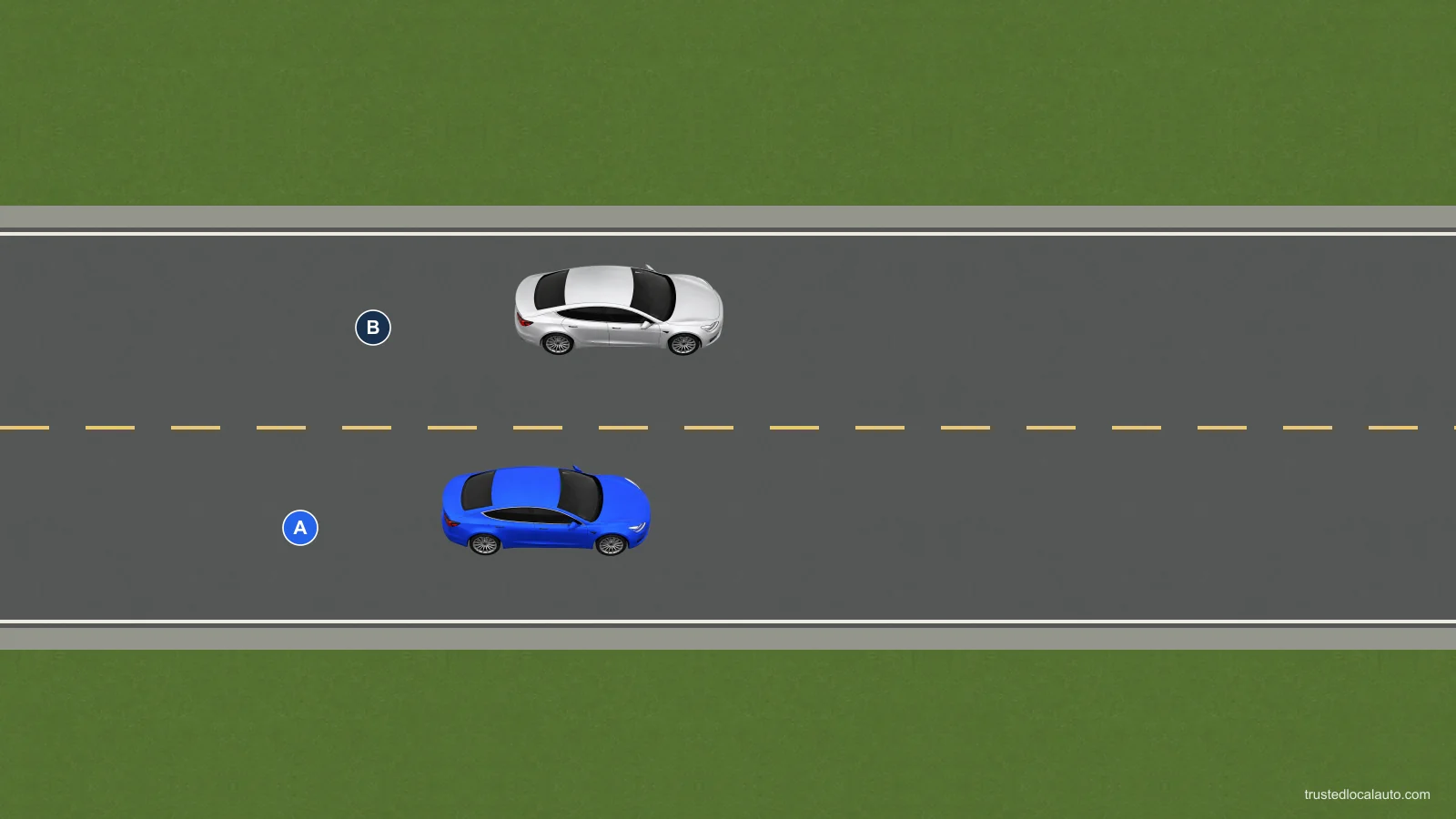 Another Vehicle Is PassingSilver B is overtaking blue A on the left on this two-way road. What must A’s driver do while B passes?Try this question
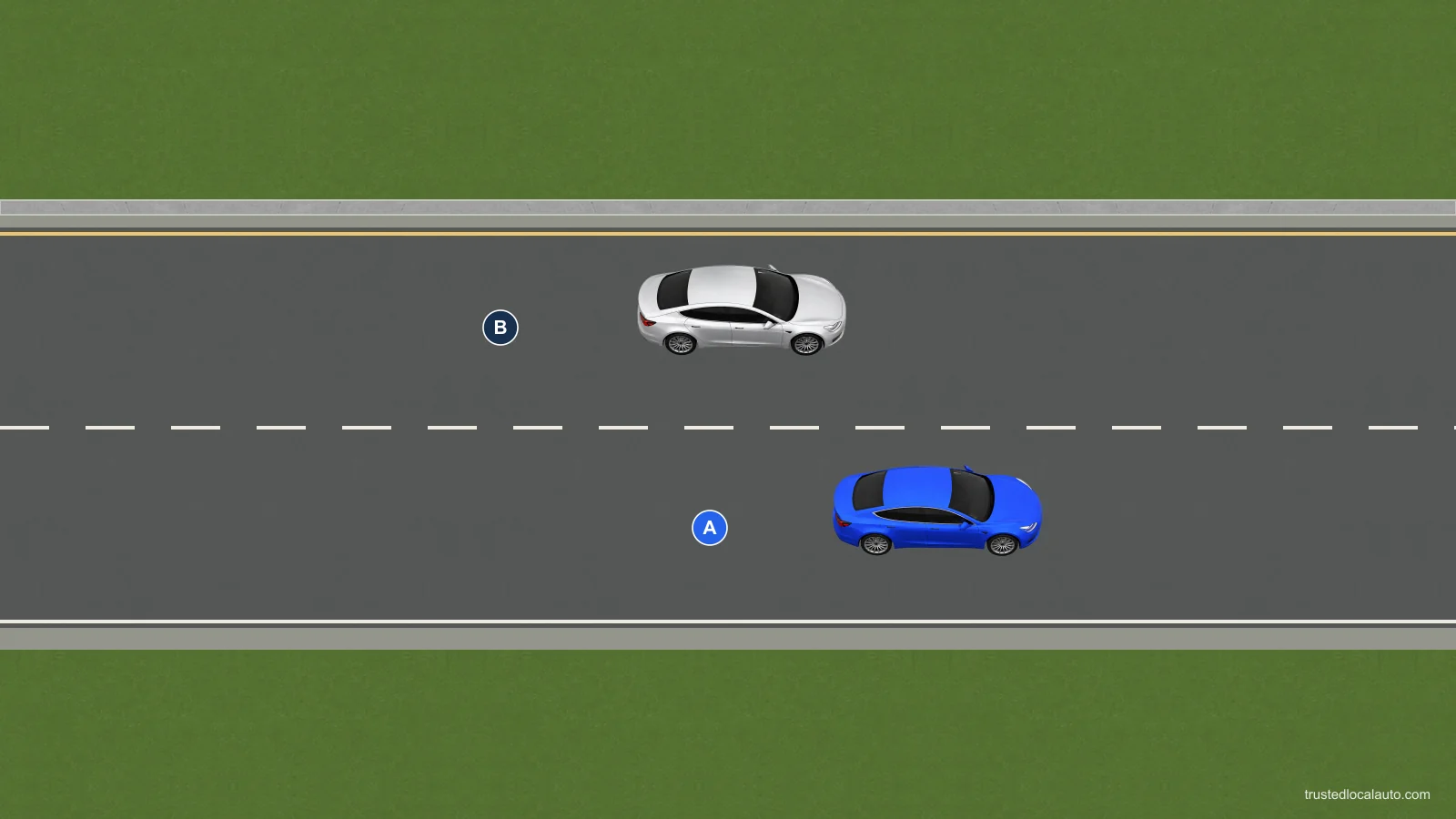 Changing LanesA wants to move into the lane on its left, where B is near A’s left rear. What should A’s driver do before moving?Try this question
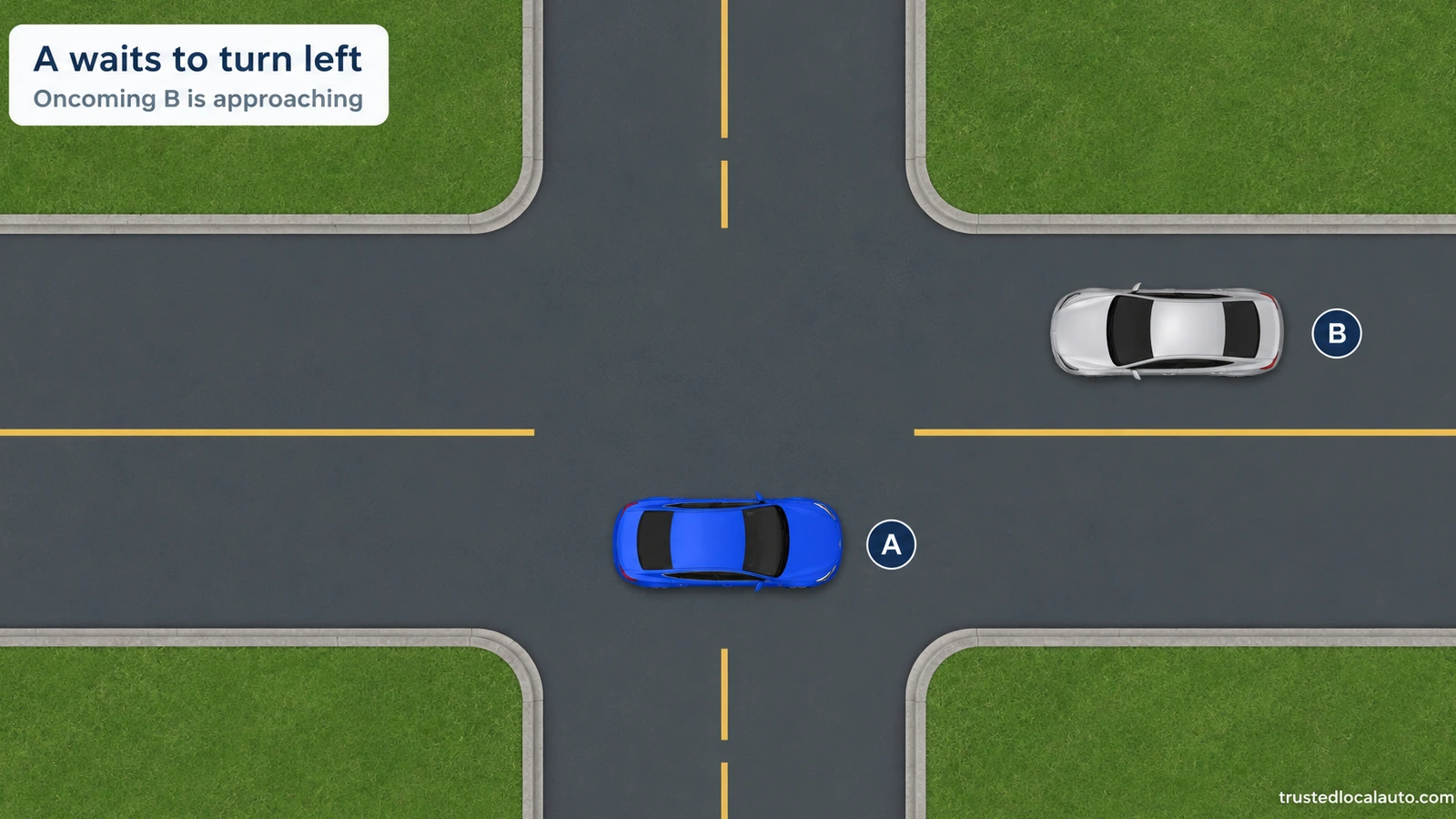 Waiting to Turn LeftA has entered the intersection legally and is stopped while waiting for oncoming B to pass before turning left. How should A’s front wheels be positioned while waiting?Try this question
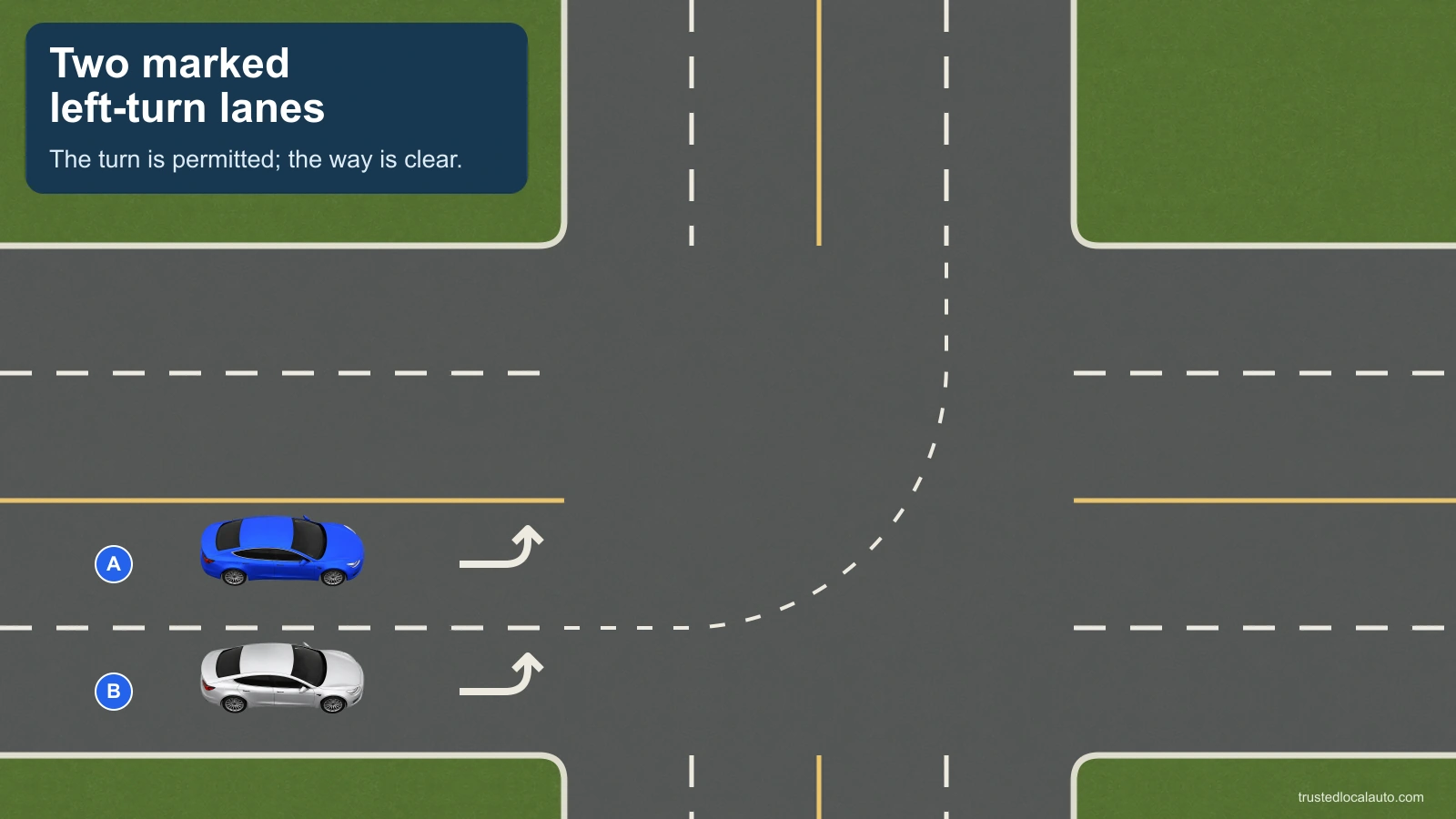 Two Lanes Marked for the Same TurnTwo lanes are marked for the same turn, and guide markings show the course from each lane through the intersection. Why should you follow the course marked for your lane?Try this question
- Front wheels while waiting to turn left HardA has entered the intersection legally and is stopped, waiting for oncoming B to pass before A turns left. Which statement about A's front wheels is correct?Try this question
8 text questions
More questions in this topic
- On a two-way road wide enough for one line of traffic in each direction, you are meeting an oncoming vehicle. How should you position your vehicle?
- You are behind a slower car on a two-way road with one lane in each direction. Before moving left to pass, what must you establish?
- You plan to turn at the next intersection. Which preparation makes the turn safer and more predictable?
- You are approaching a planned turn in normal conditions. When should you begin signalling?
- You are driving on a curve. There is no No U-turn sign and you can see more than 150 metres in both directions. May you make a U-turn on the curve?
- You plan a turn in normal conditions. What are the minimum distances to start your signal before the turn in the city and, as the handbook advises, on highways? Hard
- In the city, in normal conditions, a driver starts to signal about 20 metres before a planned turn. Which statement is correct? Hard
- You are driving on a curve. There is no No U-turn sign, and you can see more than 150 metres in both directions. Which statement about a U-turn on this curve is correct? Hard
Prince Edward Island Class 7
More Class 7 topics
Road rules · 12 topics
- Licensing & Test Readiness26 questions
- Traffic Signals & Road Markings3 questions
- Observation, Speed & Space7 questions
- Intersections & Right-of-Way12 questions
- Turns, Lanes, Passing & Merging13 questions · This topic
- Parking, Reversing & Roadside Stops5 questions
- Sharing the Road7 questions
- Freeways & High-Speed Roads3 questions
- School Zones, Railways & Work Areas1 question
- Weather, Visibility & Emergencies15 questions
- Vehicle Safety, Documents & Towing25 questions
- Safe & Responsible Driving17 questions
Road signs · 1 topic
Each question page shows the answer, the explanation and the official source of the question.