
Quebec Class 5 topic
Quebec Class 5 Sharing the Road
Drive safely around pedestrians, cyclists, buses, trucks, motorcycles and emergency vehicles.
28 questions, free with an account. 8 of them are hard. Each one has its answer, an explanation and its official source.
- 13 picture questions
- 15 text questions
- 8 of them hard
13 picture questions
Questions in this topic
Select a question to answer it. The answer and the explanation show after you answer.
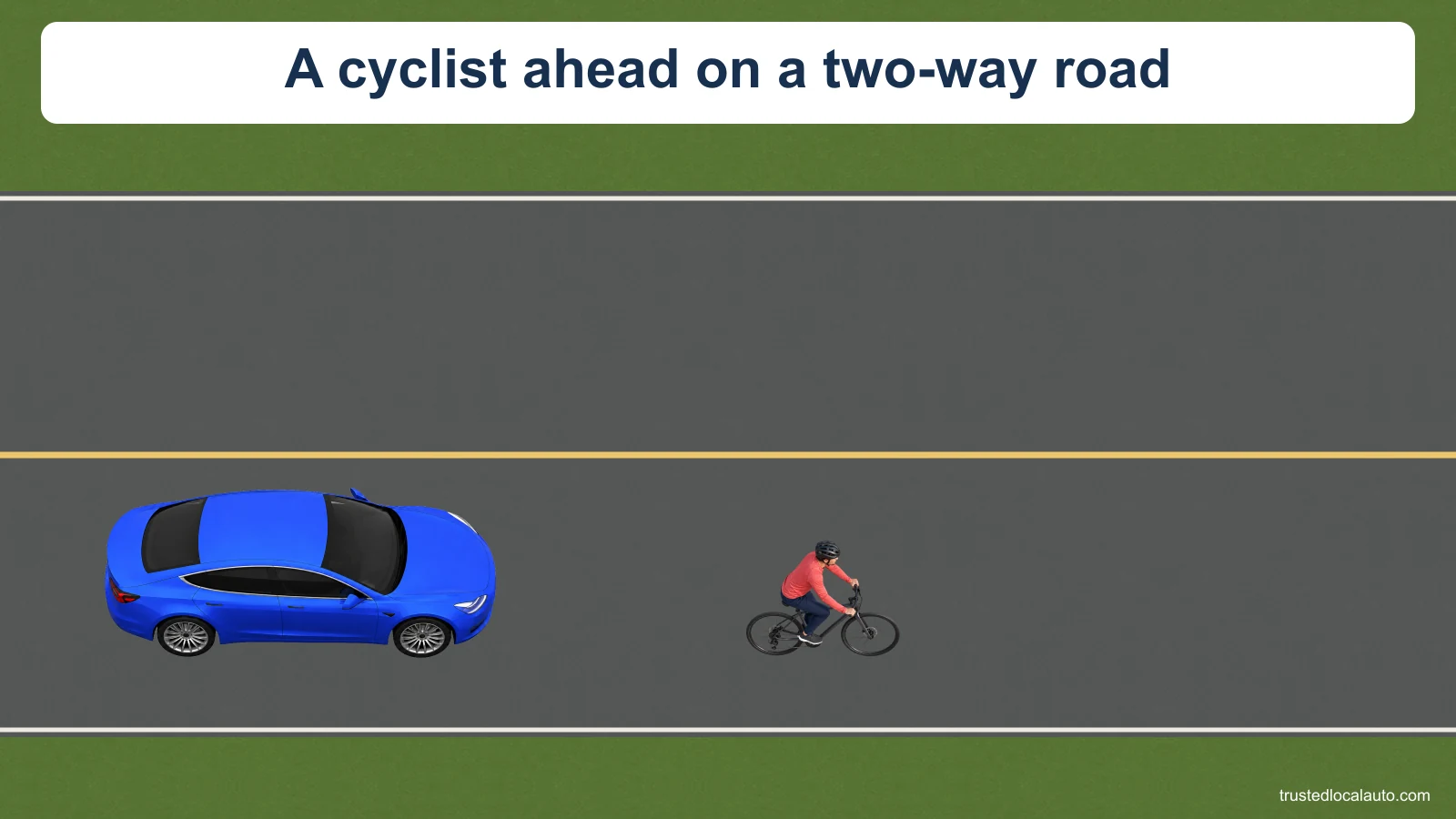 A Cyclist and a Solid Centre LineMay a driver cross a solid centre line to pass a cyclist in Quebec?Try this question
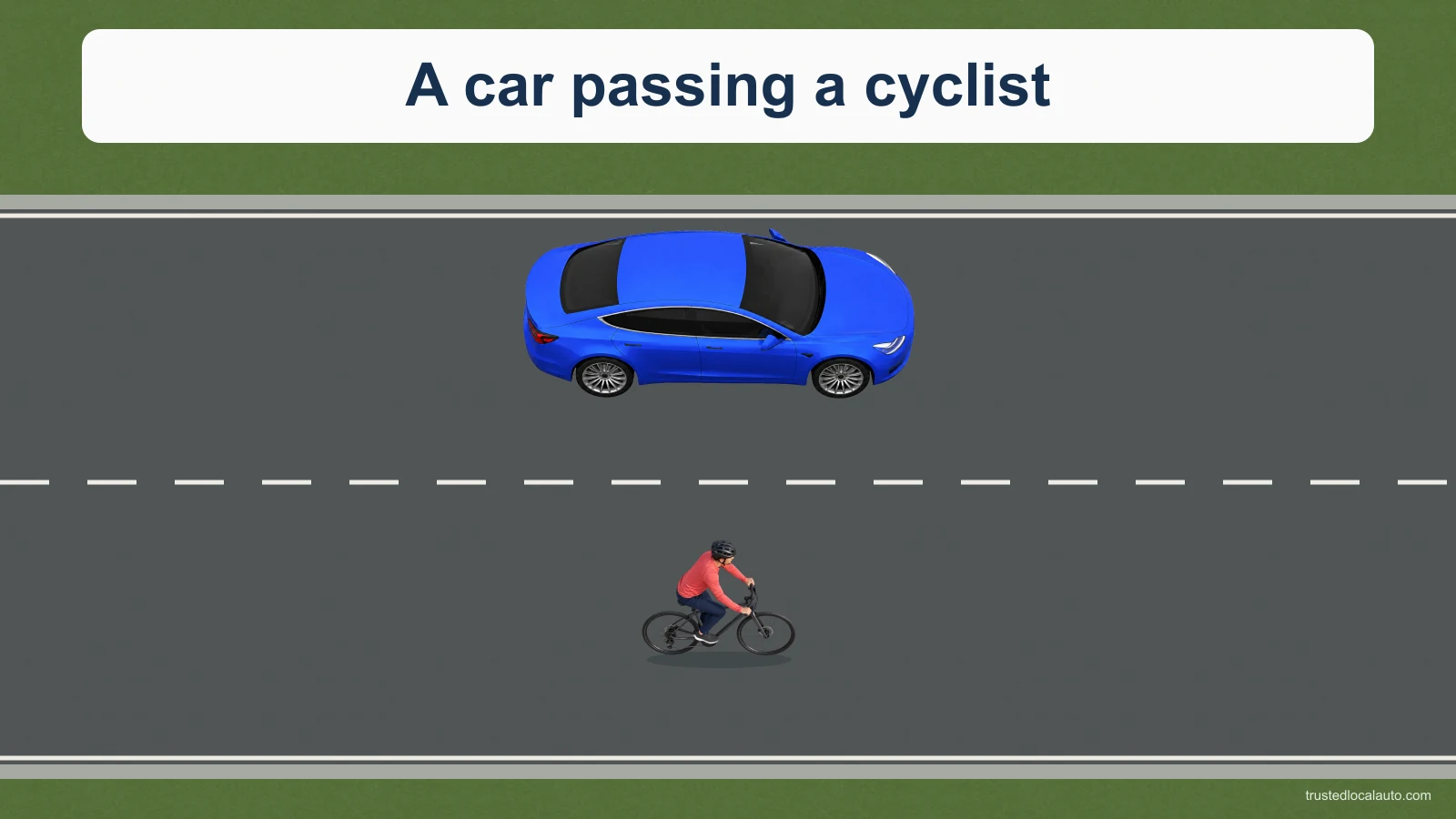 Passing a Cyclist in QuebecYou are passing a cyclist riding on the roadway in Québec, outside a designated shared street or bicycle boulevard. What minimum clearance and speed adjustment are required?Try this question
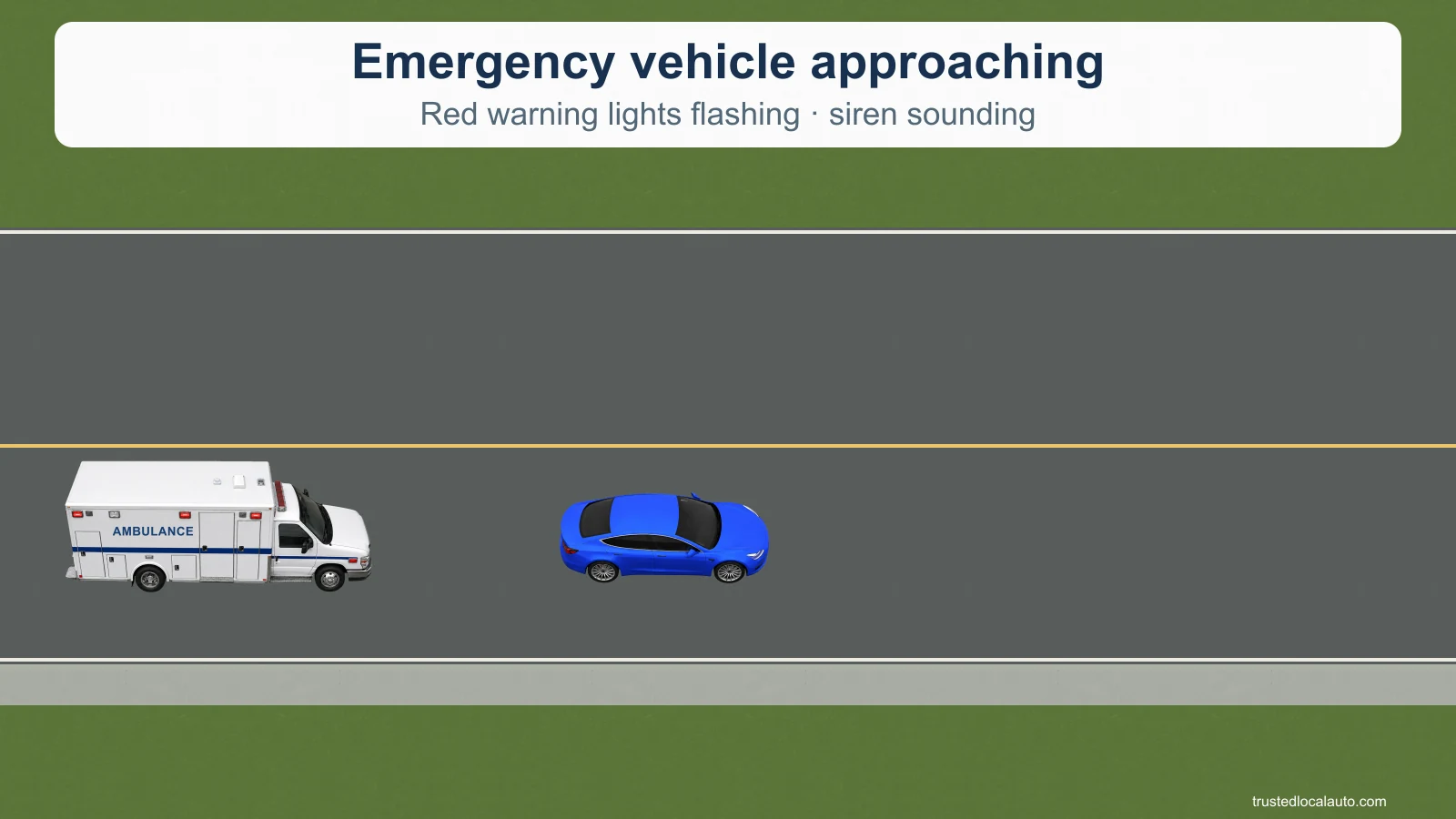 An Emergency Vehicle ApproachesAn emergency vehicle approaches with its warning lights or siren operating. What must you do?Try this question
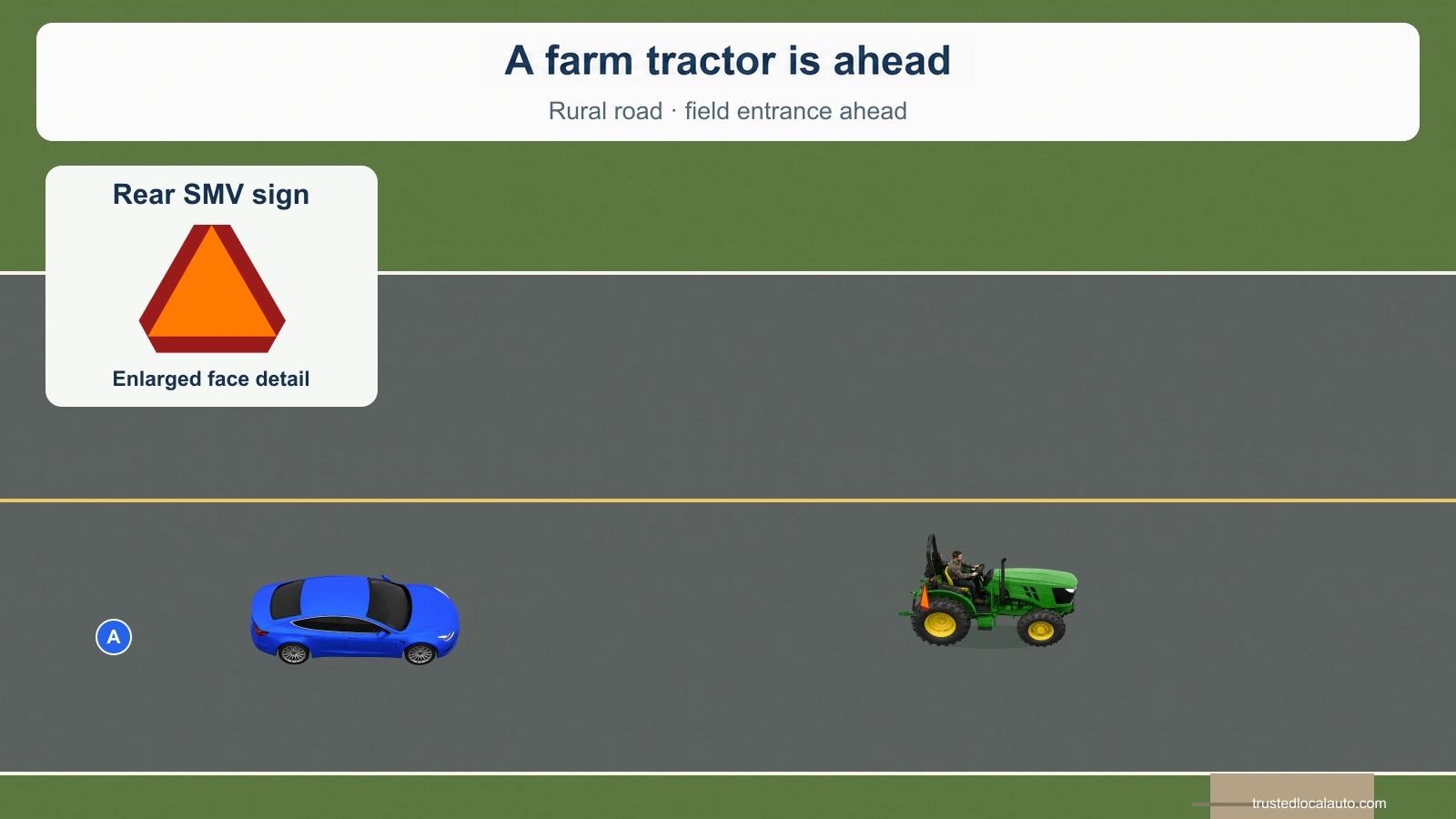 Following Farm EquipmentA farm tractor is ahead near a field entrance. What should you anticipate?Try this question
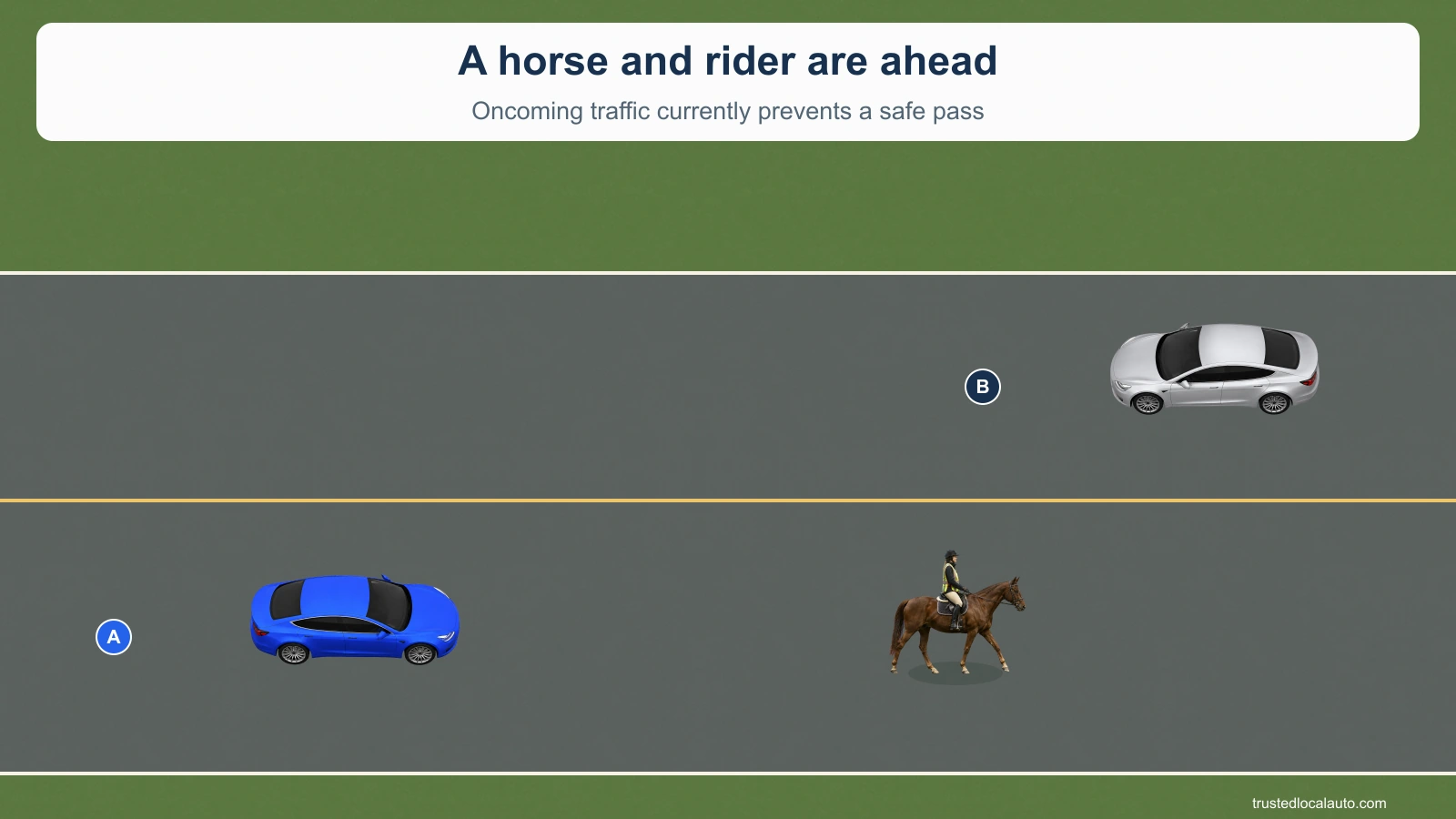 A Horse and Rider AheadA horse and rider are ahead and oncoming traffic prevents a safe pass. What should you do?Try this question
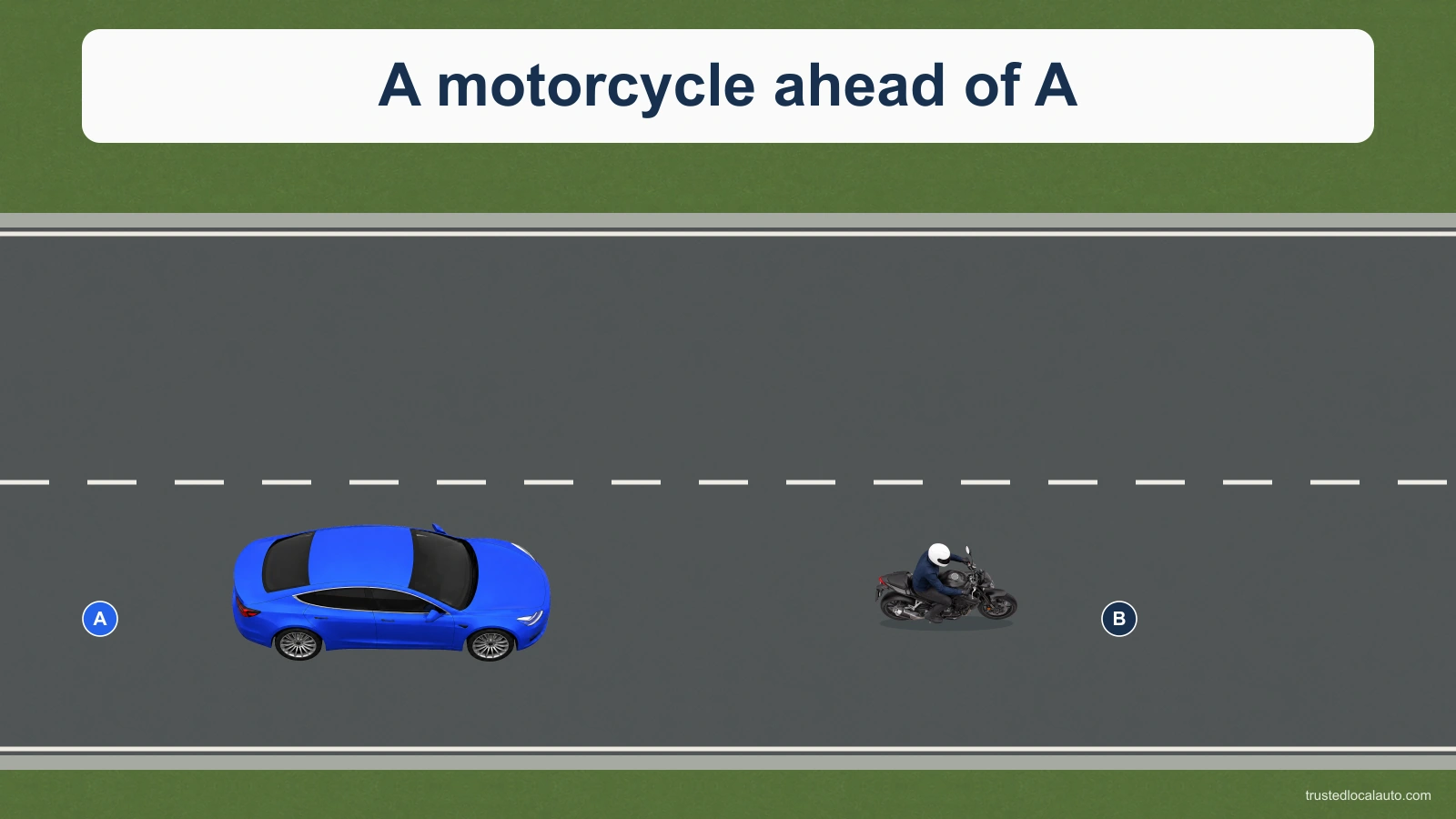 Sharing the Road With a MotorcycleCar A follows motorcycle B. How should A treat the motorcycle’s lane space?Try this question
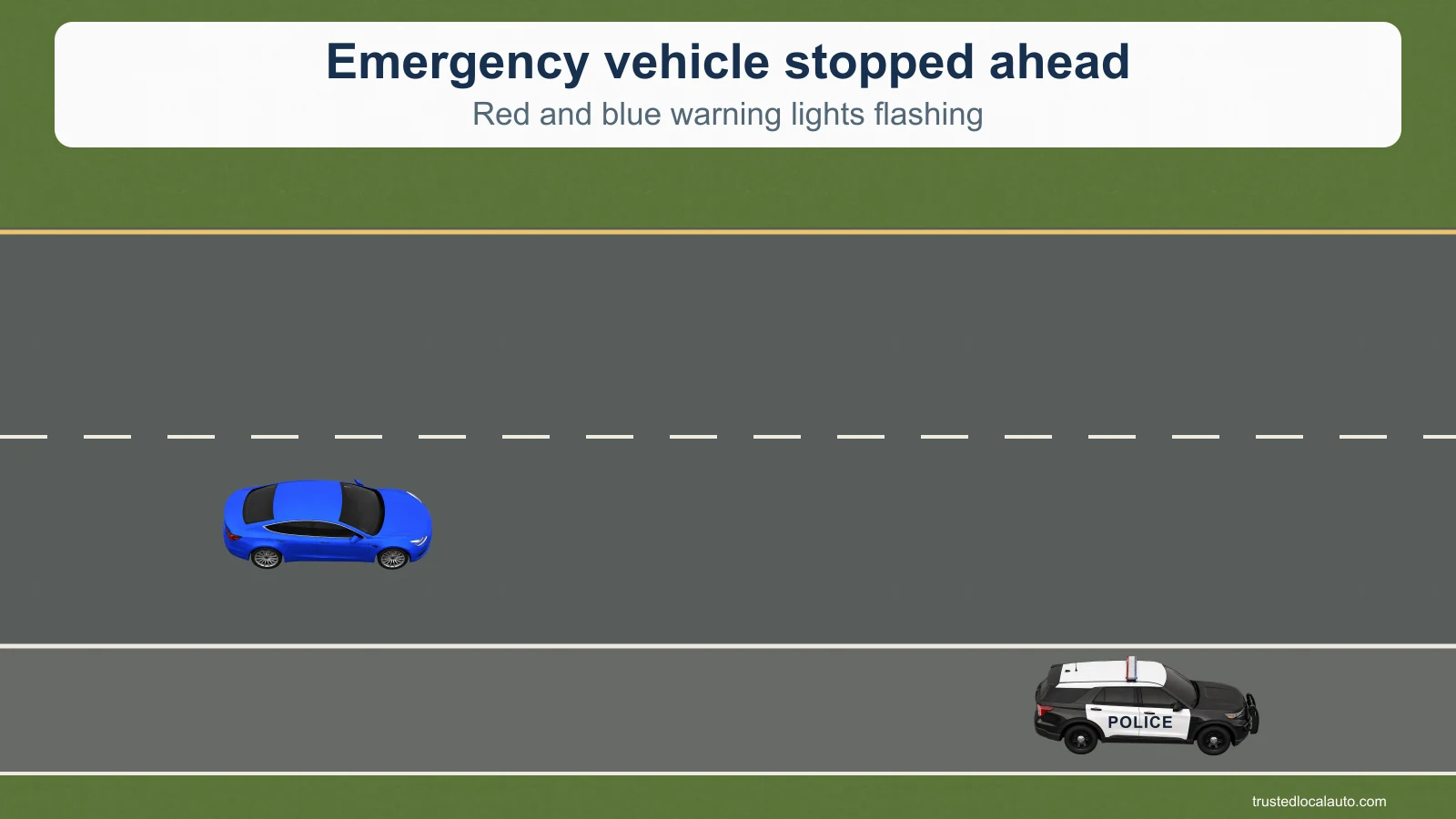 A Vehicle Stopped on the ShoulderA police vehicle with flashing warning lights is stopped on the right shoulder. Another lane goes in your direction and you can enter it safely. What must you do as you approach?Try this question
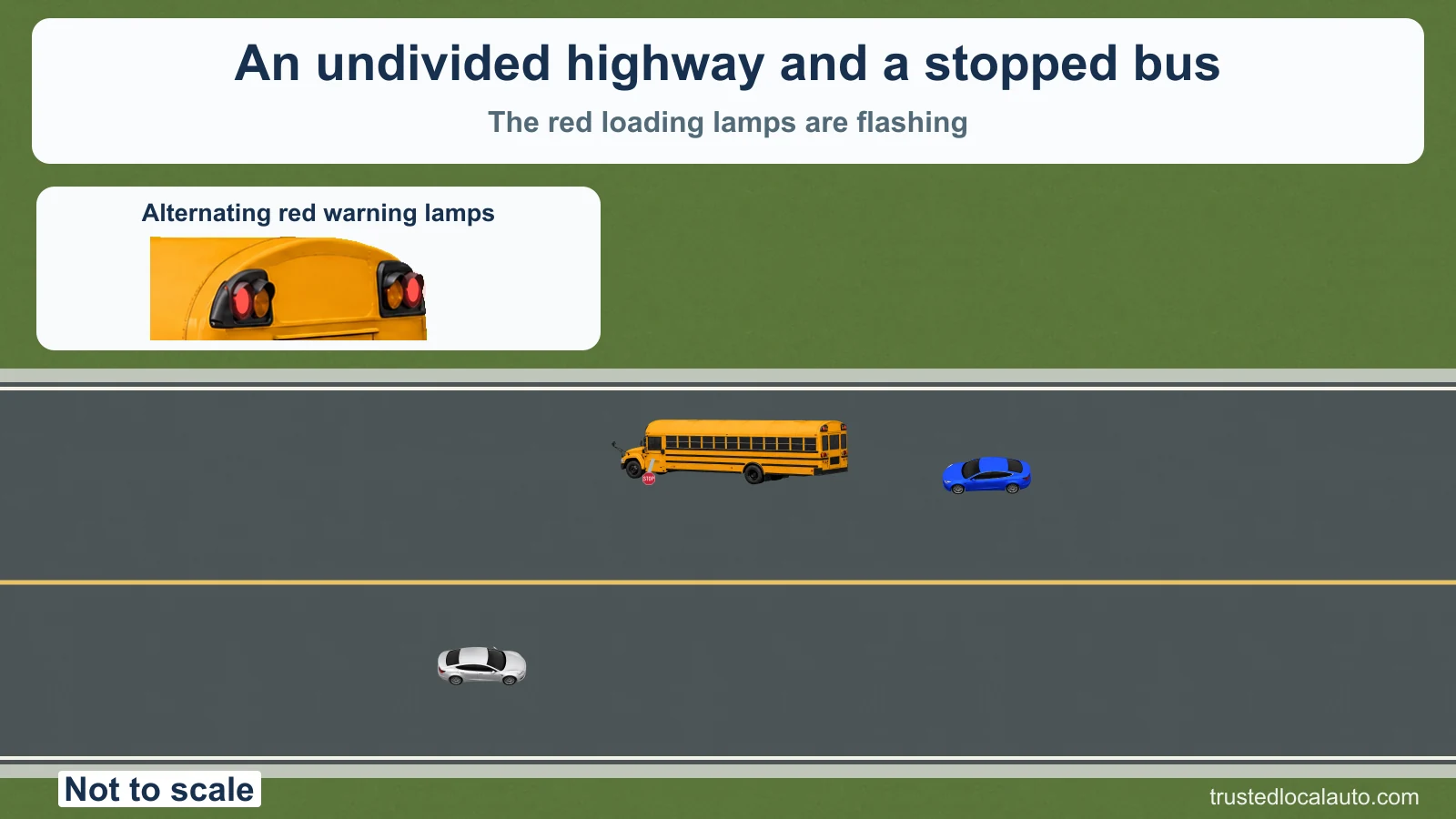 An Active School-Bus WarningOn an undivided Quebec road, you approach a school bus transporting pupils with flashing red lights or its stop arm activated. What must you do?Try this question
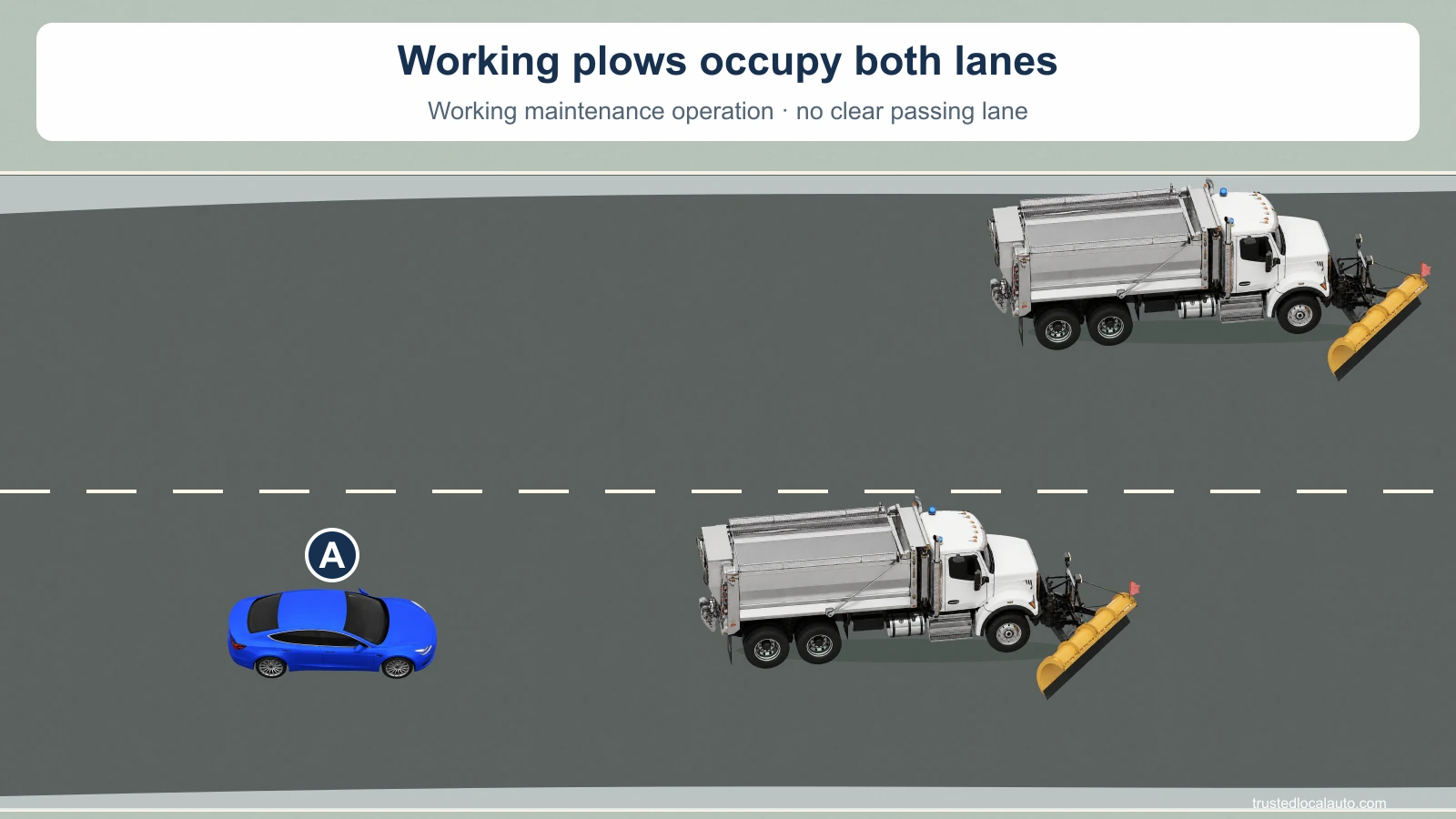 Working Snowplows AheadWorking snowplows occupy the lanes ahead, with no clear passing lane. What is the safest response?Try this question
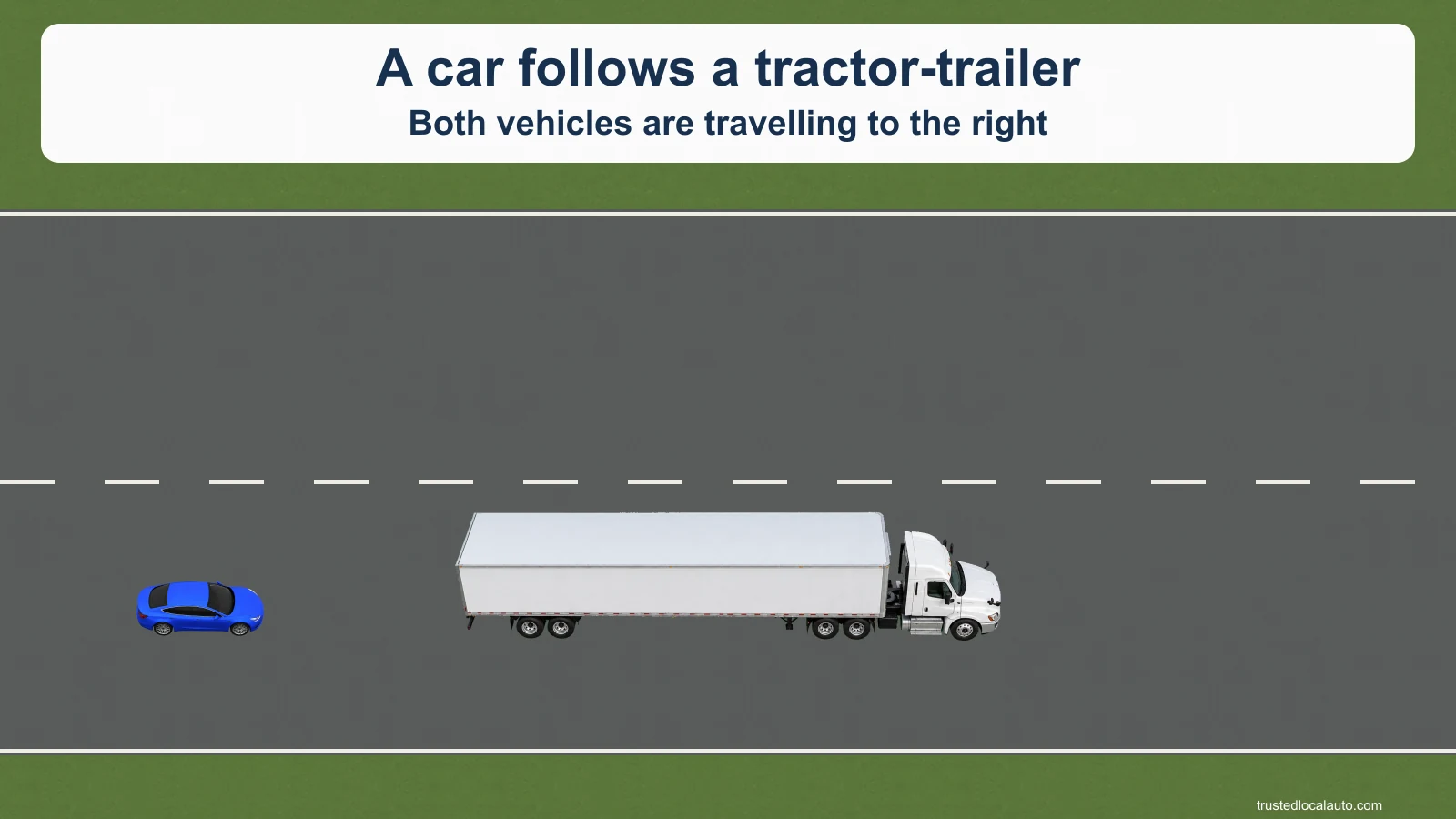 Driving Near a Heavy VehicleWhy should a driver avoid staying close beside or behind a heavy truck?Try this question
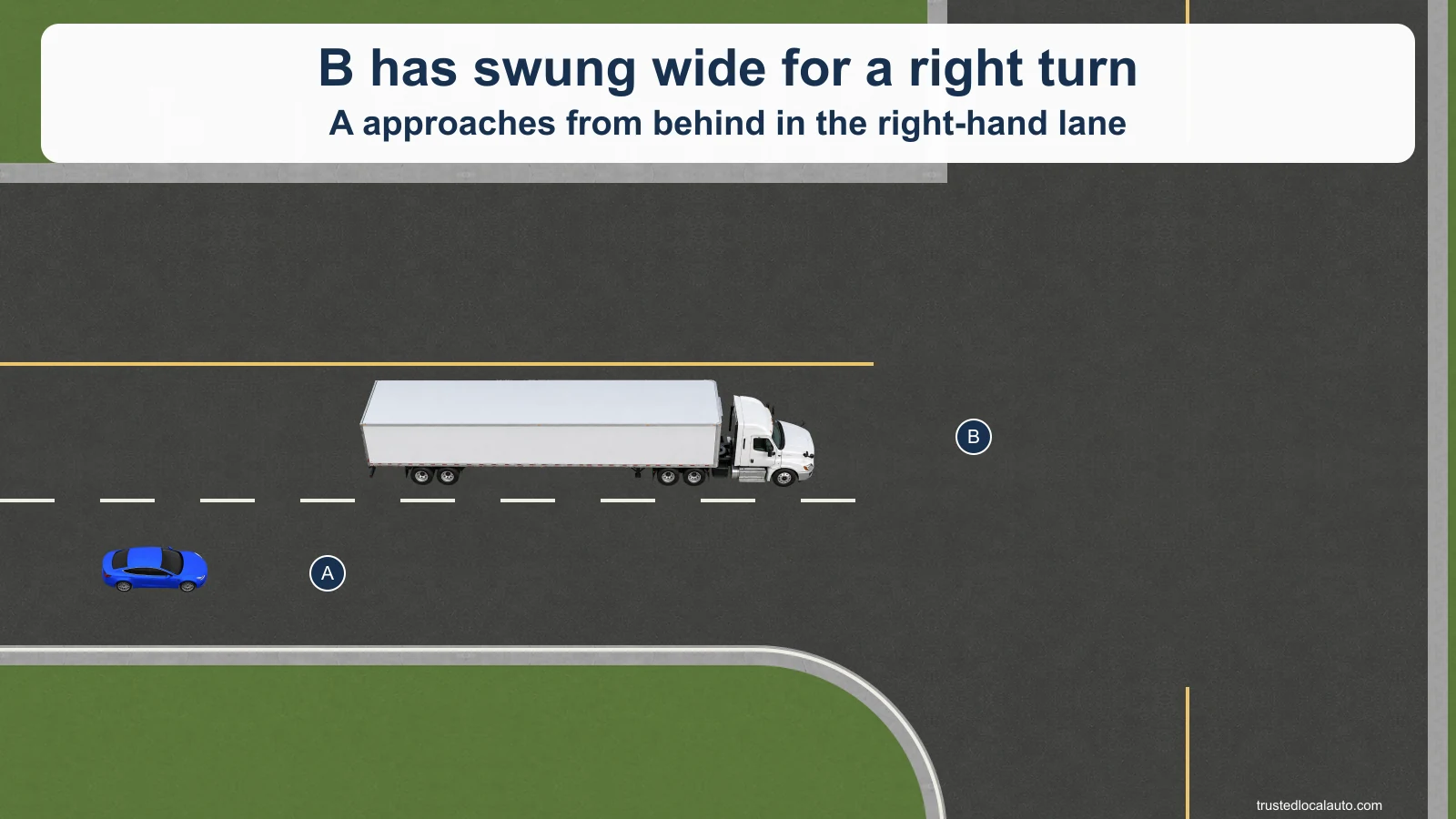 A Truck Preparing to TurnTruck B has moved left to prepare for a wide right turn. Car A approaches from behind in the right-hand lane. What should A do?Try this question
- Solid centre line and a cyclist ahead HardOn a long, straight two-way road with a solid yellow centre line, you come up behind a cyclist. No oncoming traffic is in sight and you can see far ahead. May you cross the solid line to pass the cyclist?Try this question
- Truck preparing a wide right turn HardTruck B has moved left to prepare for a wide right turn. Car A approaches from behind in the right-hand lane. What should the driver of car A do?Try this question
15 text questions
More questions in this topic
- Why should you reduce speed and remain ready to stop near children?
- On an ordinary public road with a maximum permitted speed below 70 km/h, a bus signals to return to the lane it occupied before stopping. You are travelling in that lane. What must you do?
- A cyclist ahead moves away from parked cars and debris near the road edge. How should you respond?
- Why can a motorcycle’s approach be difficult for another driver to judge?
- What should you watch for as you drive beside a line of parked vehicles?
- At a marked pedestrian crossing without traffic lights, a person waits at the edge and clearly signals an intention to cross. What must you do?
- Why should a driver leave pedestrians a generous safety margin?
- Why should you leave a generous gap when moving into the lane ahead of a heavy truck?
- You have stopped for a pedestrian with a visual disability at a crossing. How should you help keep the crossing predictable?
- You drive on an ordinary public road with a maximum permitted speed of 60 km/h. Ahead, a bus at a stop signals that it will return to the lane it occupied. You travel in that lane. What must you do? Hard
- On an ordinary public road, a bus at a stop signals that it will return to the lane it occupied before stopping. You travel in that lane. Your duty to yield to the bus depends on the road's speed. Which threshold does the rule use? Hard
- On a road with two lanes in your direction, you follow a motorcycle that rides near the right edge of its lane. You want to pass it. How must you treat its lane space? Hard
- On an ordinary roadway with a maximum permitted speed of 70 km/h, you have slowed to 40 km/h to pass a cyclist. It is not a shared street or bicycle boulevard. Which statement about the minimum side clearance is correct? Hard
- You pass a cyclist on an ordinary roadway, not a shared street or bicycle boulevard. The maximum permitted speed of the road is exactly 50 km/h. You have slowed down. What is the minimum side clearance? Hard
- A police vehicle with flashing lights is stopped on the right shoulder ahead. Another lane goes in your direction, but a vehicle beside you occupies it, so you cannot change lanes safely. What must you do? Hard
Quebec Class 5
More Class 5 topics
Road rules · 11 topics
- Licensing & Test Readiness30 questions
- Observation, Speed & Space27 questions
- Intersections & Right-of-Way26 questions
- Turns, Lanes, Passing & Merging26 questions
- Parking, Reversing & Roadside Stops27 questions
- Sharing the Road28 questions · This topic
- Freeways & High-Speed Roads28 questions
- School Zones, Railways & Work Areas28 questions
- Weather, Visibility & Emergencies26 questions
- Vehicle Safety, Documents & Towing28 questions
- Safe & Responsible Driving29 questions
Each question page shows the answer, the explanation and the official source of the question.