
Practice question, Question 1 of 40
Passing target: 80% (32/40)
Your car does not have antilock brakes. On an icy road you brake to stop, and the wheels lock. The car slides straight ahead and does not respond when you steer. What should you do?
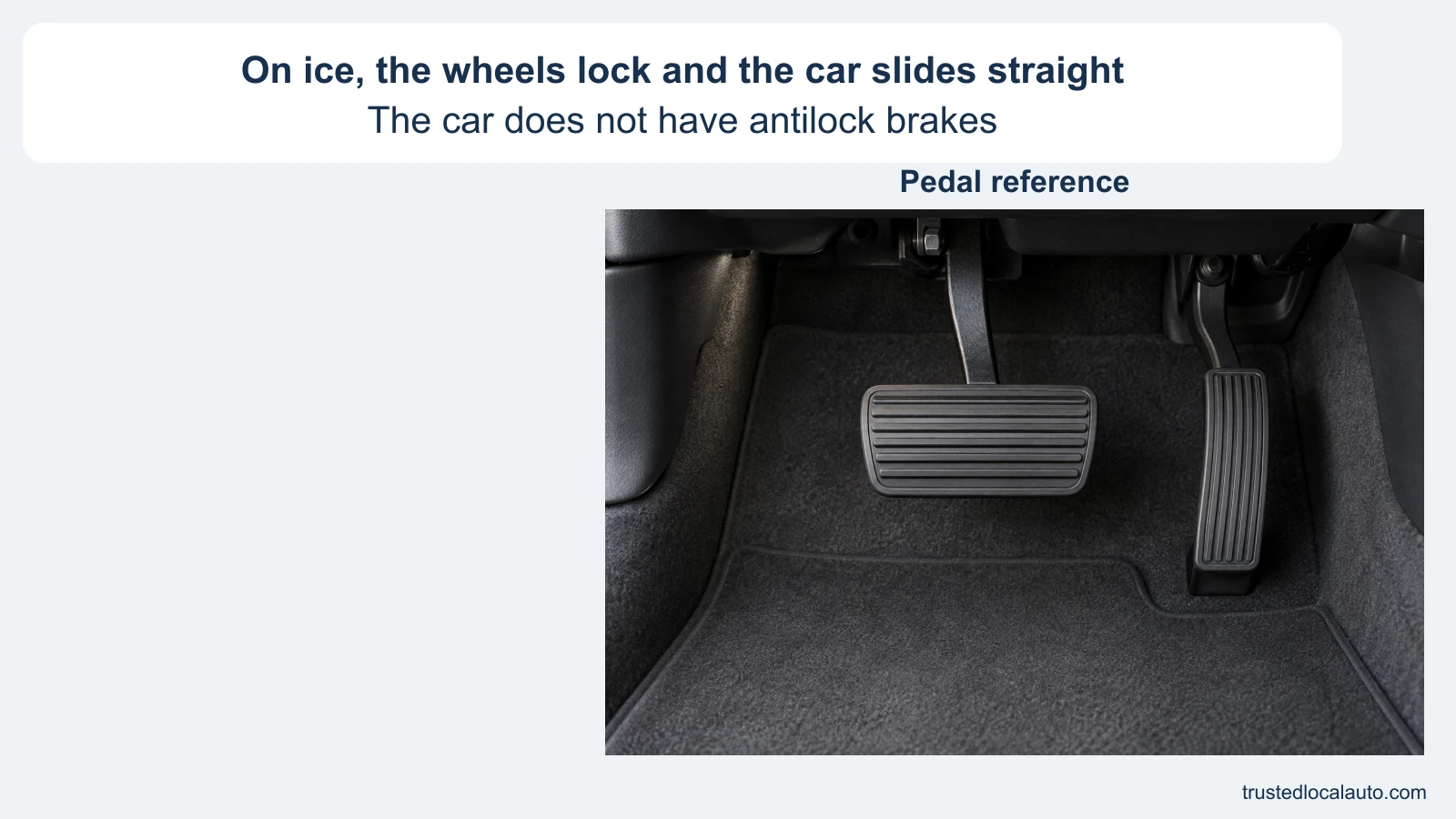
Correct answer: Ease off the pedal slightly, then reapply it just short of lockup.
Why
On snow and ice, low traction can make your stopping distance 200 feet or more, even at 20 mph. Locked front wheels cannot steer, so the car goes straight however you turn the wheel. With antilock brakes the method is different: press firmly, keep your foot down, and let the system prevent lockup. The best defense is a slow, steady speed that avoids hard braking.
Verified against Tennessee Comprehensive Driver License Manual · Driving in Winter Weather Conditions — Reduced ability to stop · p. 92, 91
Is this question correct and clear?
Continue learning
Related Tennessee questions
- Your car and another car crash in the center lane of a busy interstate. Both cars can still be driven, but the other driver is badly hurt. What should you do?
- It is 2 p.m., and a steady drizzle makes you run your windshield wipers all the time. You can still see well. What does Tennessee law say about your headlights?
- At dusk on a two-lane road, a deer steps into your lane close ahead. A car comes toward you in the other lane, and you cannot stop in time. What gives you the best chance of avoiding serious injury?
- It has not rained for two weeks. As you drive, a light rain starts to fall. When is the road likely to be the most slippery?
- After a heavy storm, water flows across a low spot in the road ahead. It looks only a few inches deep, and a pickup truck just drove through it. What should you do?
- On a dark two-lane road, an oncoming truck has very bright headlights. Where should you look until the truck passes?