
Tennessee Class D Knowledge topic
Tennessee Class D Knowledge Weather, Visibility & Emergencies
Handle darkness, poor weather, loss of traction, breakdowns, collisions and emergencies.
20 questions, free with an account. 6 of them are hard. Each one has its answer, an explanation and its official source.
- 14 picture questions
- 6 text questions
- 6 of them hard
14 picture questions
Questions in this topic
Select a question to answer it. The answer and the explanation show after you answer.
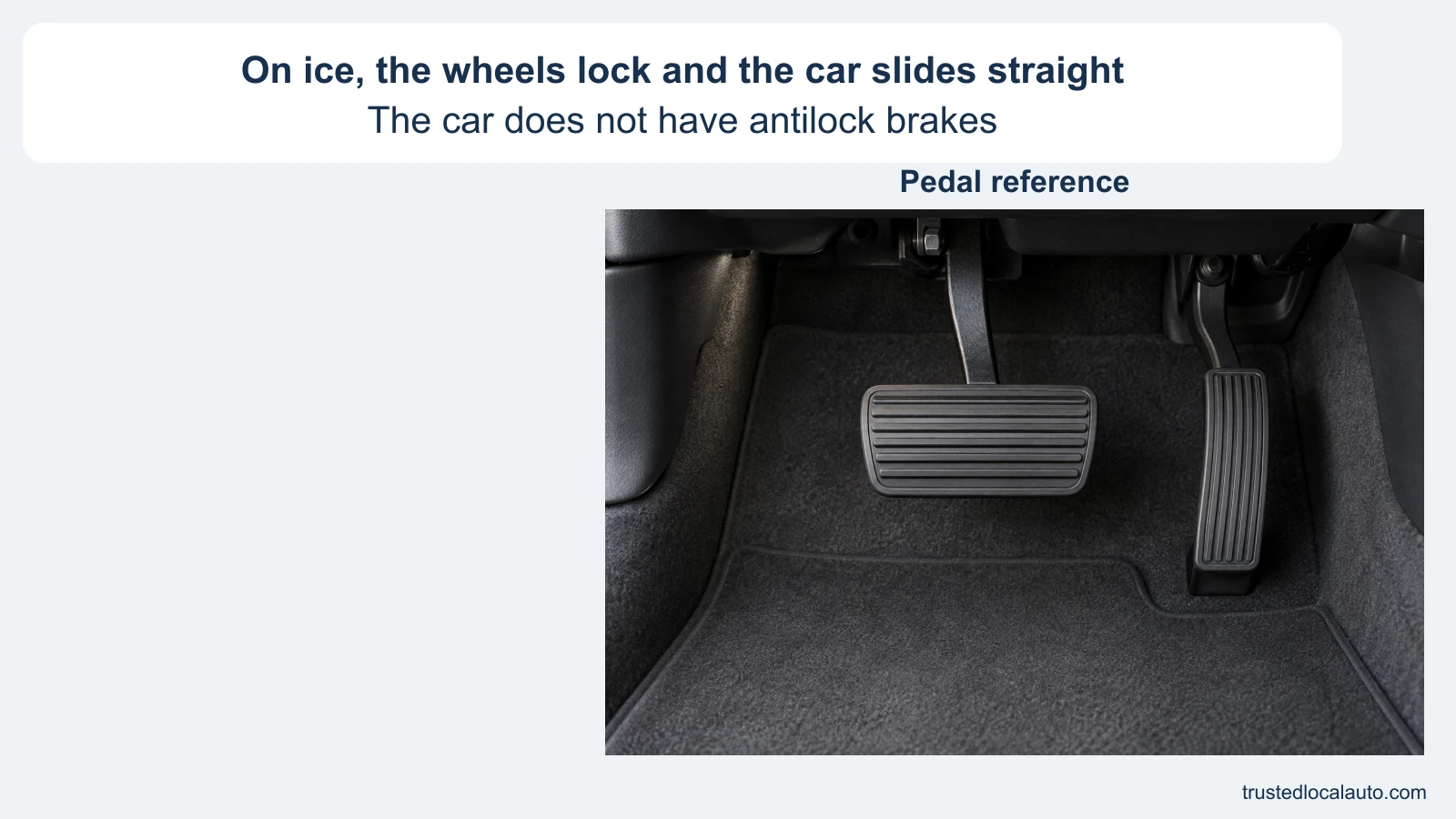 Braking on iceYour car does not have antilock brakes. On an icy road you brake to stop, and the wheels lock. The car slides straight ahead and does not respond when you steer. What should you do?Try this question
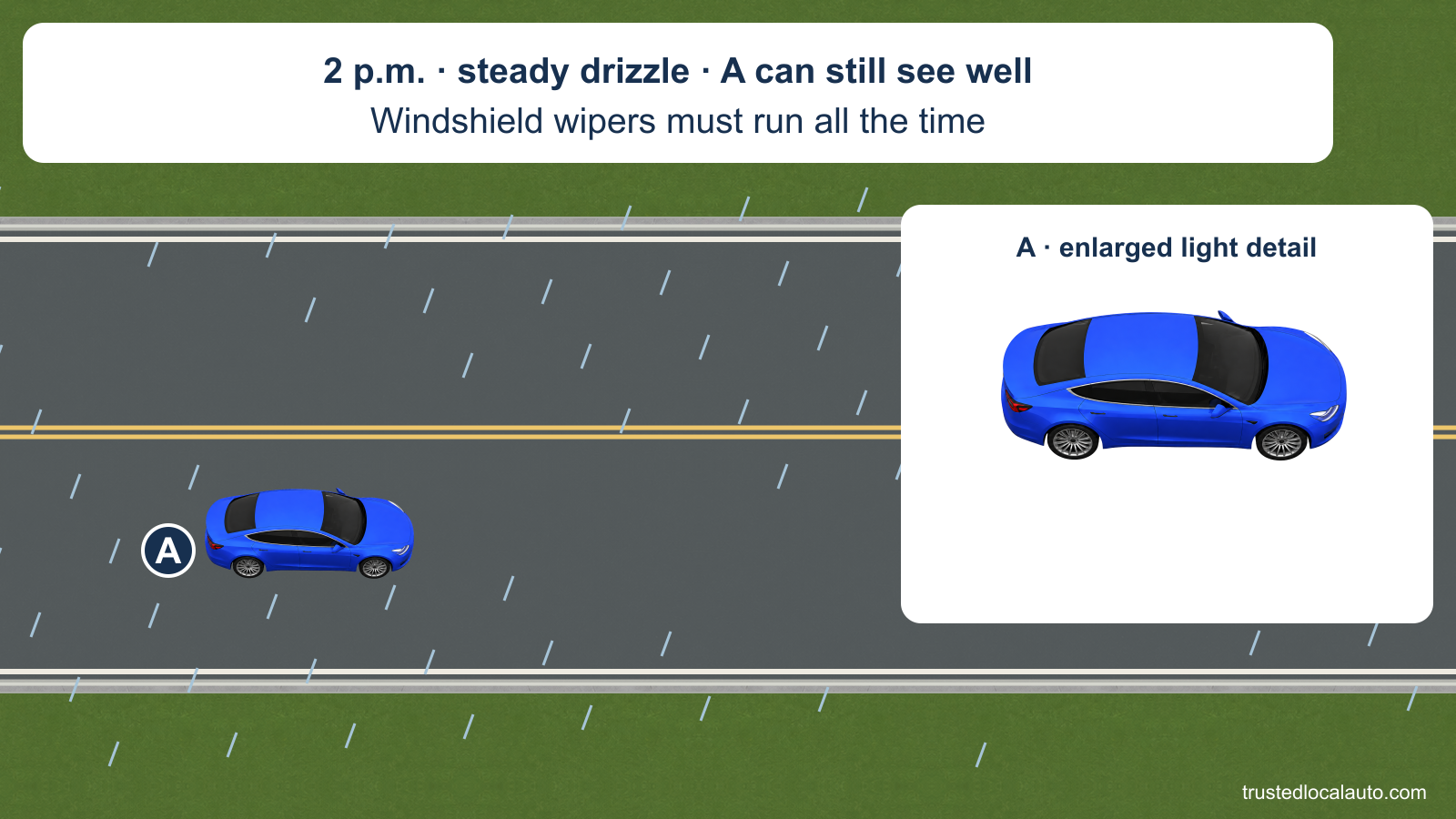 Daytime drizzle with the wipers runningIt is 2 p.m., and a steady drizzle makes you run your windshield wipers all the time. You can still see well. What does Tennessee law say about your headlights?Try this question
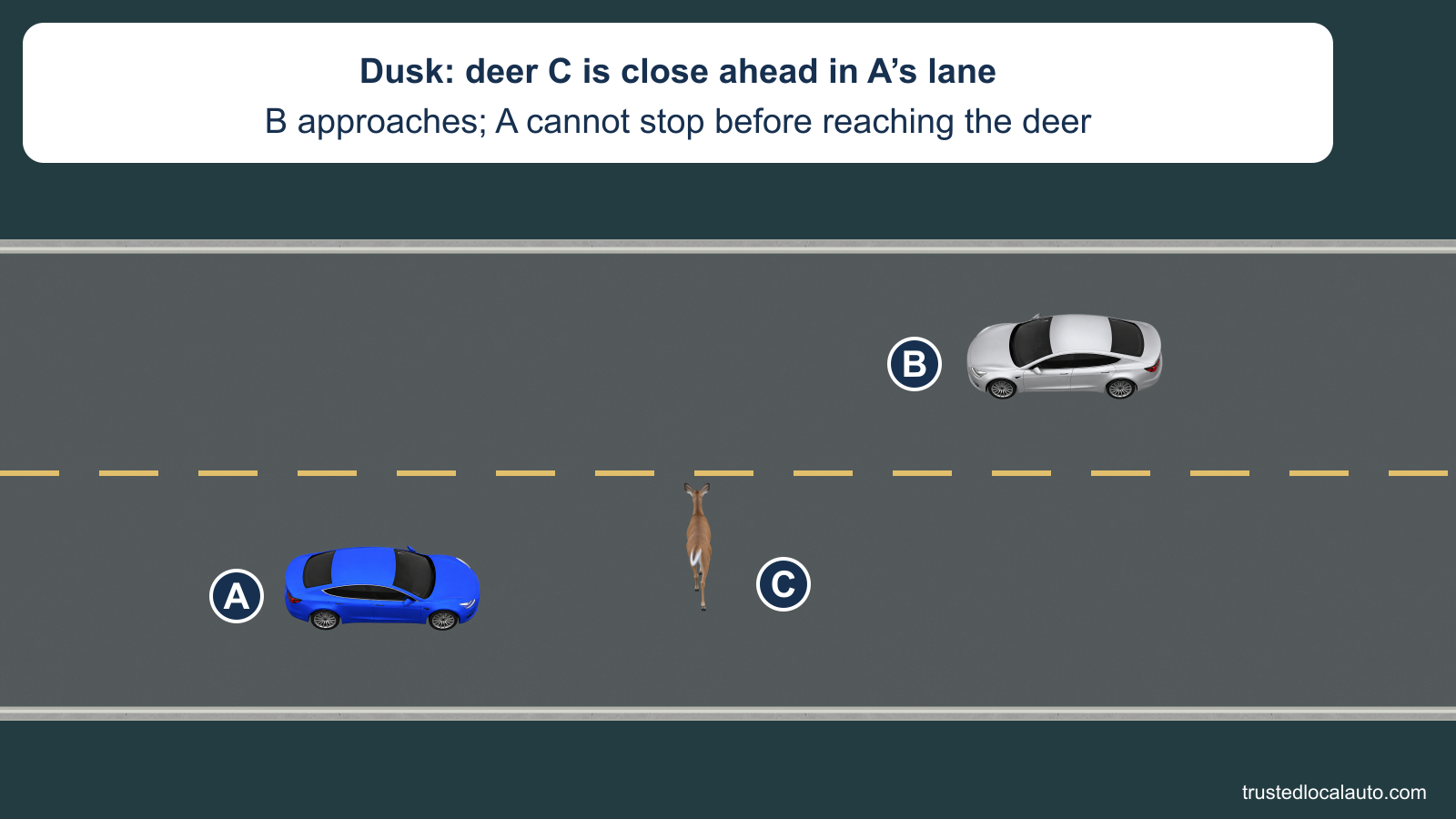 Deer steps into the lane at duskAt dusk on a two-lane road, a deer steps into your lane close ahead. A car comes toward you in the other lane, and you cannot stop in time. What gives you the best chance of avoiding serious injury?Try this question
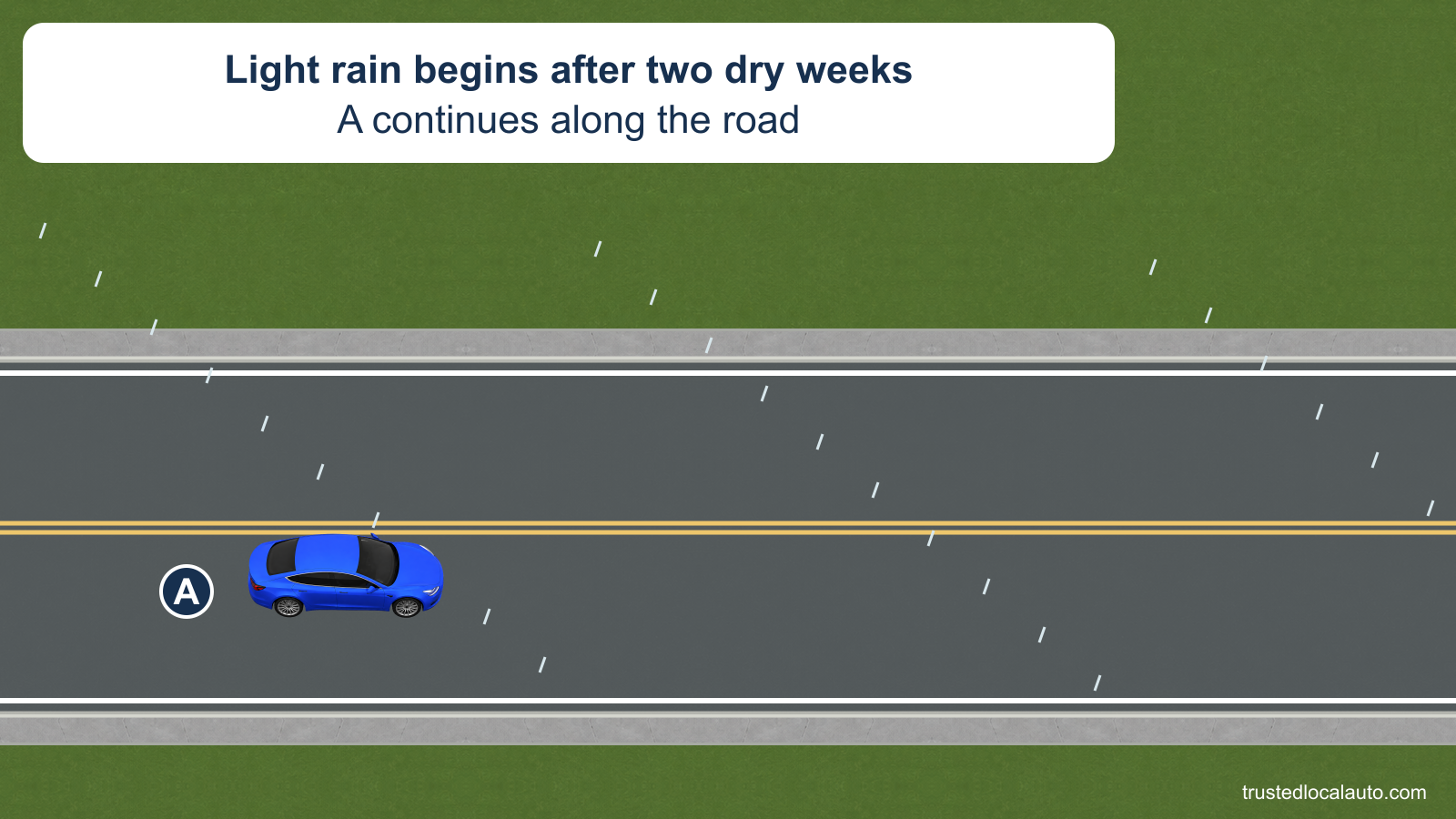 Rain after a dry spellIt has not rained for two weeks. As you drive, a light rain starts to fall. When is the road likely to be the most slippery?Try this question
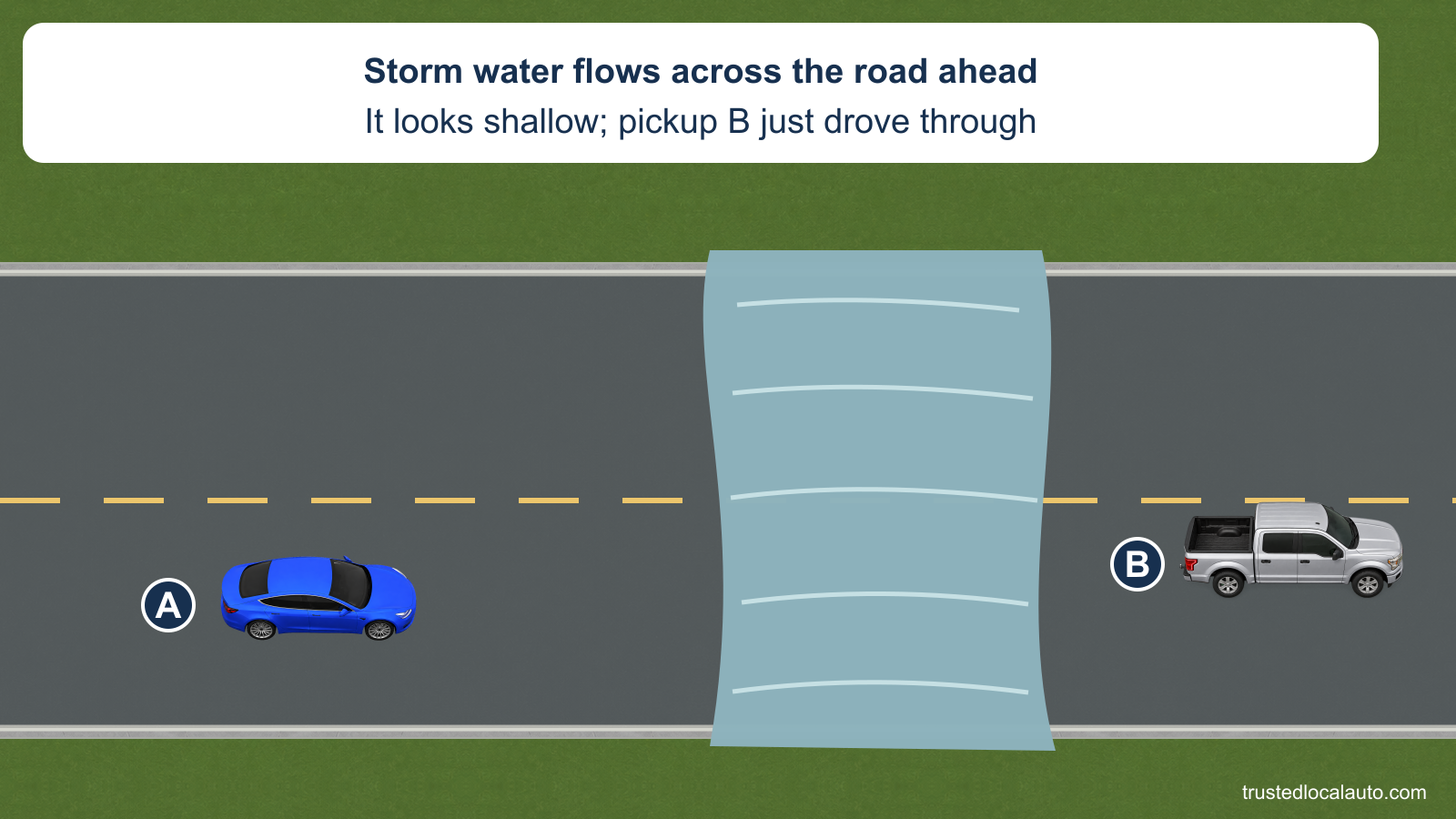 Water flowing across a low spot in the roadAfter a heavy storm, water flows across a low spot in the road ahead. It looks only a few inches deep, and a pickup truck just drove through it. What should you do?Try this question
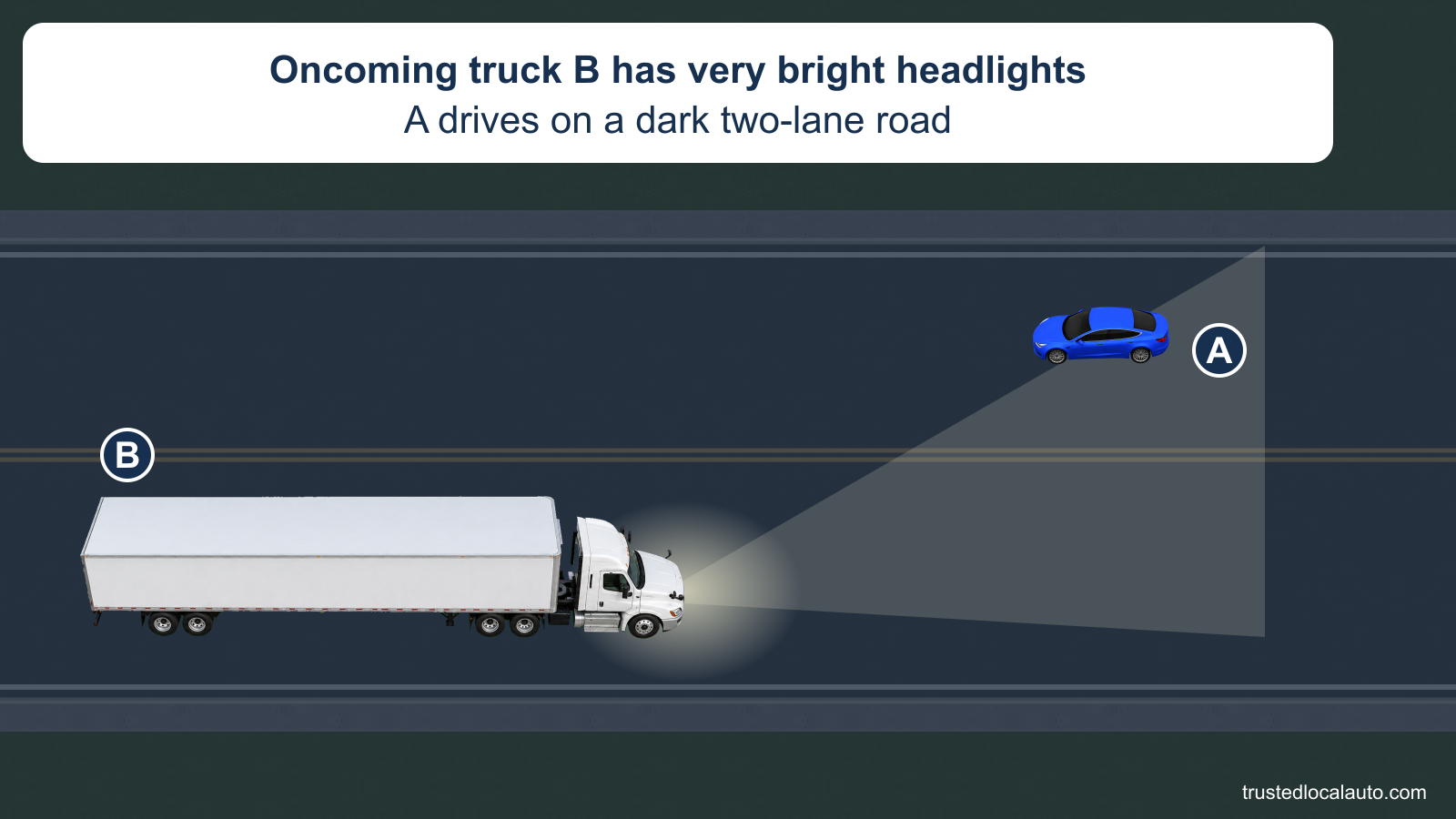 Glare from oncoming headlightsOn a dark two-lane road, an oncoming truck has very bright headlights. Where should you look until the truck passes?Try this question
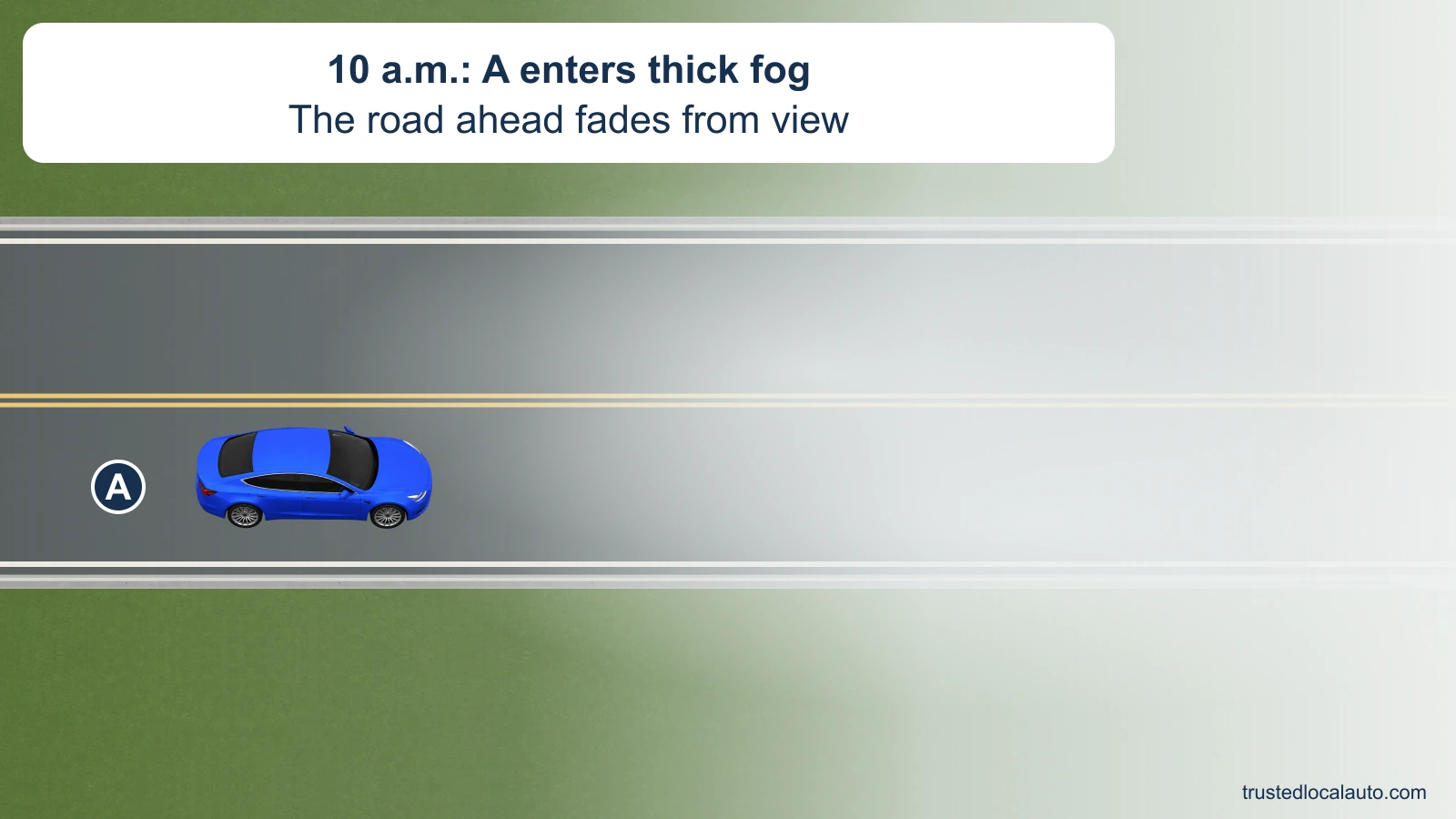 Lights to use in daytime fogAt 10 a.m., you drive into thick fog on a highway. Your car has daytime running lights, parking lights, fog lights and headlights. Which lights should you use?Try this question
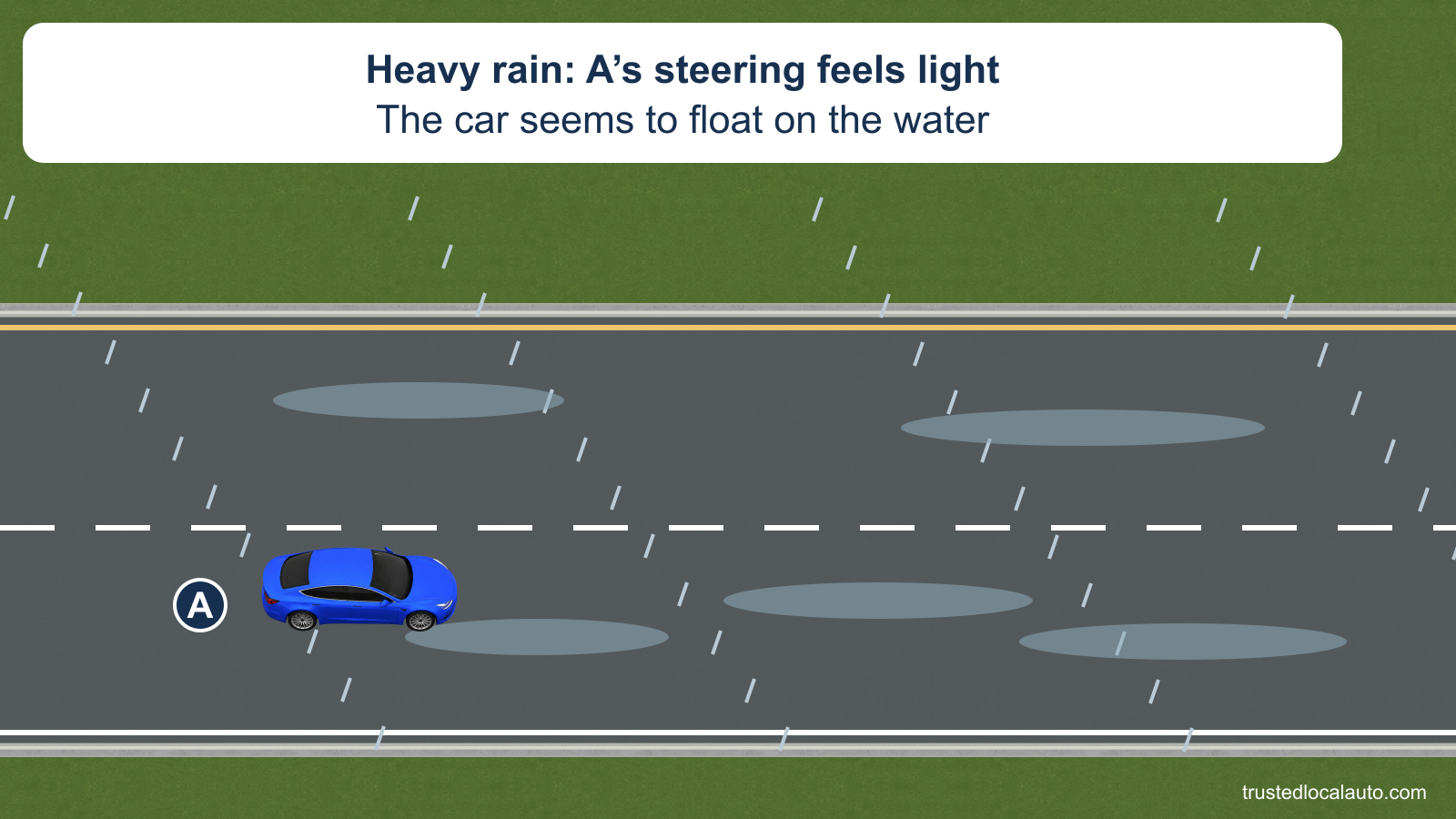 Hydroplaning responseYou drive on the interstate in heavy rain. Your steering suddenly feels light, and the car seems to float on the water. What should you do?Try this question
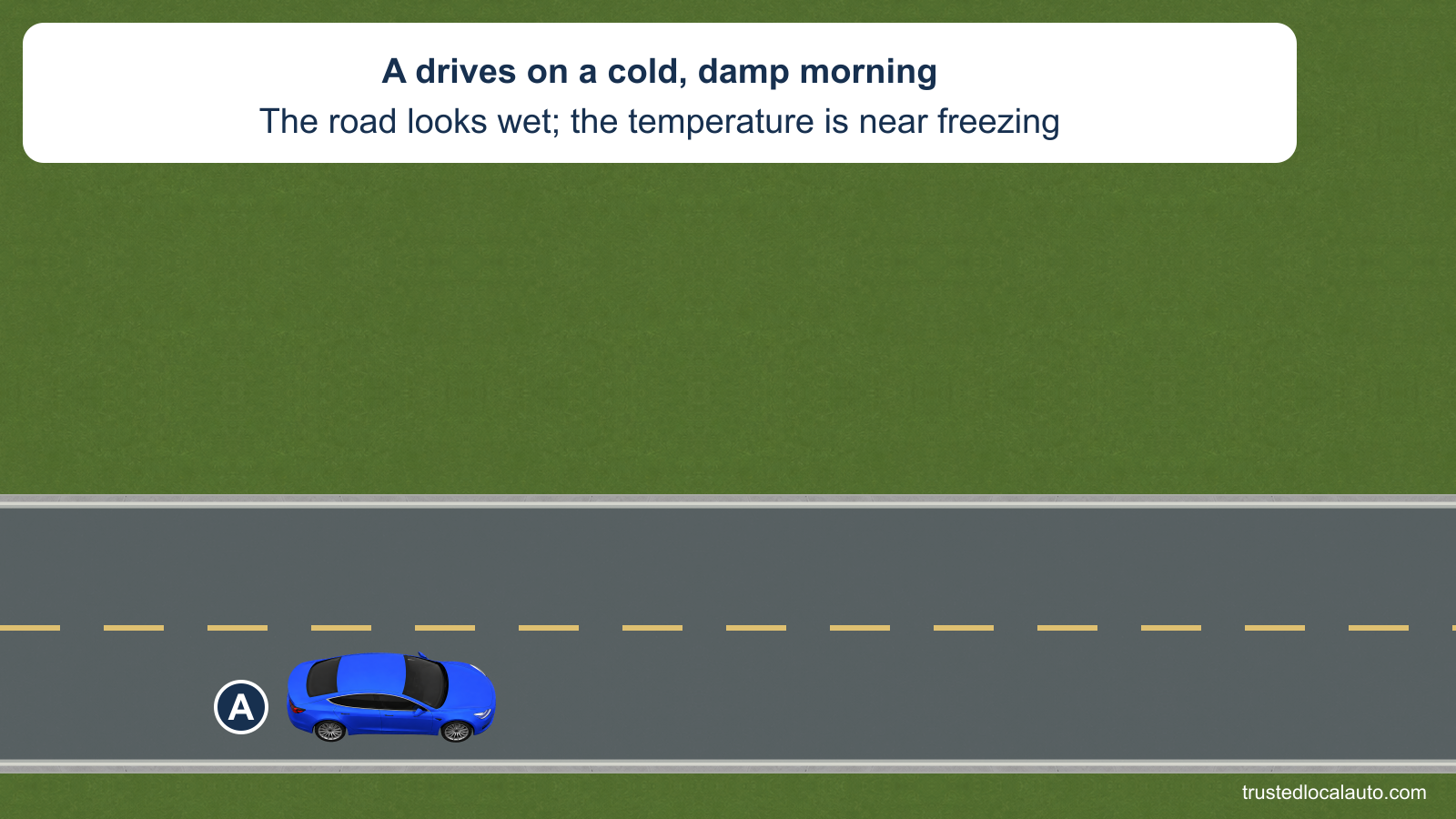 Wet road on a cold, damp morningOn a cold, damp morning, the road you drive on is only wet, and the temperature is near freezing. Where should you expect ice first?Try this question
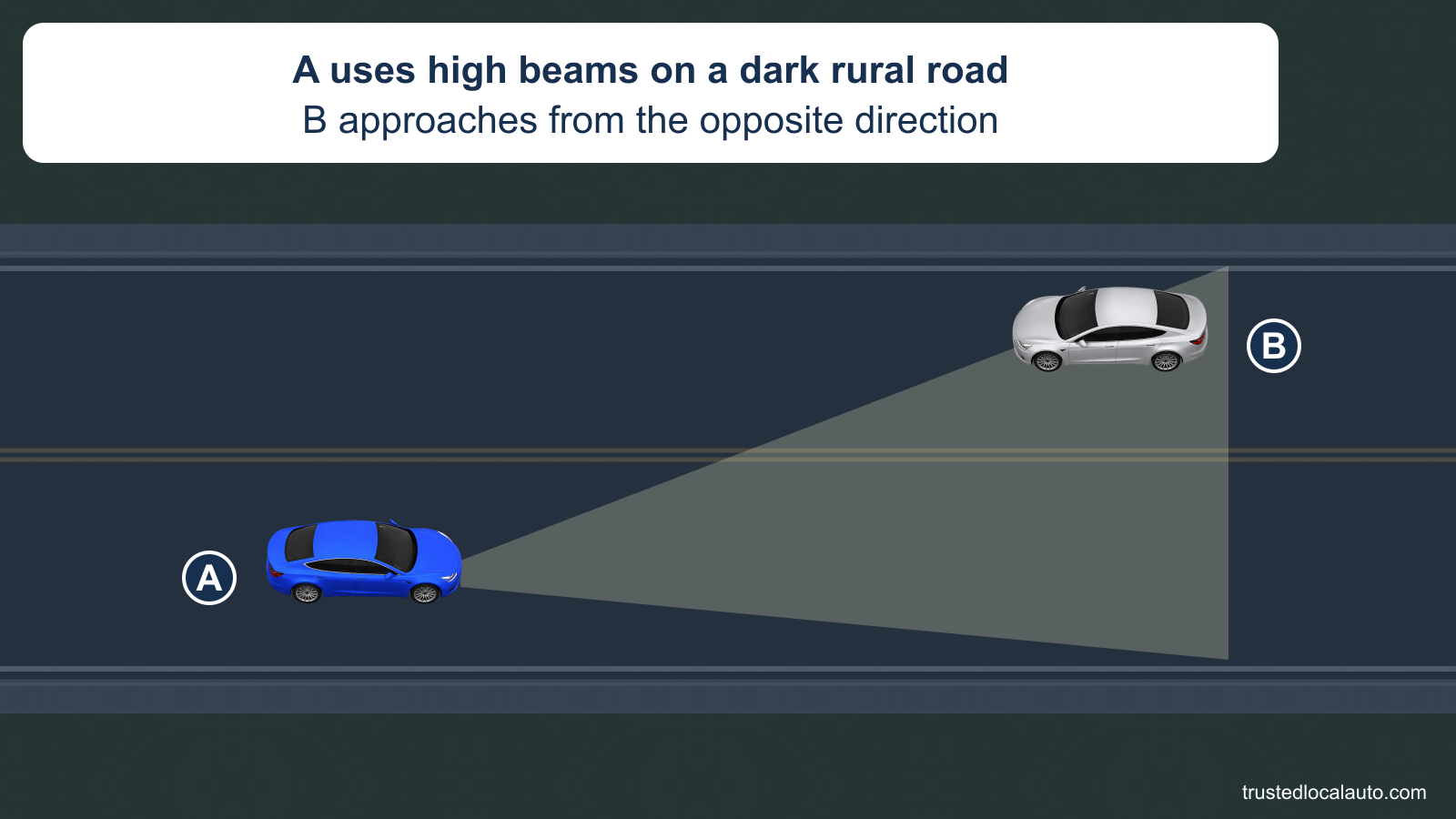 Meeting another vehicle at nightYou drive with your high beams on along a dark rural road. A car comes toward you from the opposite direction. At the latest, when must you switch to low beams?Try this question
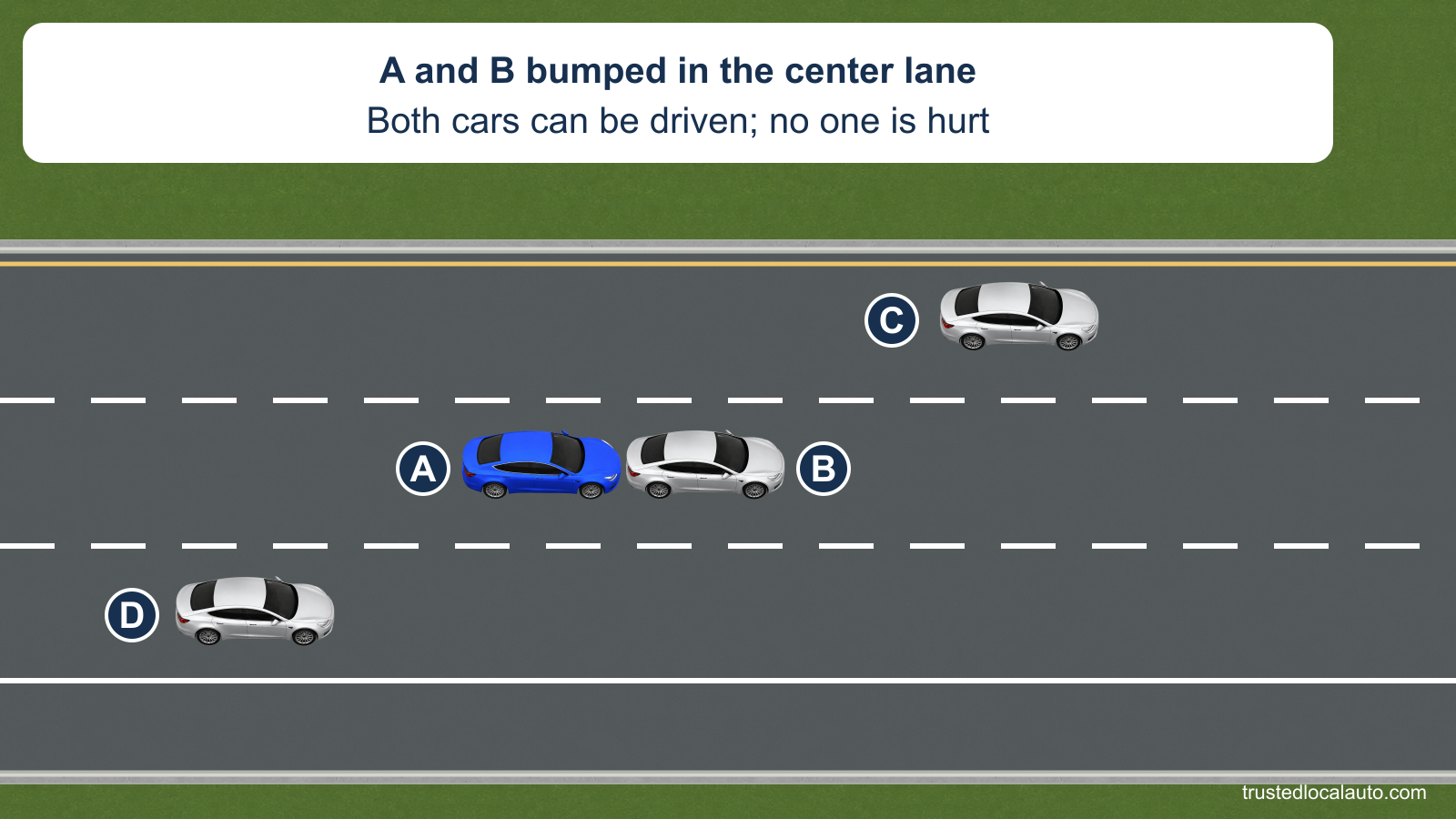 Minor crash in a busy interstate laneYour car and another car bump in the center lane of a busy interstate. Both cars can still be driven, and no one is hurt. What should you do?Try this question
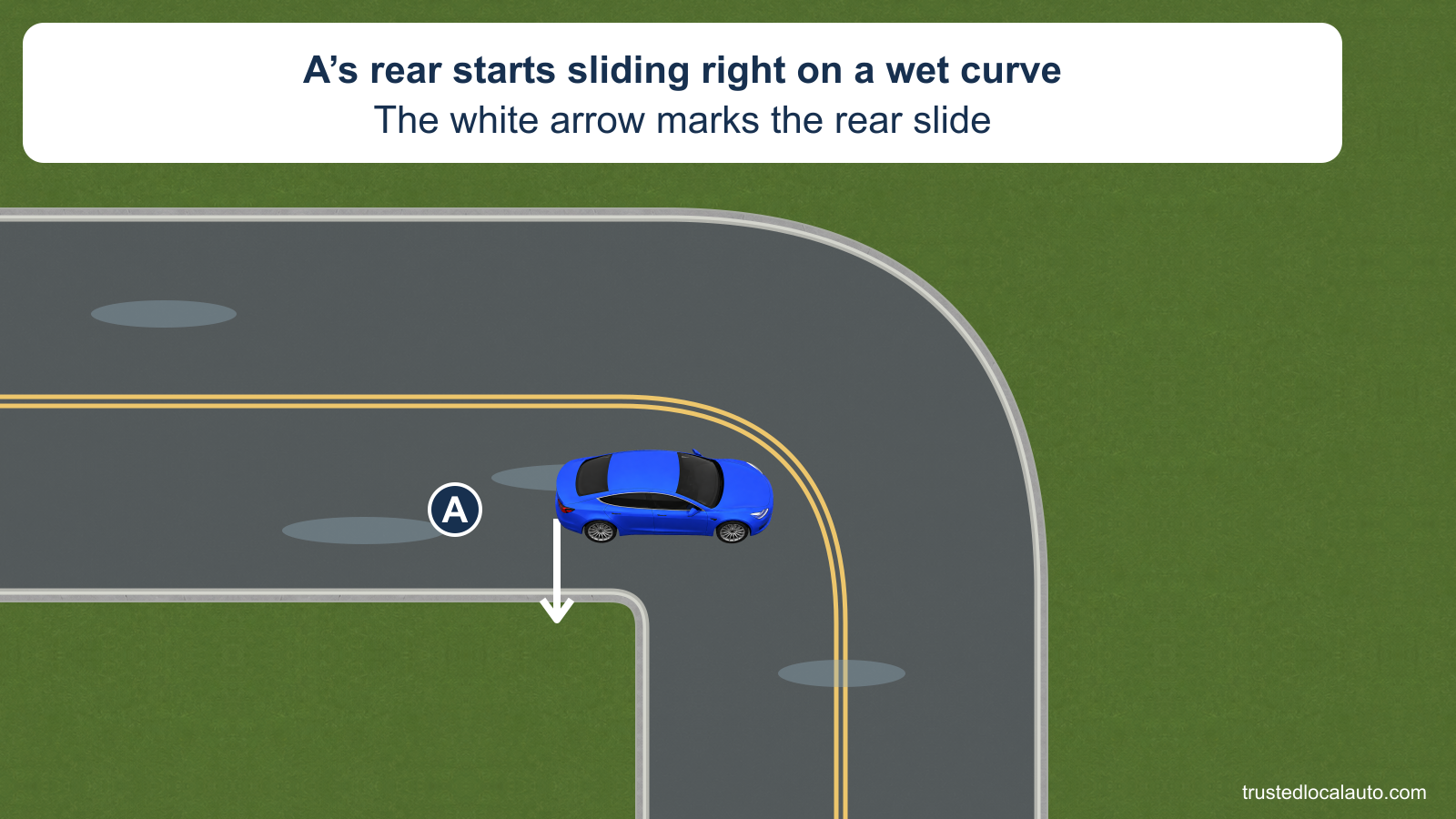 Rear-wheel skid recoveryOn a wet curve, the rear of your car starts to slide to the right. How should you steer?Try this question
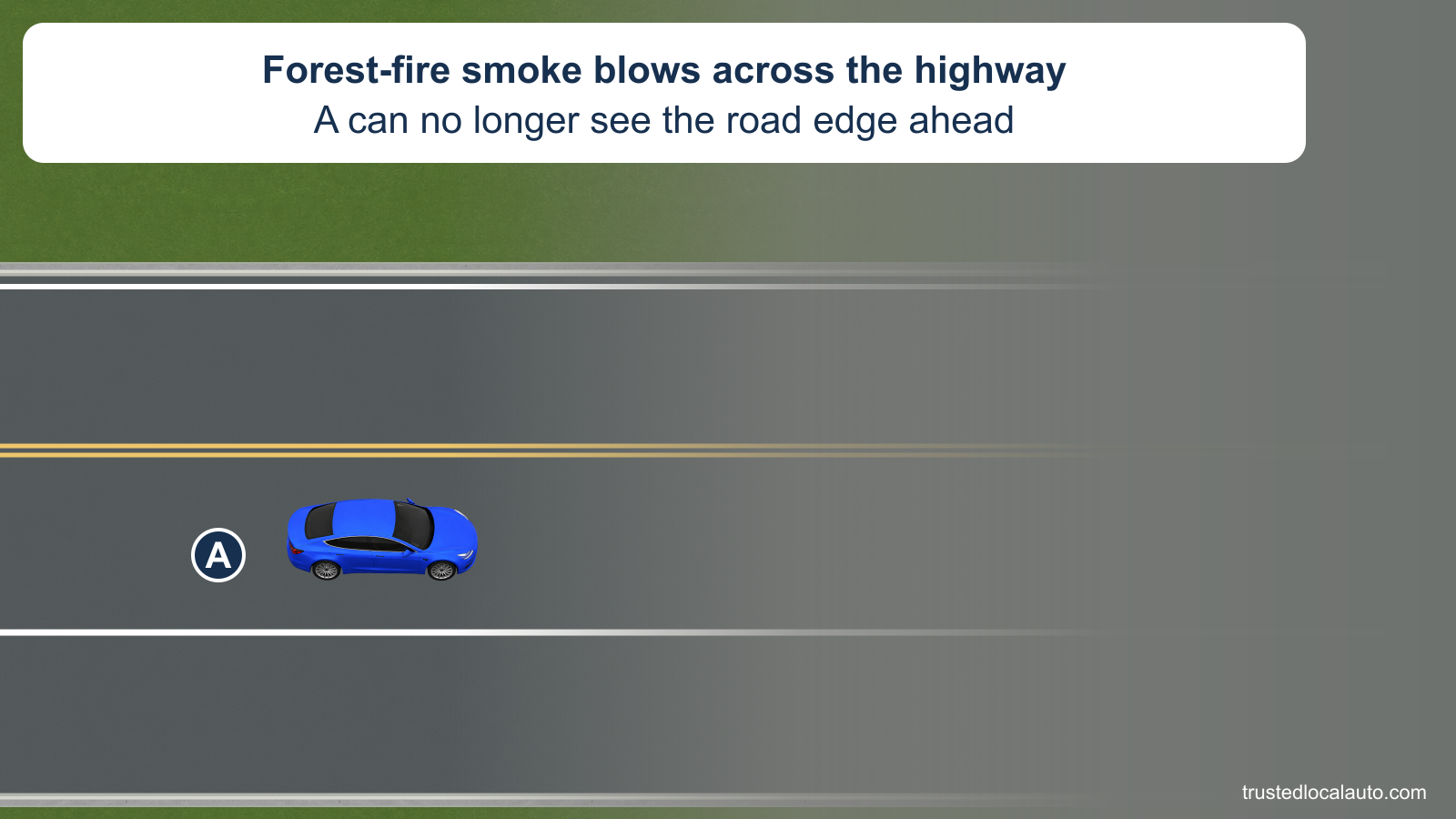 Visibility becomes nearly zeroOn a rural highway, thick smoke from a forest fire blows across the road. You can no longer see the edge of the road. What should you do?Try this question
- Locked wheels on ice without antilock brakes HardYour car does not have antilock brakes. You brake on an icy road, the wheels lock, and the car slides straight ahead when you turn the wheel. What should you do?Try this question
6 text questions
More questions in this topic
- Tennessee law sets a time period each night when your headlights must be on. What is that period?
- Your car and another car crash in the center lane of a busy interstate. Both cars can still be driven, but the other driver is badly hurt. What should you do? Hard
- Sunset today is at 6:40 p.m., and the sky is clear. Under the time rule of Tennessee law for headlights, from what time must your headlights be on? Hard
- At night on a dark rural road, no car comes toward you. You use your high beams and come up behind a car in your lane that is about 400 feet ahead of you. What should you do? Hard
- At night you use your high beams on a dark rural road. A car comes toward you in the other lane. Under the Tennessee manual, which statement is correct? Hard
- Tennessee law sets a time each evening from which headlights must be on, and a visibility rule for poor light. Which pair of rules is correct? Hard
Tennessee Class D Knowledge
More Class D Knowledge topics
Road rules · 12 topics
- Licensing & Test Readiness19 questions
- Traffic Signals & Road Markings18 questions
- Observation, Speed & Space19 questions
- Intersections & Right-of-Way14 questions
- Turns, Lanes, Passing & Merging20 questions
- Parking, Reversing & Roadside Stops20 questions
- Sharing the Road14 questions
- Freeways & High-Speed Roads21 questions
- School Zones, Railways & Work Areas31 questions
- Weather, Visibility & Emergencies20 questions · This topic
- Vehicle Safety, Documents & Towing11 questions
- Safe & Responsible Driving30 questions
Each question page shows the answer, the explanation and the official source of the question.