
Practice question, Question 1 of 65
Passing target: 80% (52/65)
You drive on a highway in heavy rain. As you go through standing water, the steering suddenly feels light, and the car seems to float on the water. What should you do?
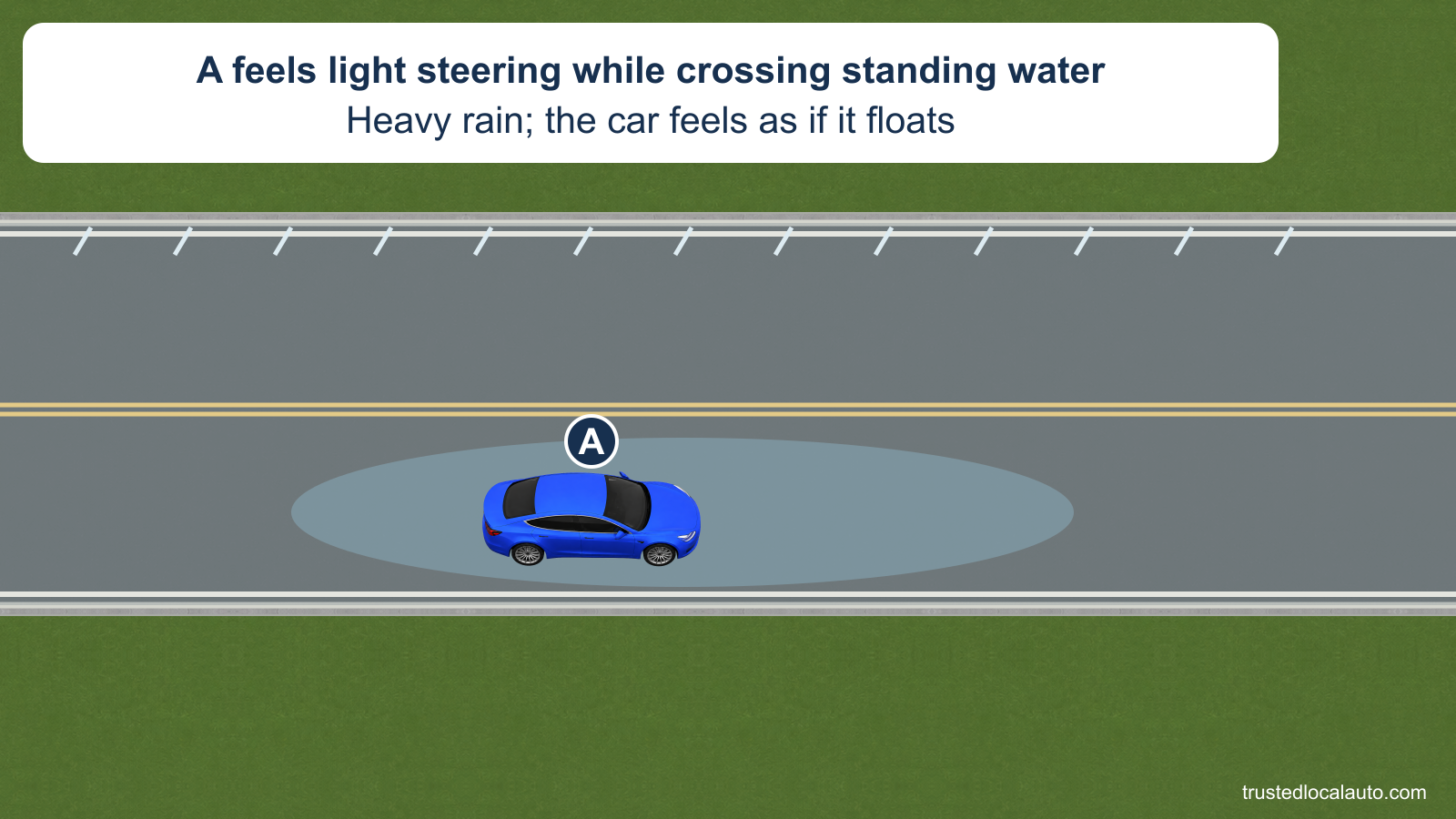
Correct answer: Ease off the gas, keep the wheel straight, and do not brake or turn until the tires grip.
Why
Hydroplaning means that the tires slide on top of a layer of water and lose contact with the road. Steering and brakes have almost no effect until the tires grip again, so let the car slow down gradually. It can happen even at low speeds when the tires are bald. In heavy rain, slow down before you reach standing water.
Verified against Wisconsin Motorists' Handbook · Hydroplaning · p. 48
Is this question correct and clear?
Continue learning
Related Wisconsin questions
- Your car has anti-lock brakes (ABS). On a wet road, the car ahead stops suddenly, and you brake hard. The brake pedal starts to pulse under your foot, and you hear a grinding noise. What should you do?
- Just after sunset on a rural road, you see a pair of eyes shine in your headlights near the ditch ahead. It looks like a deer. What should you do?
- Your car has anti-lock brakes (ABS). On a wet road, the car ahead stops suddenly, and you brake hard. The brake pedal starts to pulse under your foot, and you hear a grinding noise. What should you do?
- You drive on a city street and press the brake pedal. The pedal sinks to the floor, and the car does not slow down. What should you do first?
- Your older car does not have an anti-lock braking system (ABS). On an icy road, you must slow down quickly for stopped traffic ahead. How should you brake?
- On a highway with a 55 mph speed limit, you come up behind a snowplow that is spreading salt. Its warning lights flash. What is the closest that you may follow it?