
Wisconsin Class D Knowledge topic
Wisconsin Class D Knowledge Weather, Visibility & Emergencies
Handle darkness, poor weather, loss of traction, breakdowns, collisions and emergencies.
24 questions, free with an account. 9 of them are hard. Each one has its answer, an explanation and its official source.
- 13 picture questions
- 11 text questions
- 9 of them hard
13 picture questions
Questions in this topic
Select a question to answer it. The answer and the explanation show after you answer.
 Brake pedal pulses during a hard stopYour car has anti-lock brakes (ABS). On a wet road, the car ahead stops suddenly, and you brake hard. The brake pedal starts to pulse under your foot, and you hear a grinding noise. What should you do?Try this question
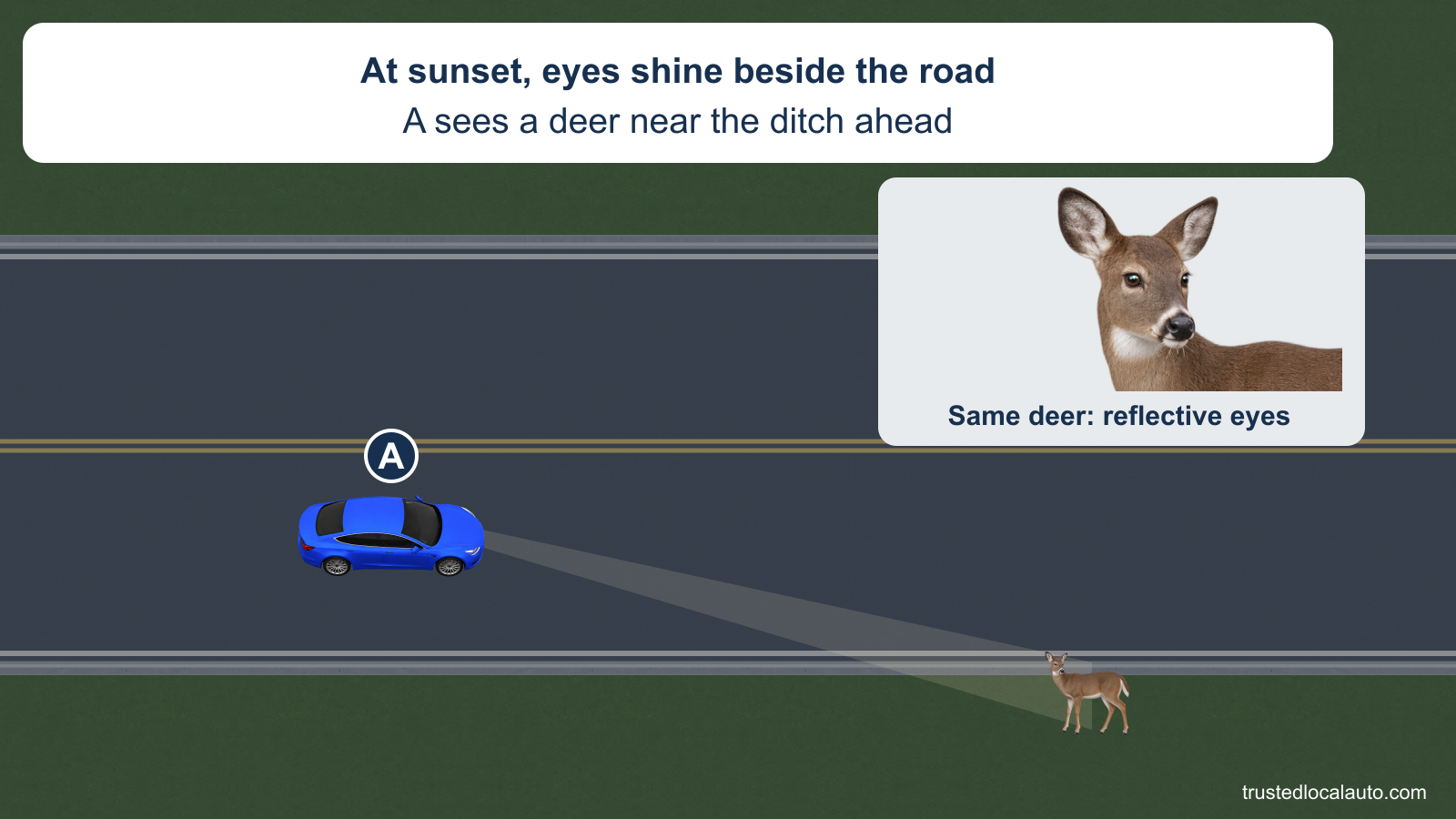 Eyes shine in your headlights near a rural roadJust after sunset on a rural road, you see a pair of eyes shine in your headlights near the ditch ahead. It looks like a deer. What should you do?Try this question
 Brake pedal sinks to the floorYou drive on a city street and press the brake pedal. The pedal sinks to the floor, and the car does not slow down. What should you do first?Try this question
 Hard stop on ice in a car without ABSYour older car does not have an anti-lock braking system (ABS). On an icy road, you must slow down quickly for stopped traffic ahead. How should you brake?Try this question
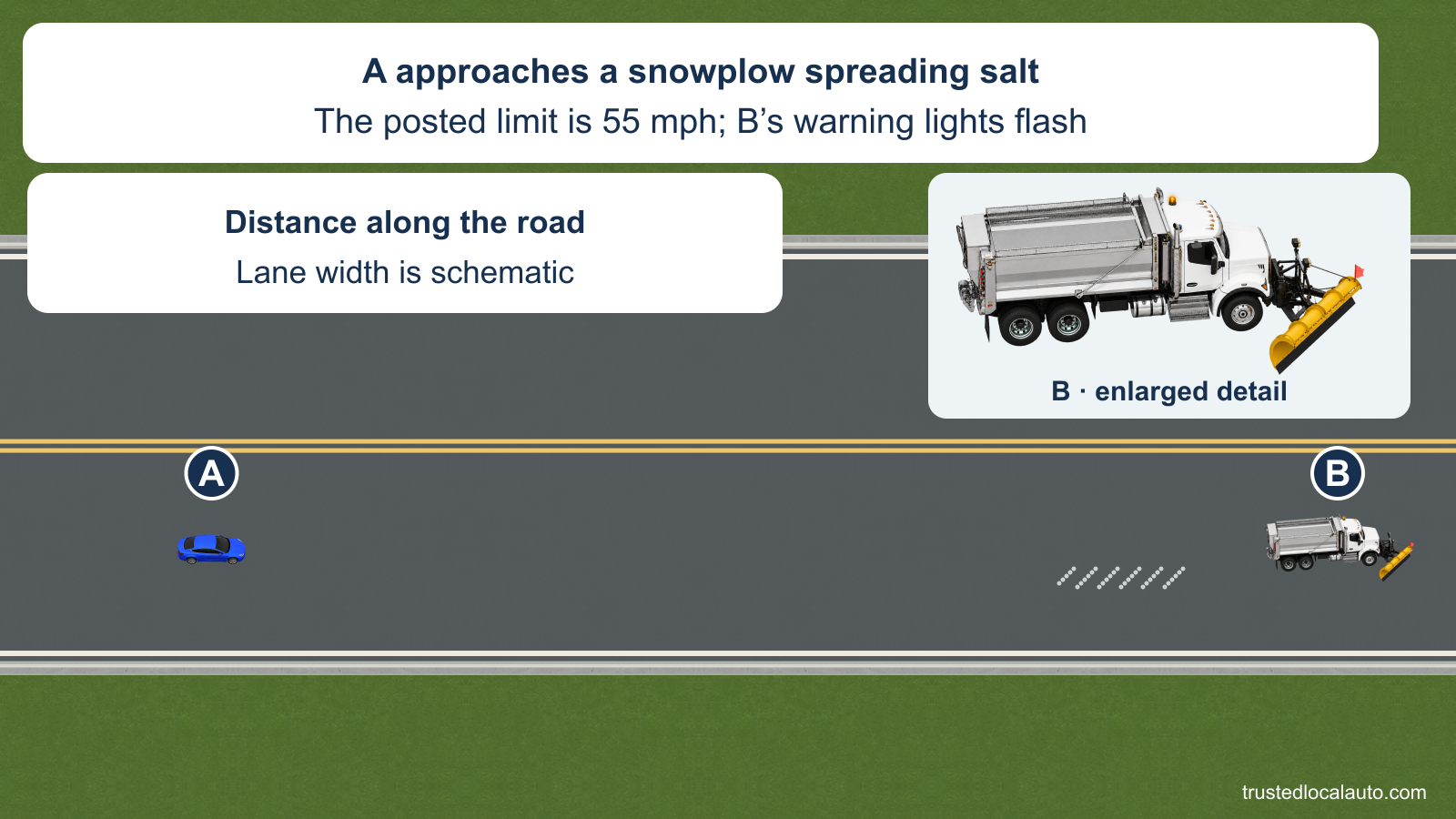 Following a working snowplow on a 55 mph highwayOn a highway with a 55 mph speed limit, you come up behind a snowplow that is spreading salt. Its warning lights flash. What is the closest that you may follow it?Try this question
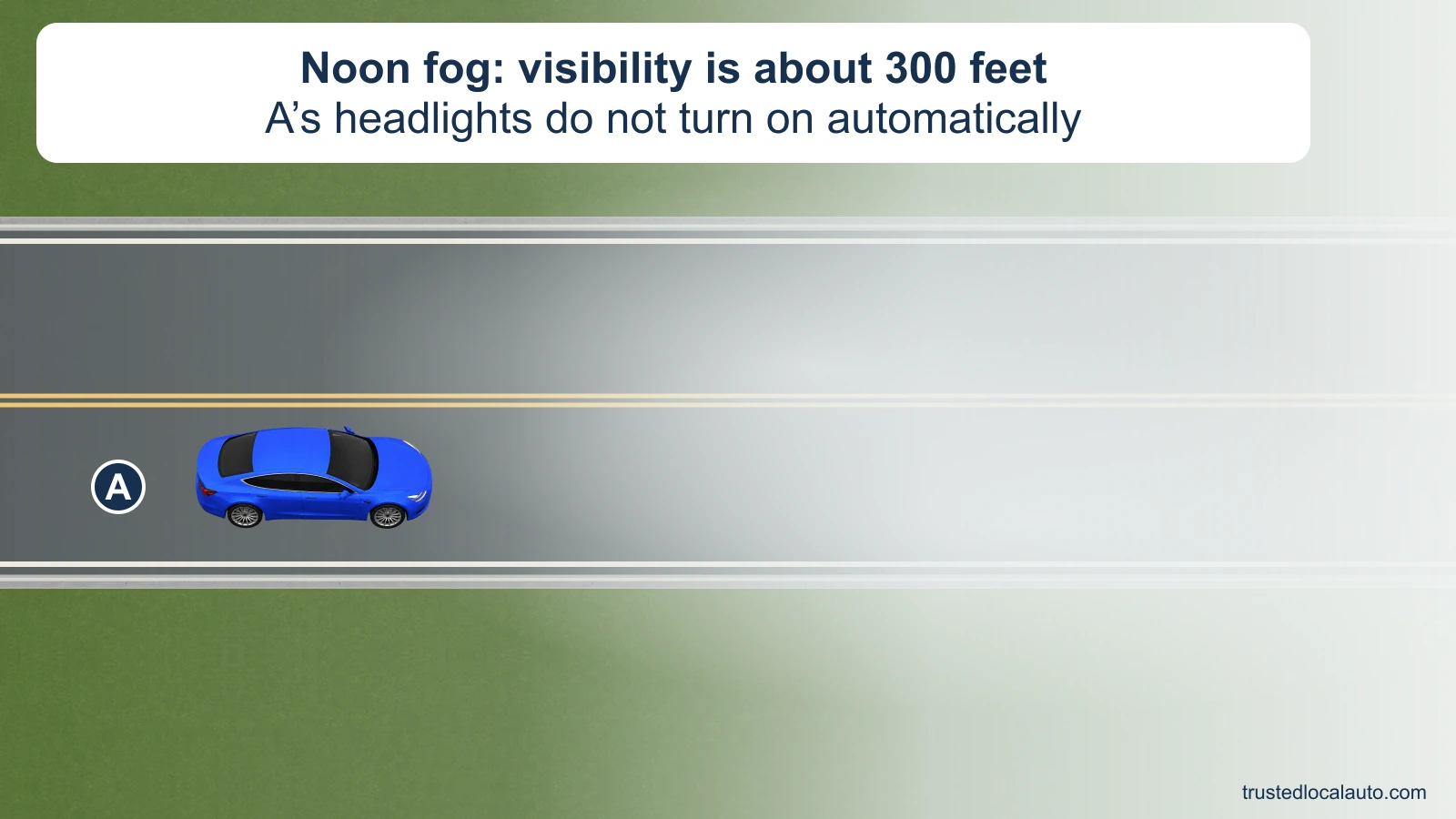 Daytime fog with about 300 feet of sight distanceIt is noon, and thick fog comes in. You can see a parked car only about 300 feet ahead of you. Your headlights do not turn on by themselves. What does Wisconsin require?Try this question
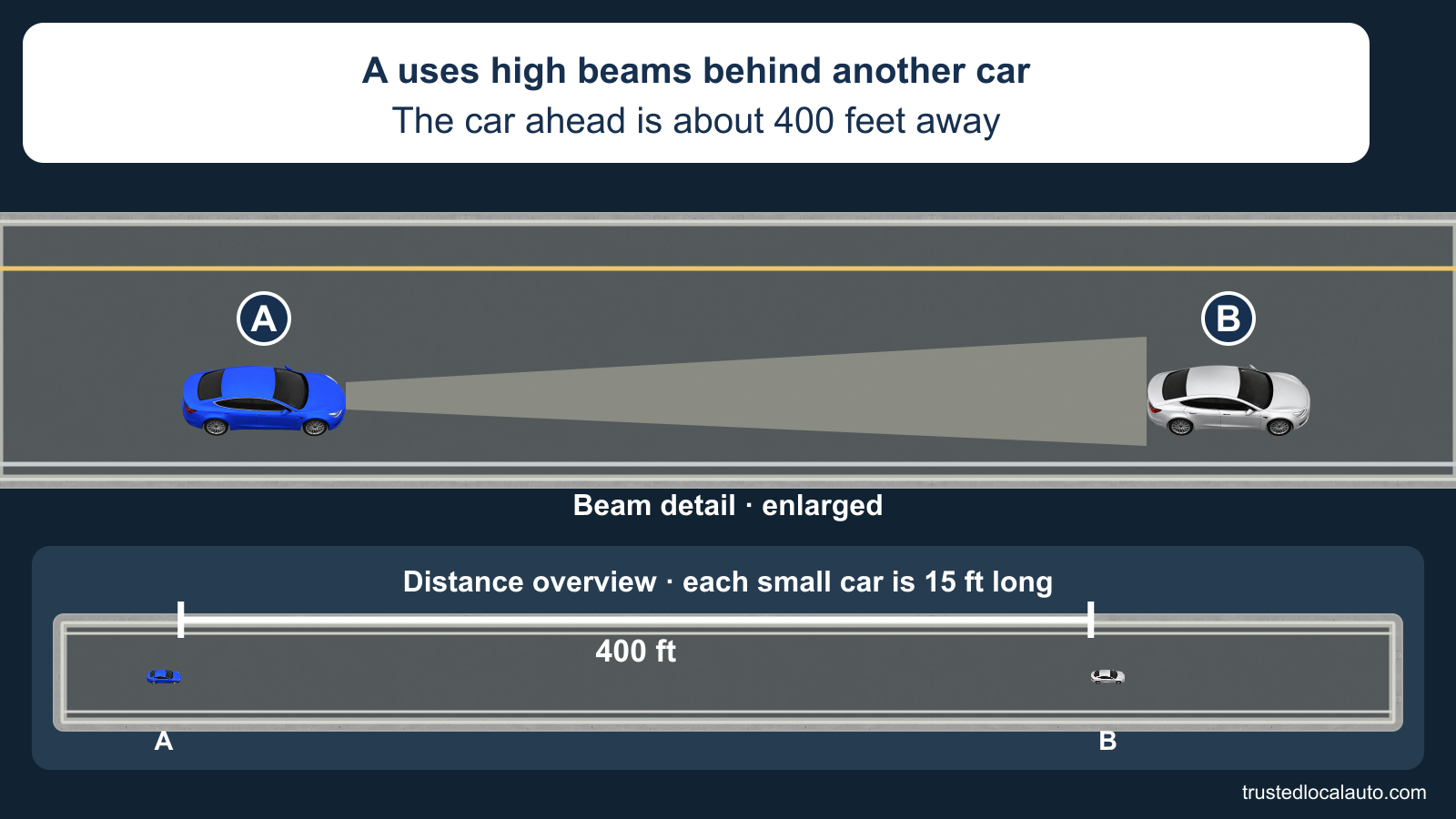 High beams while you follow another car at nightAt night on a dark rural highway, you drive with your high beams on. You catch up with another car and are now about 400 feet behind it. What does Wisconsin law require?Try this question
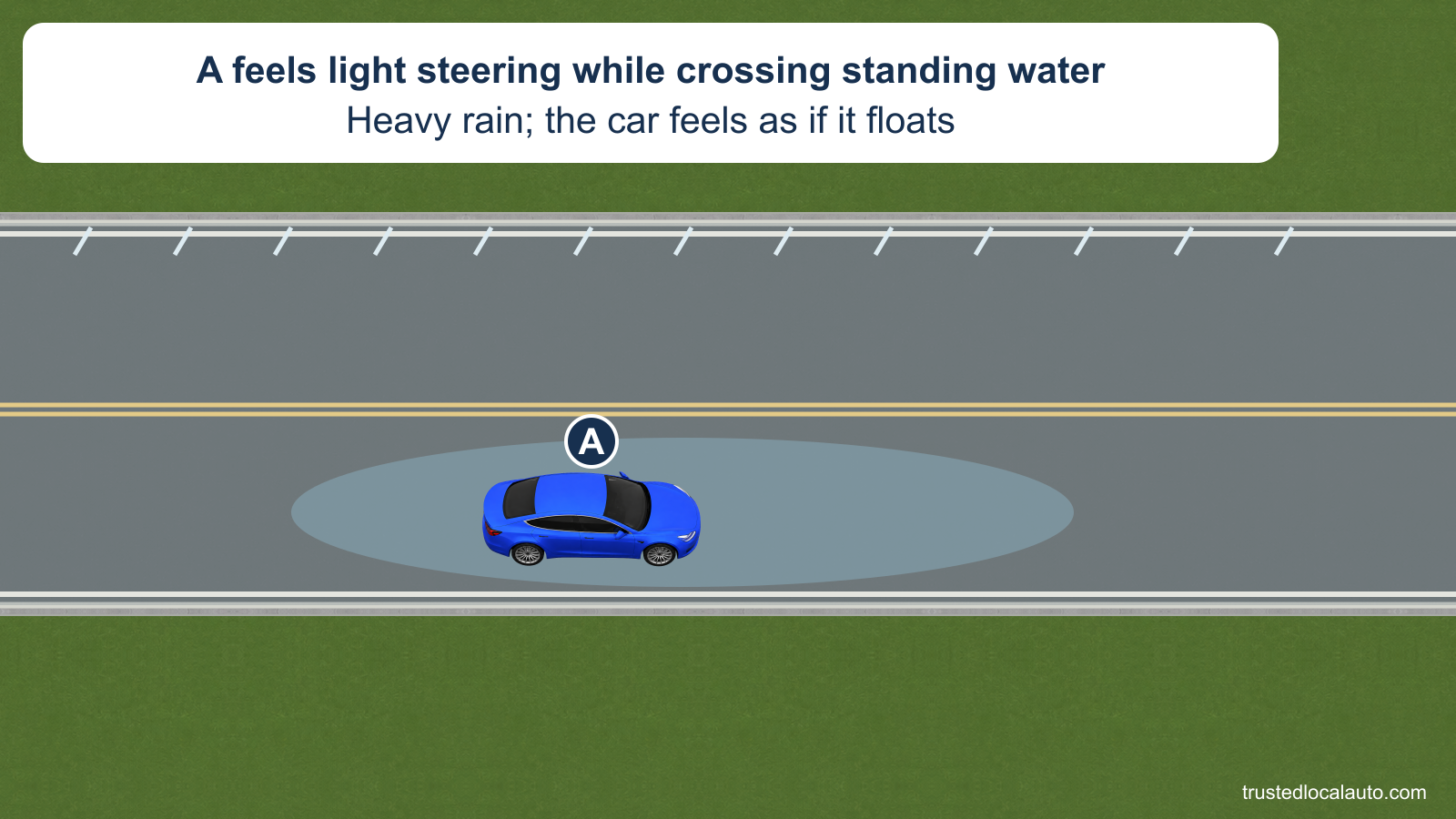 Steering goes light in standing waterYou drive on a highway in heavy rain. As you go through standing water, the steering suddenly feels light, and the car seems to float on the water. What should you do?Try this question
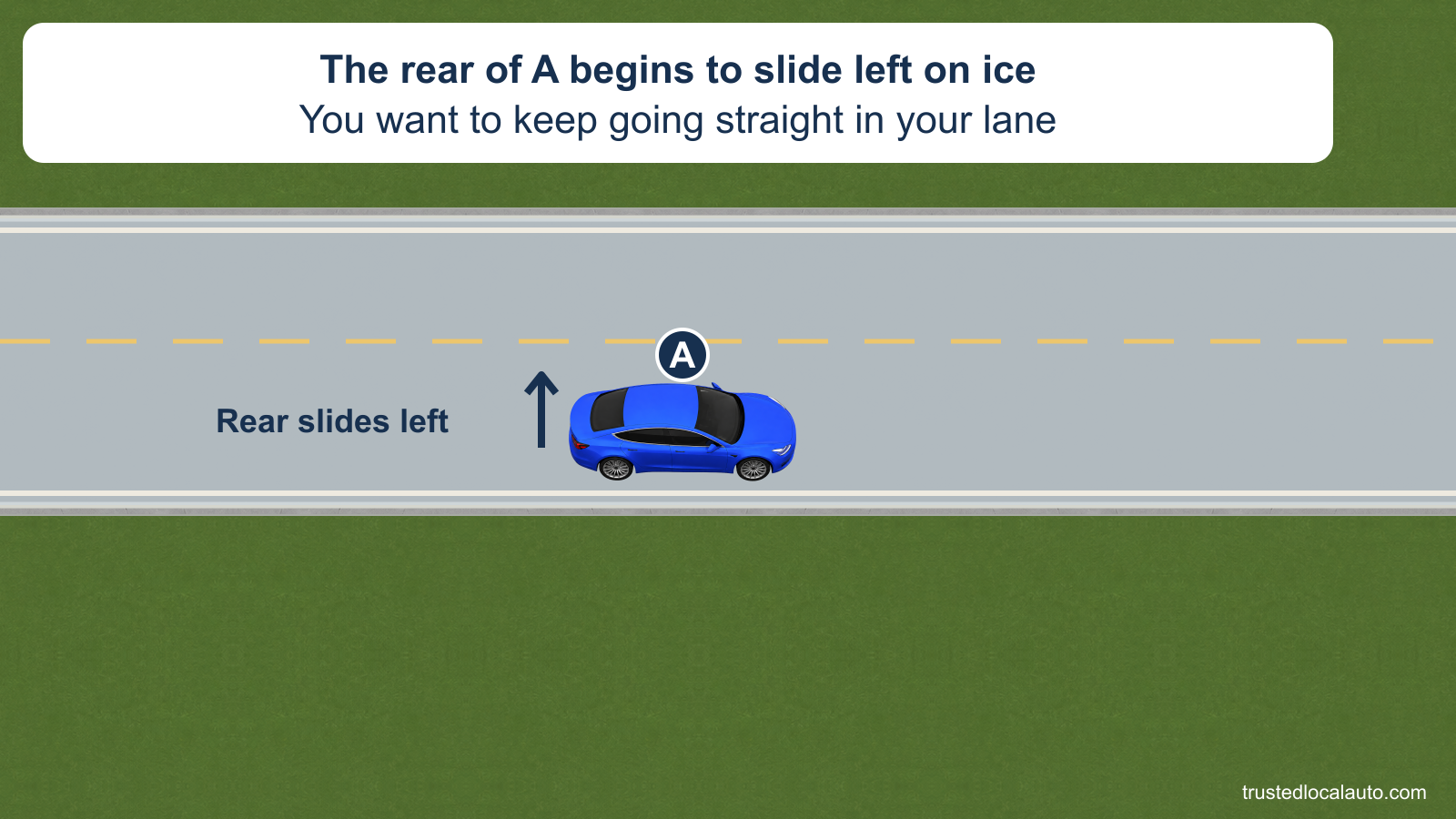 Rear of the car slides on an icy roadOn an icy road, the back of your car starts to slide to the left. You want to keep going straight in your lane. What should you do?Try this question
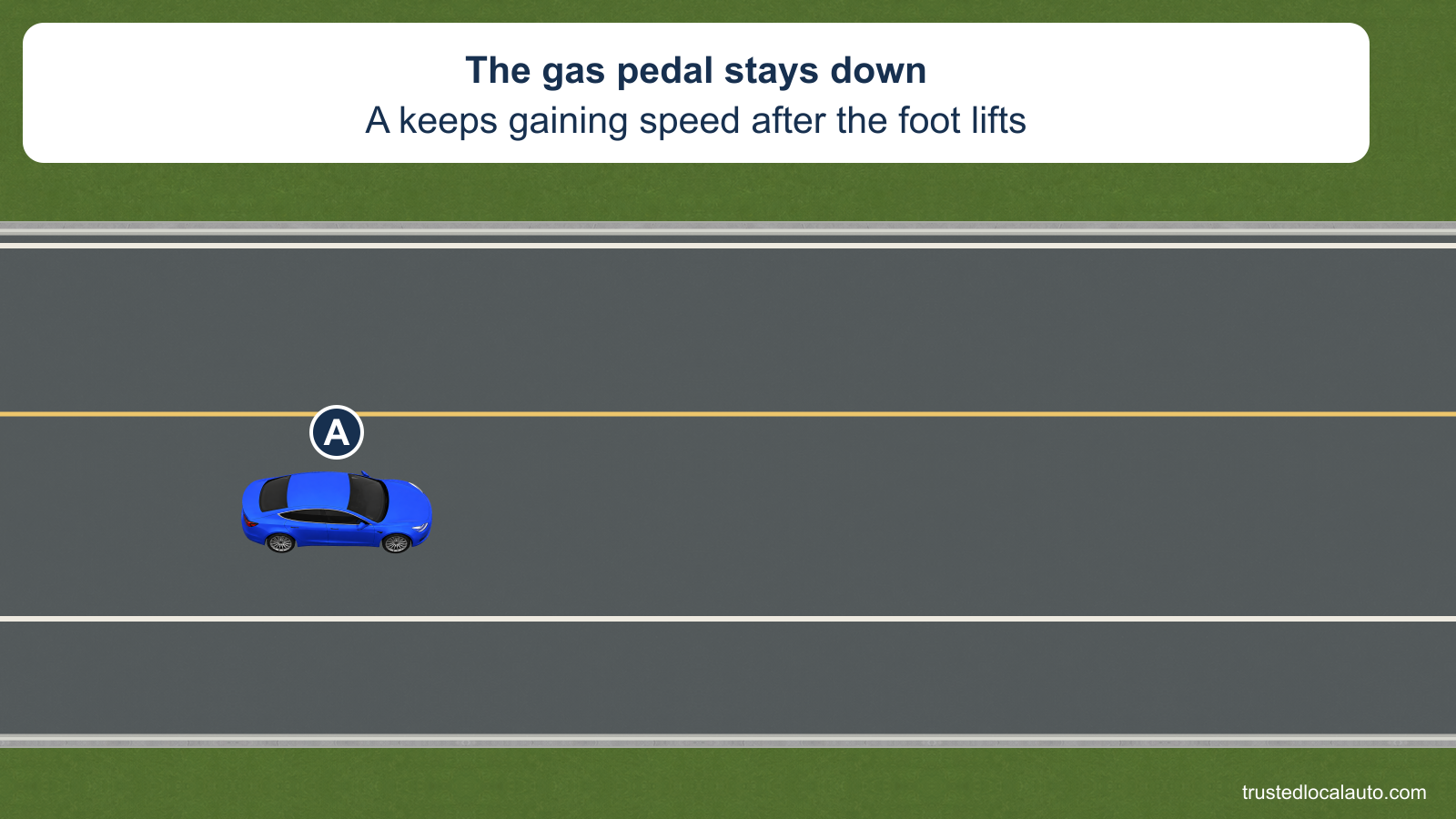 Gas pedal stuck at highway speedOn a highway, you lift your foot, but the gas pedal stays down and the car keeps going faster. What should you do?Try this question
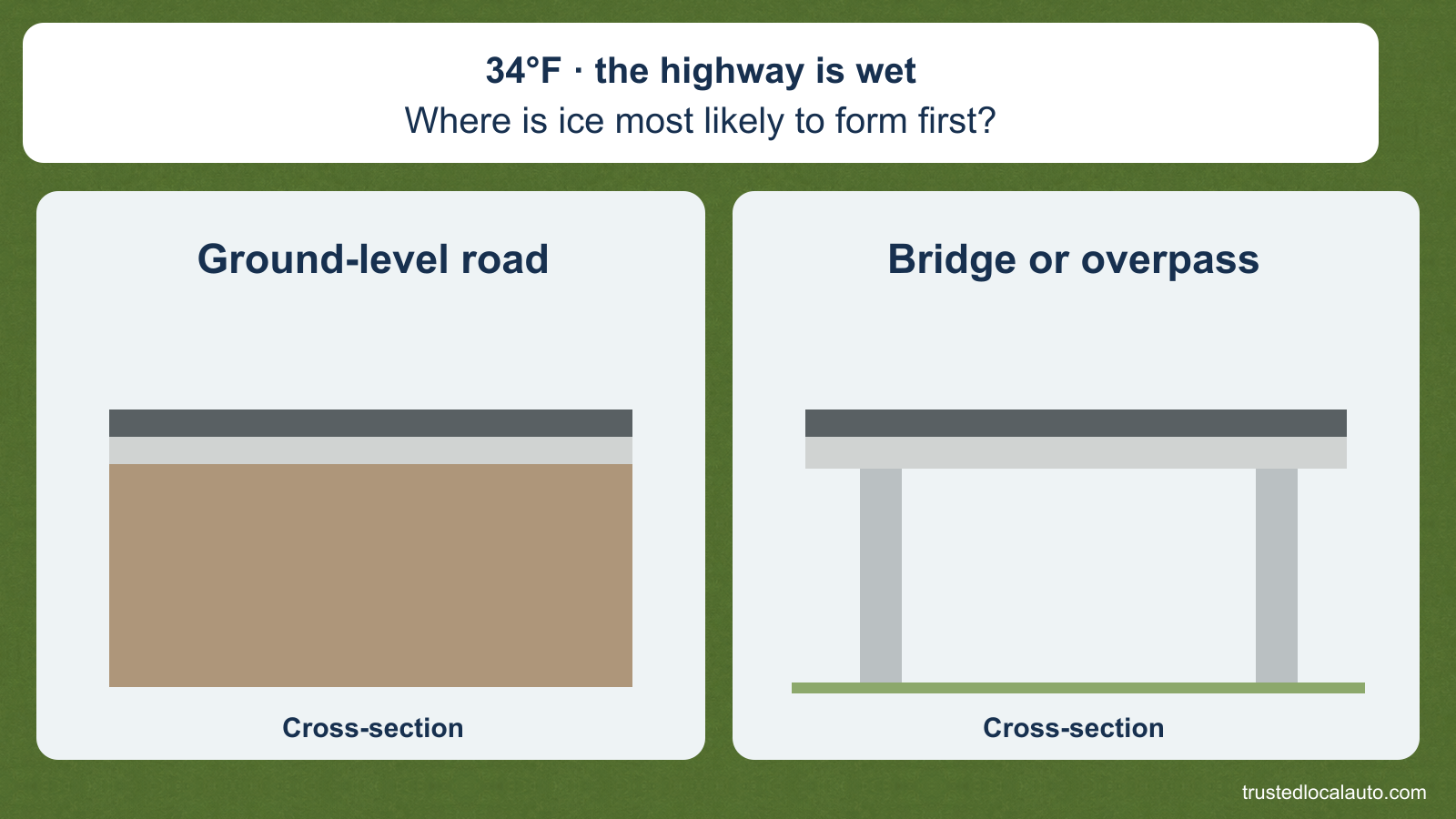 Wet highway at 34 degrees FThe air temperature is 34°F, and the highway is wet but not yet icy. Where are you most likely to find ice first?Try this question
- Brake pedal pulses during a hard stop HardYour car has anti-lock brakes (ABS). On a wet road, the car ahead stops suddenly, and you brake hard. The brake pedal starts to pulse under your foot, and you hear a grinding noise. What should you do?Try this question
- High beams behind another car HardAt night on a dark rural highway, you drive with your high beams on. You catch up with another car and are now about 400 feet behind it. Which statement is correct?Try this question
11 text questions
More questions in this topic
- Sunset today is at 7:40 p.m. The sky is still bright, and you can see clearly for more than 500 feet. By what time at the latest must your headlights be on?
- At night on a rural highway, your headlights suddenly go out. There is a car ahead of you and traffic behind you. What should you do?
- After a night of snow, you scrape a large clear area on your windshield. Snow still covers the roof, the other windows, the lights, the side mirrors and the license plates. What should you do before you drive?
- You drive at 60 mph on a highway. With a loud bang, your right front tire blows out, and the car pulls hard to the right. What should you do first?
- You can see clearly for more than 500 feet. During which period does Wisconsin law still require your headlights to be on? Hard
- At 2 p.m., heavy rain cuts your view, and you can see a vehicle only about 400 feet ahead. Your headlights do not turn on by themselves. Under the Wisconsin visibility rule, low beams are required when you cannot see a person or a vehicle at what distance? Hard
- Sunrise today is at 6:50 a.m. The sky is already light, and you can see clearly for more than 500 feet. Until what time does Wisconsin law require your headlights to be on? Hard
- It is noon, and heavy snow falls. You can see a vehicle only about 250 feet ahead. Your headlights do not turn on by themselves. Which statement is correct? Hard
- At night on a dark rural highway, your high beams are on. No car is ahead of you in your lane. An oncoming car comes toward you and is now about 450 feet away. What does Wisconsin law require? Hard
- On a street with a posted limit of exactly 35 mph, a snowplow ahead of you spreads salt with its warning lights flashing. What minimum following distance does Wisconsin law set here? Hard
- On a highway with a 55 mph limit, you follow a working snowplow with its warning lights flashing. The plow stops at an intersection ahead of you. What is the closest that you should stop behind it? Hard
Wisconsin Class D Knowledge
More Class D Knowledge topics
Road rules · 12 topics
- Licensing & Test Readiness20 questions
- Traffic Signals & Road Markings15 questions
- Observation, Speed & Space14 questions
- Intersections & Right-of-Way23 questions
- Turns, Lanes, Passing & Merging18 questions
- Parking, Reversing & Roadside Stops15 questions
- Sharing the Road16 questions
- Freeways & High-Speed Roads15 questions
- School Zones, Railways & Work Areas31 questions
- Weather, Visibility & Emergencies24 questions · This topic
- Vehicle Safety, Documents & Towing11 questions
- Safe & Responsible Driving17 questions
Each question page shows the answer, the explanation and the official source of the question.