
Practice question, Question 1 of 65
Passing target: 80% (52/65)
The air temperature is 34°F, and the highway is wet but not yet icy. Where are you most likely to find ice first?
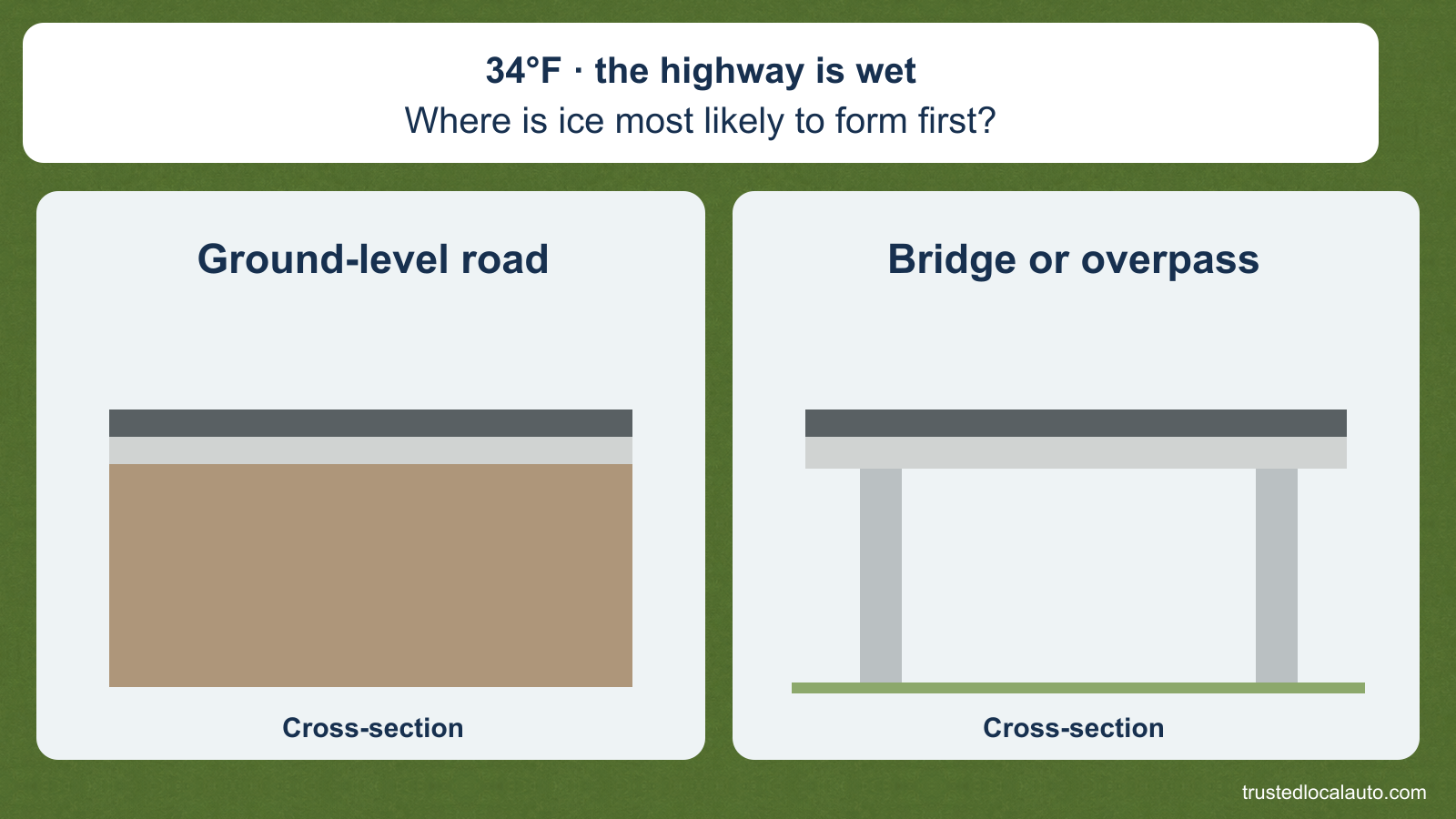
Correct answer: On bridges and overpasses, because they freeze before the rest of the road
Why
Near the freezing point, a road can change from wet to icy in a short distance. Slow down before you reach a bridge or an overpass, and do not brake hard or make sharp turns on it. Watch also for ice in shady spots and on pavement when rain starts to fall on a cold day.
Verified against Wisconsin Motorists' Handbook · Severe weather · p. 48
Is this question correct and clear?
Continue learning
Related Wisconsin questions
- Your car has anti-lock brakes (ABS). On a wet road, the car ahead stops suddenly, and you brake hard. The brake pedal starts to pulse under your foot, and you hear a grinding noise. What should you do?
- Just after sunset on a rural road, you see a pair of eyes shine in your headlights near the ditch ahead. It looks like a deer. What should you do?
- Your car has anti-lock brakes (ABS). On a wet road, the car ahead stops suddenly, and you brake hard. The brake pedal starts to pulse under your foot, and you hear a grinding noise. What should you do?
- You drive on a city street and press the brake pedal. The pedal sinks to the floor, and the car does not slow down. What should you do first?
- Your older car does not have an anti-lock braking system (ABS). On an icy road, you must slow down quickly for stopped traffic ahead. How should you brake?
- On a highway with a 55 mph speed limit, you come up behind a snowplow that is spreading salt. Its warning lights flash. What is the closest that you may follow it?