
North Dakota Class D Knowledge topic
North Dakota Class D Knowledge Observation, Speed & Space
Build safe scanning, speed choice, following distance, hazard awareness and communication habits.
17 questions, free with an account. 6 of them are hard. Each one has its answer, an explanation and its official source.
- 7 picture questions
- 10 text questions
- 6 of them hard
7 picture questions
Questions in this topic
Select a question to answer it. The answer and the explanation show after you answer.
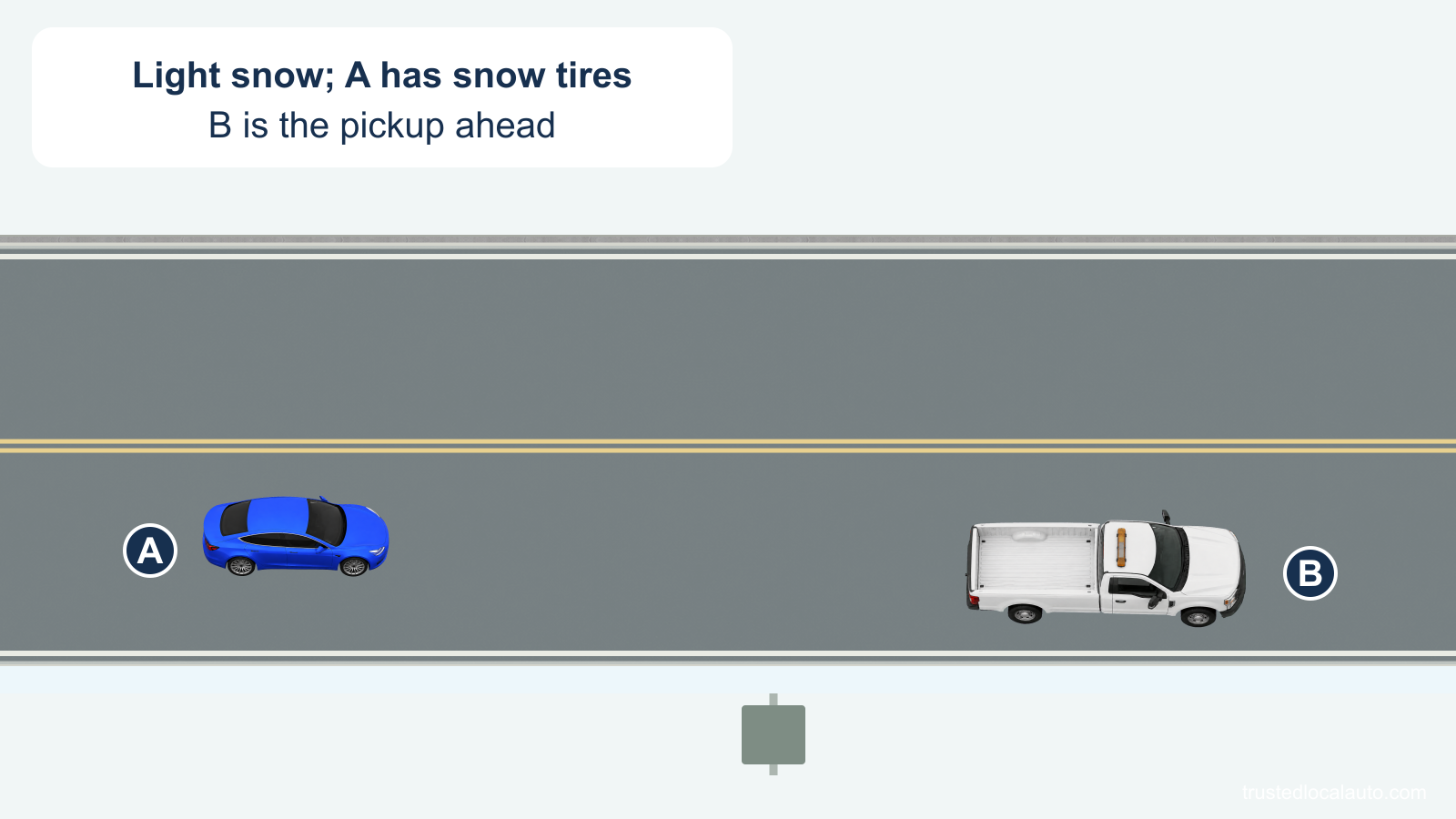 Following distance on a snowy highwayLight snow has made the highway slippery. Your car has snow tires, and you are following a pickup. How much following distance should you keep?Try this question
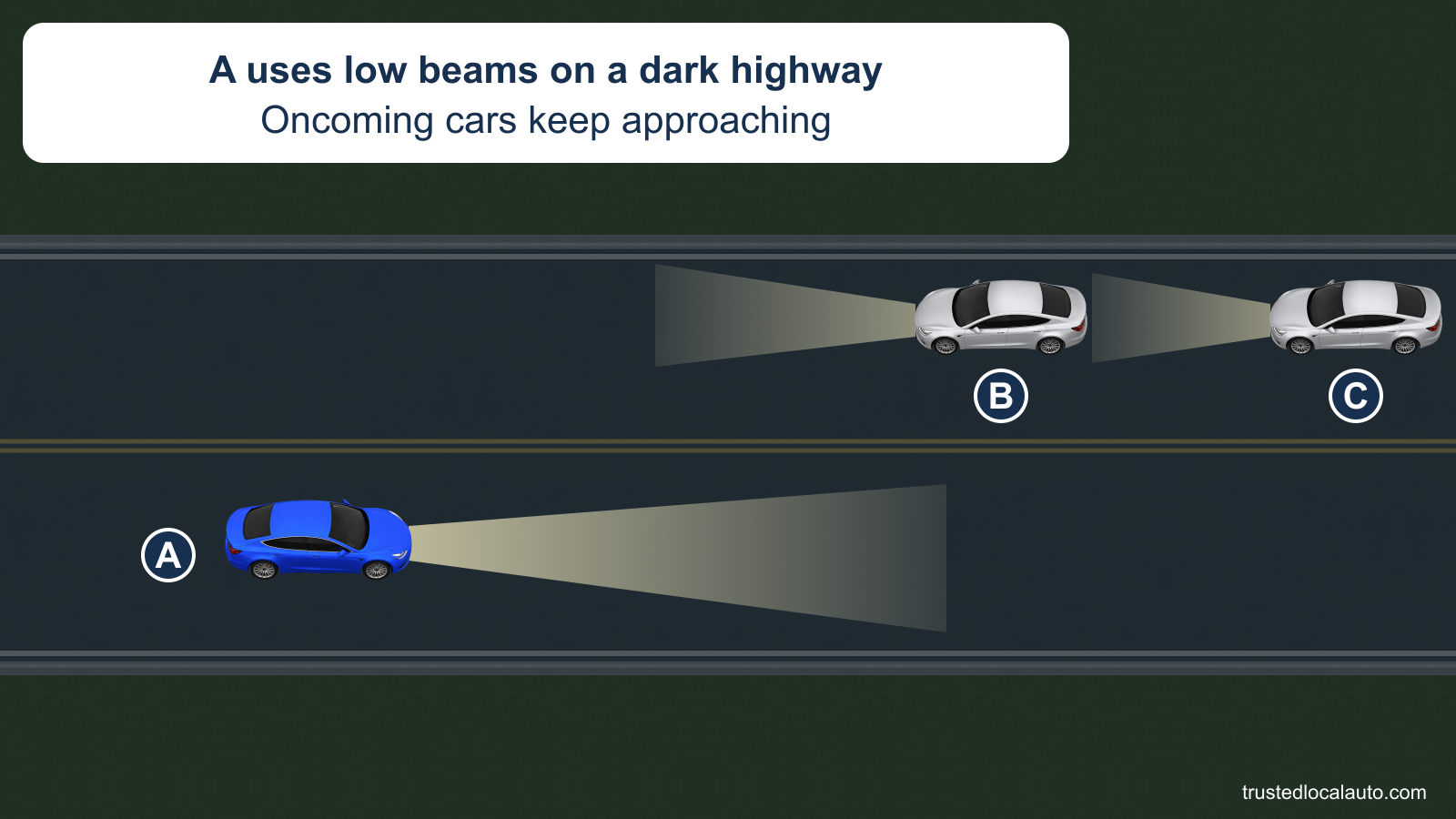 Speed at night with low beamsYou drive at night on a dark rural highway. Oncoming cars keep coming, so you must use your low beams. How should you set your speed?Try this question
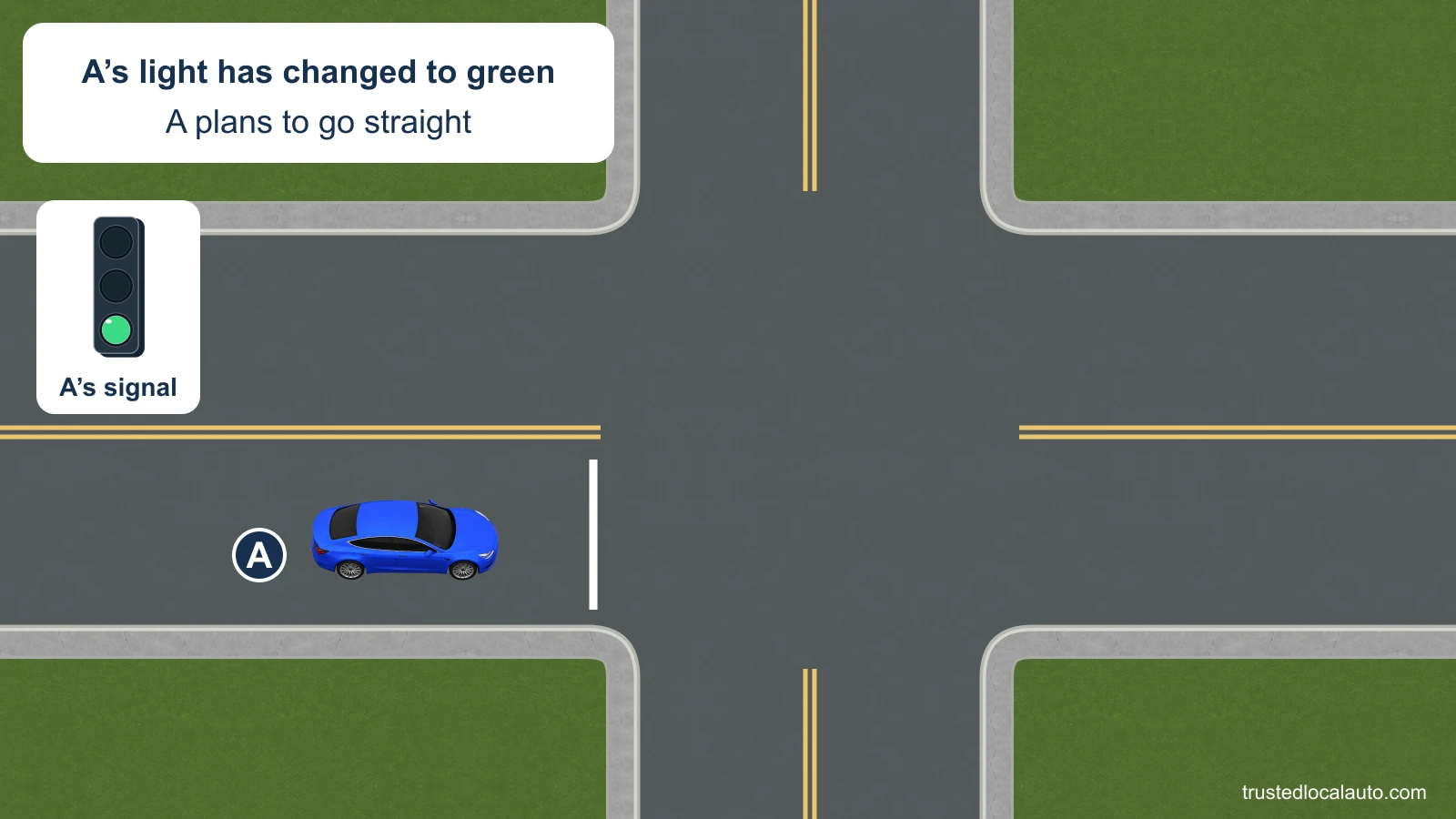 Looking before intersection entryYou are first in line at a red light. The light turns green, and you plan to drive straight through the intersection. Before you enter it, which way should you look?Try this question
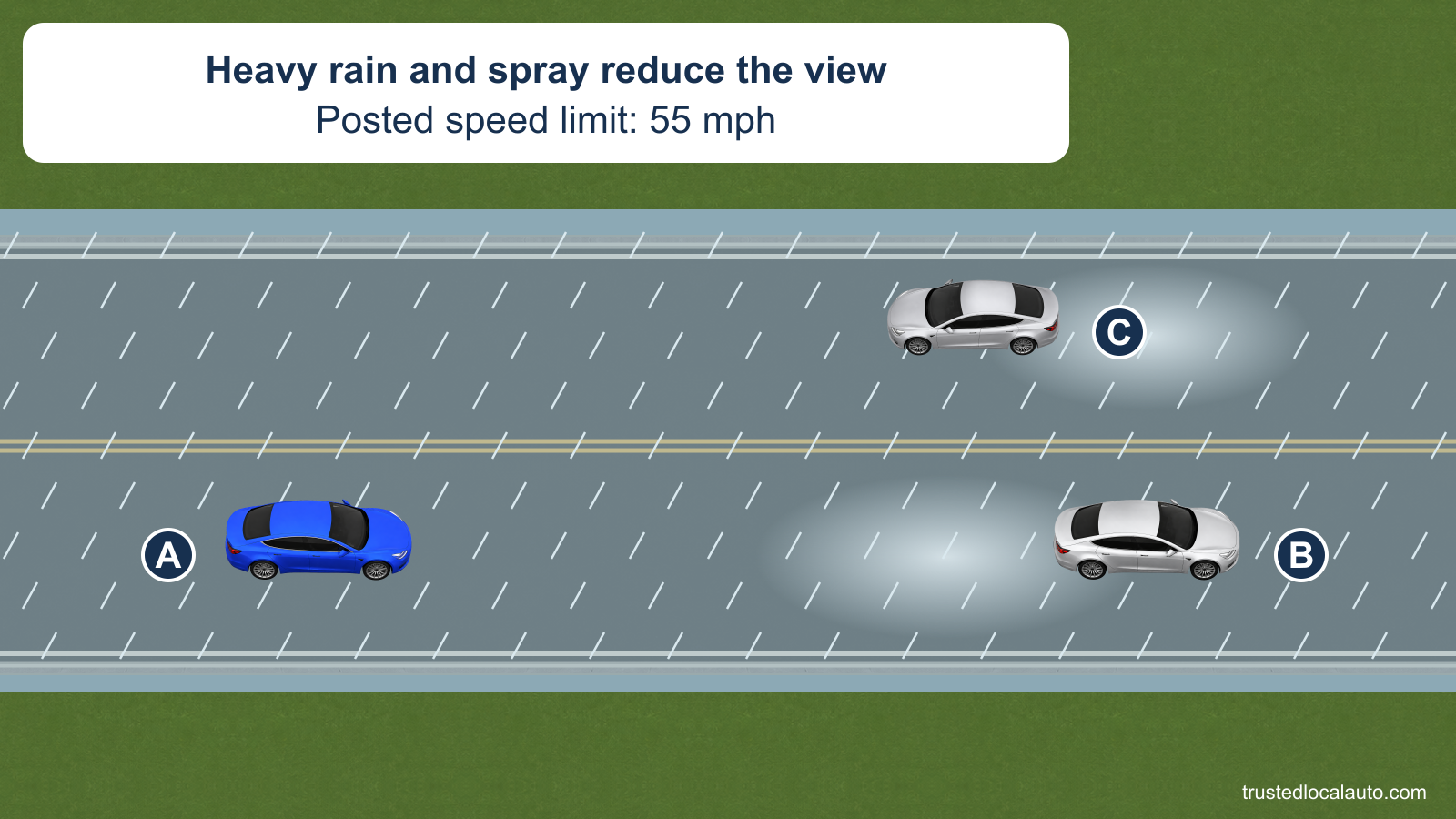 Speed in heavy rainThe posted speed limit is 55 mph. Heavy rain has started, and spray from other vehicles cuts how far you can see. What speed should you drive?Try this question
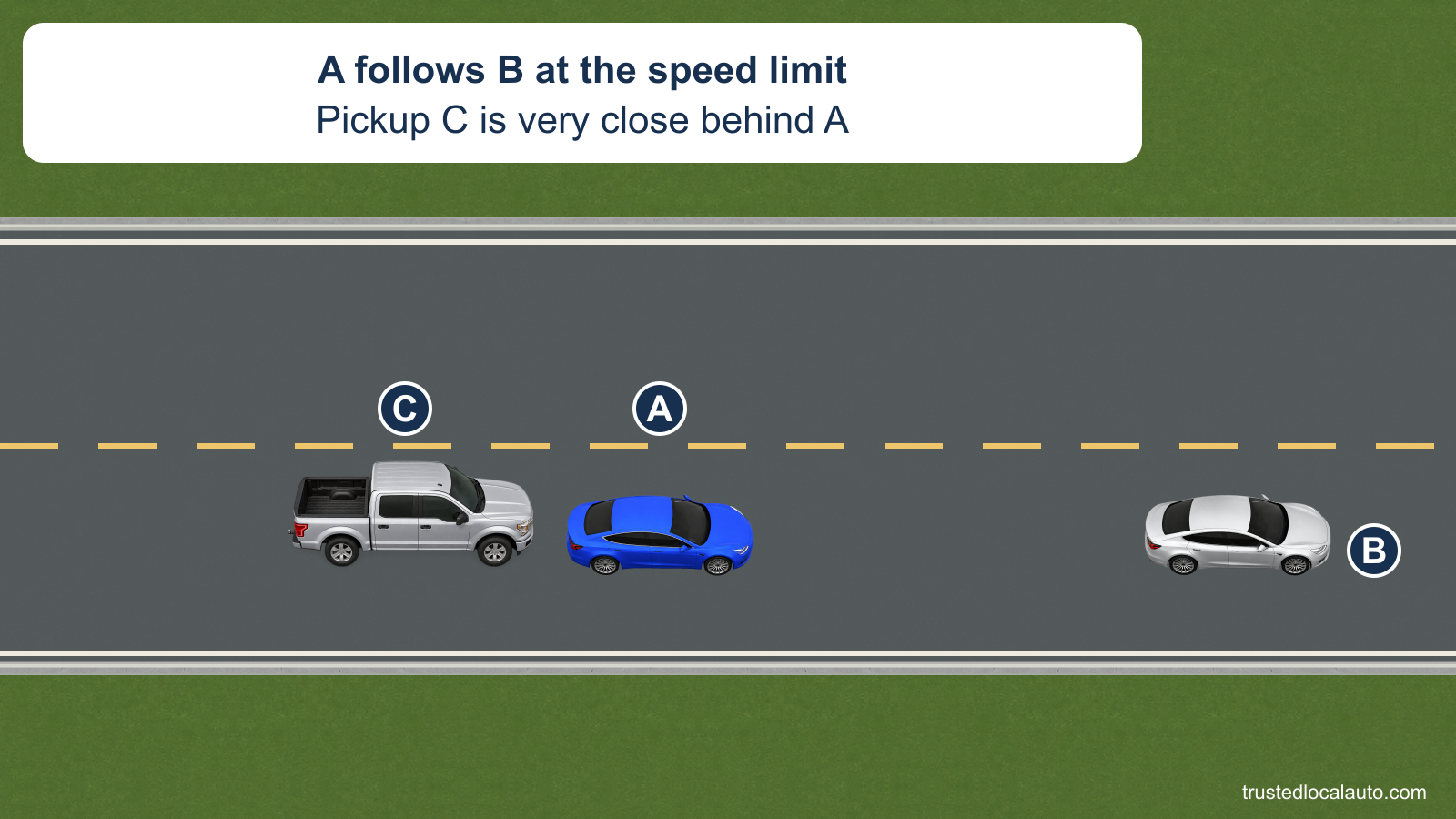 Responding to a tailgaterOn a two-lane highway, you follow a car at the speed limit. A pickup comes up and follows very close behind you. What should you do?Try this question
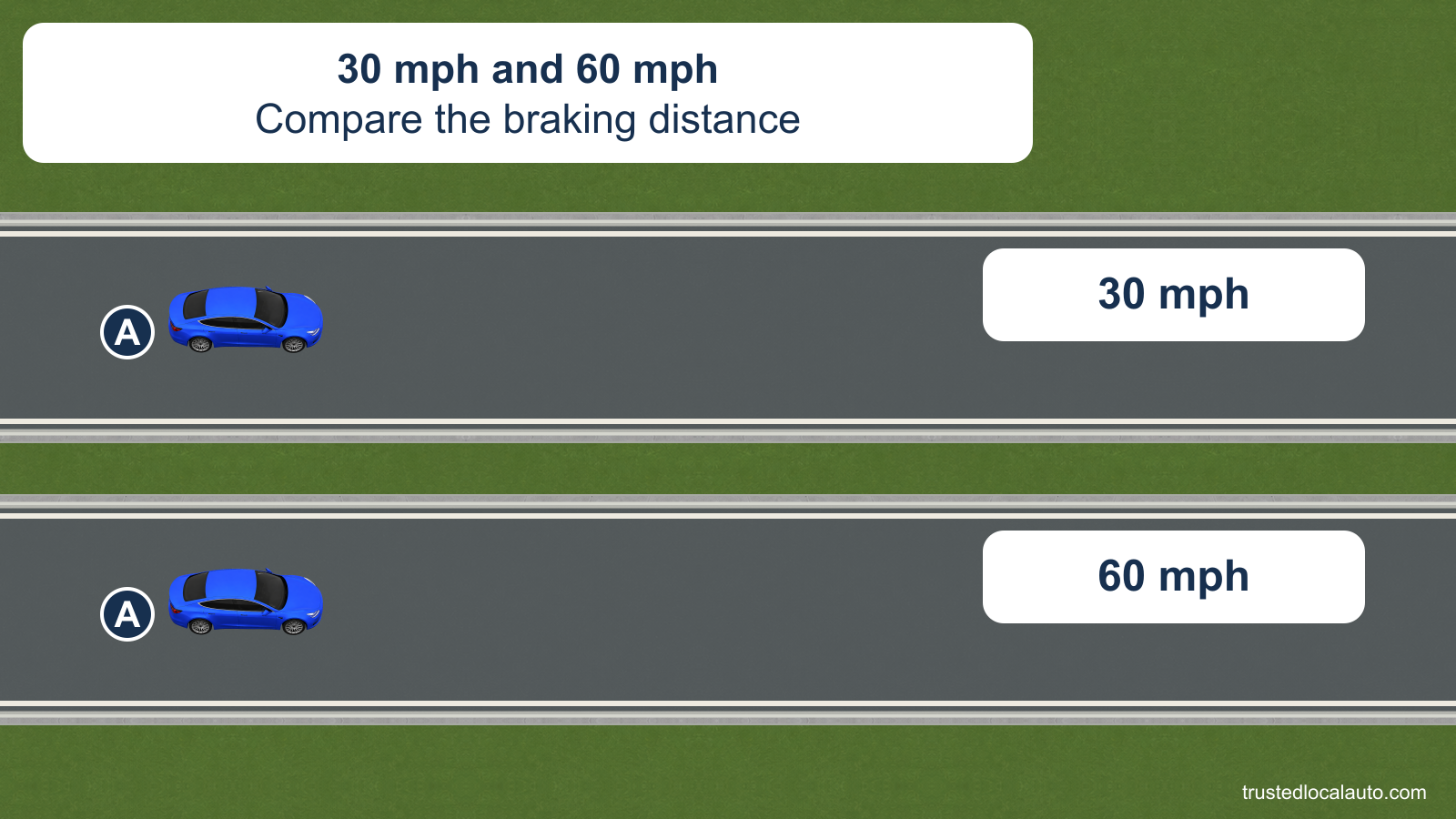 Stopping distance componentsYou usually drive a street at 30 mph. Today you drive a highway at 60 mph, twice as fast. Compared with 30 mph, about how long is your braking distance at 60 mph?Try this question
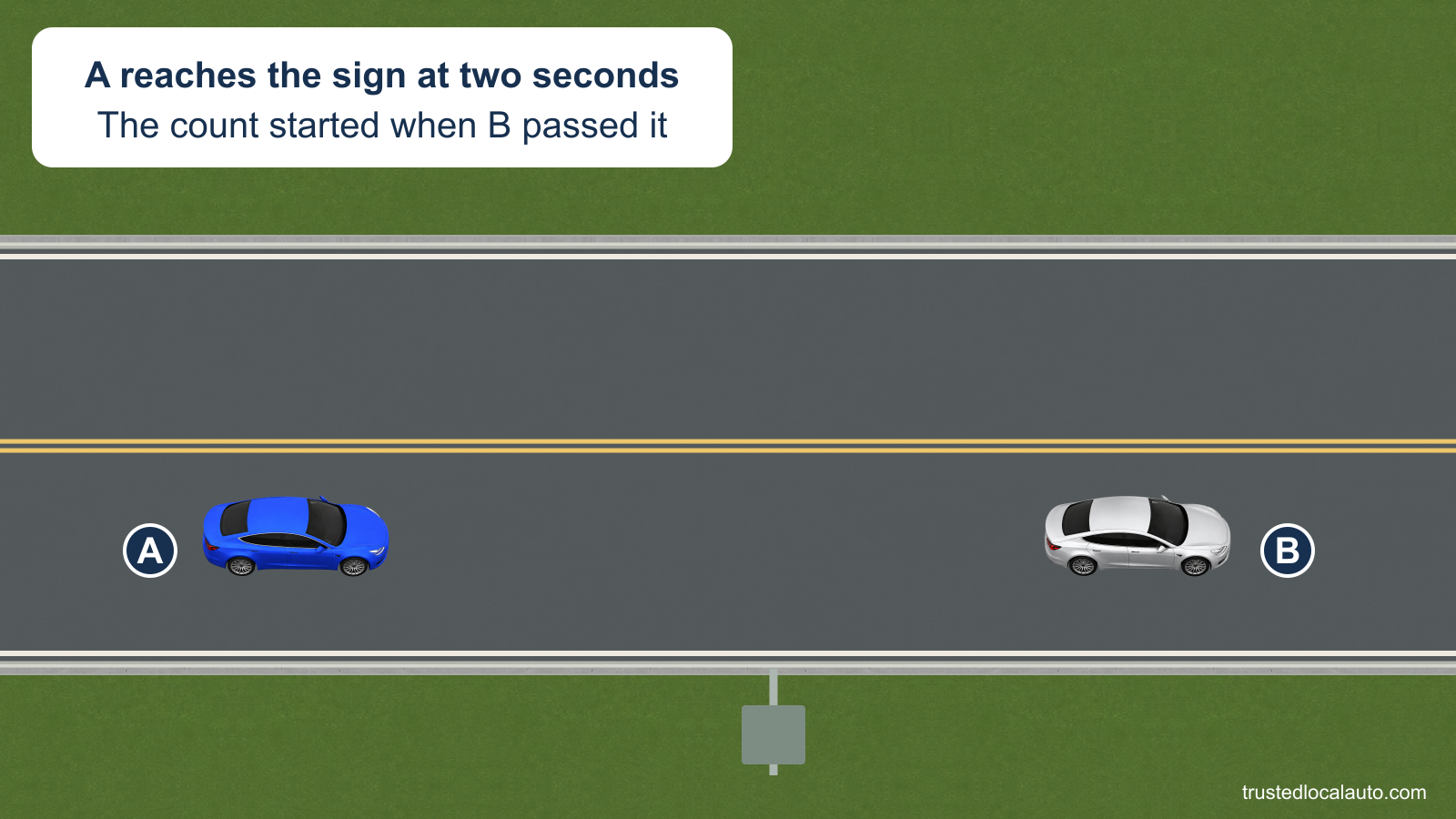 Counting your following gapOn a dry road, the car ahead of you passes a road sign. You start to count, and your front bumper reaches the same sign as you say 'one-thousand-and-two.' What does this tell you?Try this question
10 text questions
More questions in this topic
- You are driving down a long hill. To save fuel, a passenger suggests that you shift into neutral and coast. What does North Dakota law say?
- You turn off the highway onto a gravel township road. No speed limit is posted. What is the highest speed that North Dakota law presumes is lawful on this road?
- You drive a car at 55 mph on dry, level pavement in good weather. About how much distance does it take to bring the car to a stop?
- You are driving through a residential neighborhood in a North Dakota town. You see no speed limit sign. What is the highest speed that the law presumes is lawful there?
- You usually drive a street at 30 mph. Today you drive a highway at 60 mph. Which statement about your braking distance at 60 mph is correct? Hard
- How does the braking distance of a vehicle change when you double its speed, and when you double its weight? Which pair is correct? Hard
- Which statement about following distance is NOT correct? Hard
- On a dry, clear two-lane highway, you follow a car at a steady speed. A driver behind you wants to pass you. What minimum following distance does the manual give for this case? Hard
- In a North Dakota town, you drive on a paved road through a public park. No speed limit sign is posted, and no school or railroad crossing is near. What is the highest speed that the law presumes is lawful? Hard
- No speed limit sign is posted. At which of these places does North Dakota law presume that 25 mph is the highest lawful speed? Hard
North Dakota Class D Knowledge
More Class D Knowledge topics
Road rules · 12 topics
- Licensing & Test Readiness27 questions
- Traffic Signals & Road Markings14 questions
- Observation, Speed & Space17 questions · This topic
- Intersections & Right-of-Way20 questions
- Turns, Lanes, Passing & Merging21 questions
- Parking, Reversing & Roadside Stops16 questions
- Sharing the Road22 questions
- Freeways & High-Speed Roads14 questions
- School Zones, Railways & Work Areas33 questions
- Weather, Visibility & Emergencies21 questions
- Vehicle Safety, Documents & Towing15 questions
- Safe & Responsible Driving22 questions
Each question page shows the answer, the explanation and the official source of the question.