
Ontario G1 topic
Ontario G1 Weather, Visibility & Emergencies
Handle darkness, poor weather, loss of traction, breakdowns, collisions and emergencies.
54 questions, free with an account. 16 of them are hard. Each one has its answer, an explanation and its official source.
- 38 picture questions
- 16 text questions
- 16 of them hard
38 picture questions
Questions in this topic
Select a question to answer it. The answer and the explanation show after you answer.
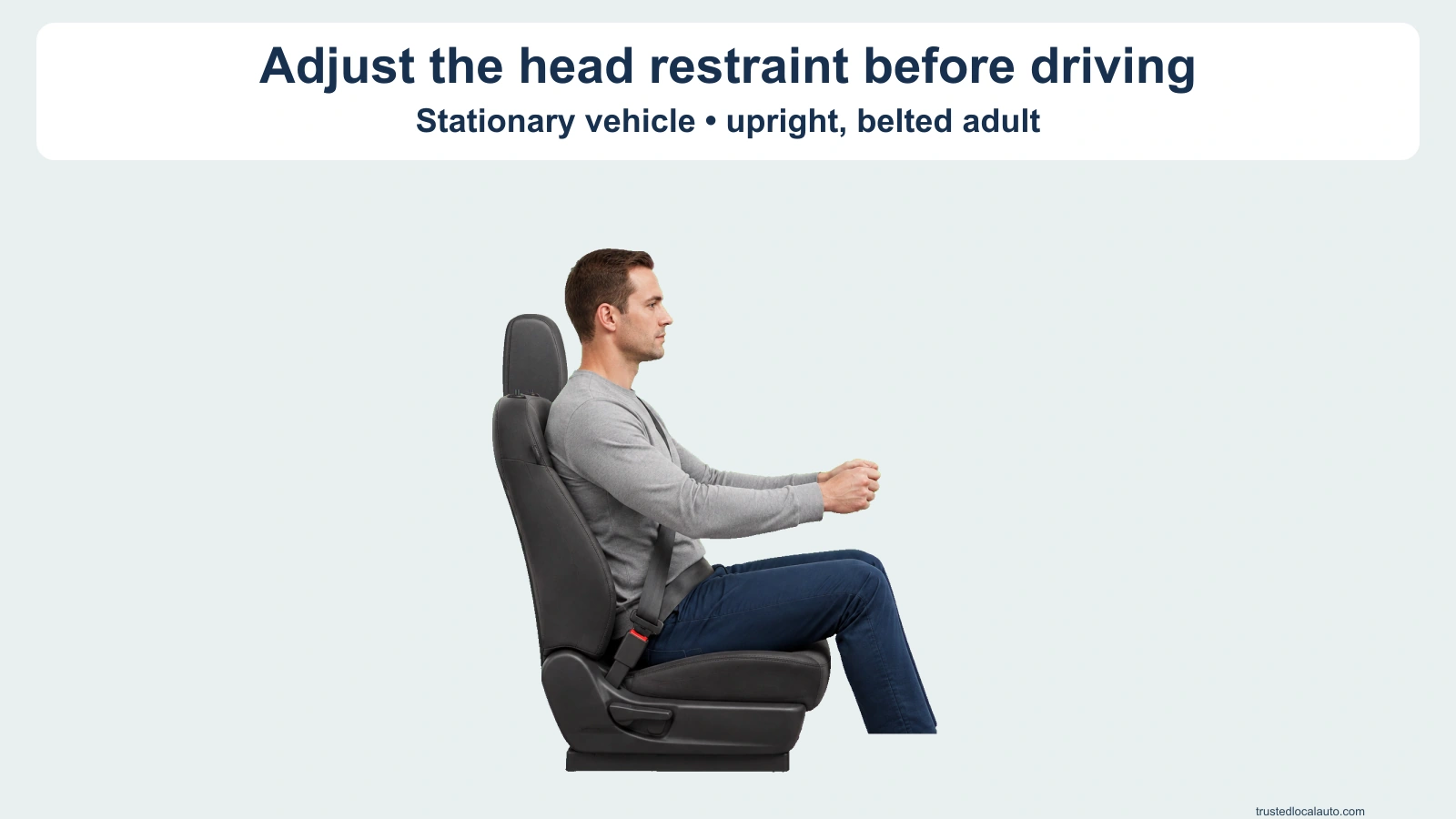 Adjusting a head restraintBefore driving, how should you position an adjustable head restraint to help reduce the risk of whiplash in a rear-end collision?Try this question
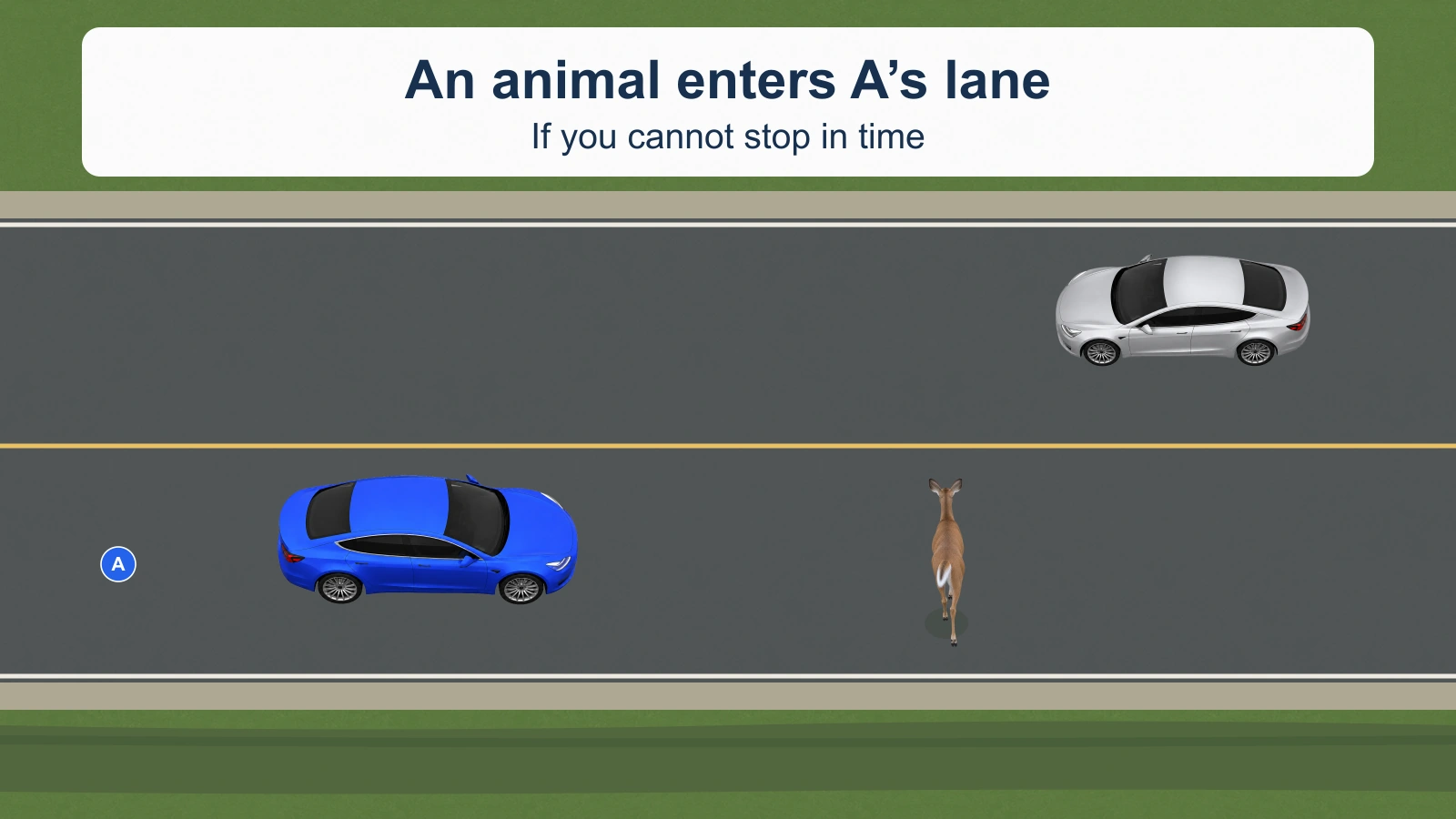 Deer in your lane, too close to stopA deer suddenly enters your lane and you cannot stop before reaching it. What should you do immediately?Try this question
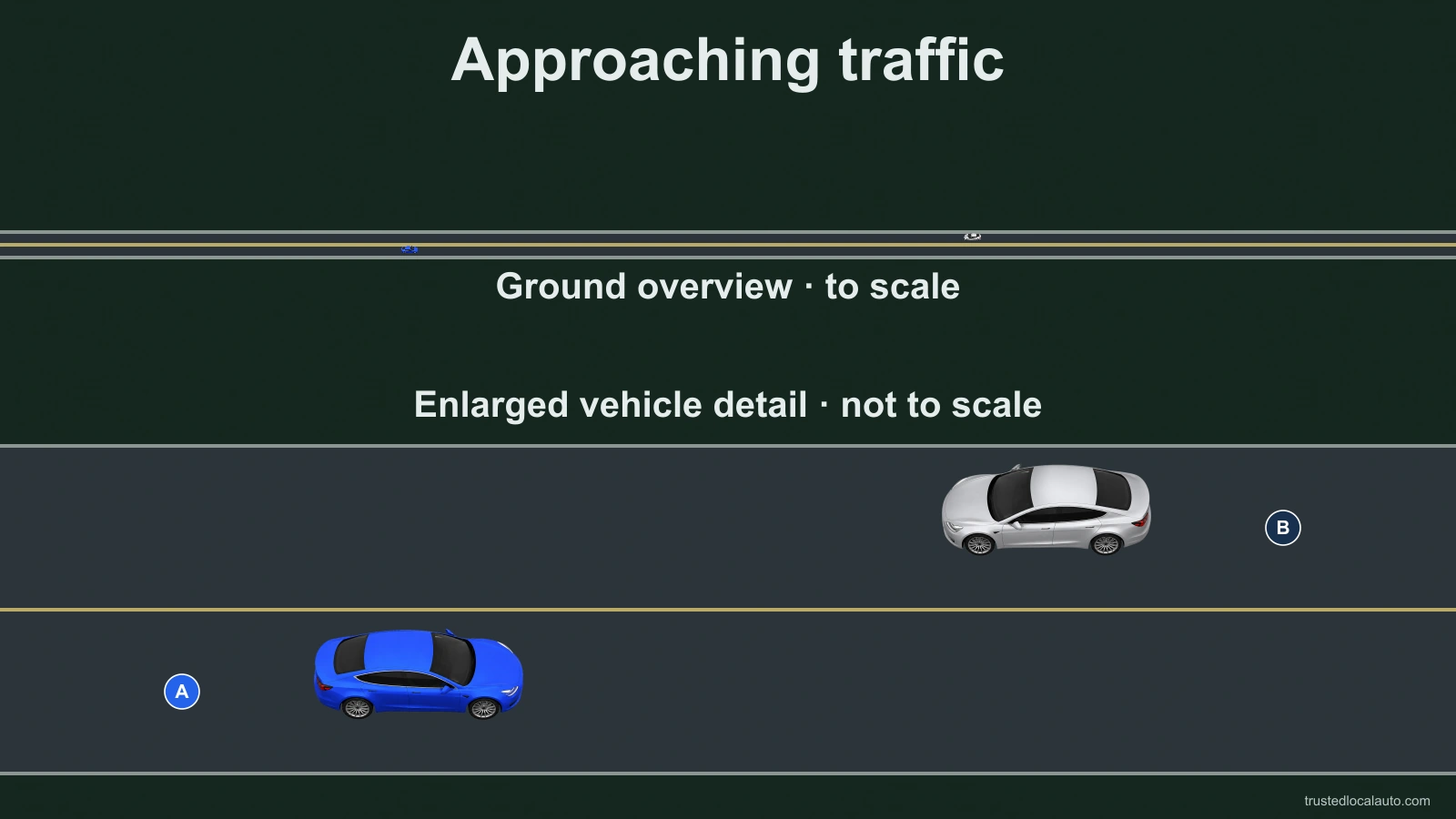 Dimming high beams for an oncoming vehicleWhen approaching an oncoming vehicle at night, when must you switch your headlights from high beams to low beams?Try this question
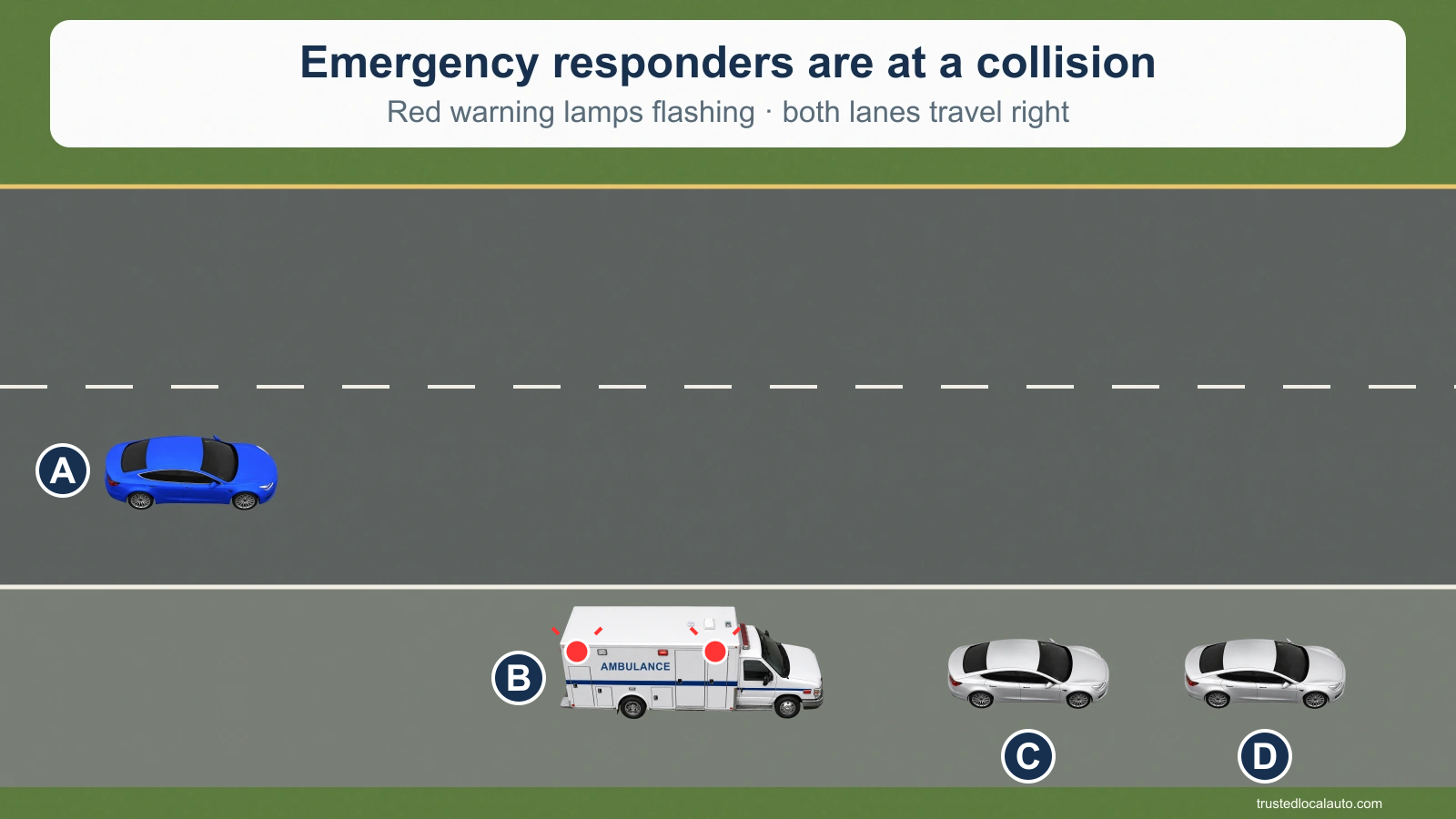 Ambulance at a collision on the right shoulderYou are in the right lane of a highway with two lanes in your direction. An ambulance is stopped on the right shoulder at a collision scene, with red lights flashing. What should you do?Try this question
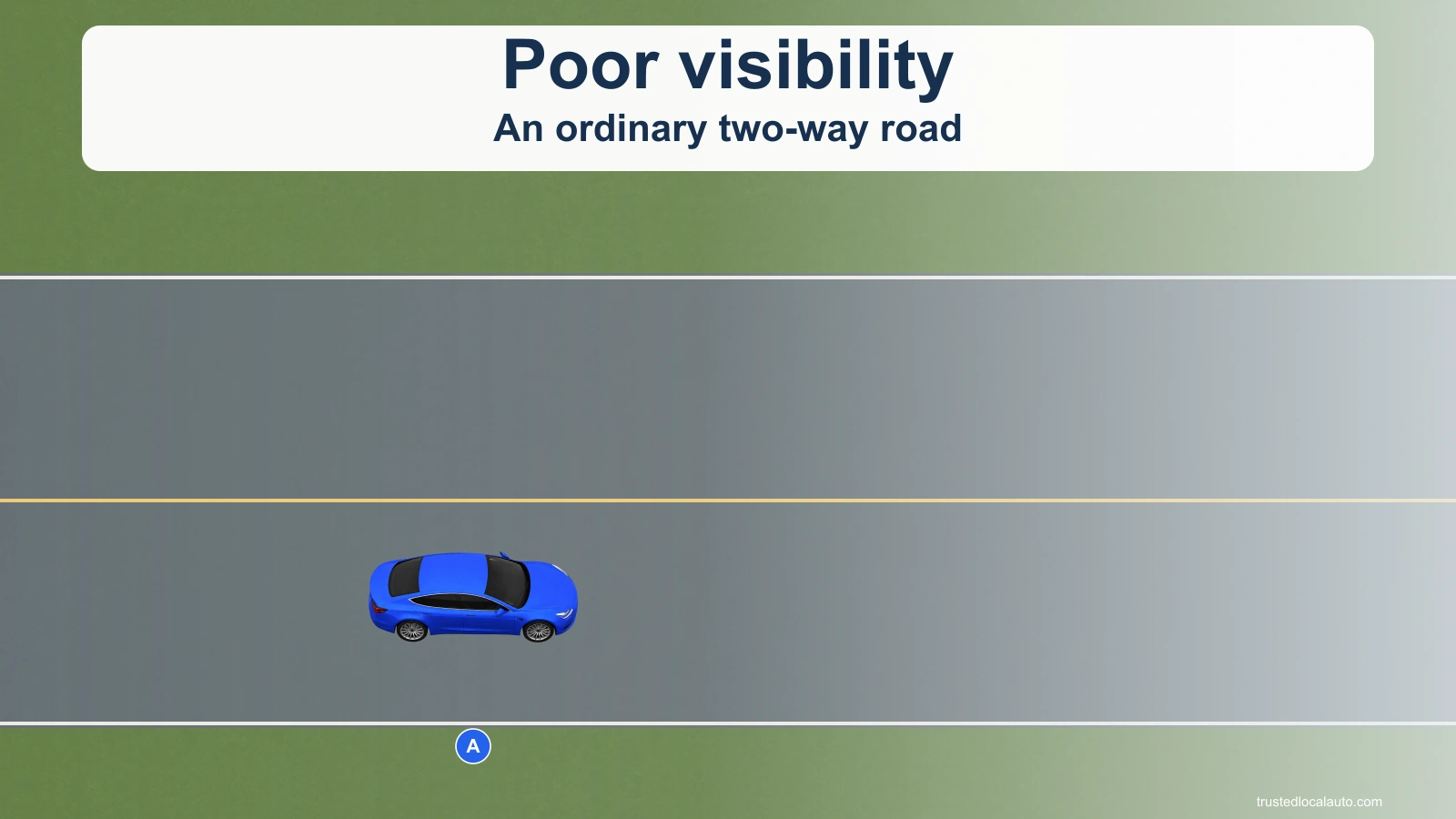 Headlights in poor visibility by dayAside from the time of day, under what visibility condition must you turn on your headlights?Try this question
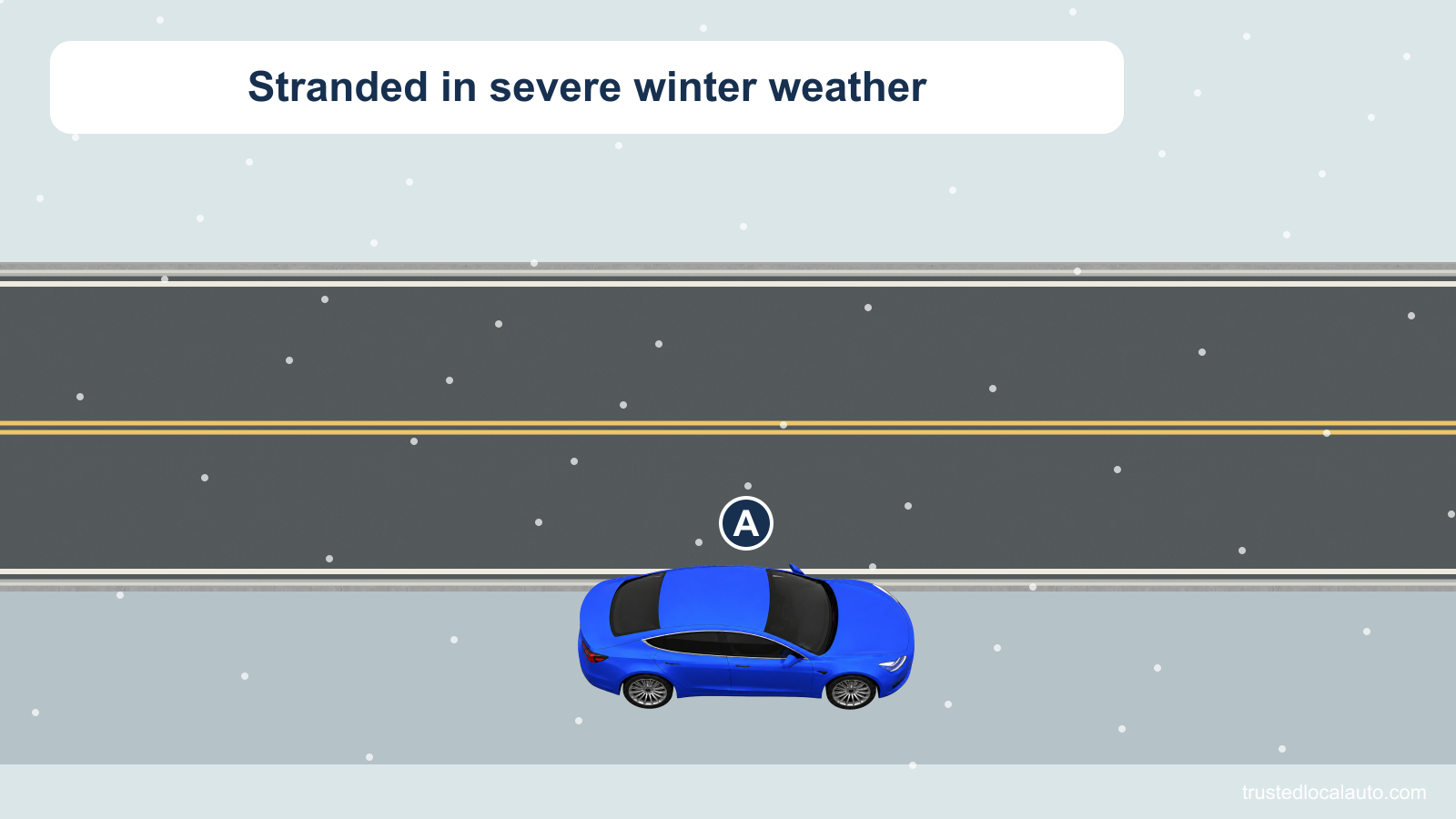 Stranded in severe winter weatherIf you become stranded in severe winter weather, what is the safest choice?Try this question
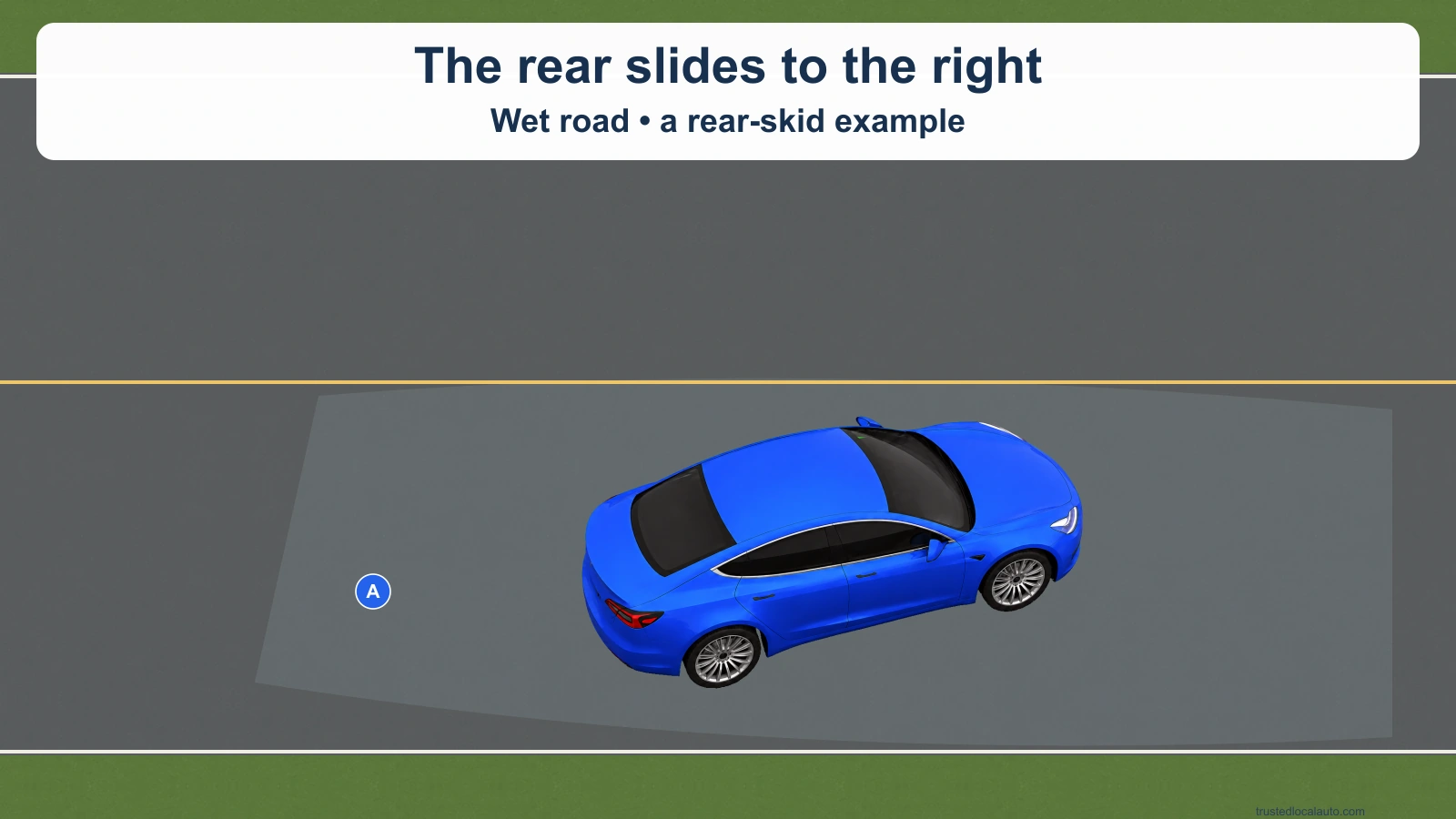 Skid on a wet or icy road: how to steerIf your vehicle begins to skid on a wet or icy road, how should you steer to regain control?Try this question
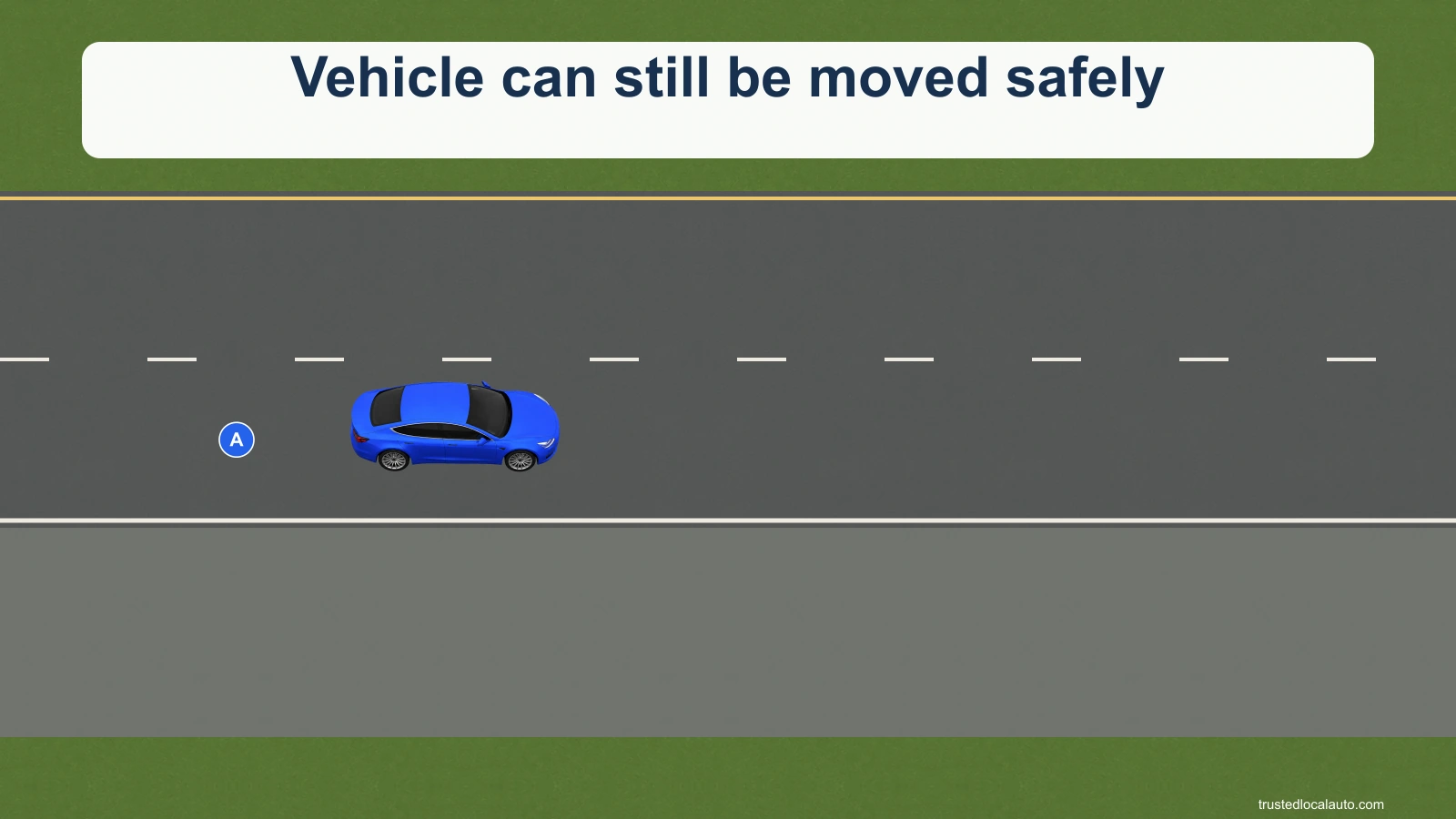 Vehicle breakdown on a busy highwayIf your vehicle breaks down or becomes disabled on a busy highway, what is the best immediate action?Try this question
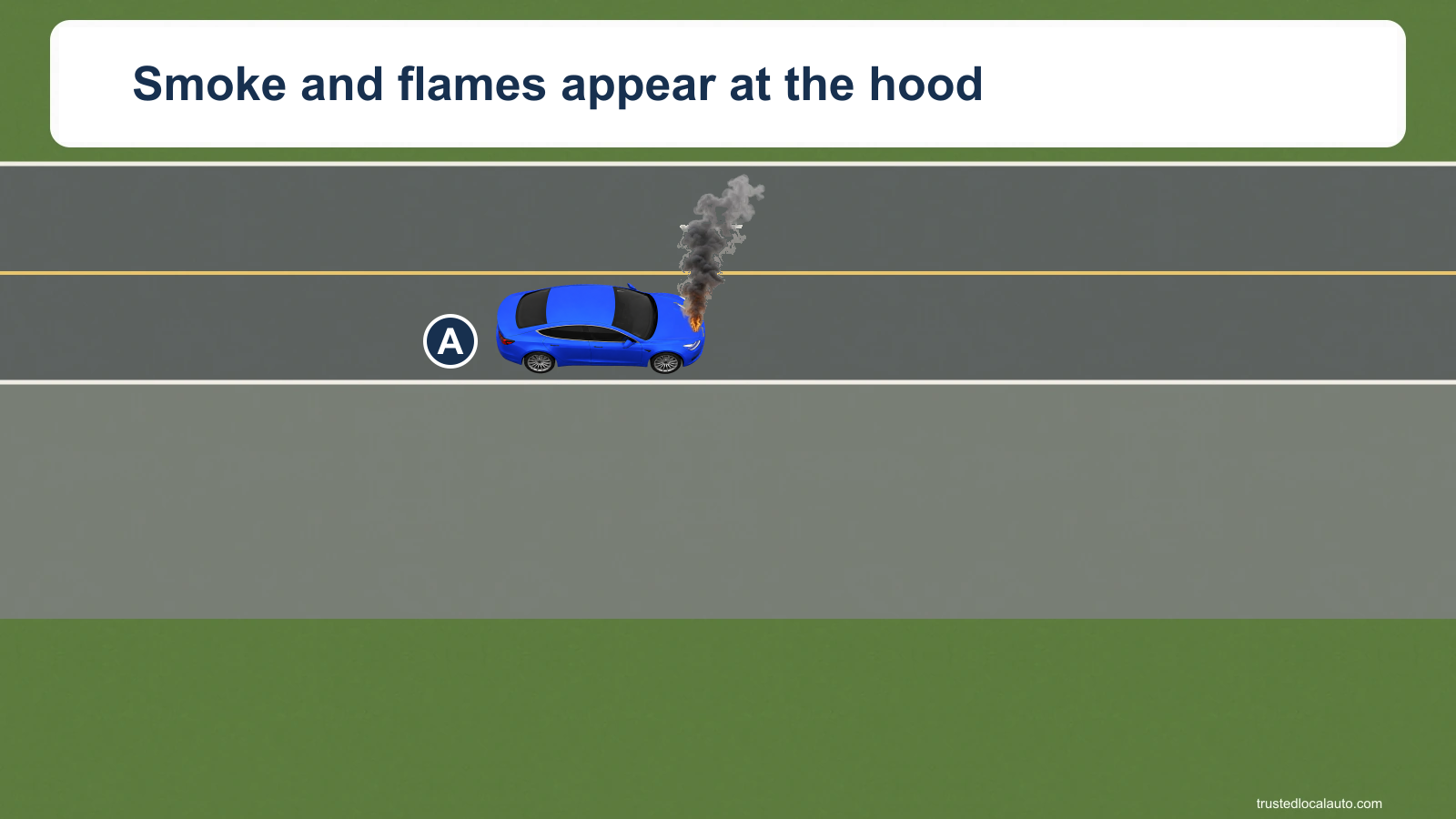 Vehicle catches fire while you driveWhat should you do if your vehicle catches fire while you are driving?Try this question
 Why not to use high beams in fogWhen driving in fog, why should you NOT use your high beam headlights?Try this question
- Headlights in heavy fog, snow or rainWhen driving in heavy fog, snow, or rain, which headlights should you use?Try this question
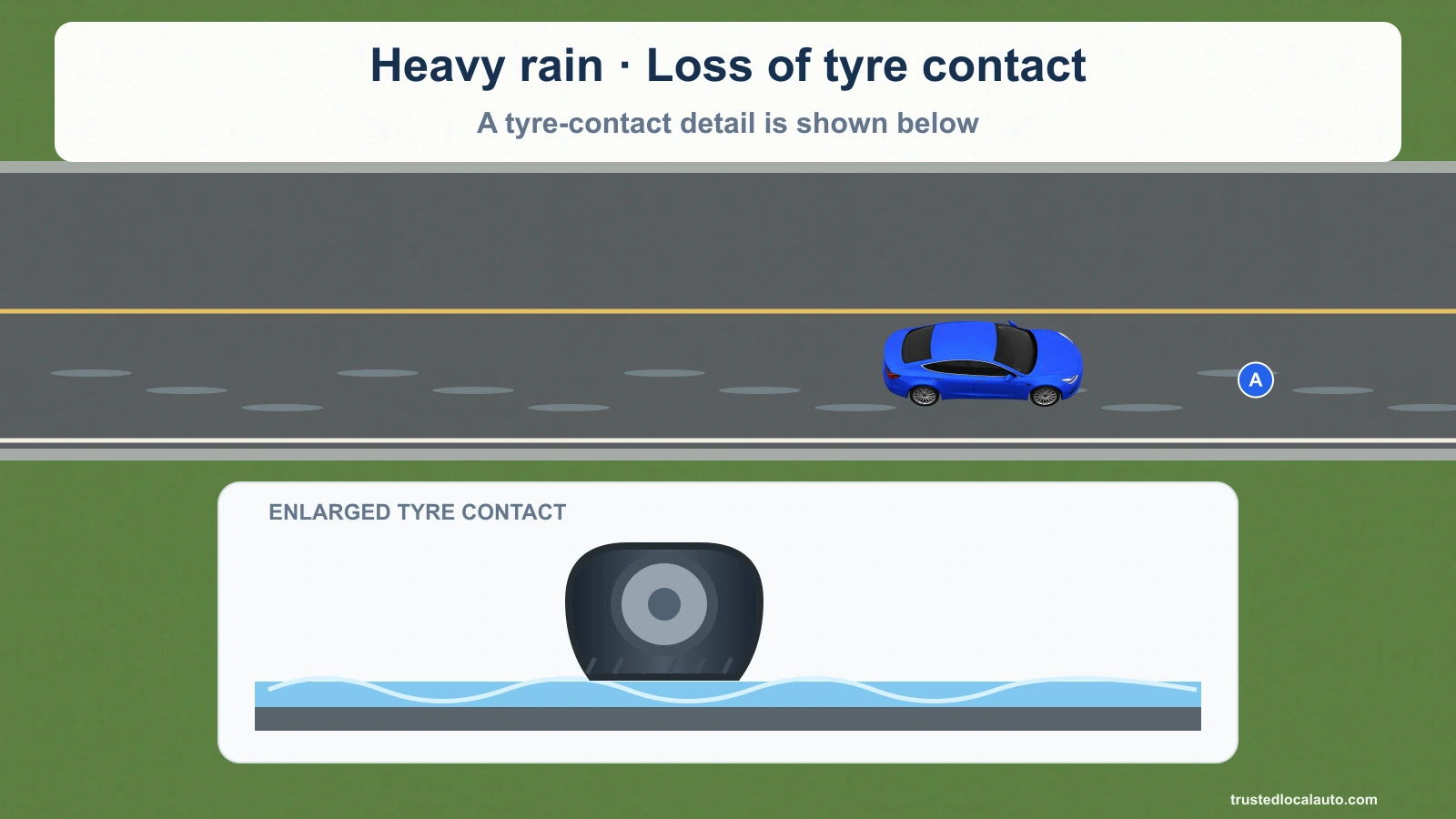 Tires on a thin layer of water in heavy rainWhen driving in heavy rain, your tires may ride on a thin layer of water rather than the road surface, causing a total loss of traction. This is known as:Try this question
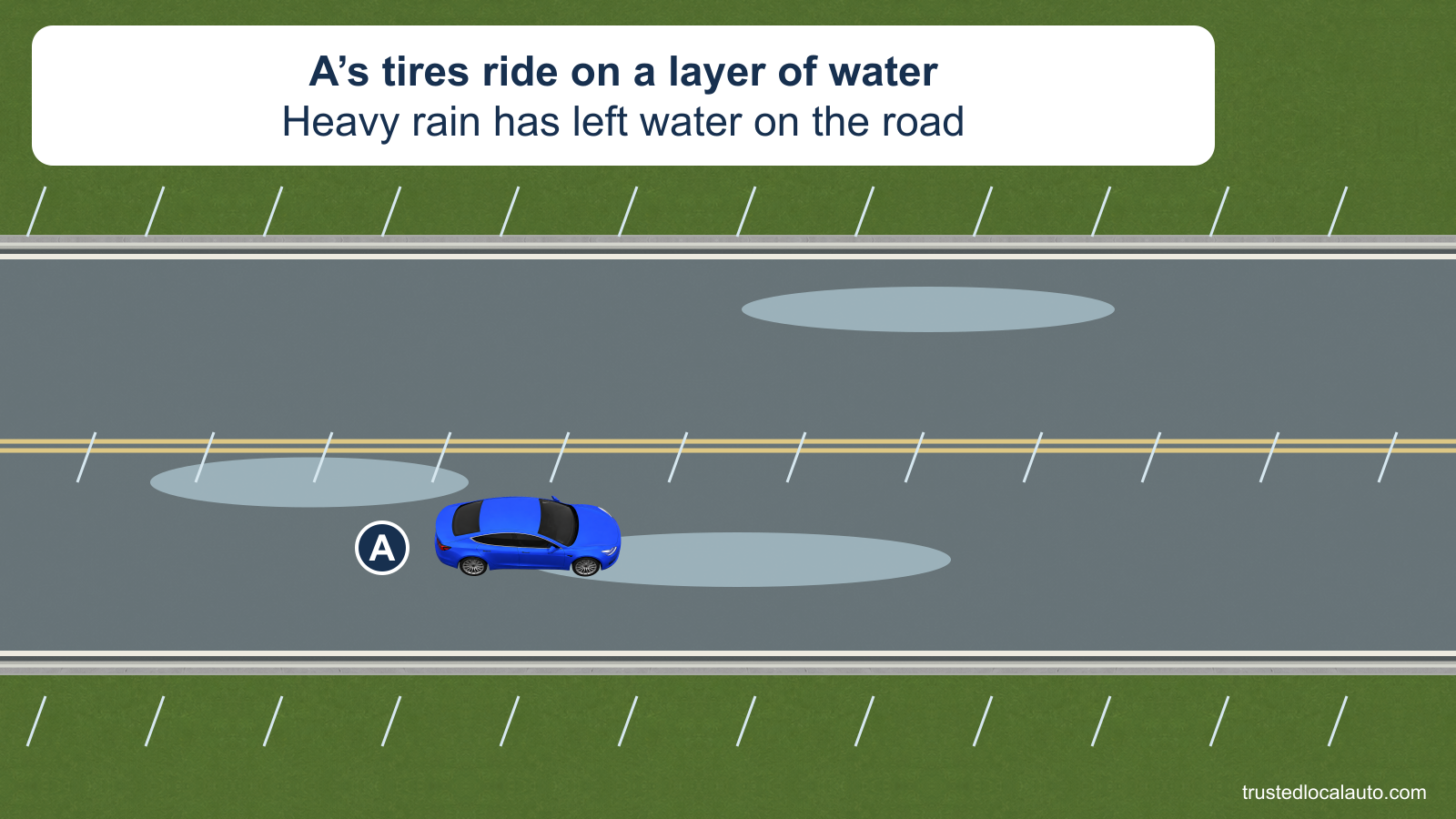 Hydroplaning in heavy rain: your responseWhen driving in heavy rain, your tires may ride on top of a thin layer of water. This is called 'hydroplaning.' If this happens, you should:Try this question
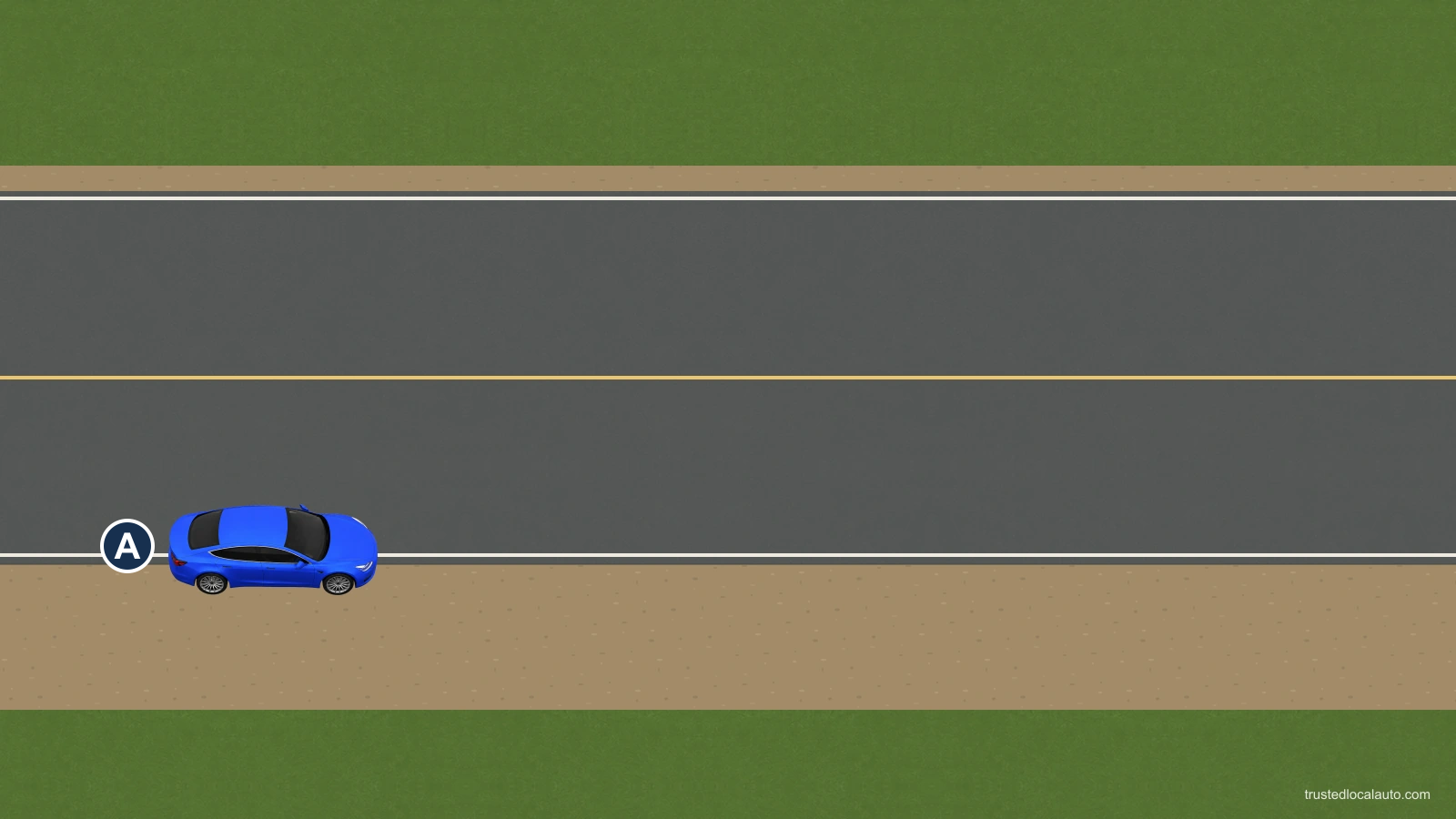 Right wheels drop onto a soft shoulderYou are driving and your right wheels accidentally drop off the paved road onto a soft dirt shoulder. What should you do?Try this question
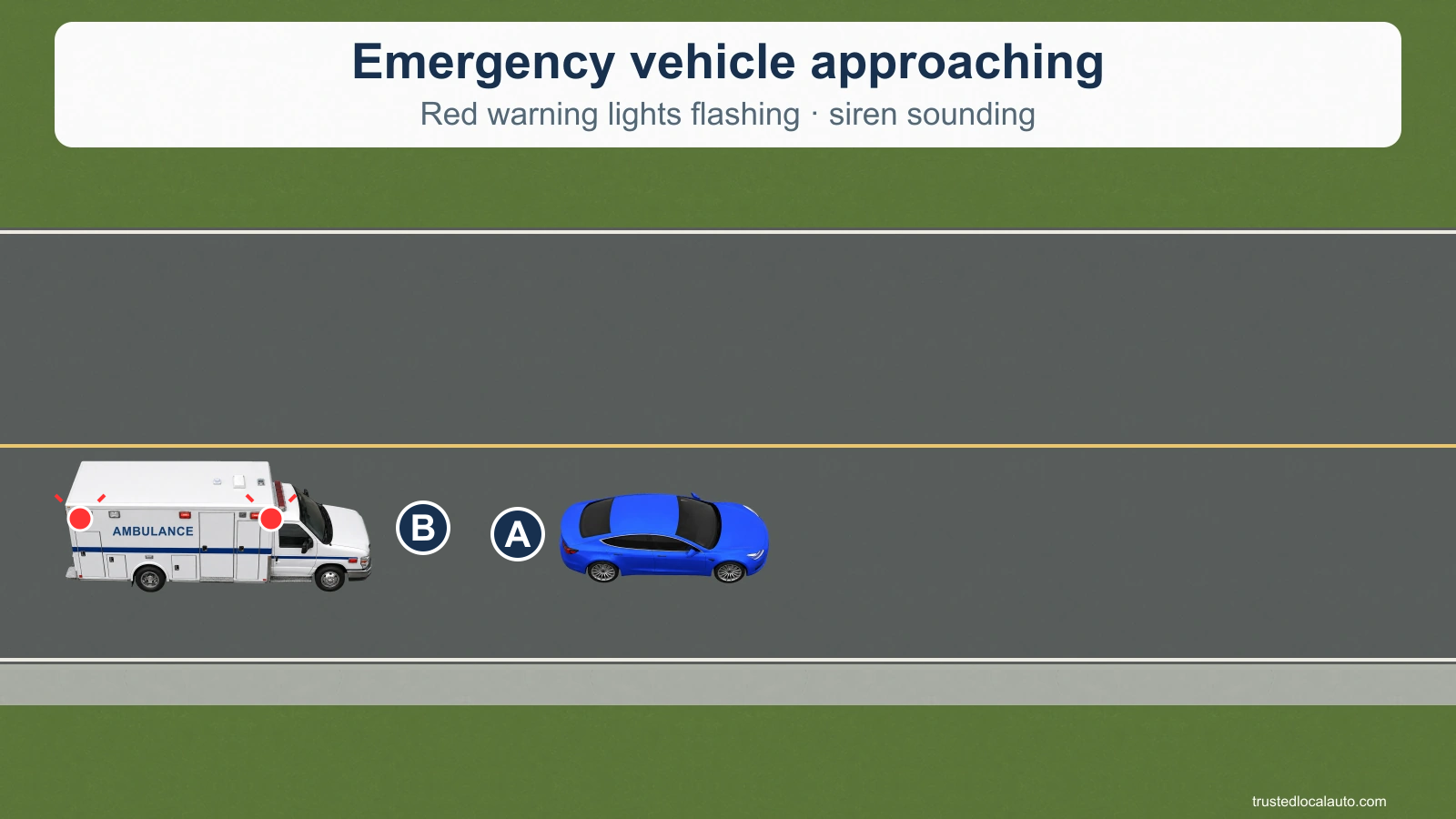 Emergency vehicle approaching on a two-way streetWhen an emergency vehicle with flashing lights and sirens approaches from any direction on a two-way street, what must you do?Try this question
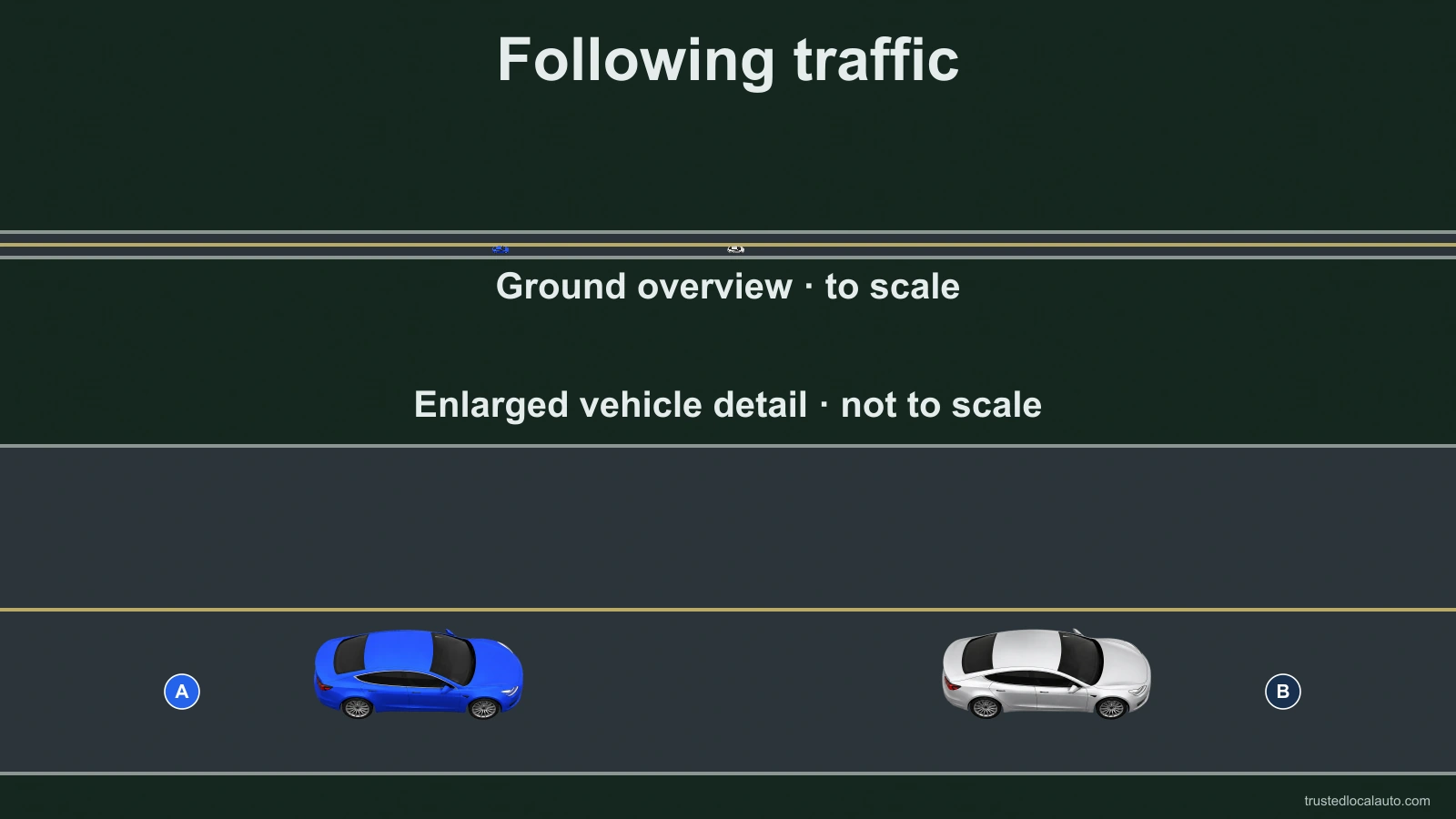 Dimming high beams behind another vehicleWhen following another vehicle from behind at night, at what distance must you dim your high beams to low beams?Try this question
 Daytime running lights at nightWhy should you not rely on daytime running lights (DRLs) alone when driving at night?Try this question
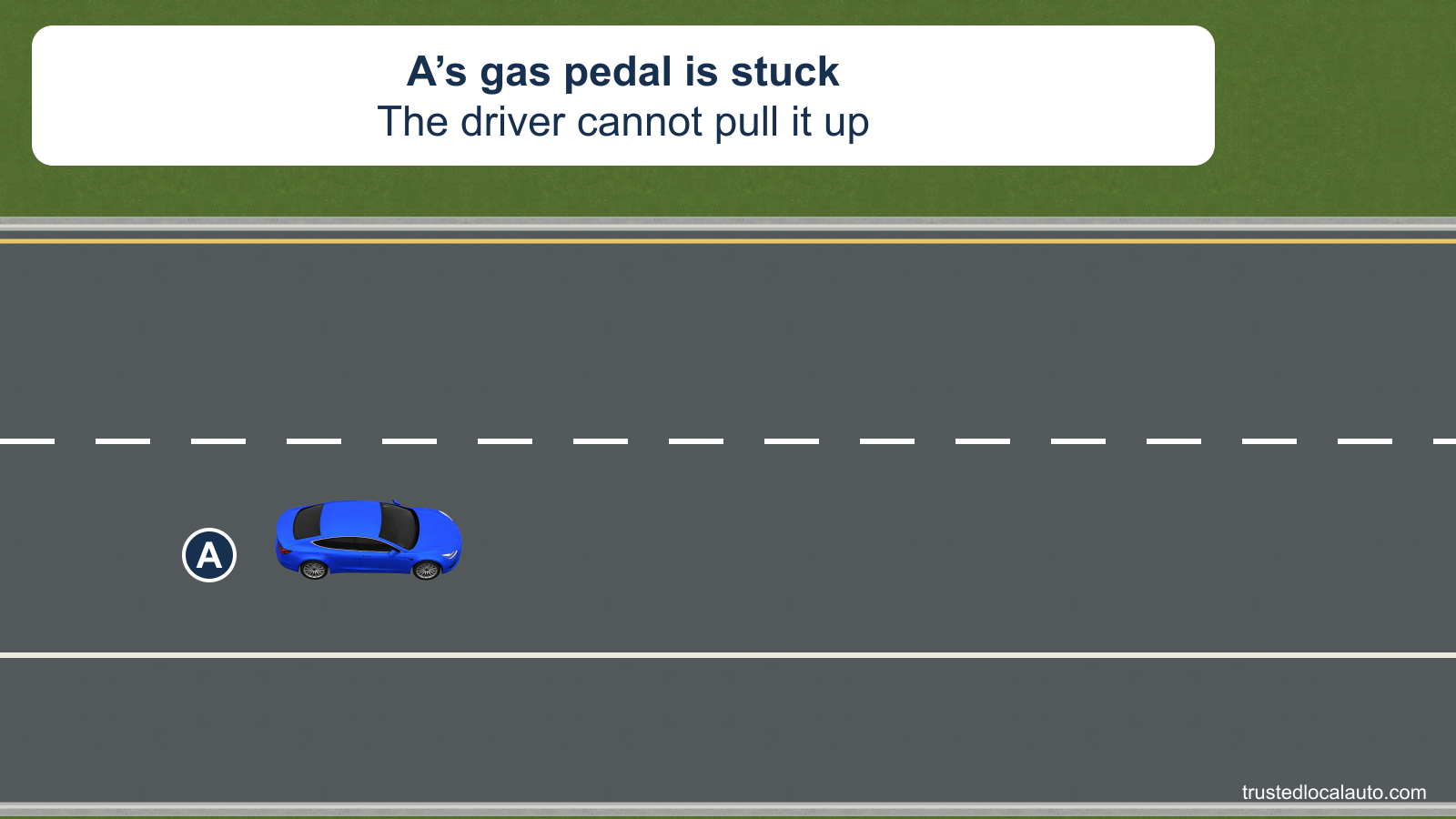 Stuck gas pedal you cannot pull upIf your gas pedal sticks and you cannot pull it up, what is the safest immediate action?Try this question
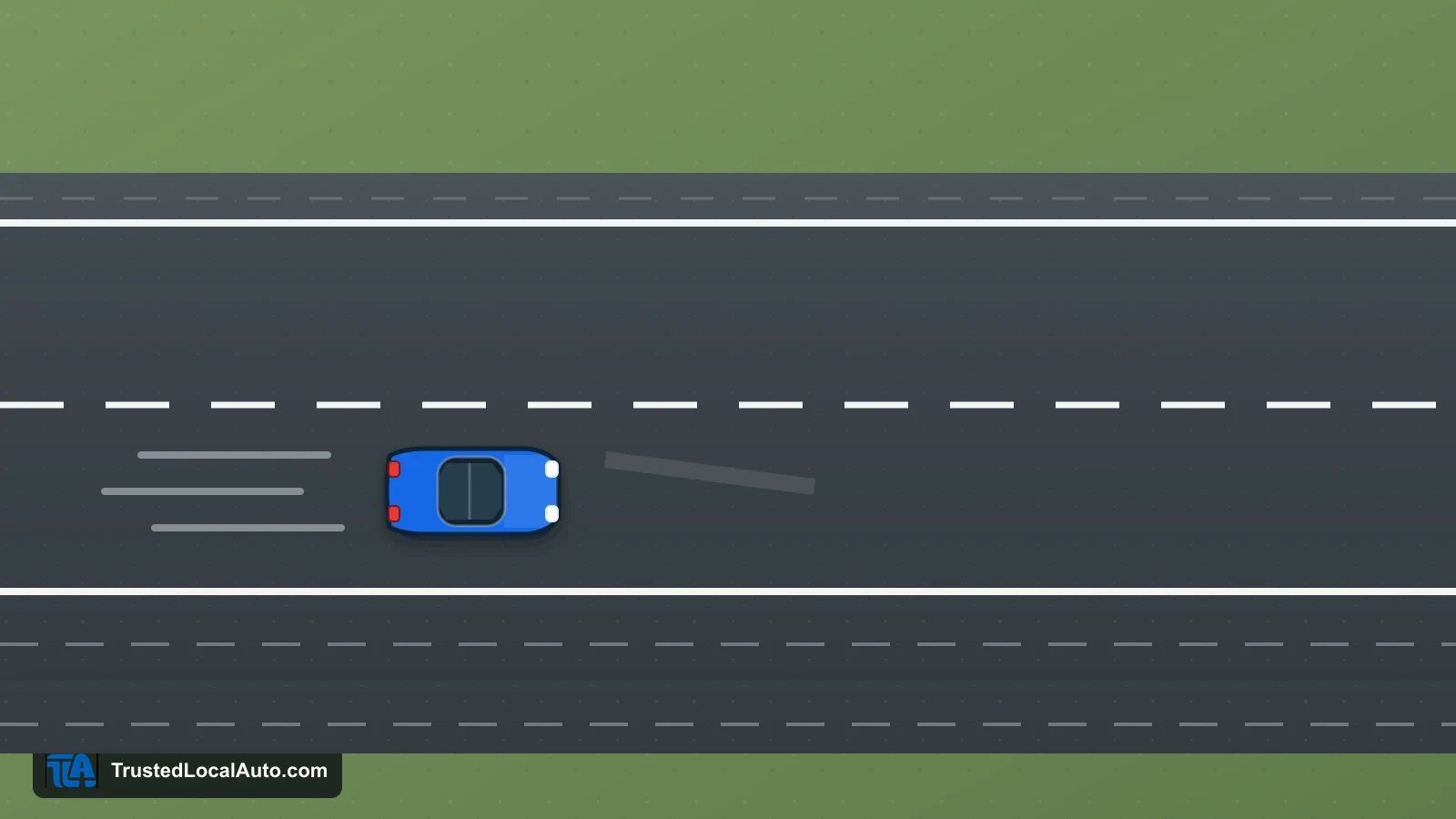 Gas pedal sticks and the engine racesIf your gas pedal sticks and the engine continues to race while driving, what is the safest action?Try this question
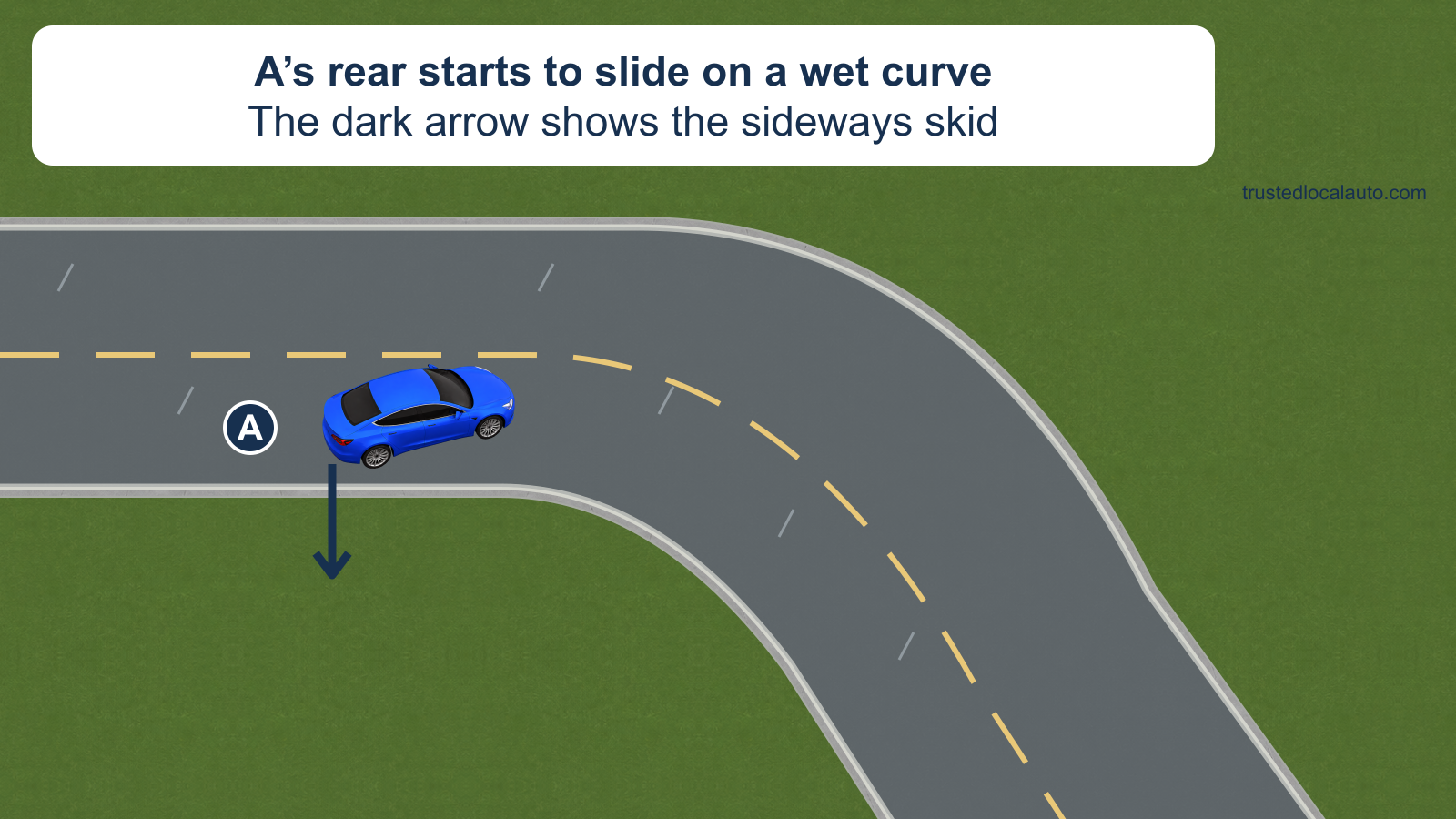 First step to get out of a skidTo get your vehicle out of a skid, you should first:Try this question
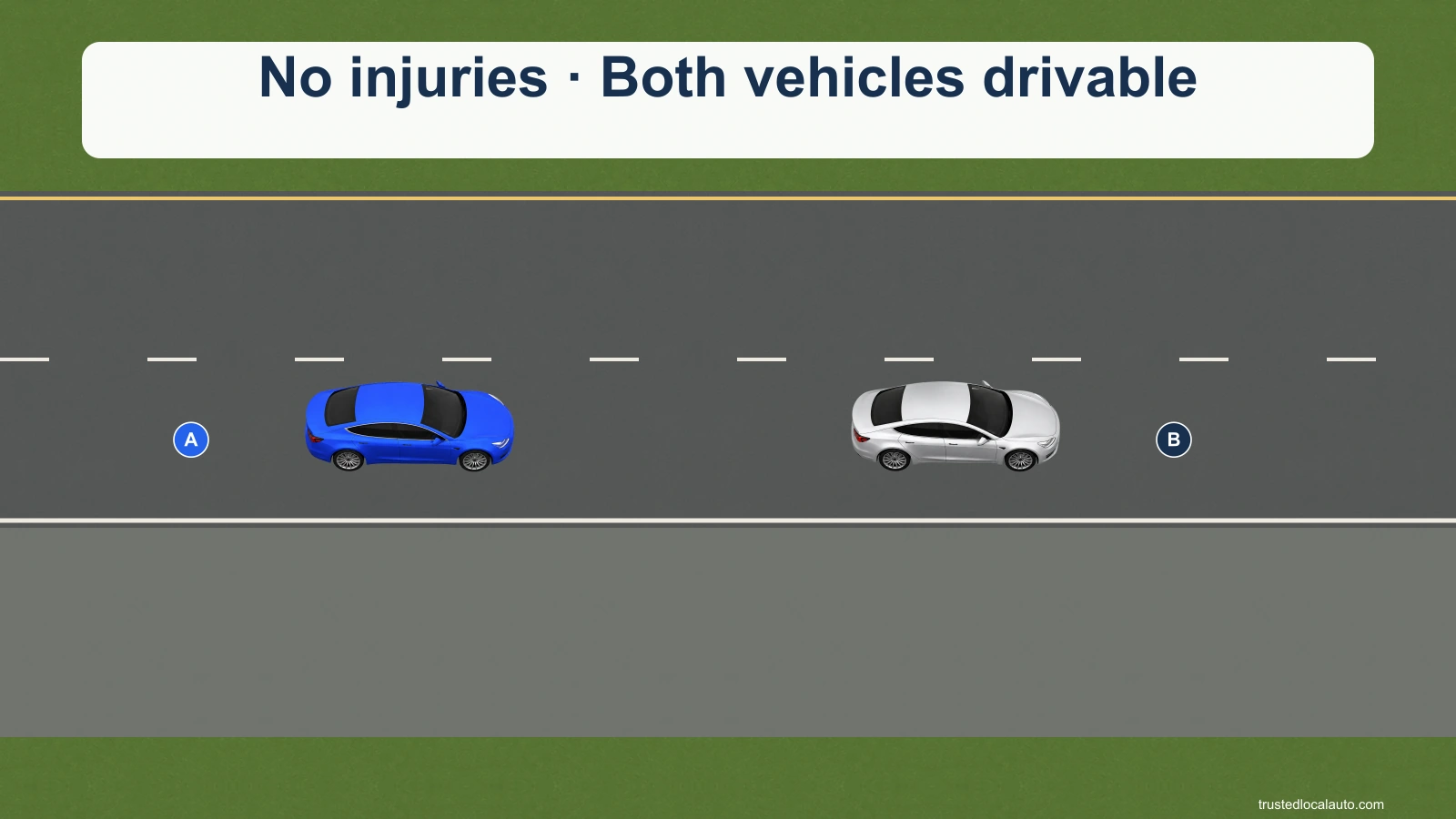 Minor collision on a busy highway, no injuriesIf you are involved in a minor fender-bender collision on a busy highway with no injuries and vehicles are drivable, what should you do?Try this question
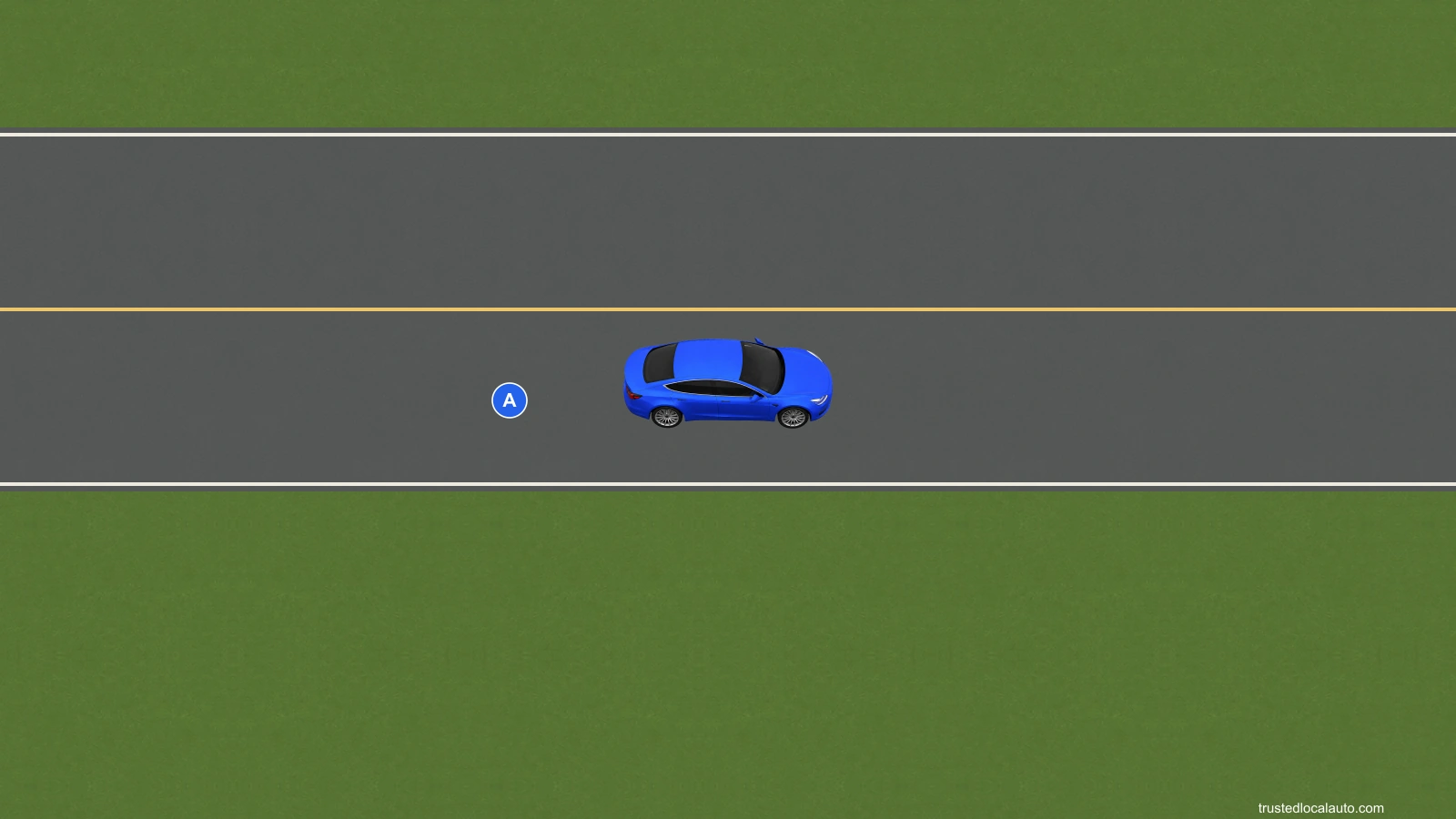 Legal times to turn on your headlightsBy law, you must turn on your vehicle's headlights:Try this question
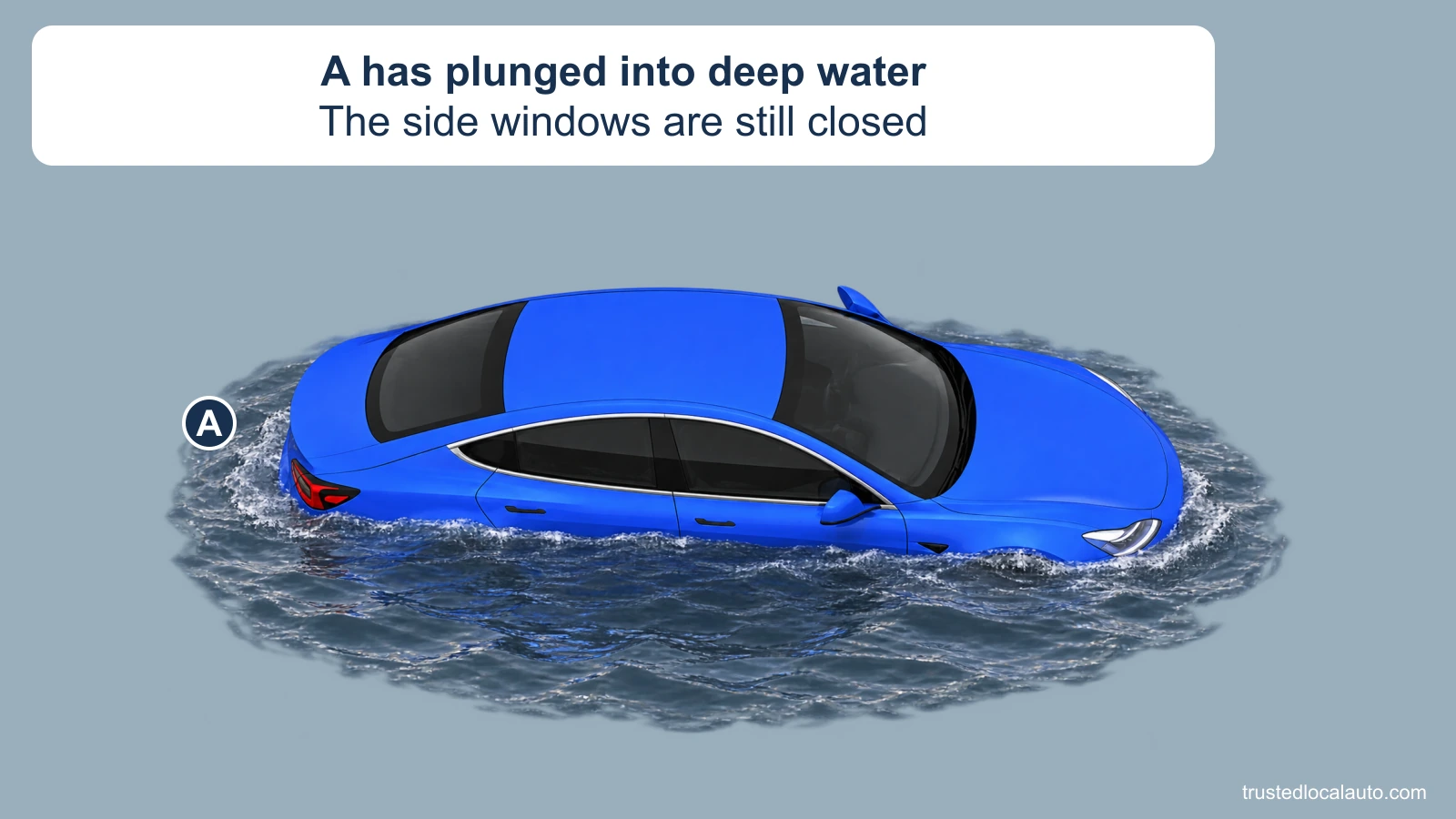 Vehicle plunges into deep waterIf your vehicle leaves the roadway and plunges into deep water, what is your best chance of escape?Try this question
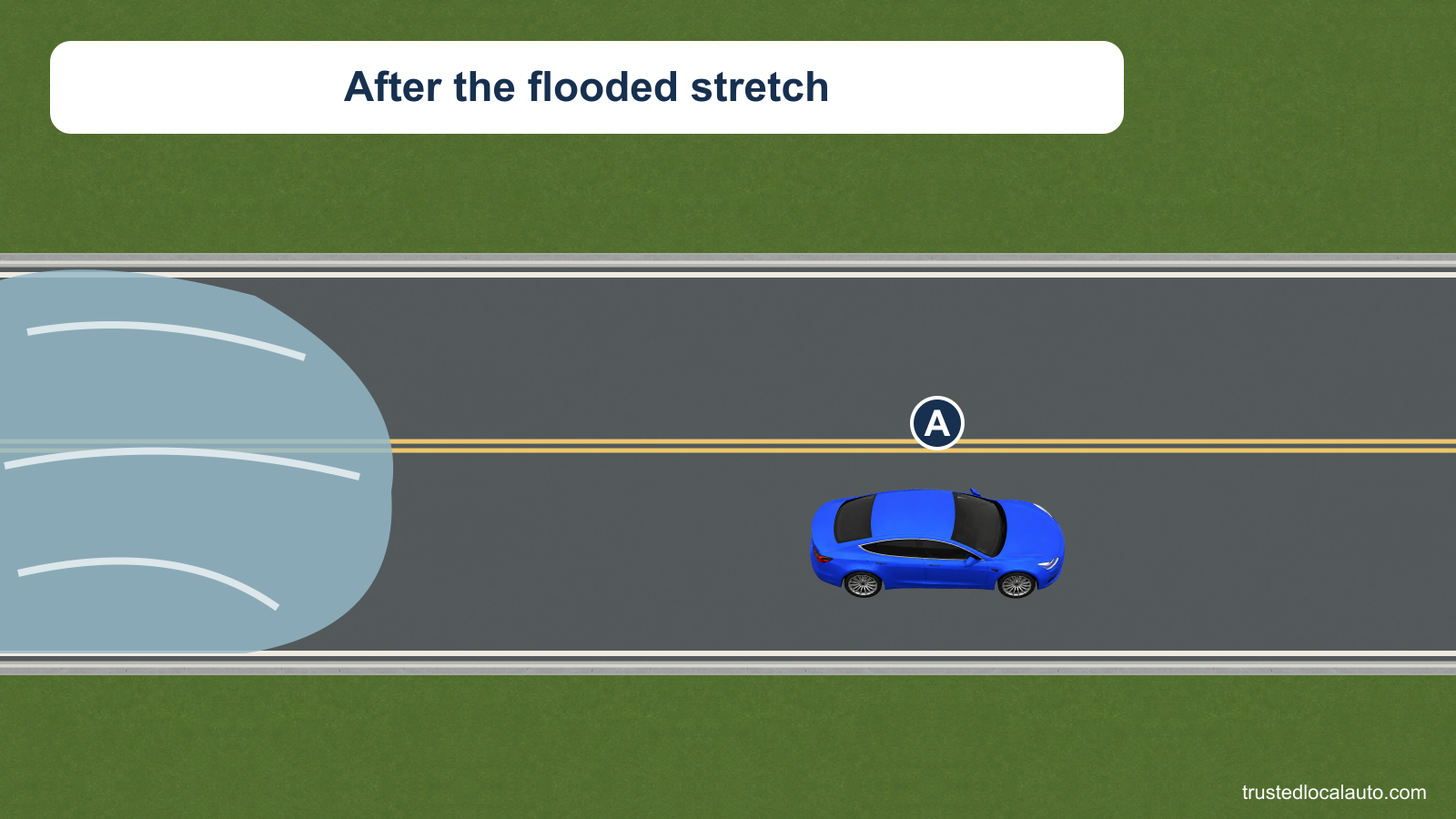 After driving through a flooded roadIf you must drive through a flooded stretch of road, what should you do afterward?Try this question
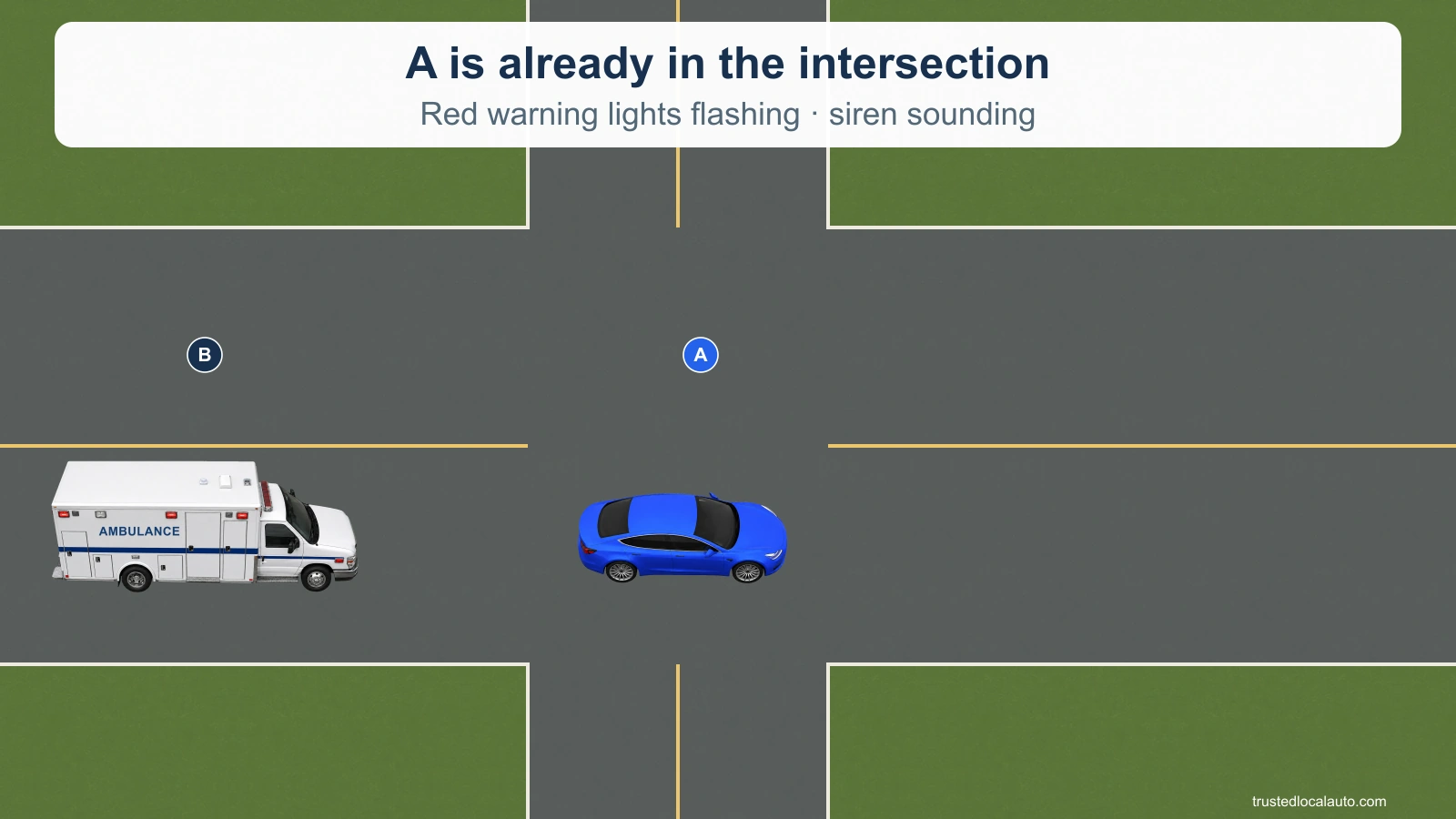 Sirens approach while you are in an intersectionWhat must you do if you are in an intersection when an emergency vehicle with lights and sirens approaches?Try this question
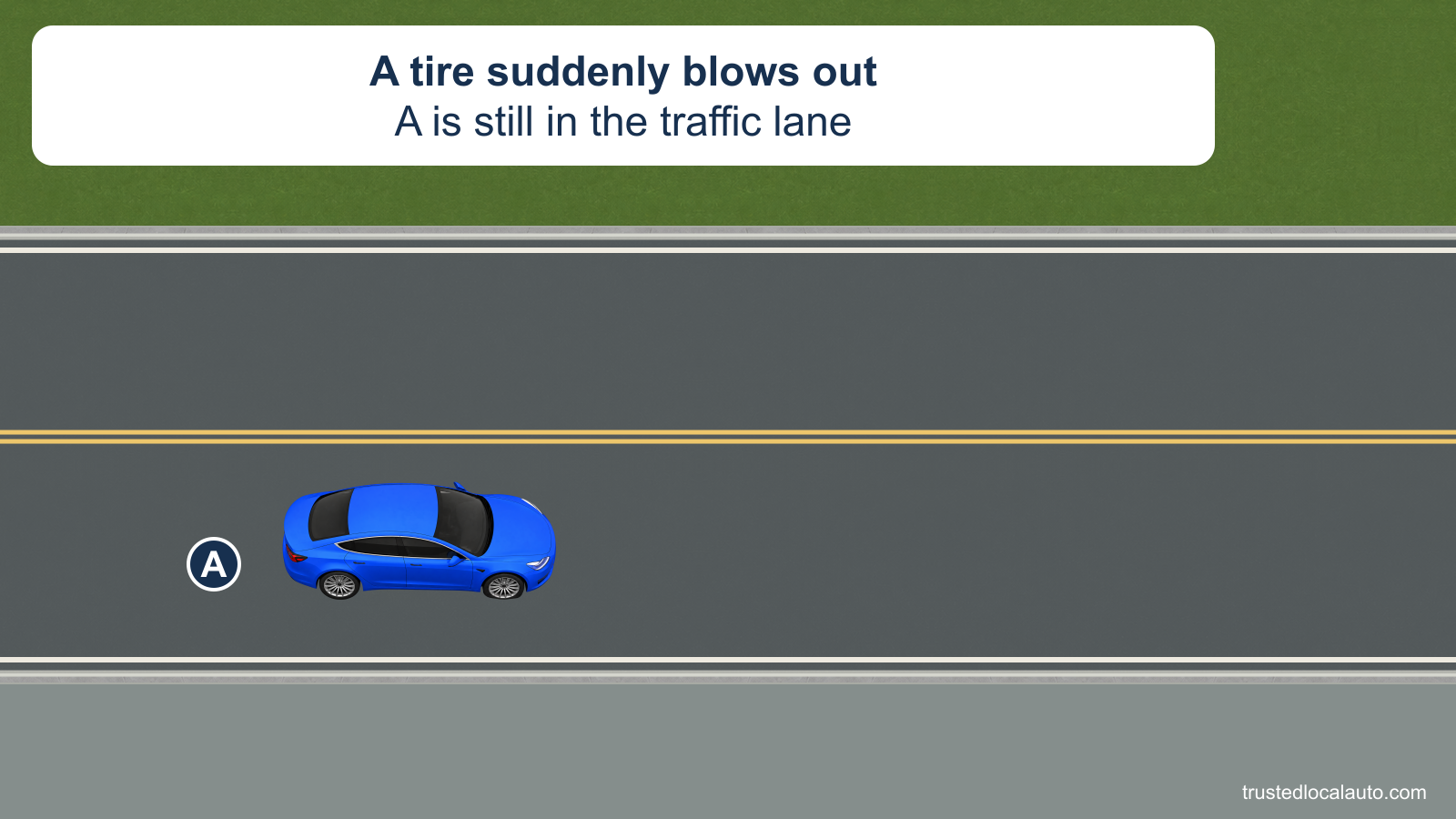 Tire blowout: the first thing to doIf one of your tires suddenly blows out while you are driving, what is the first thing you should do?Try this question
- When Ontario law requires headlightsIn Ontario, at what times are you legally required to turn on your vehicle's headlights?Try this question
- Best way to recover from hydroplaningIf you realize your vehicle is hydroplaning, what is the best way to recover control?Try this question
- Wheels drift off the pavement onto the shoulderIf your vehicle's wheels drift off the paved roadway onto the unpaved shoulder, what should you do?Try this question
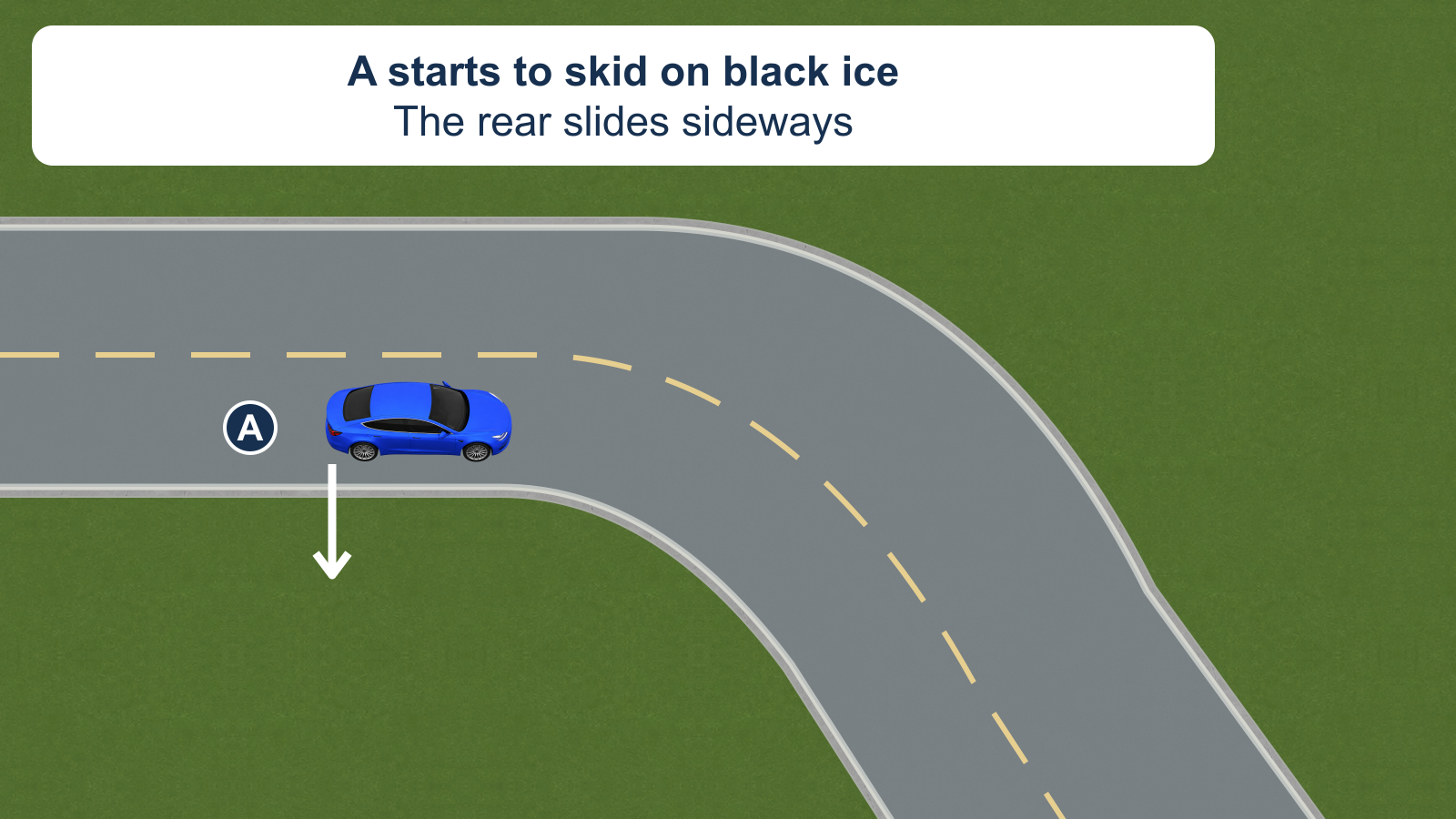 Skid on black ice: how to respondIf your vehicle starts to skid on black ice, how should you respond?Try this question
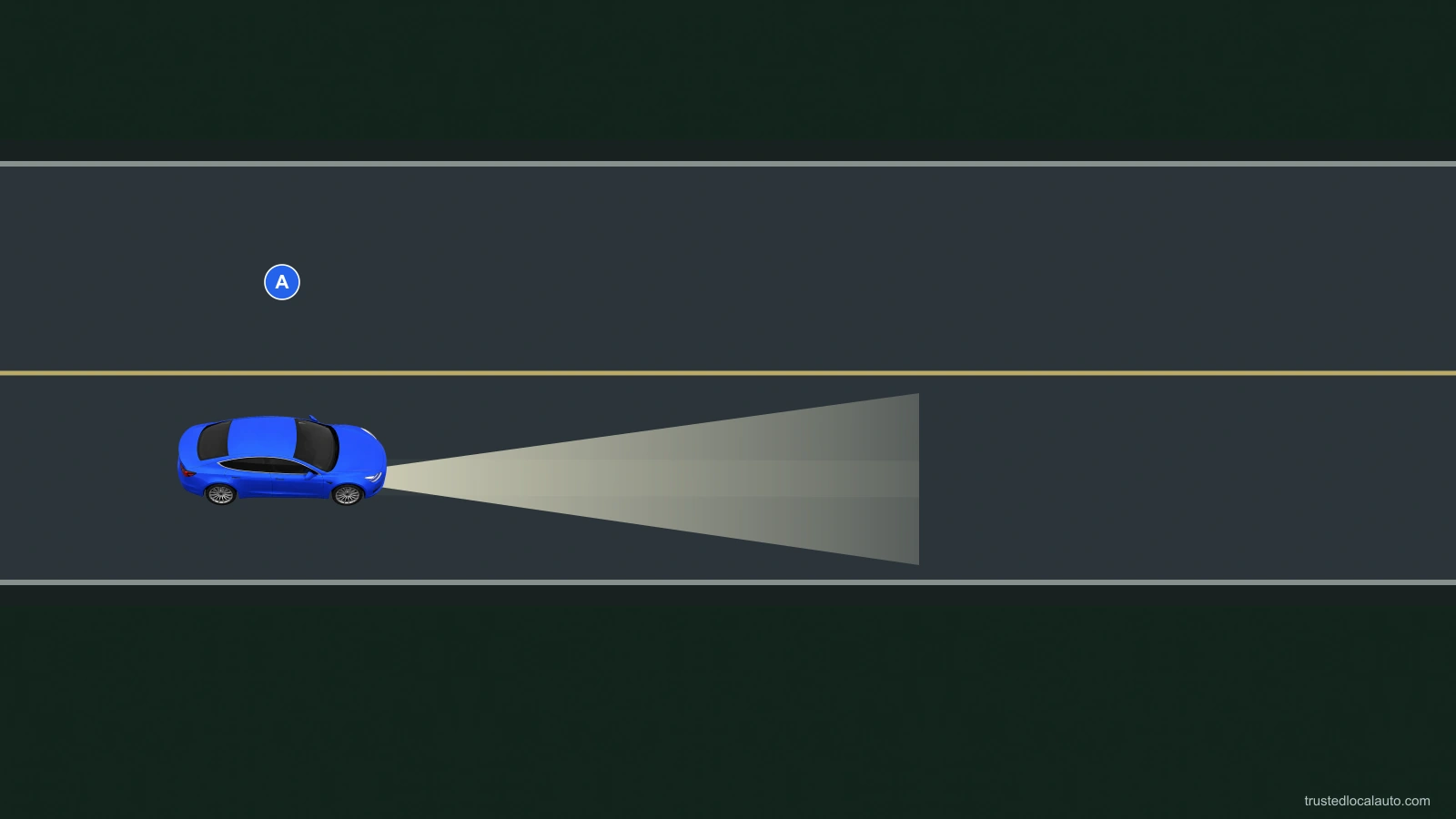 Meaning of overdriving your headlightsWhat does the term 'overdriving your headlights' mean?Try this question
- Ambulance behind you on a two-way road HardYou drive on a two-way road, and you are not in an intersection. An ambulance with red lights flashing and its siren on comes up behind you. What must you do?Try this question
- Deer in your lane with an oncoming car HardOn a rural two-way road, a deer jumps into your lane ahead. You cannot stop before you reach it. A car comes toward you in the other lane, and there is a ditch beside your lane. What should you do?Try this question
- Dimming behind a vehicle: the exact limit HardAt night, your high beams are on. You come up behind another vehicle in your lane, and no vehicle comes toward you. Which statement gives the legal limit for dimming?Try this question
- Minor collision with no injuries on a highway HardOn a busy highway, your car and another car have a minor collision. No one is injured, and both cars can still be driven. What should the drivers do?Try this question
- Stranded in a winter storm: the wrong advice HardYour vehicle is stranded in severe winter weather, and you wait for help. Which statement is NOT correct?Try this question
- Vehicle ahead at night: which dimming rule applies? HardOn a clear night, you close in on a vehicle ahead in your lane. Your high beams are on, and no vehicle comes toward you. Which rule applies to your high beams?Try this question
- Vehicle fire while you drive HardWhile you drive on a two-way road, smoke and flames come from the hood of your car. Which statement is correct?Try this question
16 text questions
More questions in this topic
- If your hydraulic brakes stop responding, what does the MTO handbook suggest trying to restore pressure temporarily?
- For a vehicle with hydraulic brakes and a conventional hand-operated parking brake, what does the MTO handbook advise if the brake pedal fails to slow the vehicle?
- What should you expect from anti-lock brakes (ABS) during hard braking?
- If you are involved in a collision where someone is injured, what is the first thing you must do?
- By law, you must report a collision to police immediately if anyone is injured or if the combined property damage appears to exceed:
- Is it legal to drive using only your parking lights?
- Bright oncoming headlights make it difficult to see at night. Where does the current MTO handbook advise directing your gaze?
- Your car has hydraulic brakes and a hand-operated parking brake. You press the brake pedal, but the car does not slow down. What does the MTO handbook advise? Hard
- Two cars collide on a city street, and no one is injured. Which statement gives the property-damage limit at which you must report the collision to police? Hard
- At night, your high beams are on. The law sets one dimming distance for an oncoming vehicle and one for a vehicle that you follow. Which pair of dimming limits is correct? Hard
- On a two-way road, you are already in the middle of an intersection, going straight. A fire truck with lights flashing and its siren on comes up behind you. The way ahead is clear. What should you do? Hard
- At noon, fog lets you see people and vehicles clearly to about 140 metres. Which statement gives the legal limit for using headlights in poor weather? Hard
- By law, your headlights must be on during a set period around night-time. When does this period start and end? Hard
- At night, your high beams are on. A car ahead of you in your lane is 100 metres away. An oncoming car is 120 metres away. Which statement is correct? Hard
- During the day, falling snow limits how far you can see. By law, headlights are required when clear sight is less than a set distance. What is that distance? Hard
- Which statement about collisions is NOT correct? Hard
Ontario G1
More G1 topics
Road rules · 12 topics
- Licensing & Test Readiness100 questions
- Traffic Signals & Road Markings37 questions
- Observation, Speed & Space15 questions
- Intersections & Right-of-Way14 questions
- Turns, Lanes, Passing & Merging42 questions
- Parking, Reversing & Roadside Stops30 questions
- Sharing the Road46 questions
- Freeways & High-Speed Roads25 questions
- School Zones, Railways & Work Areas42 questions
- Weather, Visibility & Emergencies54 questions · This topic
- Vehicle Safety, Documents & Towing28 questions
- Safe & Responsible Driving30 questions
Each question page shows the answer, the explanation and the official source of the question.