
Missouri Class F Written topic
Missouri Class F Written Freeways & High-Speed Roads
Prepare for entering, travelling on and leaving freeways and other higher-speed roads.
18 questions, free with an account. 6 of them are hard. Each one has its answer, an explanation and its official source.
- 7 picture questions
- 11 text questions
- 6 of them hard
7 picture questions
Questions in this topic
Select a question to answer it. The answer and the explanation show after you answer.
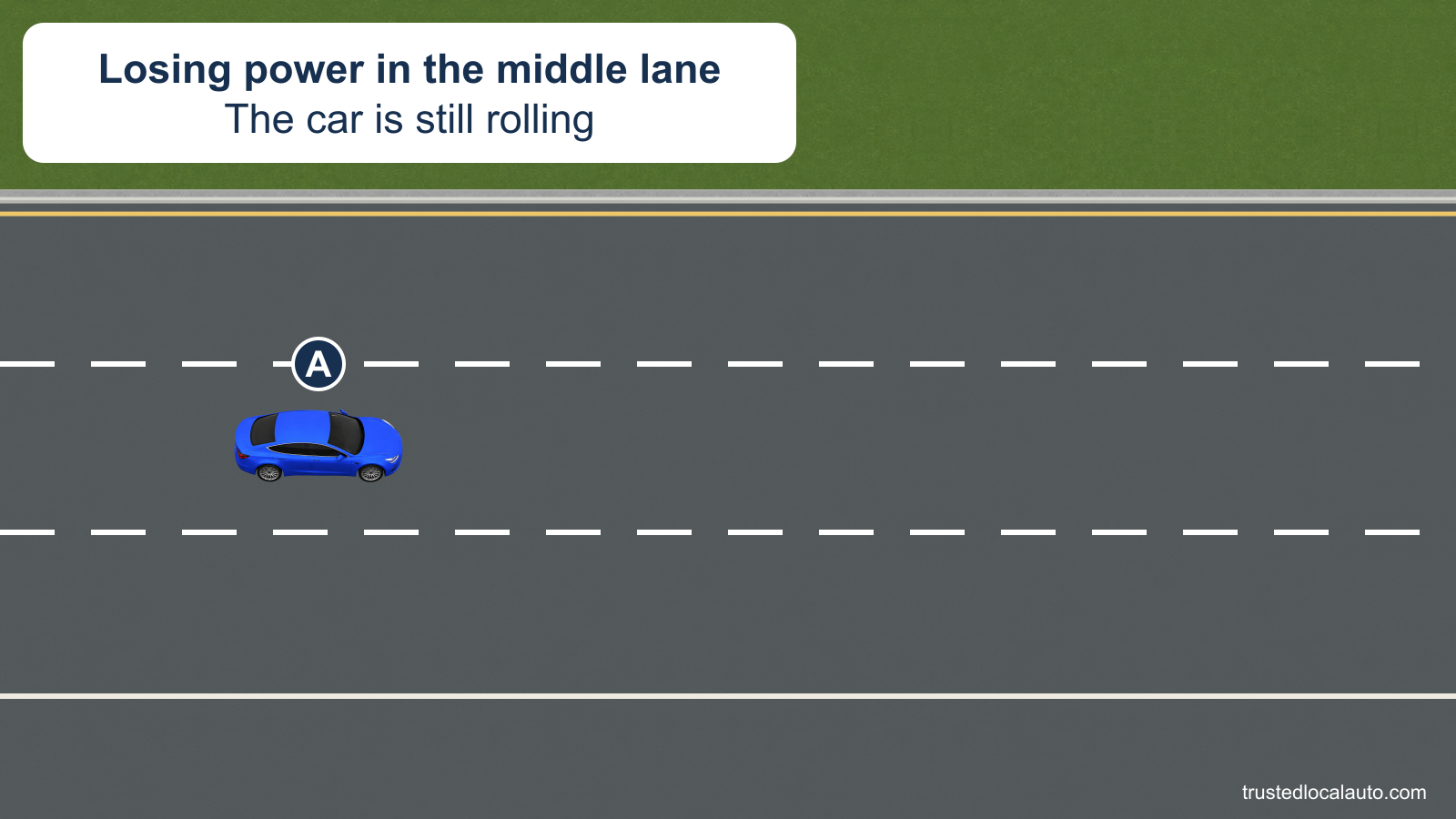 Car trouble on an interstateYour car starts to lose power in the middle lane of an interstate, but it is still rolling. What should you do first?Try this question
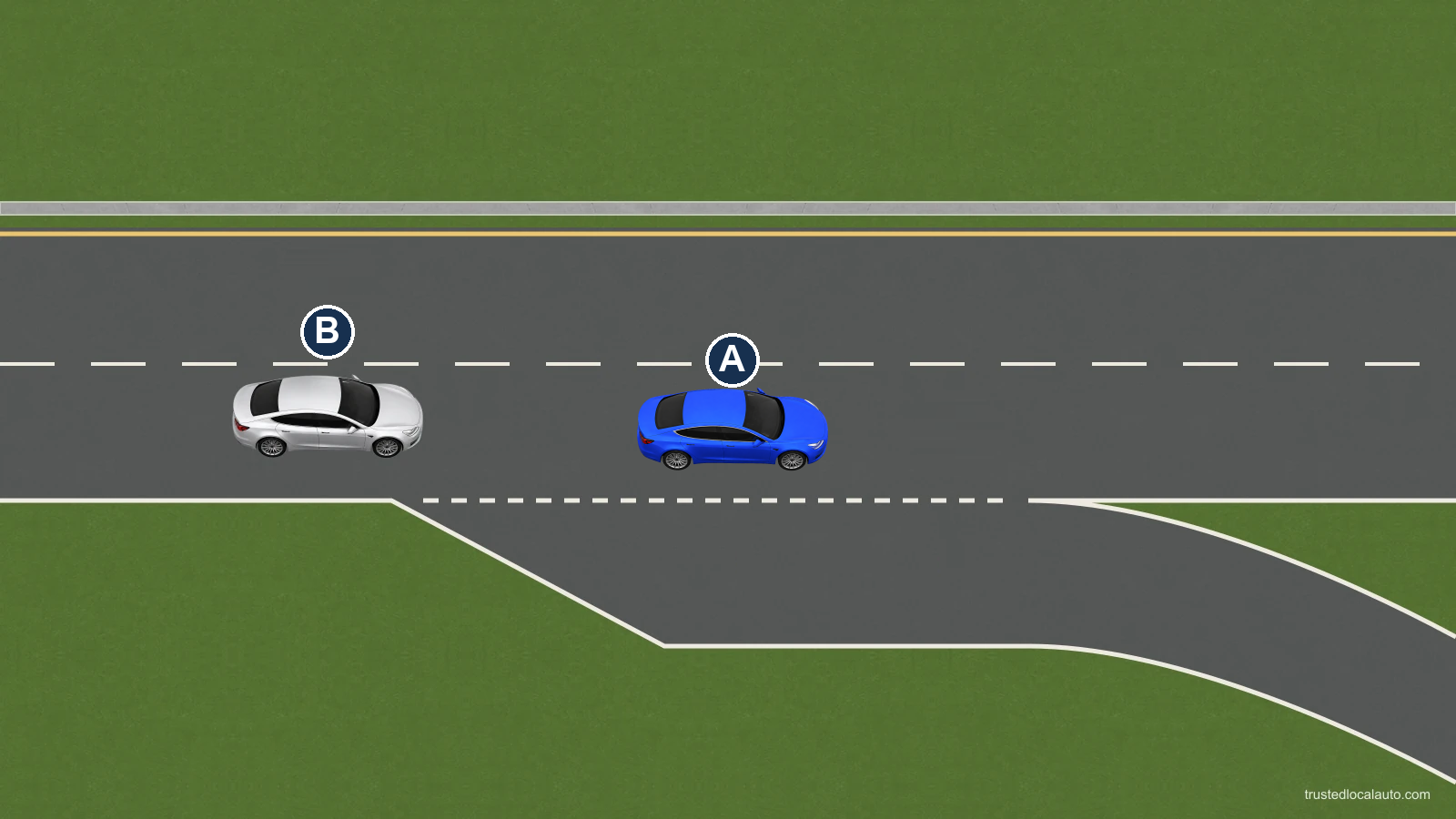 Slowing down to leave a freewayYou are about to leave a freeway, and the exit ramp begins with a deceleration lane. Where should you do most of your slowing?Try this question
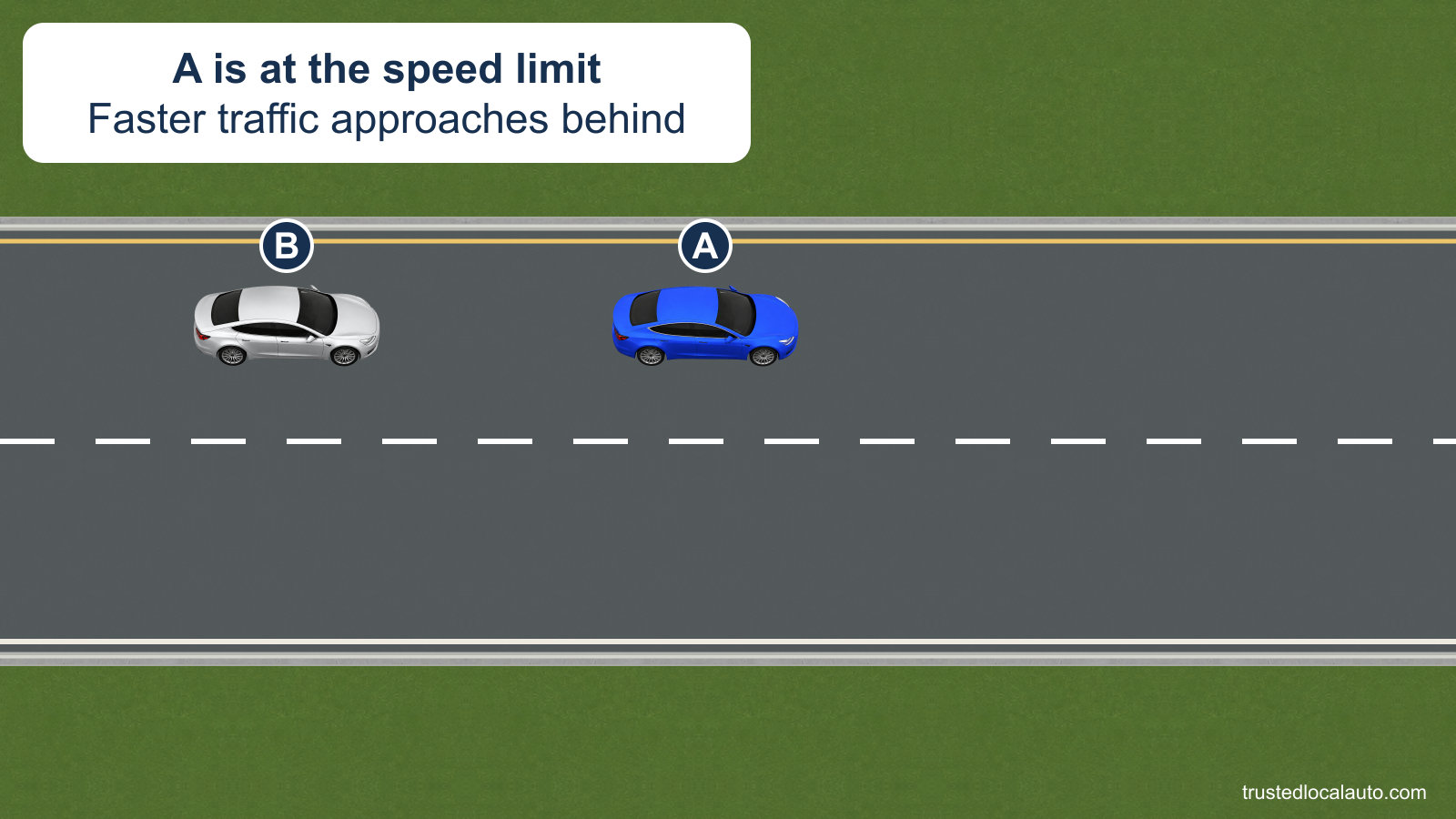 Staying in the left lane of a four-lane highwayOn a four-lane divided highway, you are driving at the speed limit in the left lane. The right lane is open, and faster traffic is coming up behind you. What should you do?Try this question
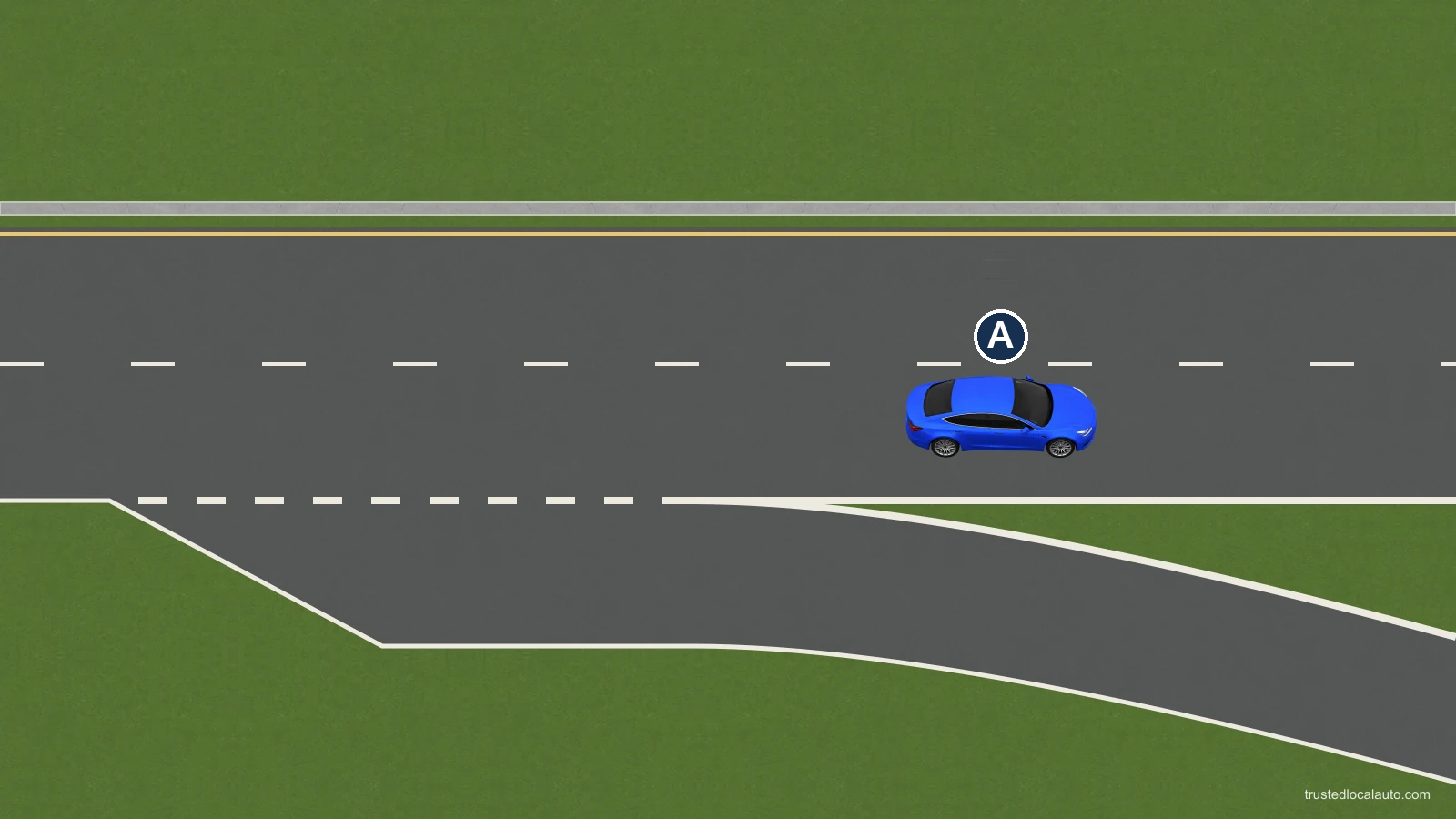 Missing your freeway exitYou are in the right lane of an interstate and realize that you just passed the exit you needed. What should you do?Try this question
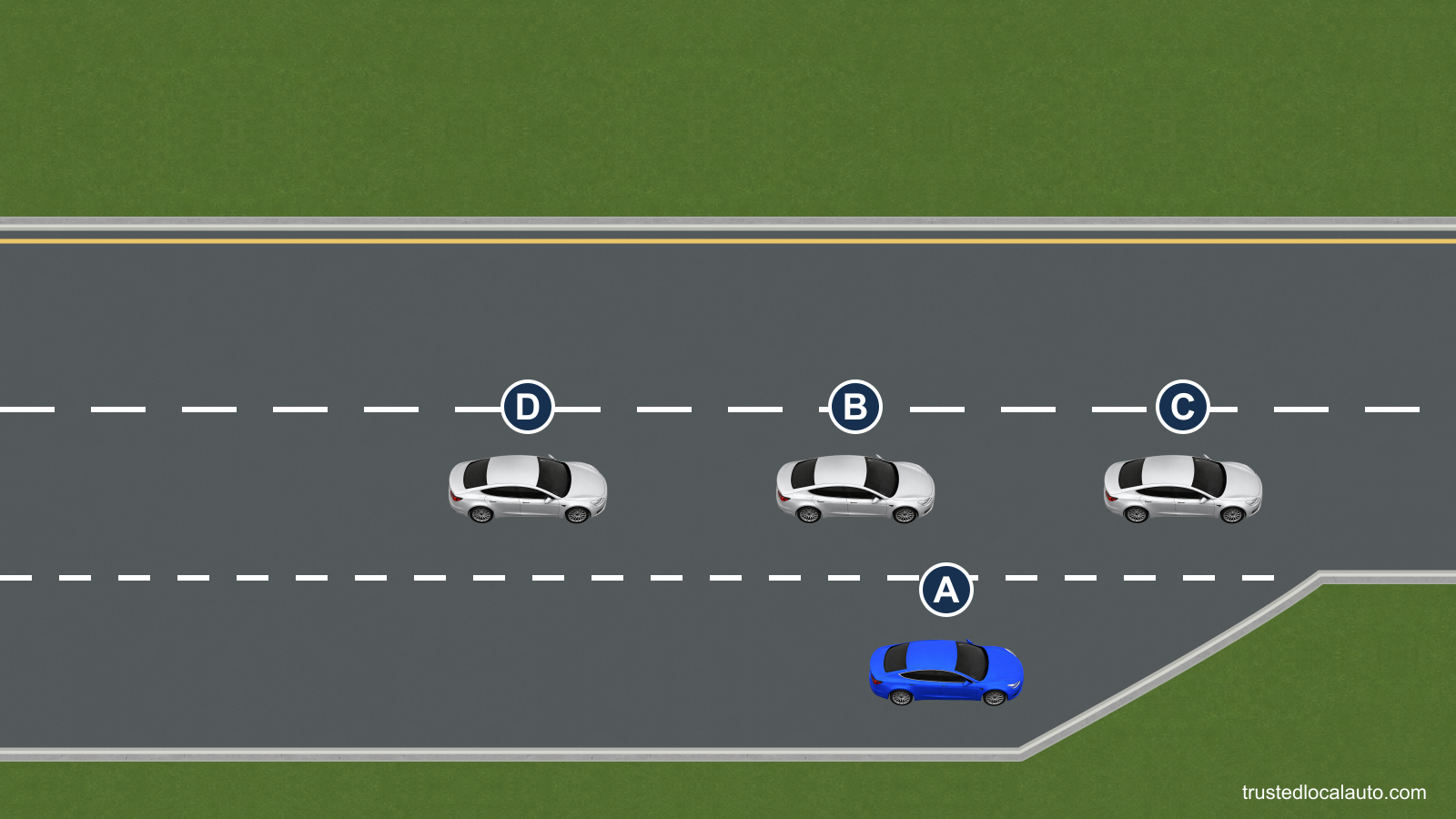 No gap at the end of the acceleration laneYou reach the end of an acceleration lane, but freeway traffic is heavy and no driver makes room for you. What should you do?Try this question
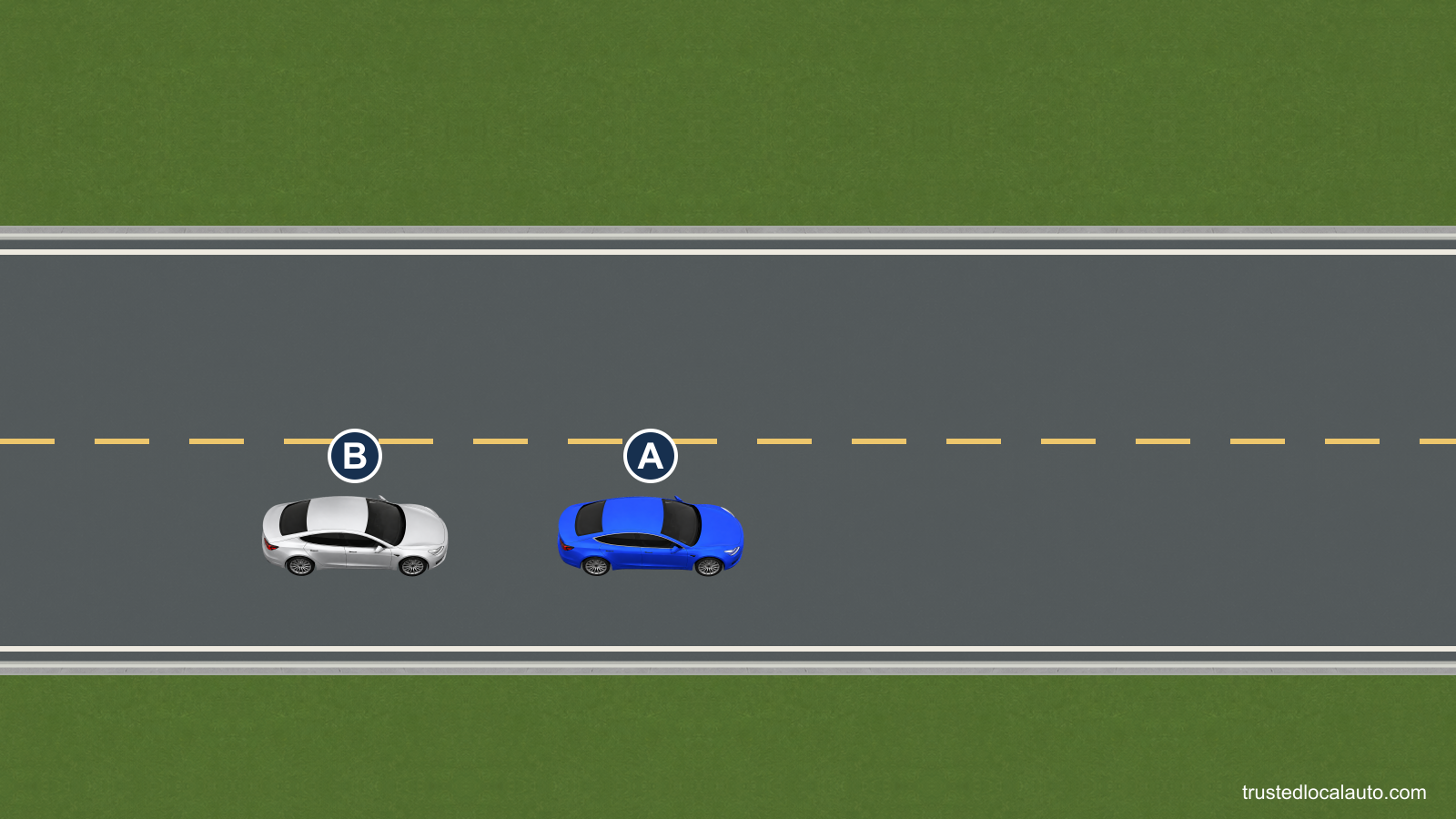 Being tailgated on a two-lane roadOn a two-lane road with one lane in each direction, a driver is following you very closely. What should you do?Try this question
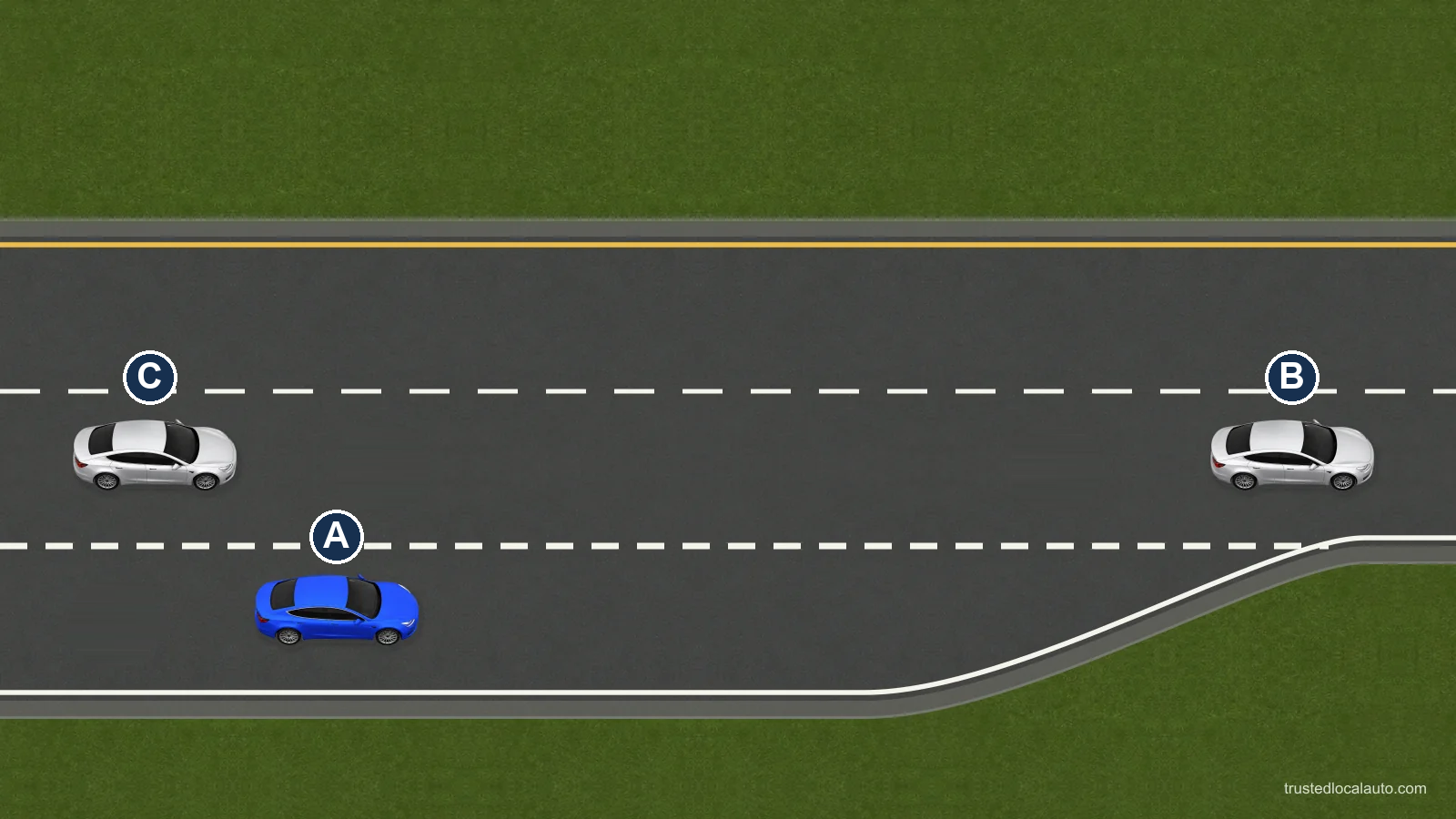 Using the acceleration laneYou are on a freeway entrance ramp that ends in an acceleration lane. Freeway traffic is moderate. How should you use the acceleration lane?Try this question
11 text questions
More questions in this topic
- You are driving east across Missouri on I-70. What happens to the exit numbers as you go?
- Traffic is light and the weather is clear on a Missouri interstate. What is the slowest speed you may lawfully drive?
- Under Missouri's uniform maximum speed limits, what is the top lawful speed on a rural interstate or rural freeway when no different limit is posted?
- You are towing a heavy trailer at 45 mph on a two-lane highway with a posted 60 mph limit. A long line of cars has built up behind you. What should you do?
- You are driving on an interstate and want to stop to check your route on a map. Where should you stop?
- You drive south on a north-south interstate in Missouri. Which statement about the exit numbers is correct? Hard
- Heavy snow covers an interstate. A speed of 40 mph is not safe on the road surface now. Which statement is correct? Hard
- On a four-lane divided highway, you drive at the speed limit in the left lane. You will turn left at a crossroad a short distance ahead. Faster traffic comes up behind you. No sign or marking directs lane use. Which statement is correct? Hard
- A fully licensed driver drives 38 mph on a Missouri interstate. The weather is clear, the road is dry and in good condition, and traffic is light. Which statement is correct? Hard
- You tow a heavy trailer on a two-lane highway with a posted 60 mph limit. At any speed above 45 mph, the trailer begins to sway. A long line of cars builds up behind you. What should you do? Hard
- You tow a heavy trailer at 45 mph on a two-lane highway with a posted 60 mph limit. A long line of cars has built up behind you. Which statement is correct? Hard
Missouri Class F Written
More Class F Written topics
Road rules · 12 topics
- Licensing & Test Readiness20 questions
- Traffic Signals & Road Markings16 questions
- Observation, Speed & Space15 questions
- Intersections & Right-of-Way16 questions
- Turns, Lanes, Passing & Merging18 questions
- Parking, Reversing & Roadside Stops16 questions
- Sharing the Road13 questions
- Freeways & High-Speed Roads18 questions · This topic
- School Zones, Railways & Work Areas32 questions
- Weather, Visibility & Emergencies24 questions
- Vehicle Safety, Documents & Towing22 questions
- Safe & Responsible Driving22 questions
Each question page shows the answer, the explanation and the official source of the question.