
North Carolina Class C Knowledge topic
North Carolina Class C Knowledge Weather, Visibility & Emergencies
Handle darkness, poor weather, loss of traction, breakdowns, collisions and emergencies.
26 questions, free with an account. 10 of them are hard. Each one has its answer, an explanation and its official source.
- 12 picture questions
- 14 text questions
- 10 of them hard
12 picture questions
Questions in this topic
Select a question to answer it. The answer and the explanation show after you answer.
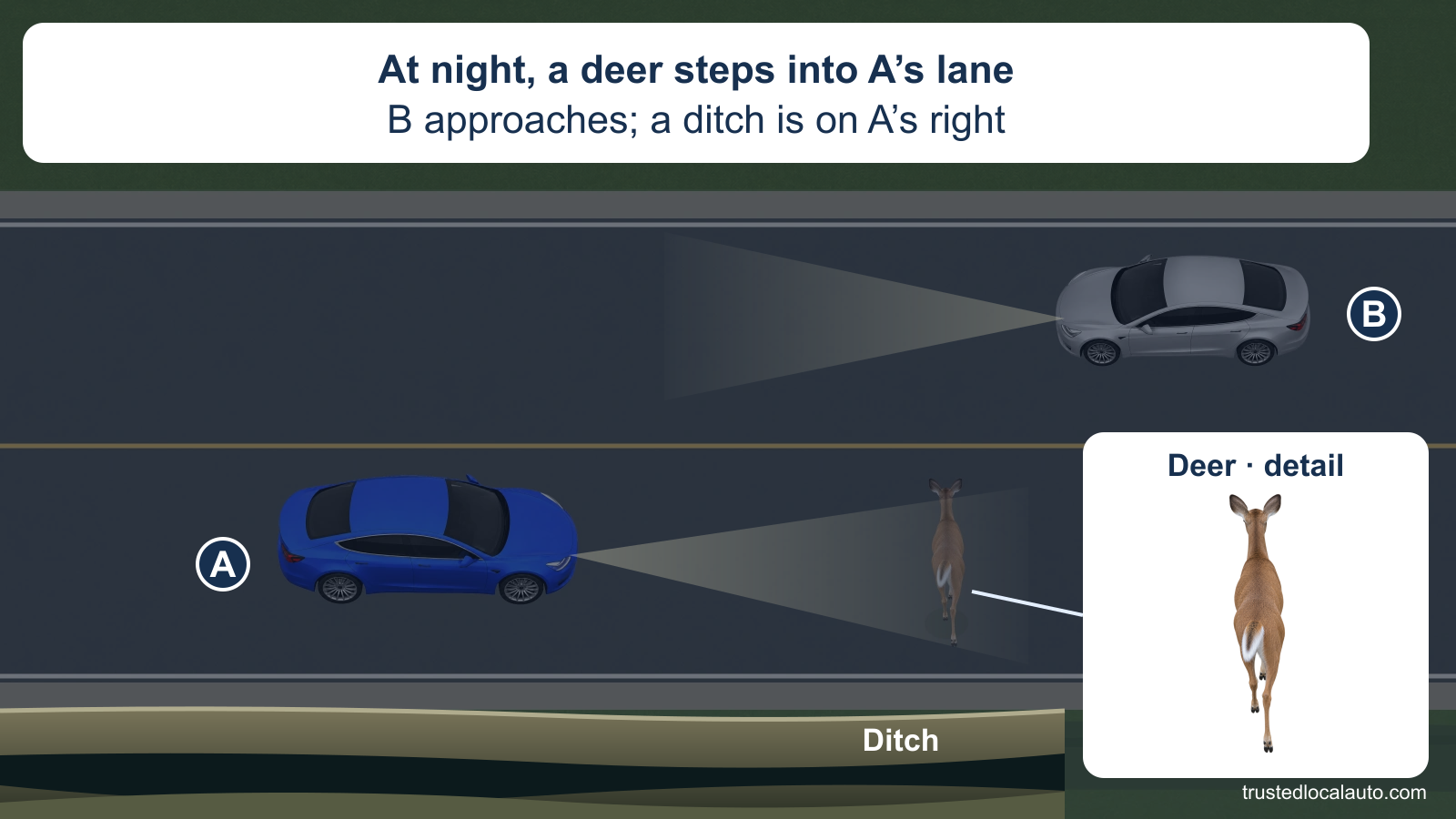 Deer stepping into your lane at nightAt night on a two-lane road, a deer suddenly steps into your lane ahead. A car is coming in the other lane, and there is a ditch on your right. What should you do?Try this question
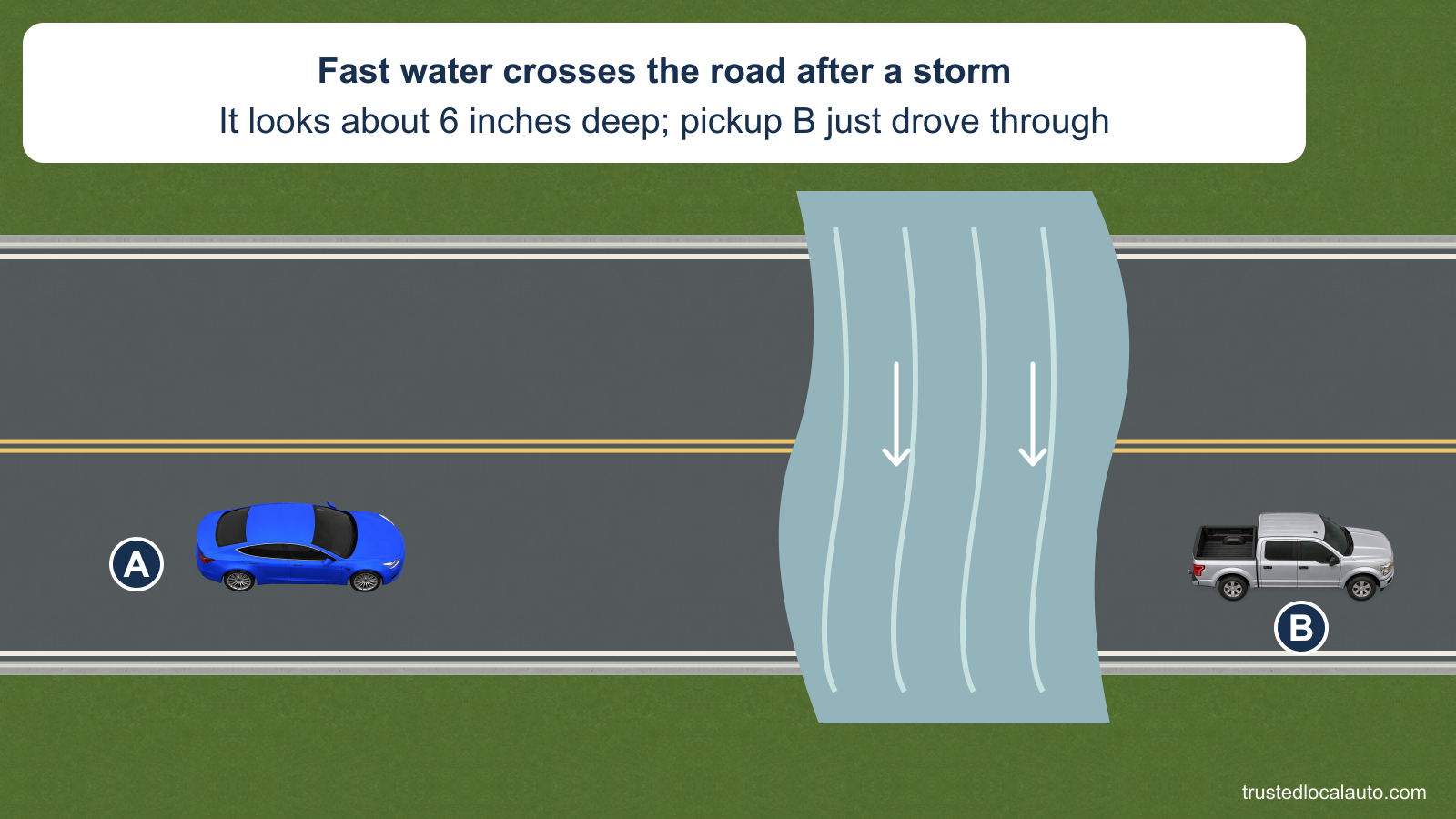 Fast-moving water across the roadAfter a heavy storm, fast-moving water flows across a low spot in the road ahead. It looks only about six inches deep, and a pickup truck just drove through it. What should you do?Try this question
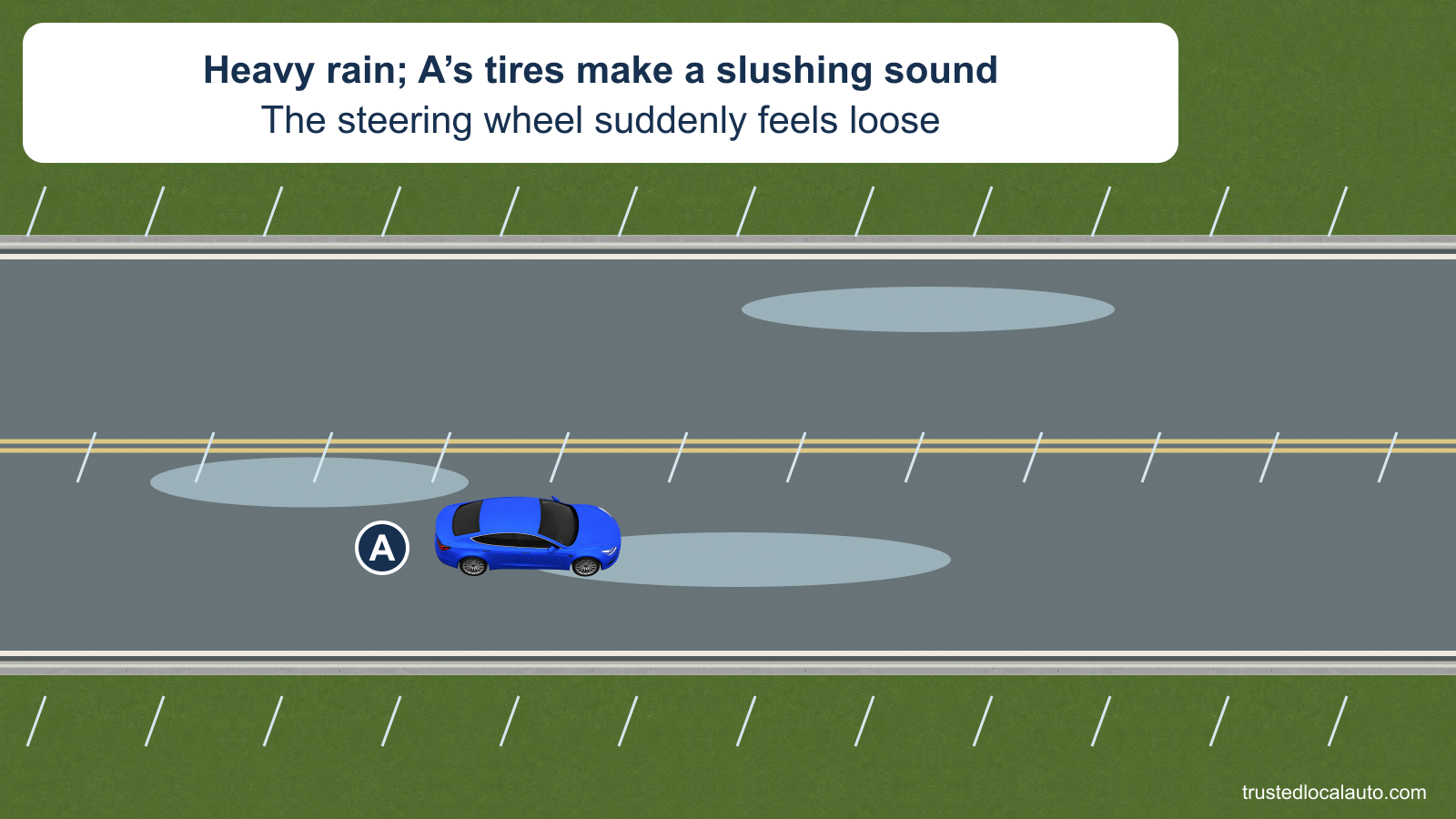 Slushing tires and a loose steering feel in rainYou drive in heavy rain on a highway. You hear a slushing sound from your tires, and the steering wheel suddenly feels loose. What should you do?Try this question
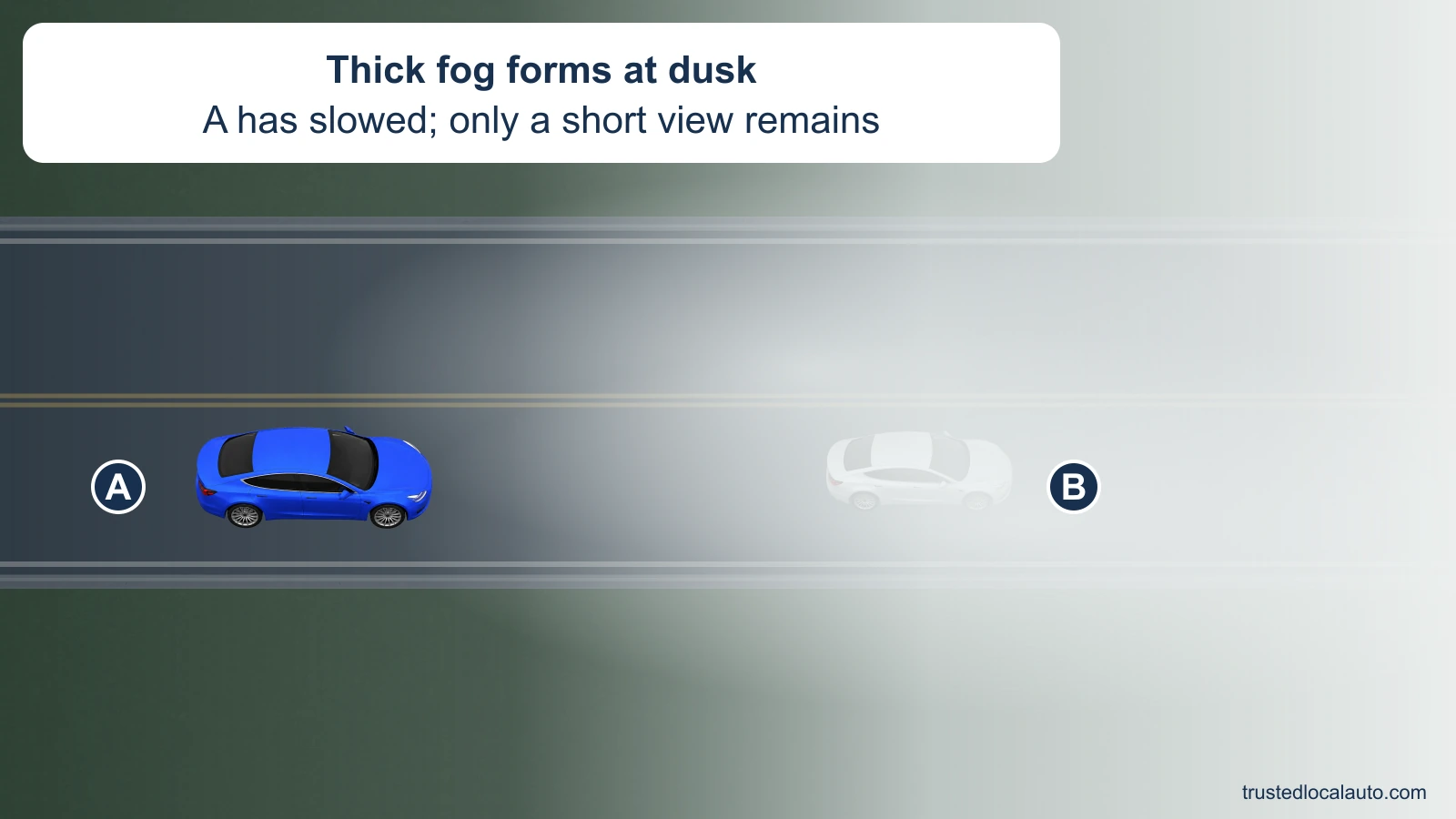 Headlights in thick fogThick fog forms while you drive on a rural road at dusk. You slow down, but you can see only a short way ahead. Which lights should you use?Try this question
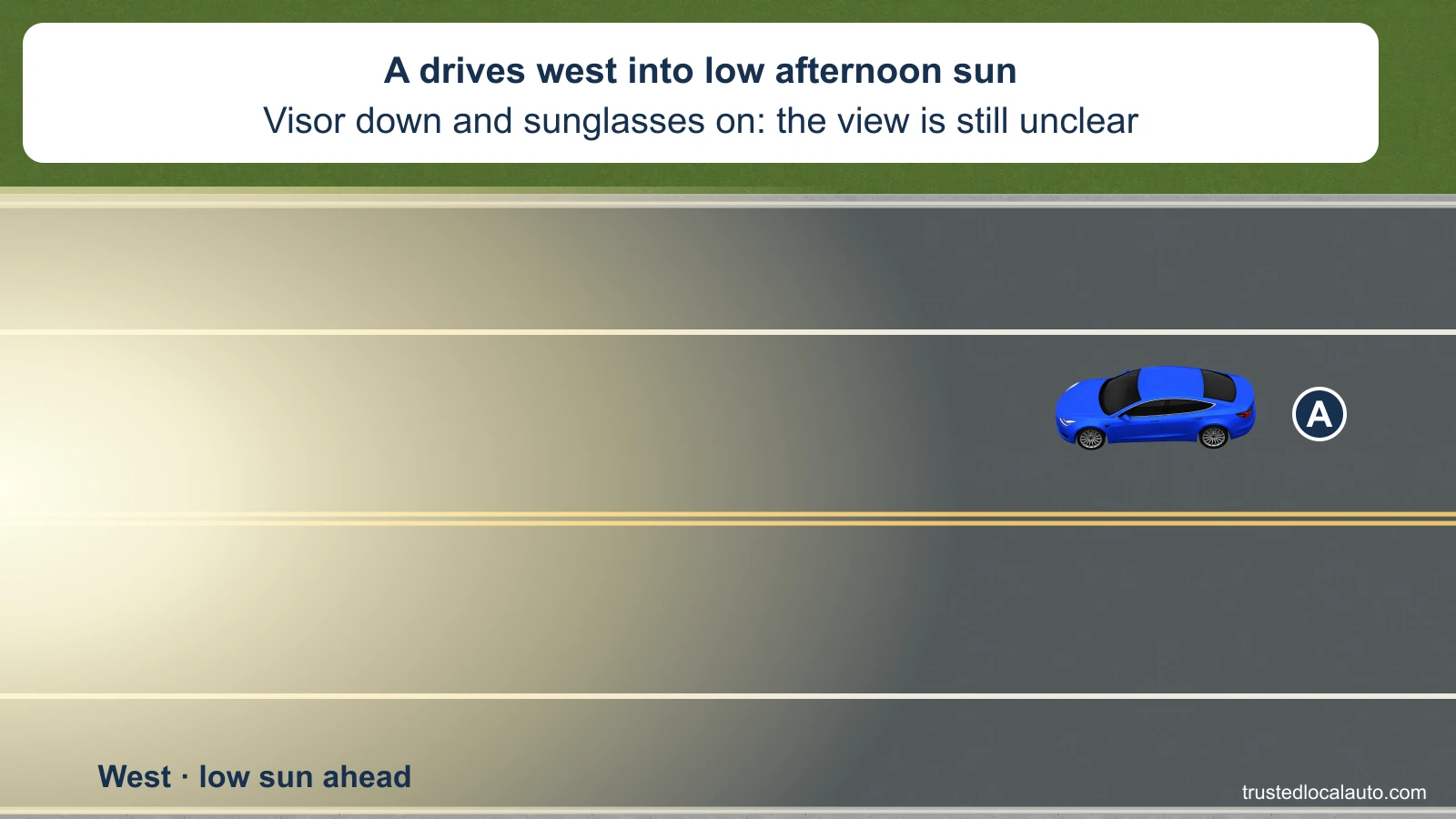 Low sun shining straight into your eyesLate in the afternoon you drive west, and the low sun shines straight into your eyes. You have already lowered the sun visor and put on sunglasses, but you still cannot see the road clearly. What should you do?Try this question
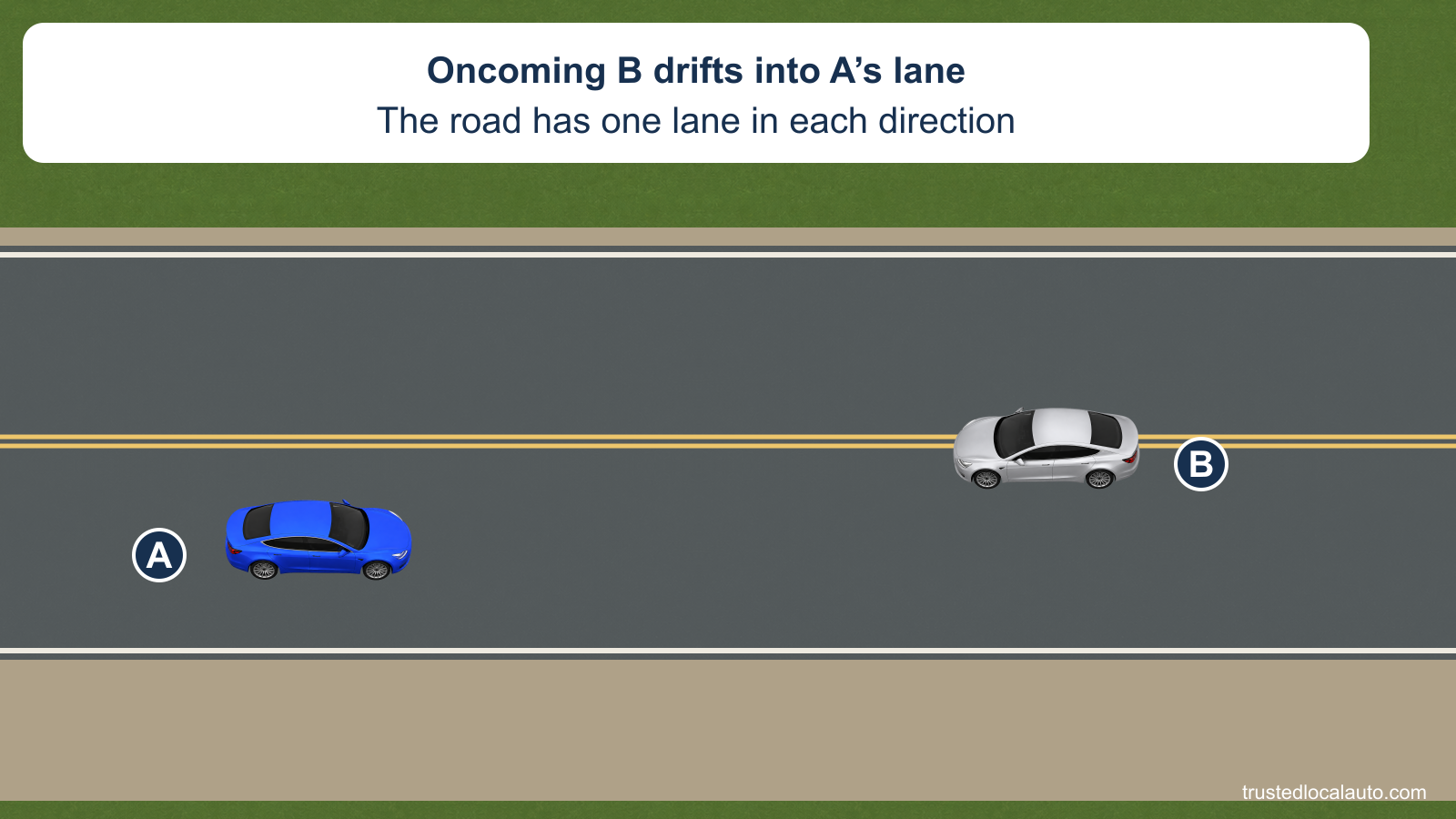 Oncoming car drifts across the center lineOn a two-lane road, an oncoming car drifts across the center line into your lane. What should you do?Try this question
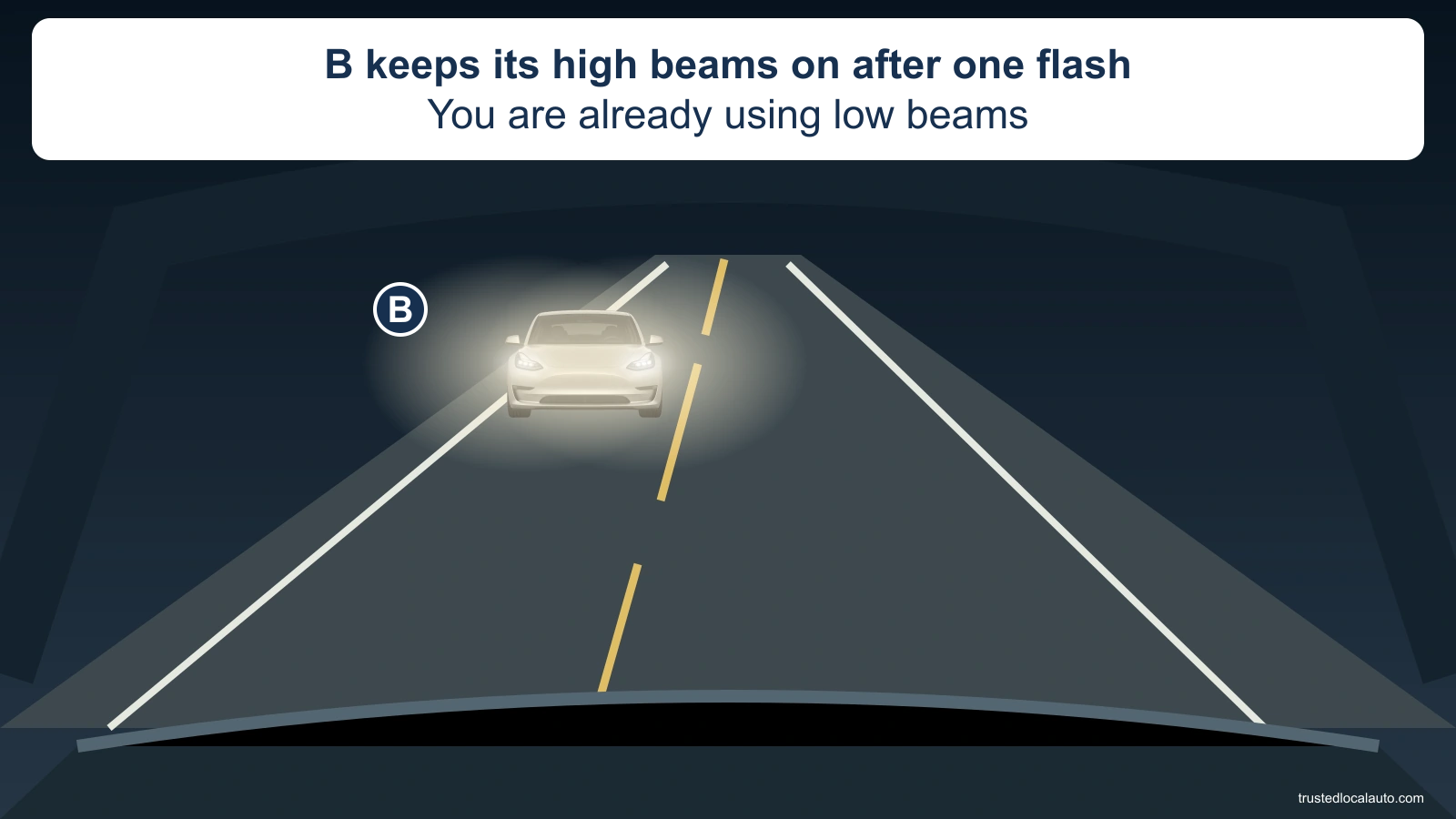 Oncoming driver who does not dim the high beamsYou are driving at night on a two-lane road with your low beams on. An oncoming driver keeps the high beams on, even after you flash your lights once. What should you do?Try this question
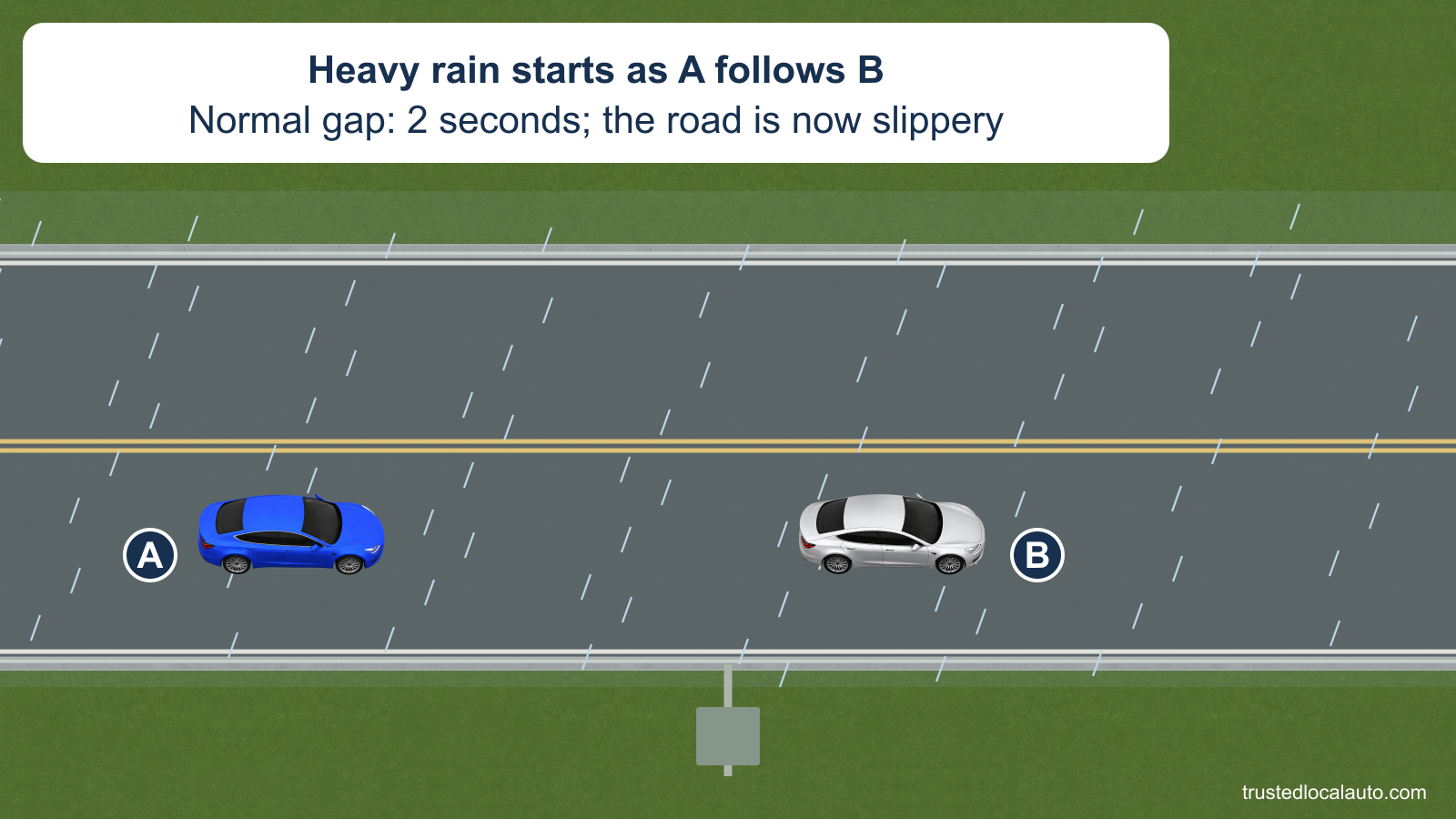 Following distance in heavy rainYou normally keep a two-second following distance. Heavy rain starts, and the pavement becomes slippery. What following distance should you keep now?Try this question
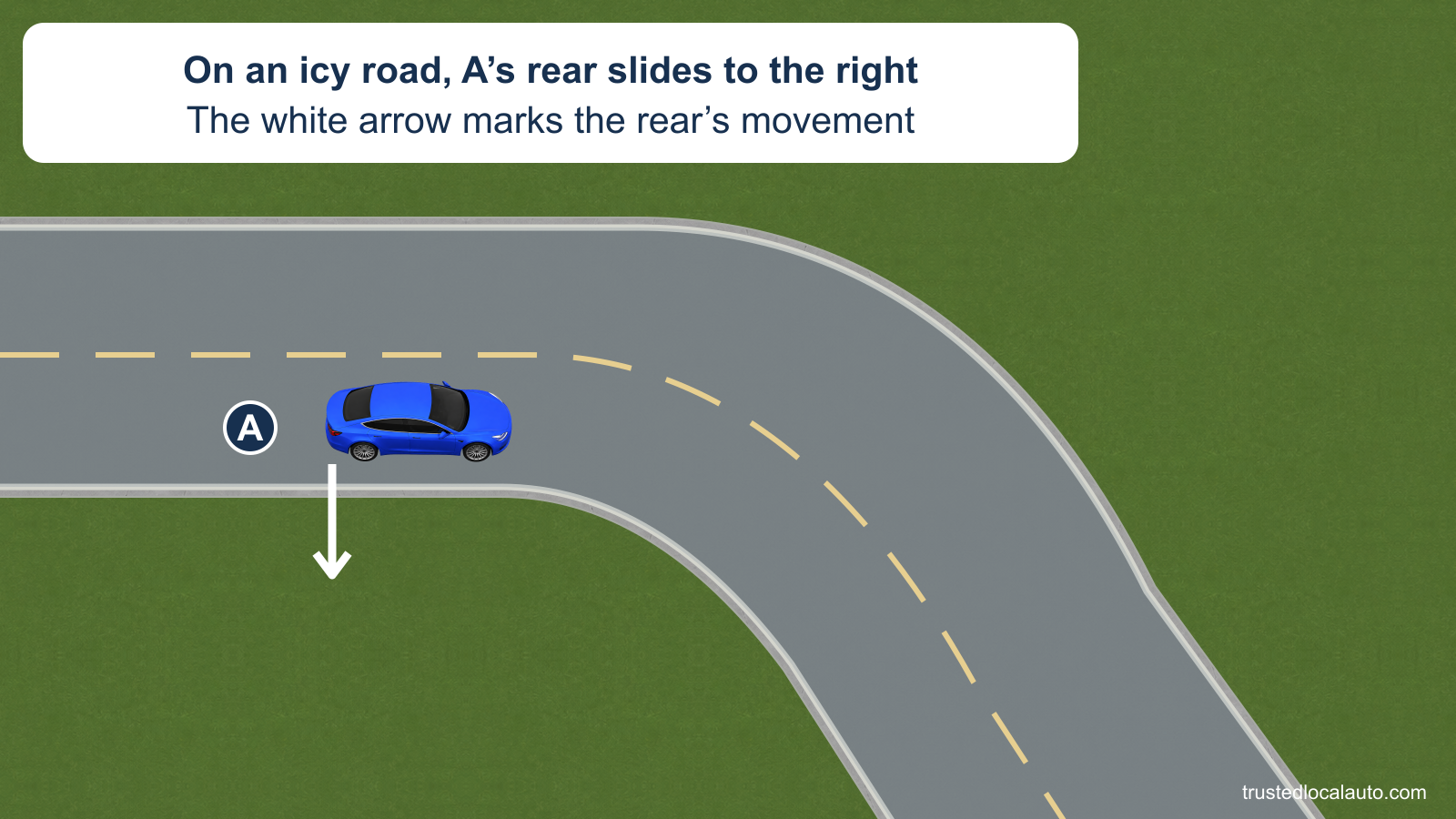 Rear of the car slides right on iceOn an icy road, the rear of your car starts to slide to the right. What should you do?Try this question
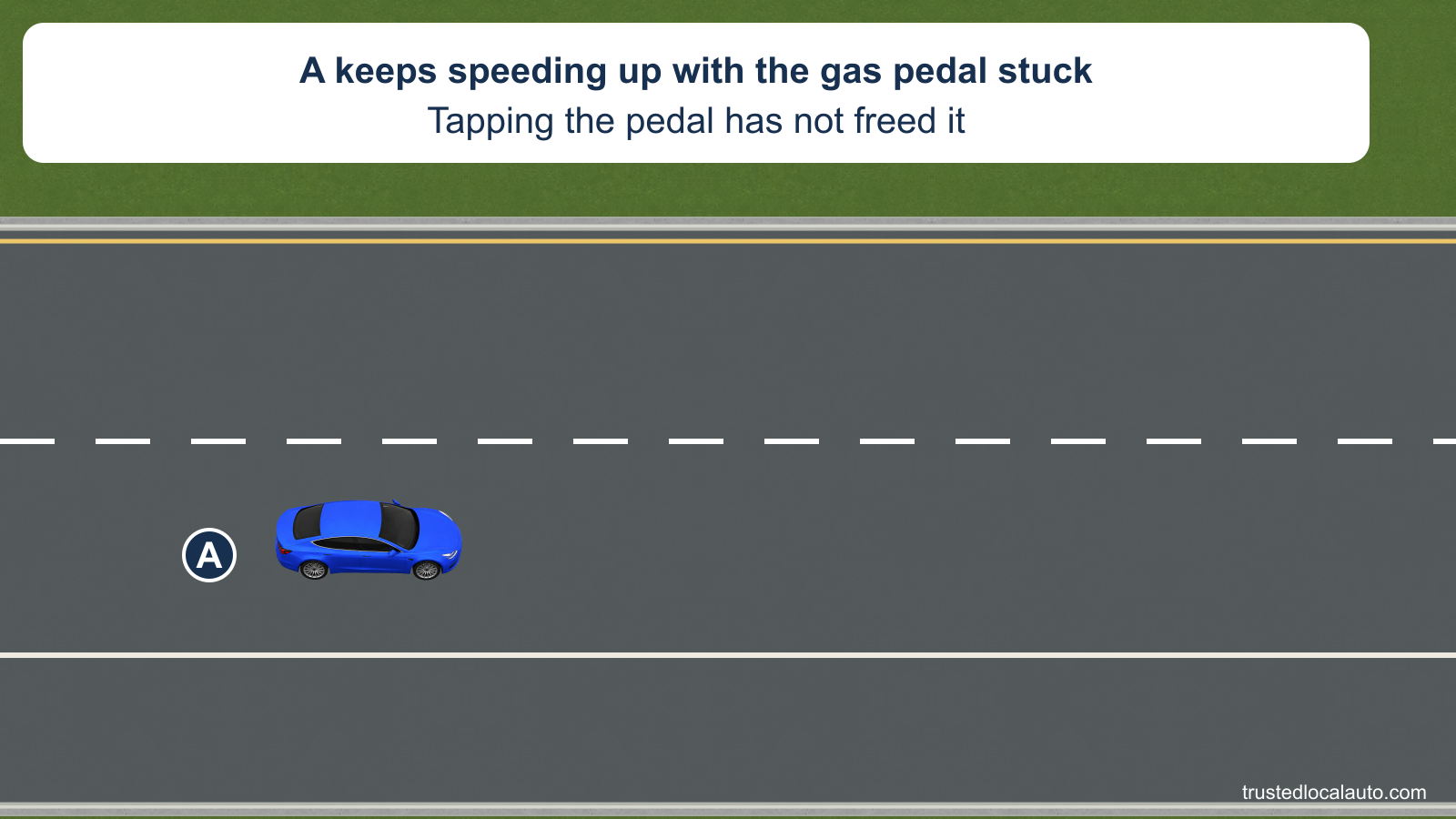 Gas pedal stuck while you are drivingYou lift your foot off the gas pedal, but the car keeps going faster because the pedal is stuck. Tapping the pedal does not free it. What should you do next?Try this question
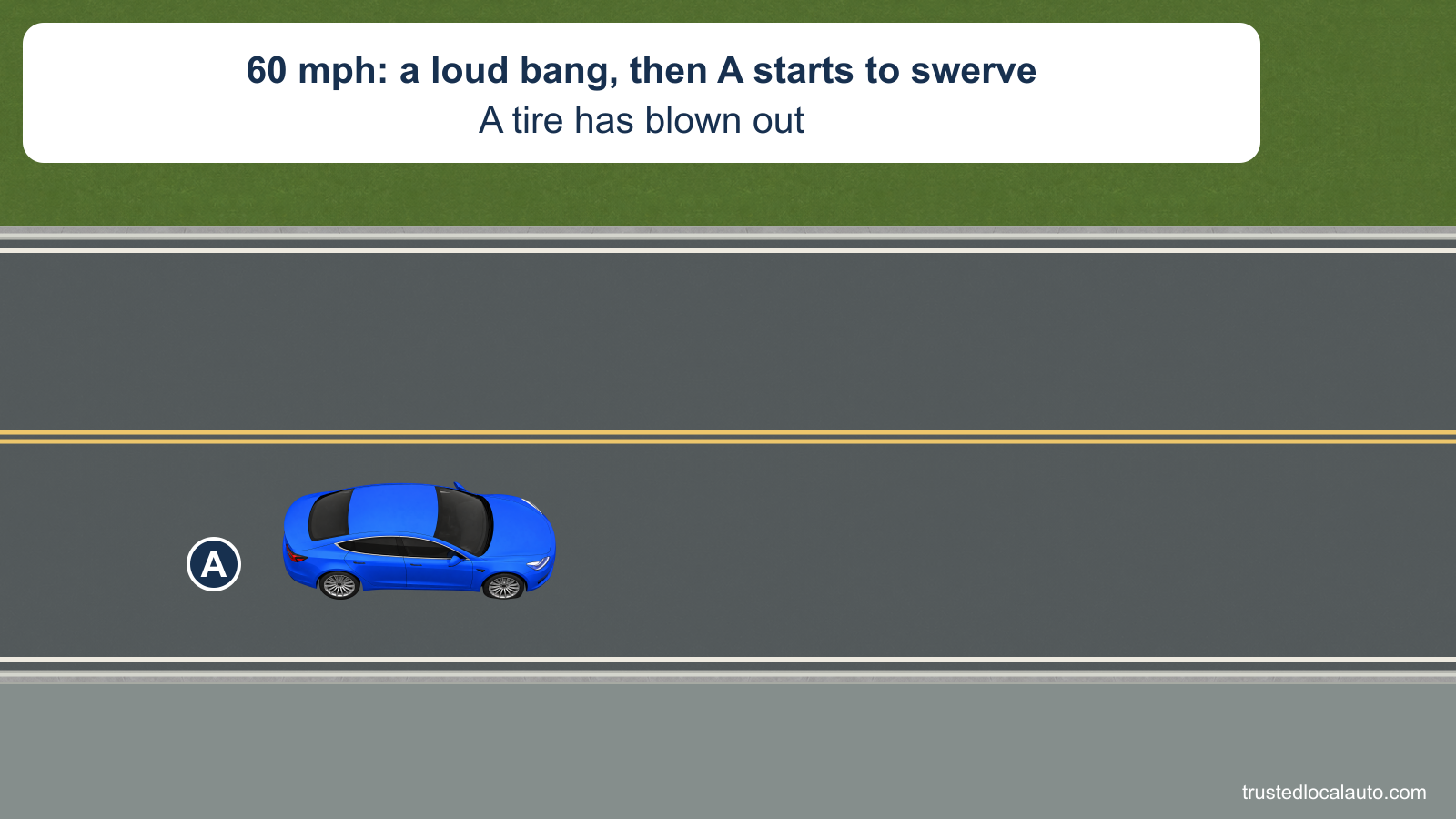 Tire blowout at highway speedYou drive 60 mph on a highway. You hear a loud bang, and the car starts to swerve. A tire has blown out. What should you do first?Try this question
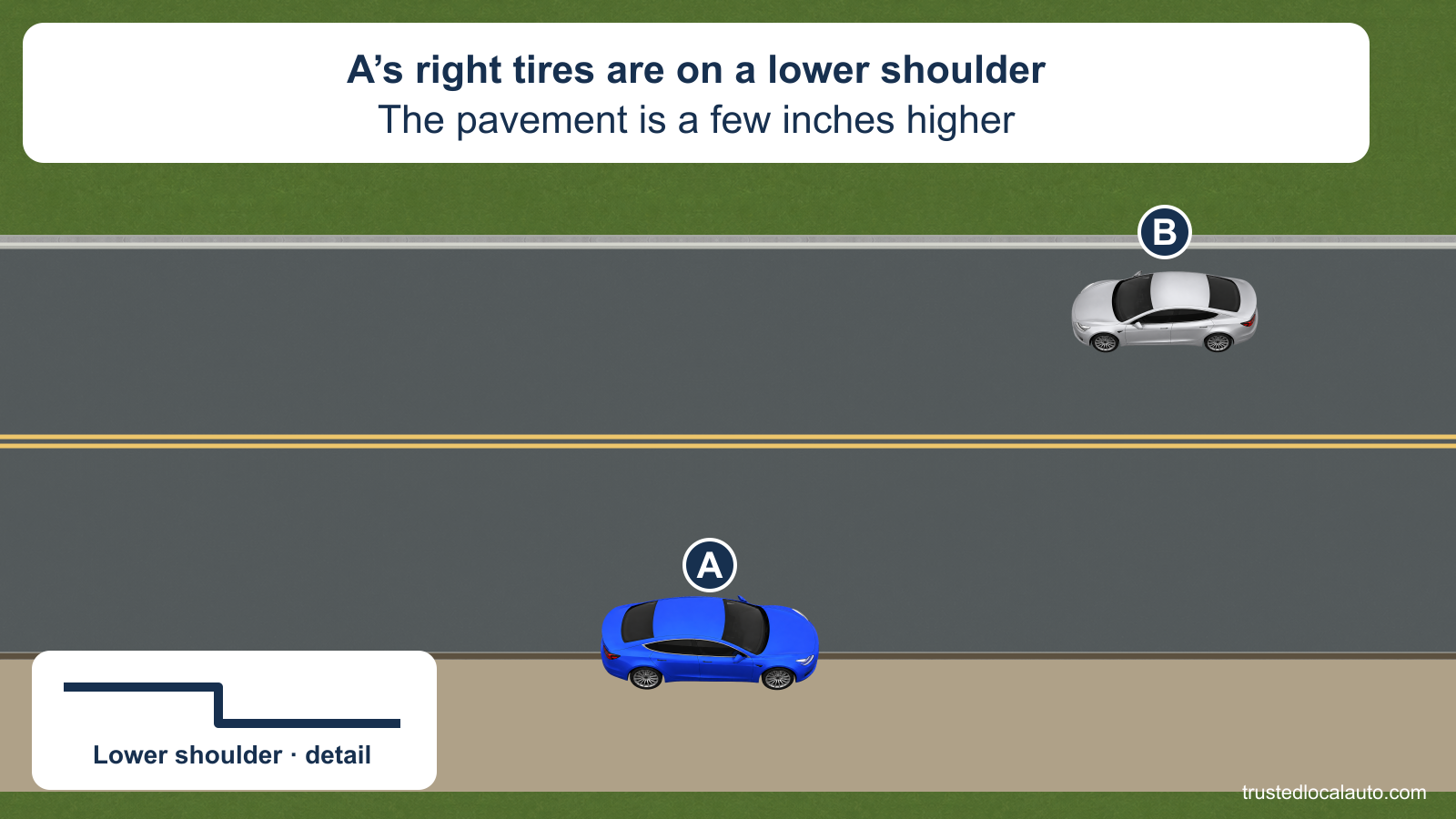 Right wheels drop off the edge of the pavementOn a two-lane road, your right wheels drift off the pavement onto a shoulder that is a few inches lower than the road. What should you do?Try this question
14 text questions
More questions in this topic
- You press the brake pedal of your car, which has an automatic transmission, as you approach stopped traffic. The pedal sinks to the floor and the car barely slows. What should you do?
- You normally drive 50 mph on a rural highway. Today the road is covered with hard-packed snow. Which speed follows the handbook's advice?
- On a city street, your car and another car collide. No one is hurt. The damage to the two cars together looks like about $2,000, and both cars can still be driven. Must you report the crash to law enforcement?
- At 2 p.m. a steady rain begins, so you turn on your windshield wipers and leave them running. What does North Carolina law require about your headlights?
- On a city street, your car and another car collide. No one is hurt, and both cars can still be driven. The damage looks like about $700 on your car and about $800 on the other car. Which statement is correct? Hard
- At night you drive with your high beams on, and a vehicle comes toward you. North Carolina law sets a distance within which you must dim your headlights for it. What is that distance? Hard
- Which statement about driving on hard-packed snow is NOT correct? Hard
- You normally keep a two-second following distance. Heavy rain starts, and the pavement becomes slippery. What is the minimum following distance now? Hard
- Heavy rain makes the pavement slippery, and your normal following distance is two seconds. Which pair gives the speed and the minimum gap that the handbook advises? Hard
- You normally drive 60 mph on a rural highway. Today the road is covered with hard-packed snow. Which speed follows the handbook's advice? Hard
- After a crash in which no one is hurt, which statement is NOT correct? Hard
- North Carolina law uses two headlight distances. The dimming distance: you must dim your high beams when you meet a vehicle within it. The view distance: you must use headlights whenever you cannot clearly see a person at that distance ahead. Which pair is correct? Hard
- At noon, snow begins to fall, and you run your windshield wipers steadily. You can still see clearly far ahead. Which statement about your headlights is correct? Hard
- In daylight, a light mist falls. You use your windshield wipers only now and then, and you can see clearly far ahead. Which statement is correct? Hard
North Carolina Class C Knowledge
More Class C Knowledge topics
Road rules · 12 topics
- Licensing & Test Readiness21 questions
- Traffic Signals & Road Markings15 questions
- Observation, Speed & Space17 questions
- Intersections & Right-of-Way18 questions
- Turns, Lanes, Passing & Merging16 questions
- Parking, Reversing & Roadside Stops15 questions
- Sharing the Road16 questions
- Freeways & High-Speed Roads12 questions
- School Zones, Railways & Work Areas30 questions
- Weather, Visibility & Emergencies26 questions · This topic
- Vehicle Safety, Documents & Towing19 questions
- Safe & Responsible Driving20 questions
Each question page shows the answer, the explanation and the official source of the question.