
Utah Class D Written Knowledge topic
Utah Class D Written Knowledge Weather, Visibility & Emergencies
Handle darkness, poor weather, loss of traction, breakdowns, collisions and emergencies.
26 questions, free with an account. 8 of them are hard. Each one has its answer, an explanation and its official source.
- 15 picture questions
- 11 text questions
- 8 of them hard
15 picture questions
Questions in this topic
Select a question to answer it. The answer and the explanation show after you answer.
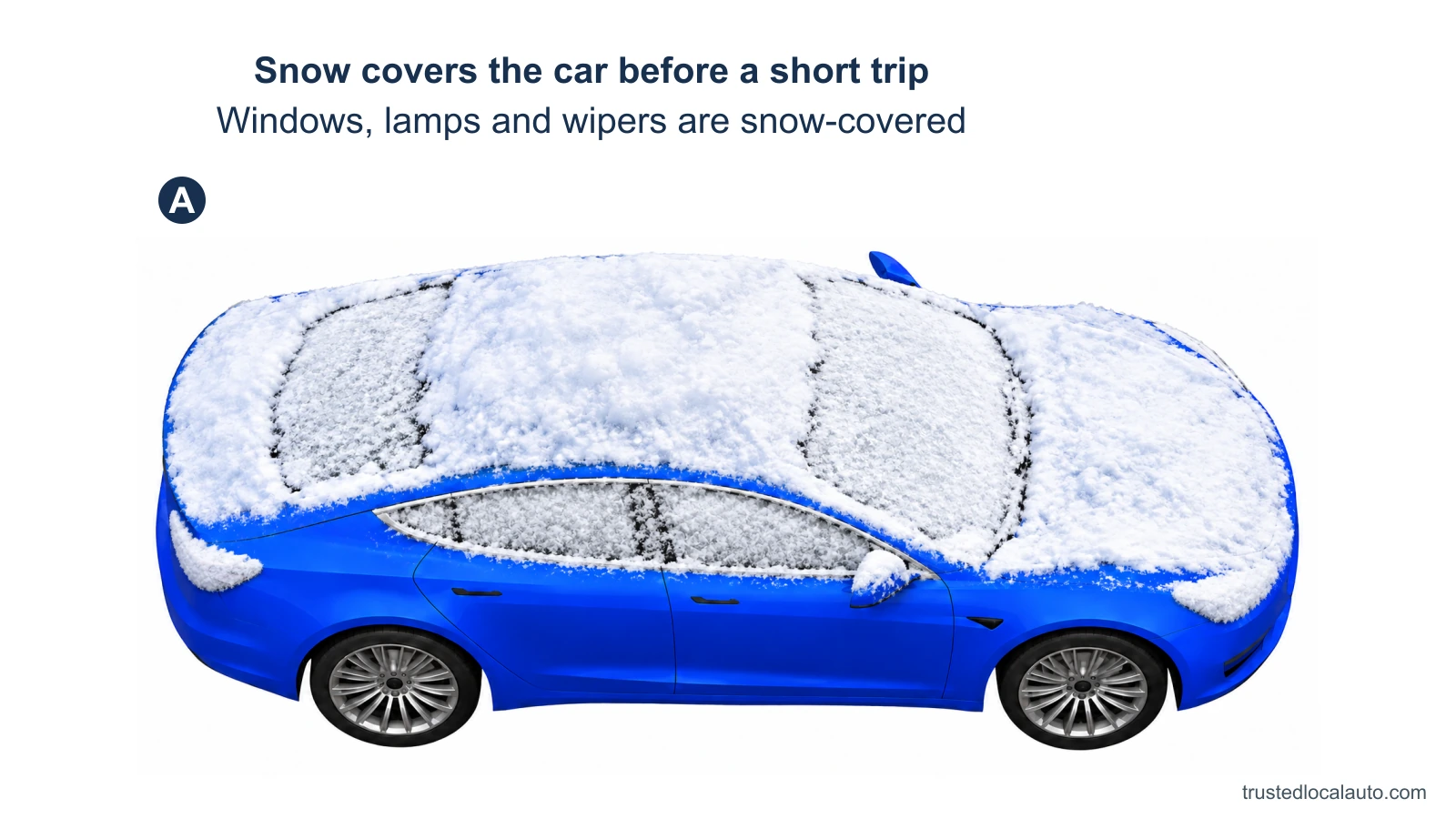 Clearing snow before drivingAfter a night of snow, you have a short drive to work. Snow covers the whole car. What must you clear before you drive?Try this question
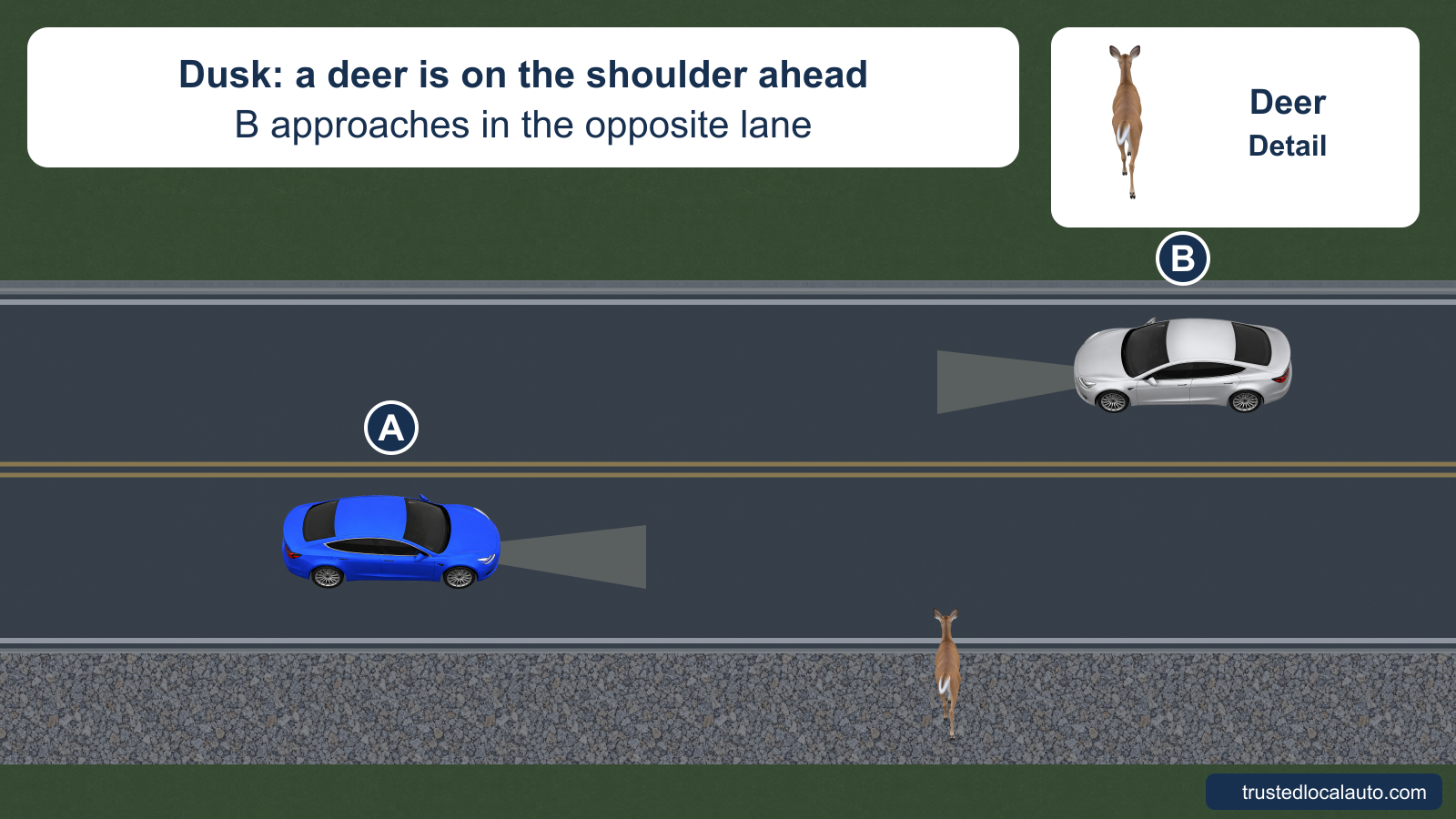 Deer standing near the roadway at duskAt dusk, you drive on a two-lane highway. A deer stands on the shoulder ahead, and a car comes toward you in the other lane. What is the best action?Try this question
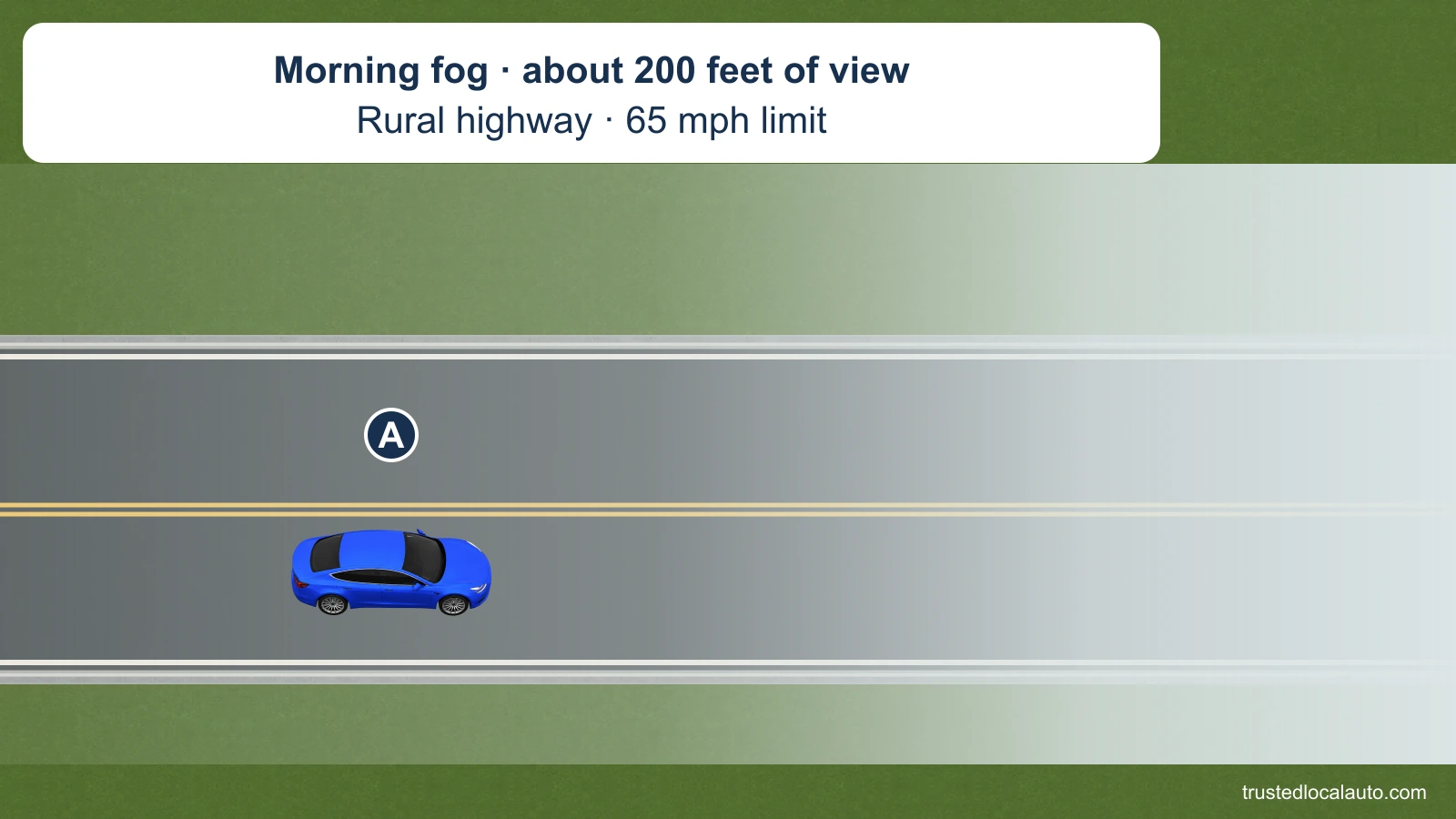 Driving in fogThick fog forms on a rural highway in the morning. You can see only about 200 feet ahead, and the speed limit is 65 mph. What should you do?Try this question
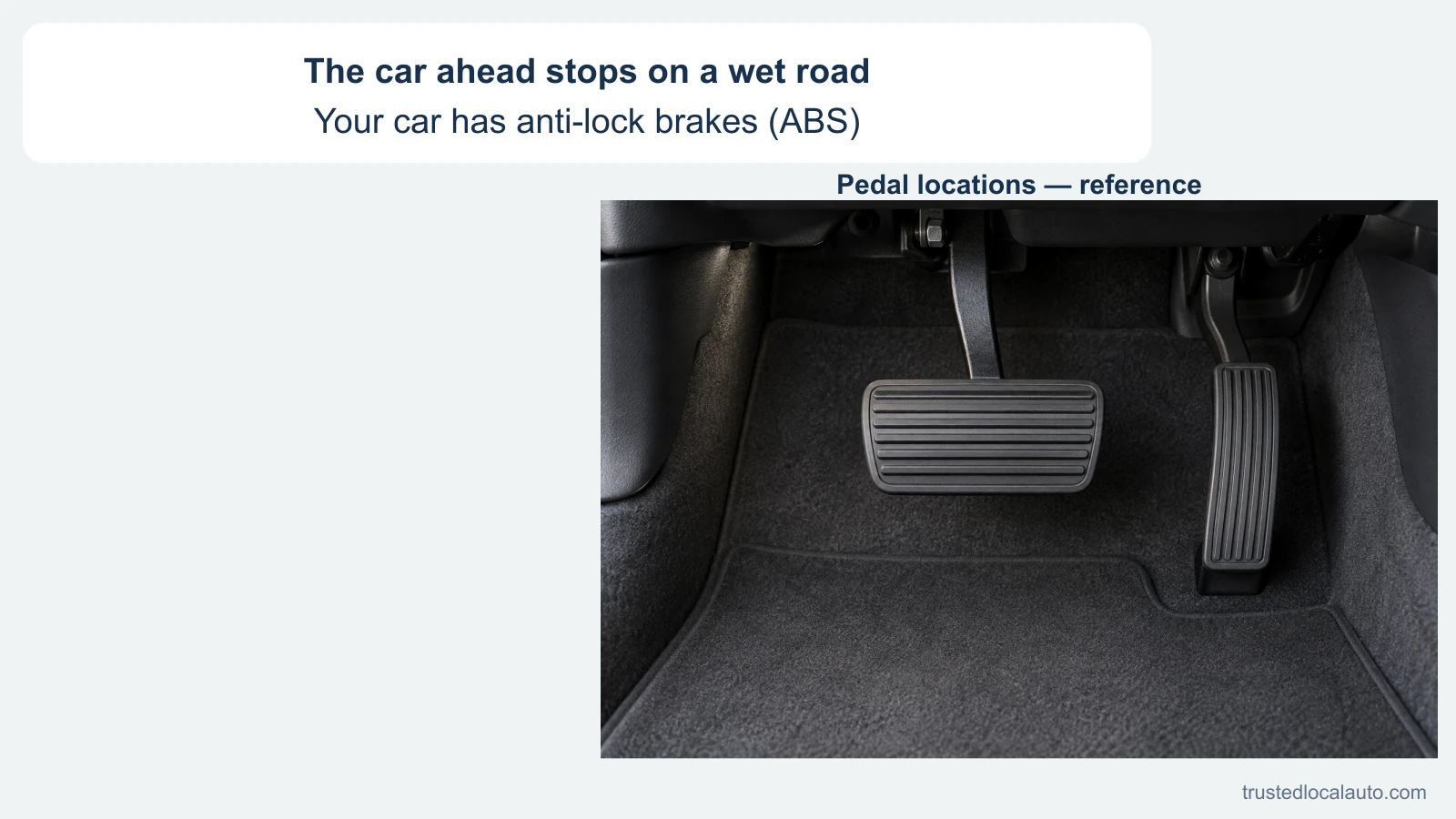 Emergency stop with anti-lock brakesThe car ahead stops suddenly on a wet road. Your car has anti-lock brakes (ABS), and you must stop as quickly as possible. How should you use the brake?Try this question
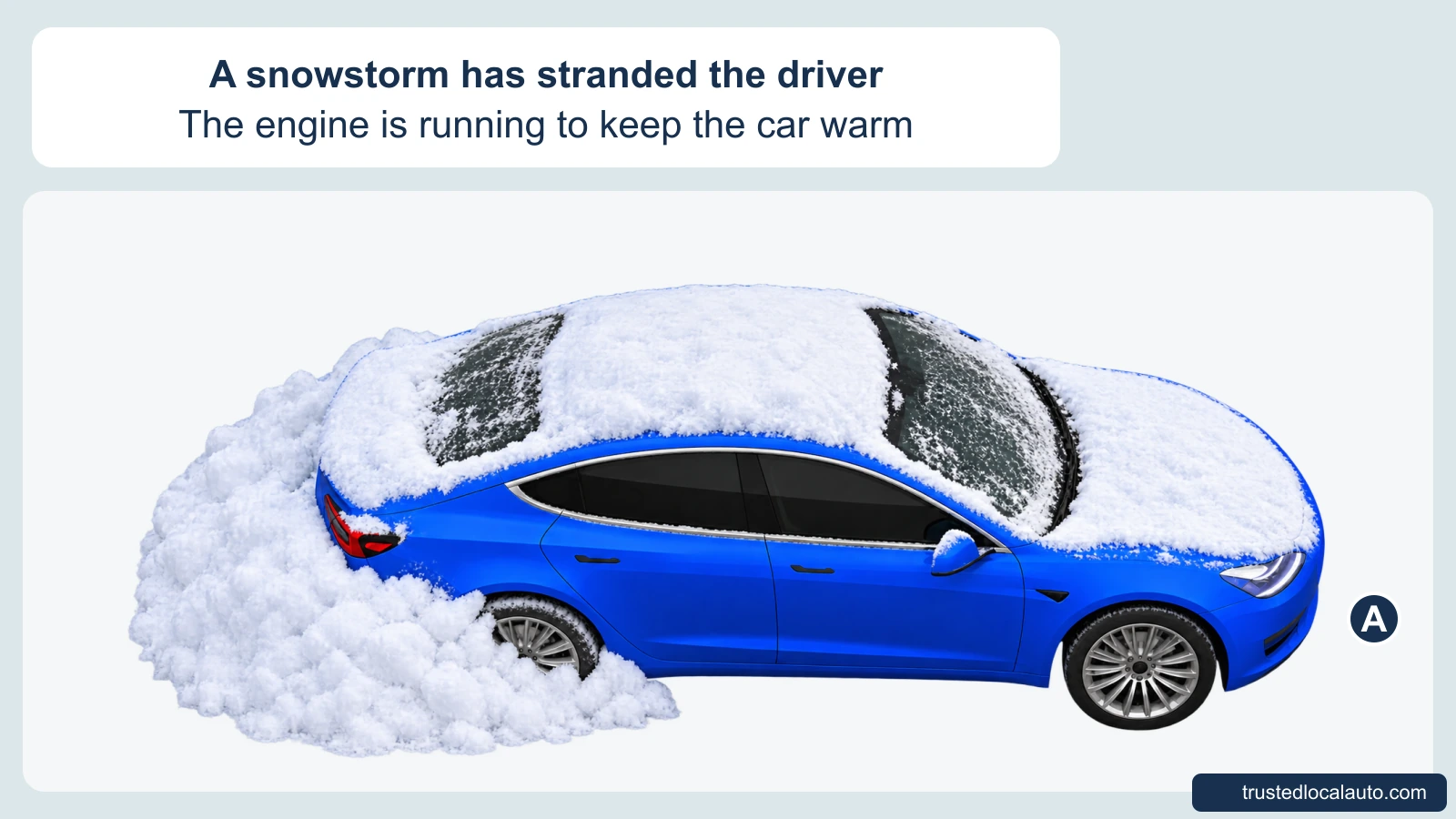 Running the engine while stranded in snowA snowstorm strands you in your car, and you run the engine to stay warm. What should you do to prevent carbon monoxide poisoning?Try this question
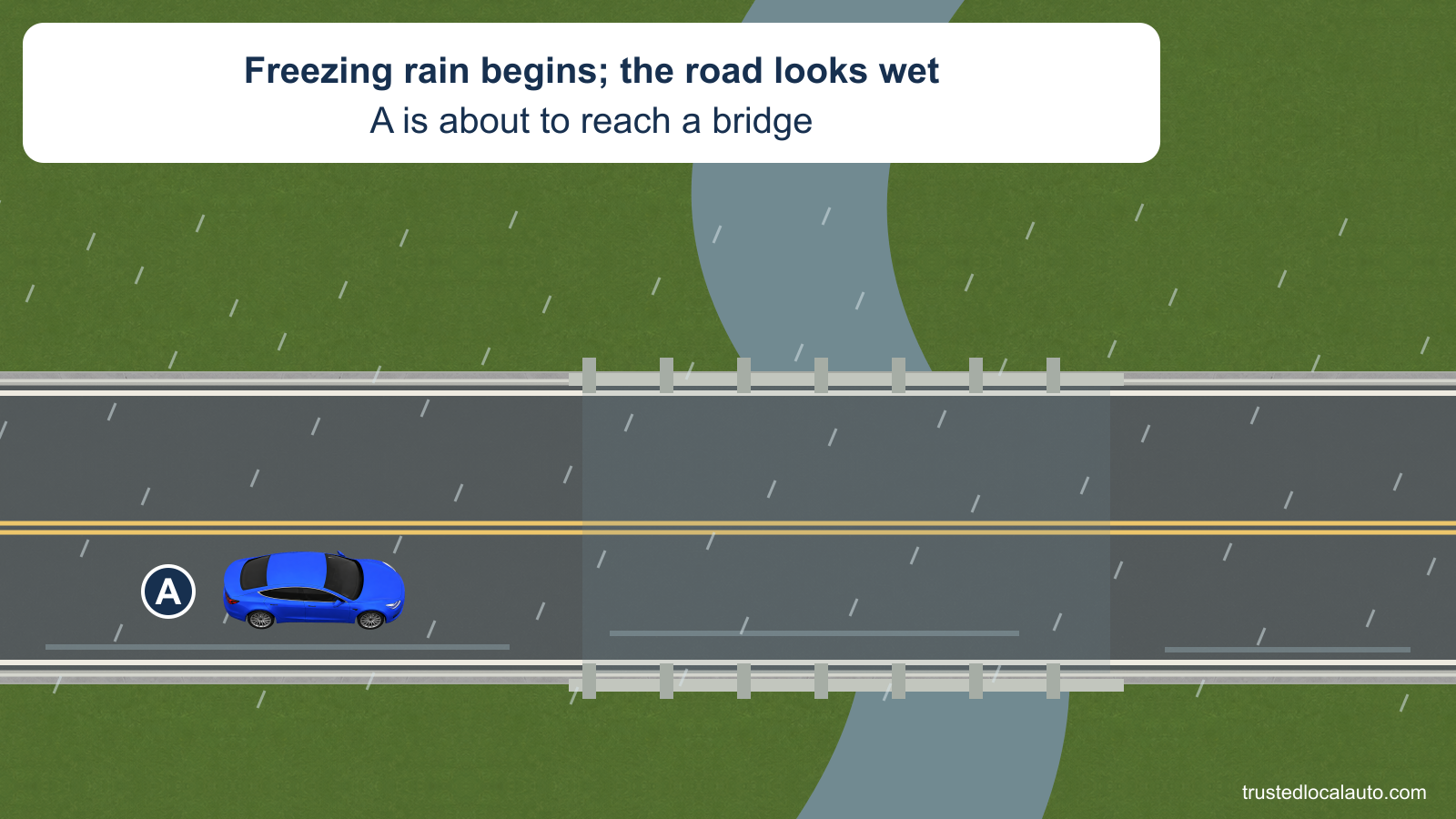 Freezing rain and a bridge aheadFreezing rain starts to fall. The road ahead looks only wet, and you are about to cross a bridge. What should you expect?Try this question
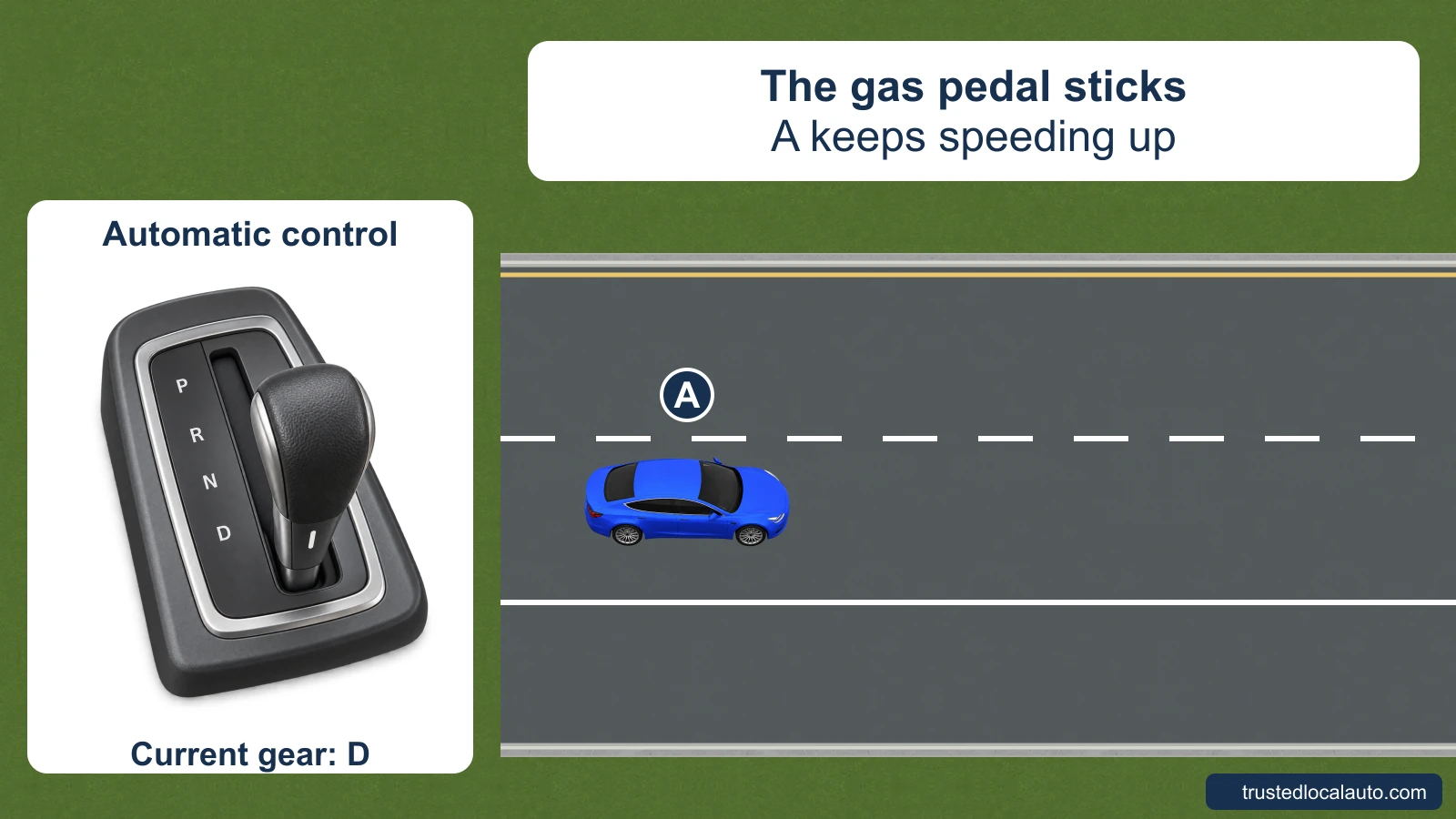 Gas pedal sticks while you driveYou drive on a highway, and the gas pedal sticks. The car keeps speeding up. What should you do first?Try this question
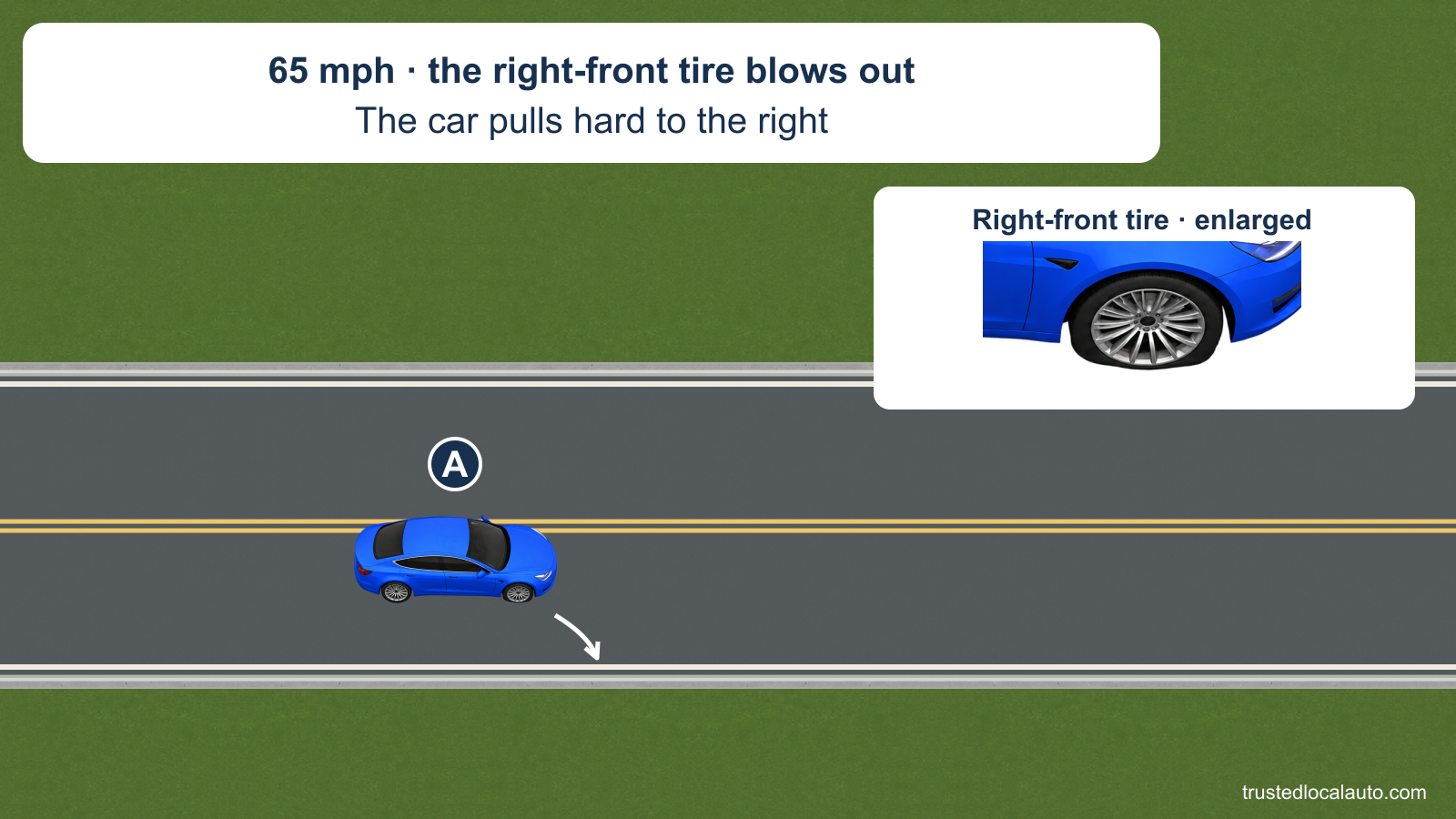 Handling a tire blowoutAt 65 mph, your right front tire blows out, and the car pulls hard to the right. What should you do first?Try this question
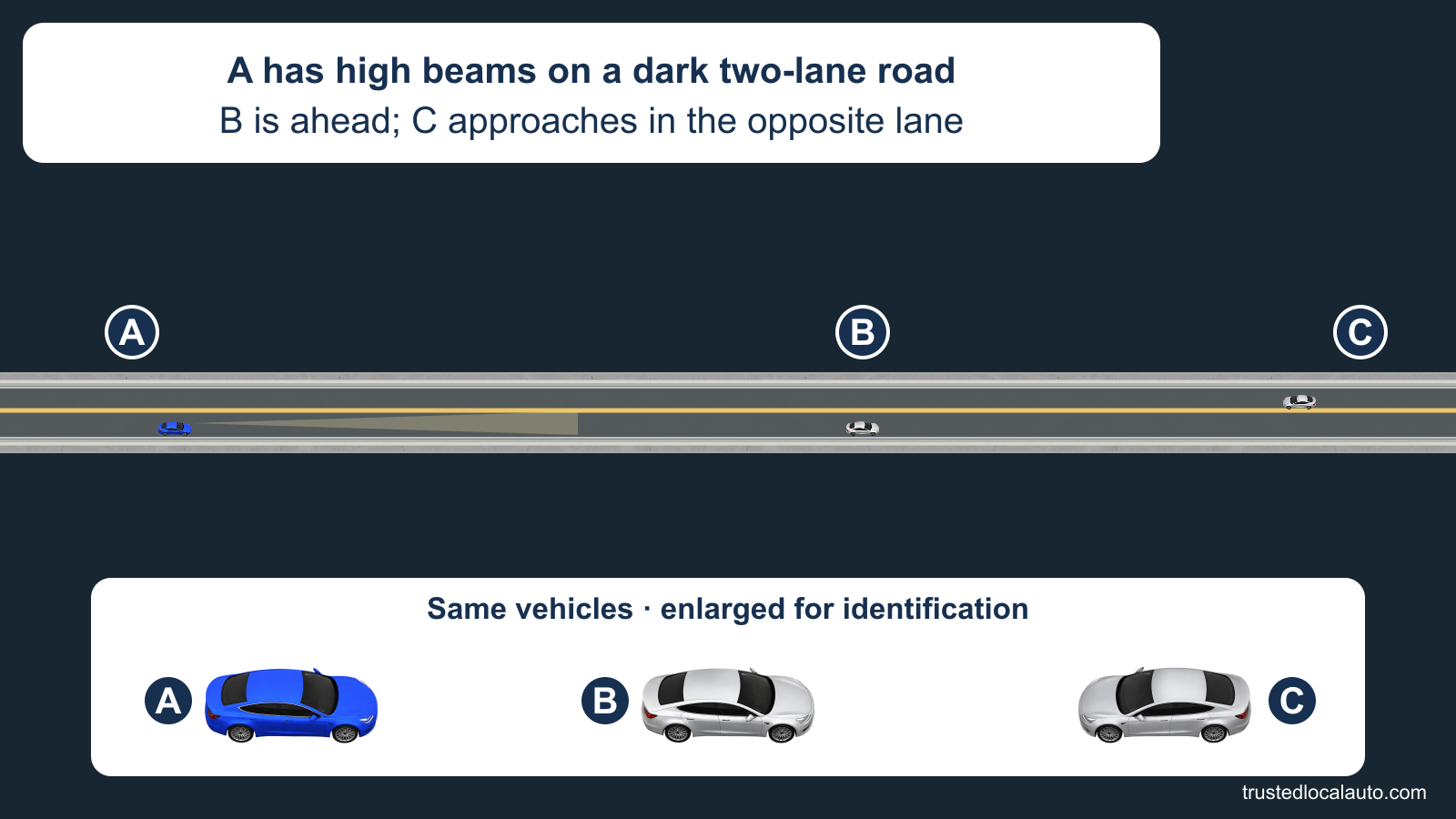 Distances for dimming high beamsYou drive on a dark two-lane highway with your high beams on. One car is ahead of you in your lane, and another car comes toward you. When must you switch to low beams?Try this question
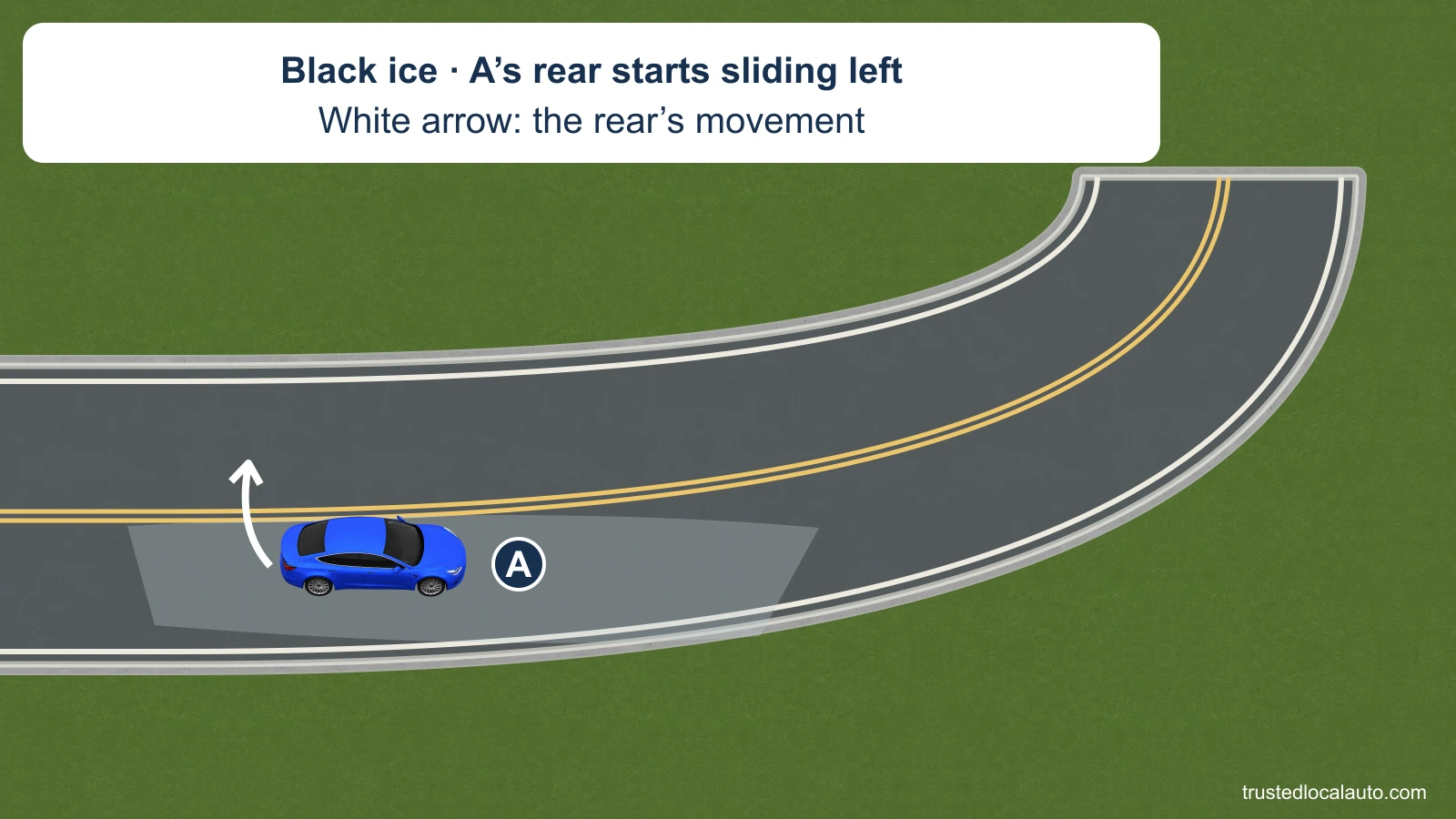 Rear-wheel skid directionOn a curve with black ice, the rear of your car starts to slide to the left. What should you do?Try this question
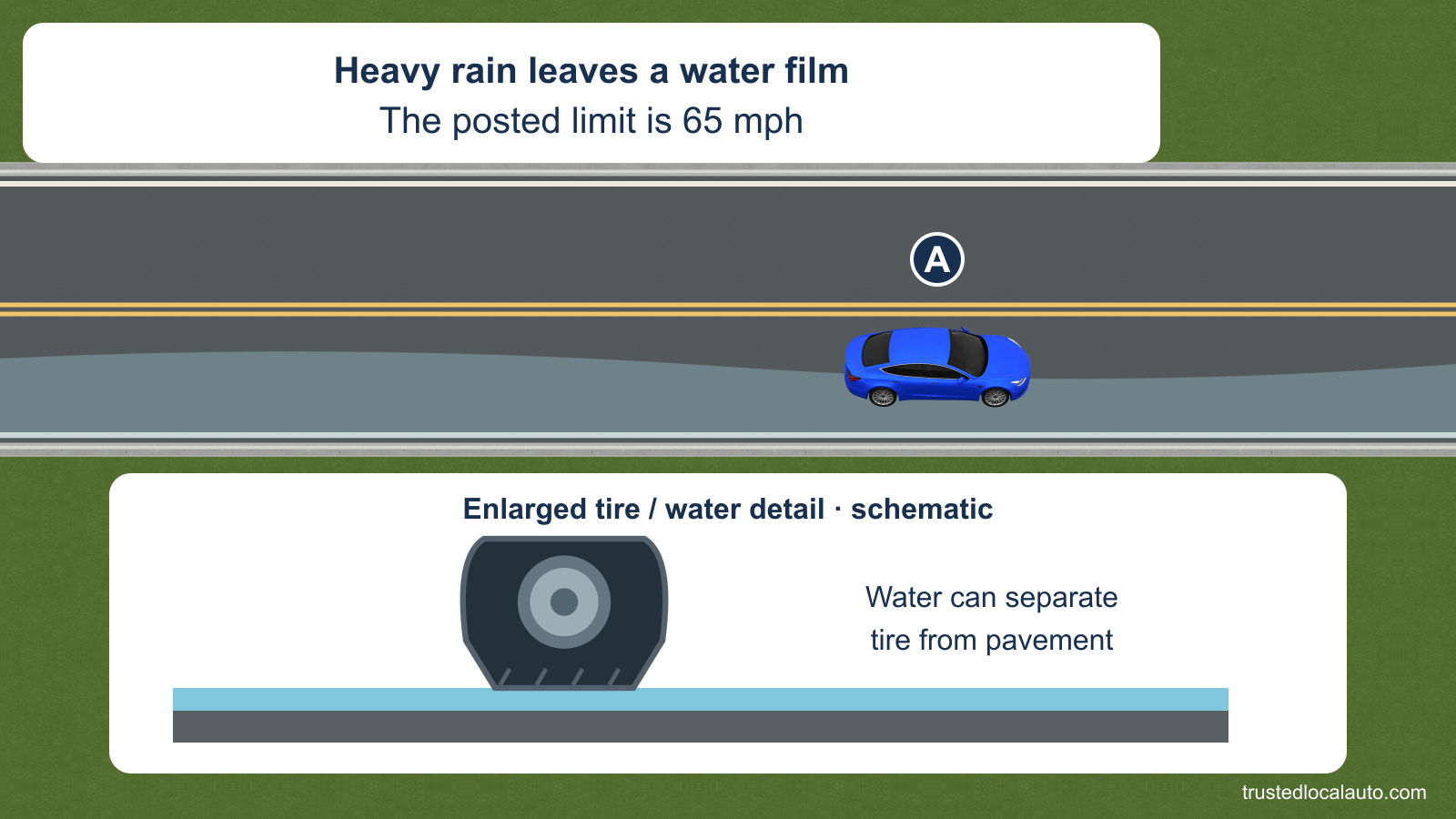 Reducing hydroplaning riskHeavy rain has left a film of water on a highway with a 65 mph limit. What most lowers the chance that your tires ride up on the water?Try this question
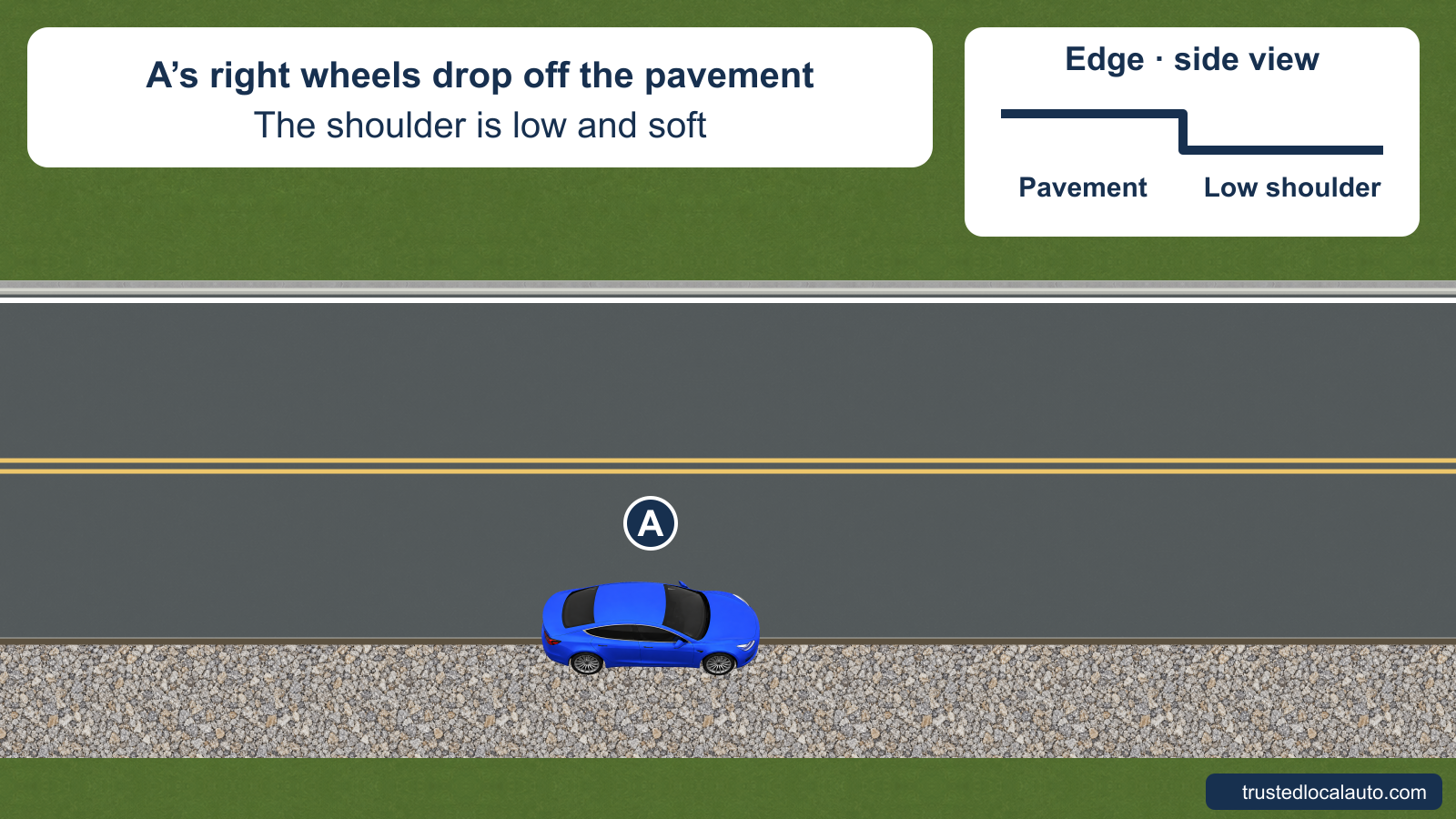 Right wheels drop off the pavement edgeYour right wheels drop off the edge of the pavement onto a low, soft shoulder. What should you do?Try this question
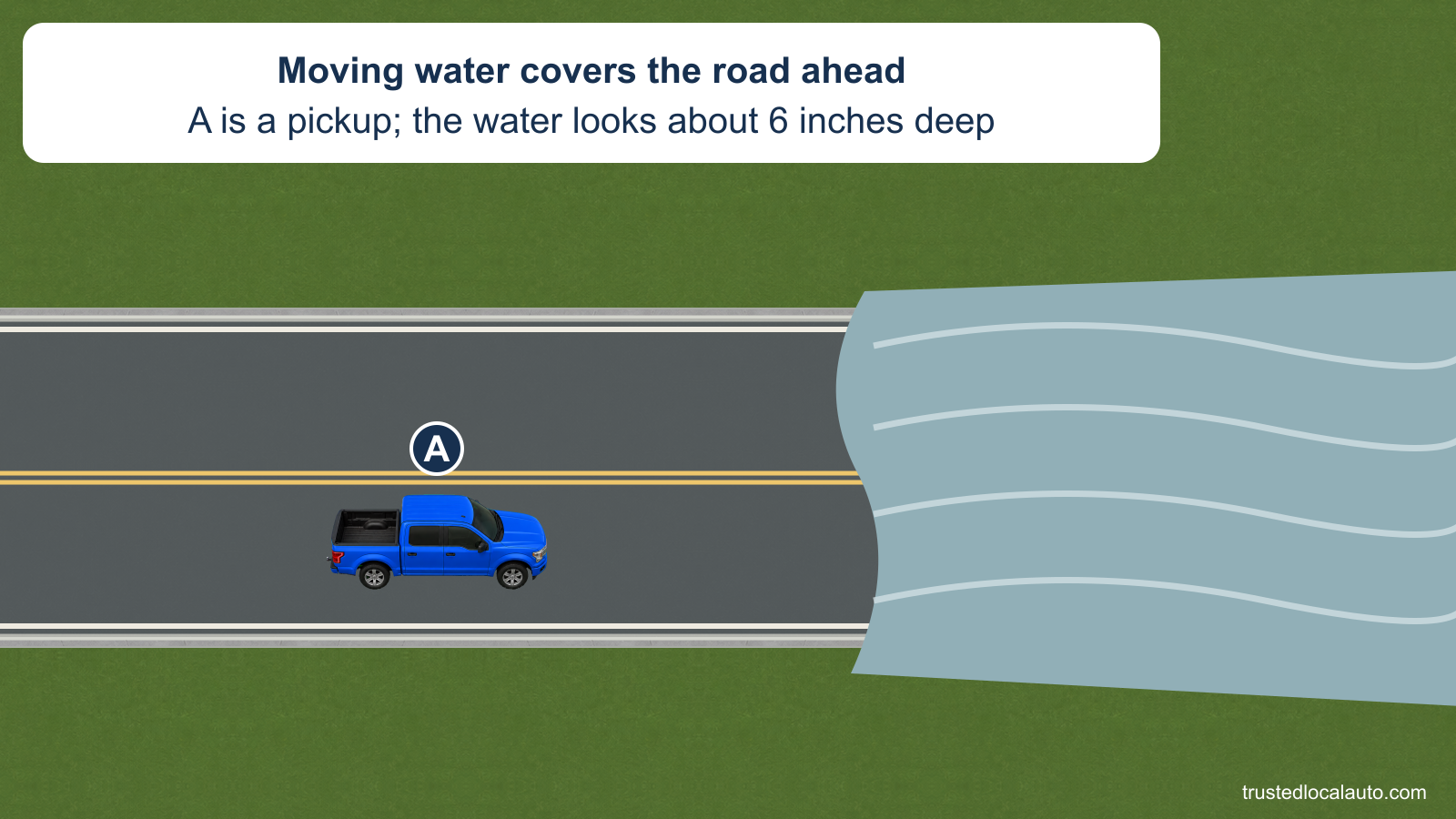 Road covered by moving waterAfter a storm, water flows across a road ahead of you. It looks only about 6 inches deep, and you drive a pickup truck. What should you do?Try this question
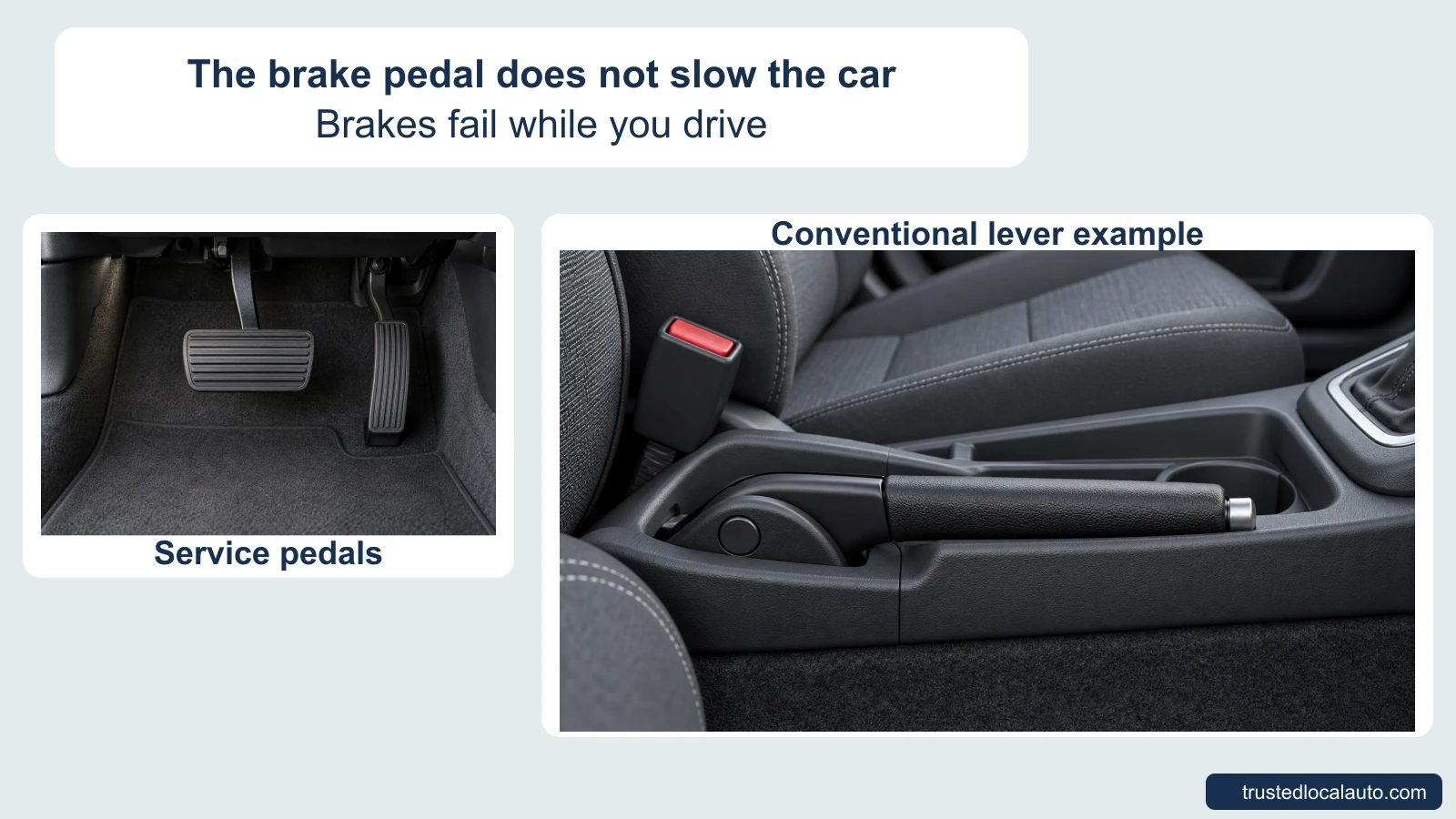 Brakes fail while you driveWhile you drive, you press the brake pedal and the brakes do not work. What does the handbook tell you to do next?Try this question
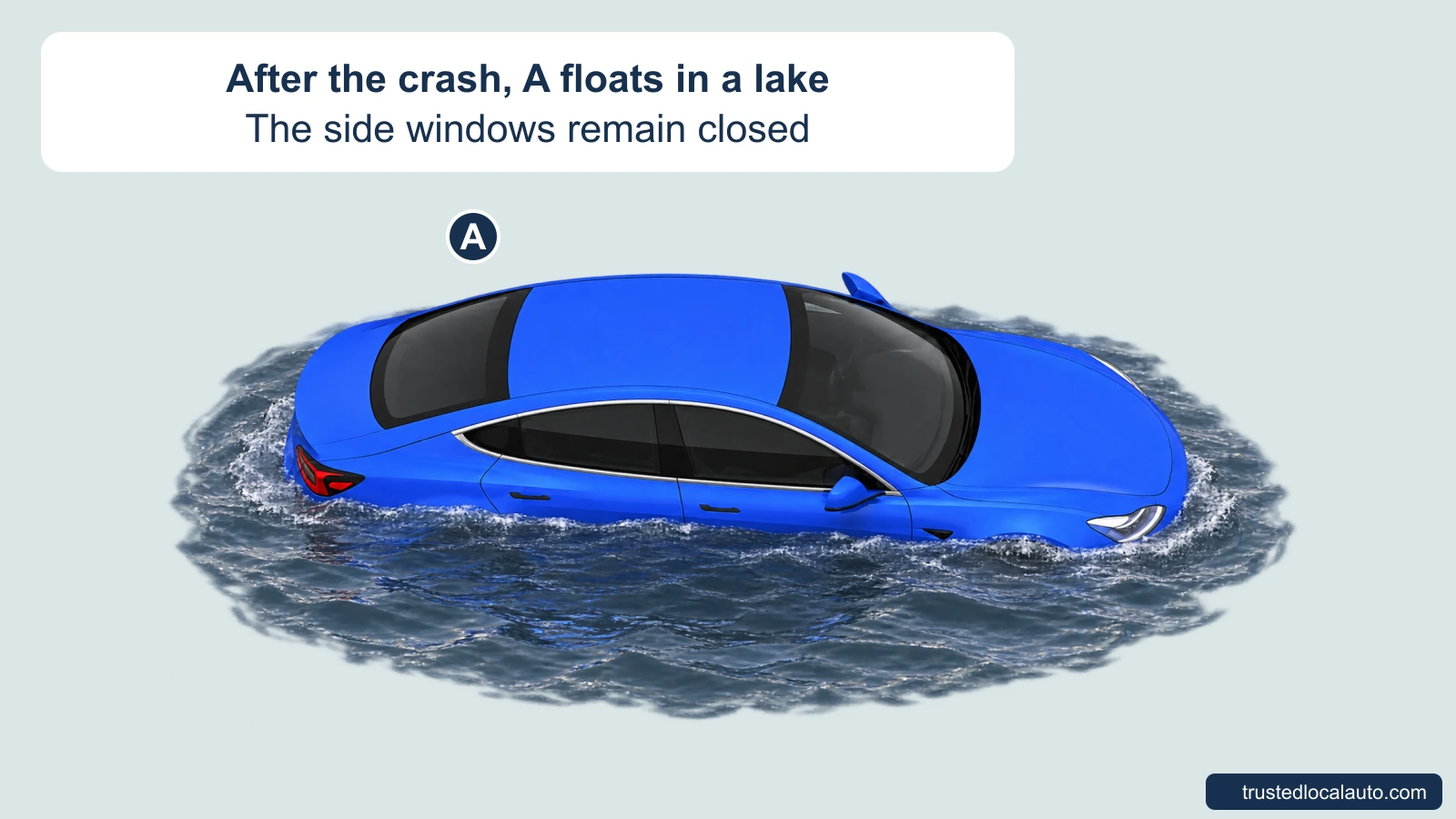 Vehicle goes into deep waterAfter a crash, your car goes into a lake and floats on the surface. What should you do first?Try this question
11 text questions
More questions in this topic
- On a hot summer day, your car breaks down on a desert highway. You see no call box and no buildings nearby. What should you do?
- A lightning storm starts while you drive a car with a hard metal roof, and there is no building nearby. What is the safest thing to do?
- Sunset today is at 7:40 p.m. The sky is clear, and you drive on a highway. From what time does Utah law require your headlights to be on?
- While you drive, you press the brake pedal and the brakes do not work. You apply the parking brake slowly, but it does not work either. What does the handbook tell you to do next? Hard
- Utah law requires headlights from a set time of day, and at any other time when you cannot clearly see persons and vehicles a set distance ahead. Which pair is correct? Hard
- It is 2 p.m. Snow falls, and you can see only about 400 feet ahead on the highway. Which statement about your headlights is correct? Hard
- At night on a two-lane highway, your high beams are on. A car ahead of you in your lane is about 400 feet away, and an oncoming car is about 450 feet away. Which statement is correct? Hard
- Your left front tire blows out while you drive on a highway. Which statement is correct? Hard
- At 65 mph, your right front tire blows out, and the car pulls hard to the right. What should you do first? Hard
- A snowstorm strands you in your car. To stay warm, you run the engine and the heater, with the exhaust pipe clear of snow and one window slightly open. How much engine time does the handbook recommend? Hard
- In which of these Utah driving rules is the distance 300 feet? Hard
Utah Class D Written Knowledge
More Class D Written Knowledge topics
Road rules · 12 topics
- Licensing & Test Readiness27 questions
- Traffic Signals & Road Markings16 questions
- Observation, Speed & Space20 questions
- Intersections & Right-of-Way17 questions
- Turns, Lanes, Passing & Merging22 questions
- Parking, Reversing & Roadside Stops16 questions
- Sharing the Road21 questions
- Freeways & High-Speed Roads13 questions
- School Zones, Railways & Work Areas31 questions
- Weather, Visibility & Emergencies26 questions · This topic
- Vehicle Safety, Documents & Towing21 questions
- Safe & Responsible Driving26 questions
Each question page shows the answer, the explanation and the official source of the question.