
Saskatchewan Class 7 topic
Saskatchewan Class 7 Weather, Visibility & Emergencies
Handle darkness, poor weather, loss of traction, breakdowns, collisions and emergencies.
32 questions, free with an account. 9 of them are hard. Each one has its answer, an explanation and its official source.
- 6 picture questions
- 26 text questions
- 9 of them hard
6 picture questions
Questions in this topic
Select a question to answer it. The answer and the explanation show after you answer.
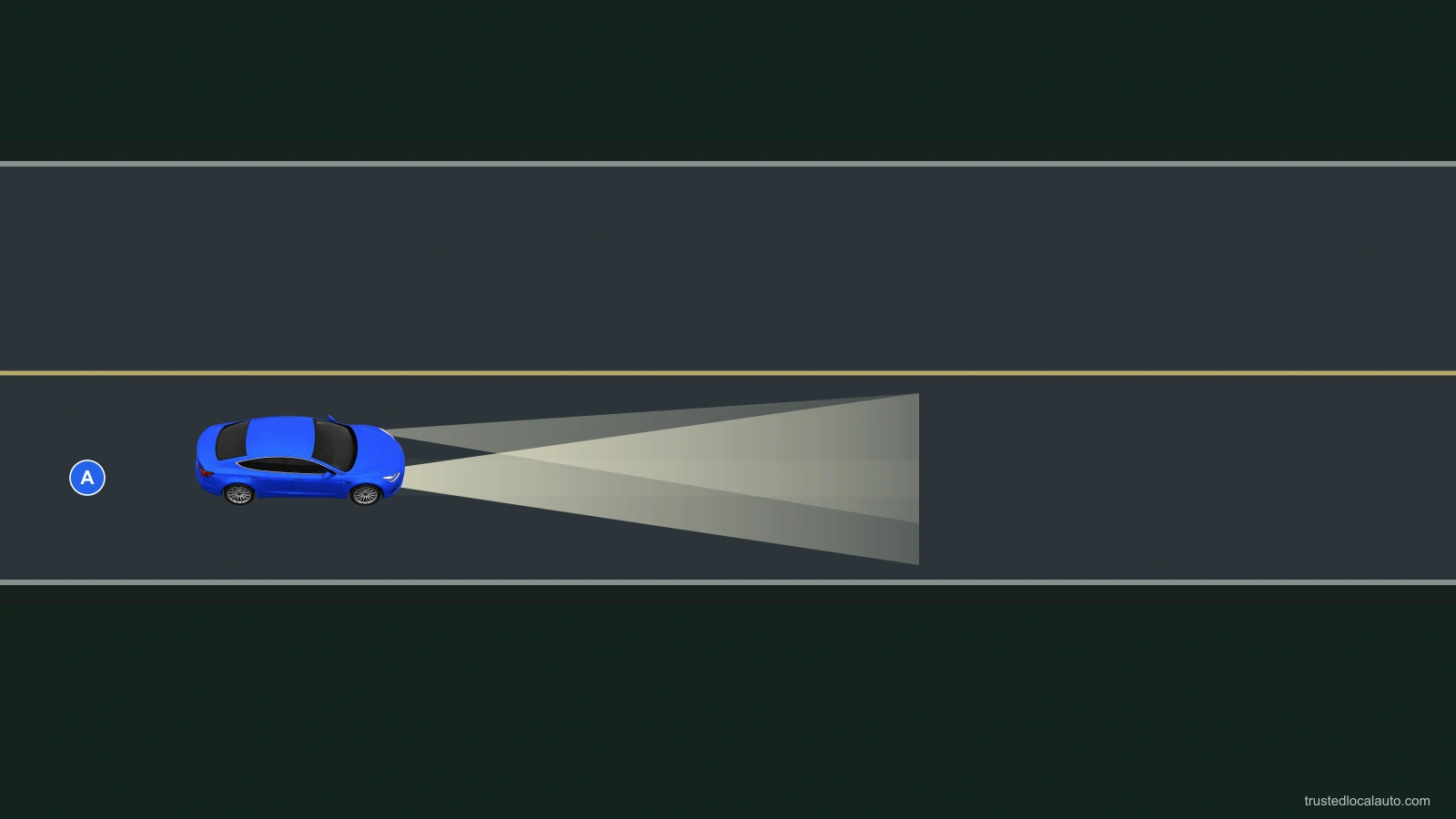 Speed and the view at nightAt your present speed on an unlit road, you would need more distance to stop than your headlights illuminate. What should you do?Try this question
- Stopping distance after darkOn an unlit road, A’s speed makes its stopping distance longer than the distance clearly visible ahead in the headlights. What does this mean?Try this question
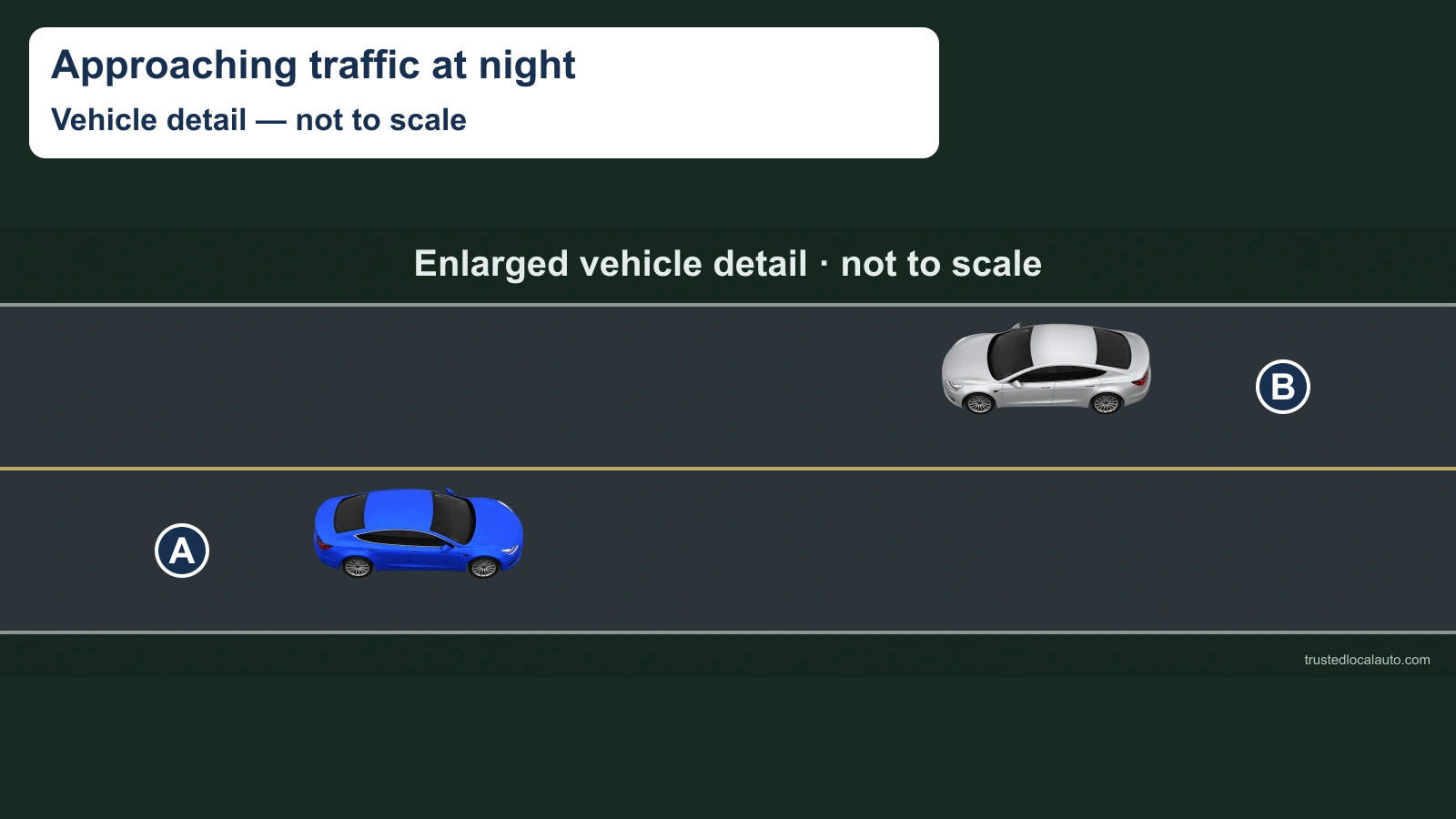 Dimming for approaching trafficOn an undivided Saskatchewan highway at night, what is the minimum distance ahead of an approaching vehicle by which you must change high beams to low beams?Try this question
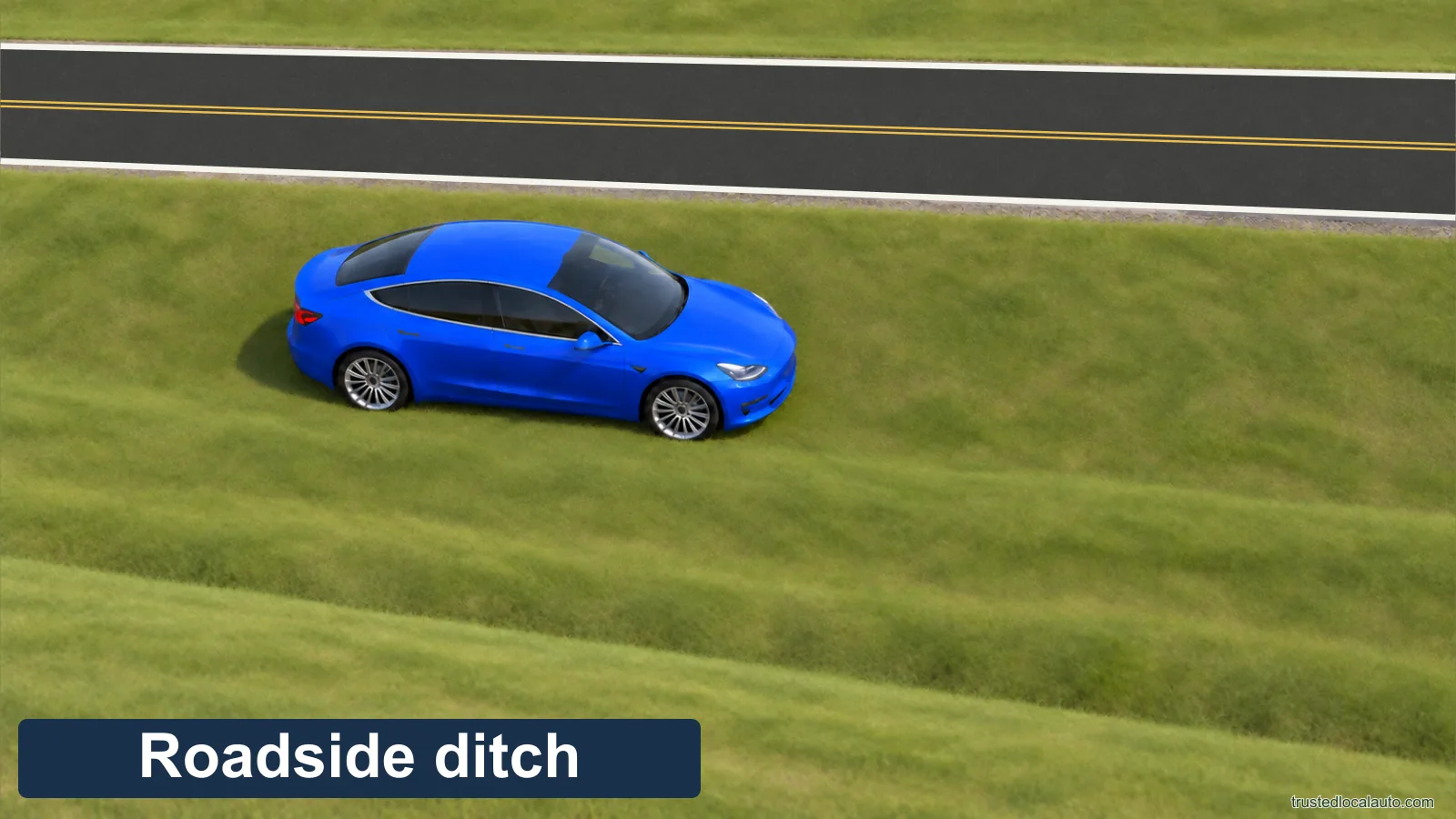 Avoiding a rollover after entering a ditchYour vehicle has entered an open roadside ditch. There is no hard obstacle in the downhill path. Which response follows SGI's advice for reducing rollover risk?Try this question
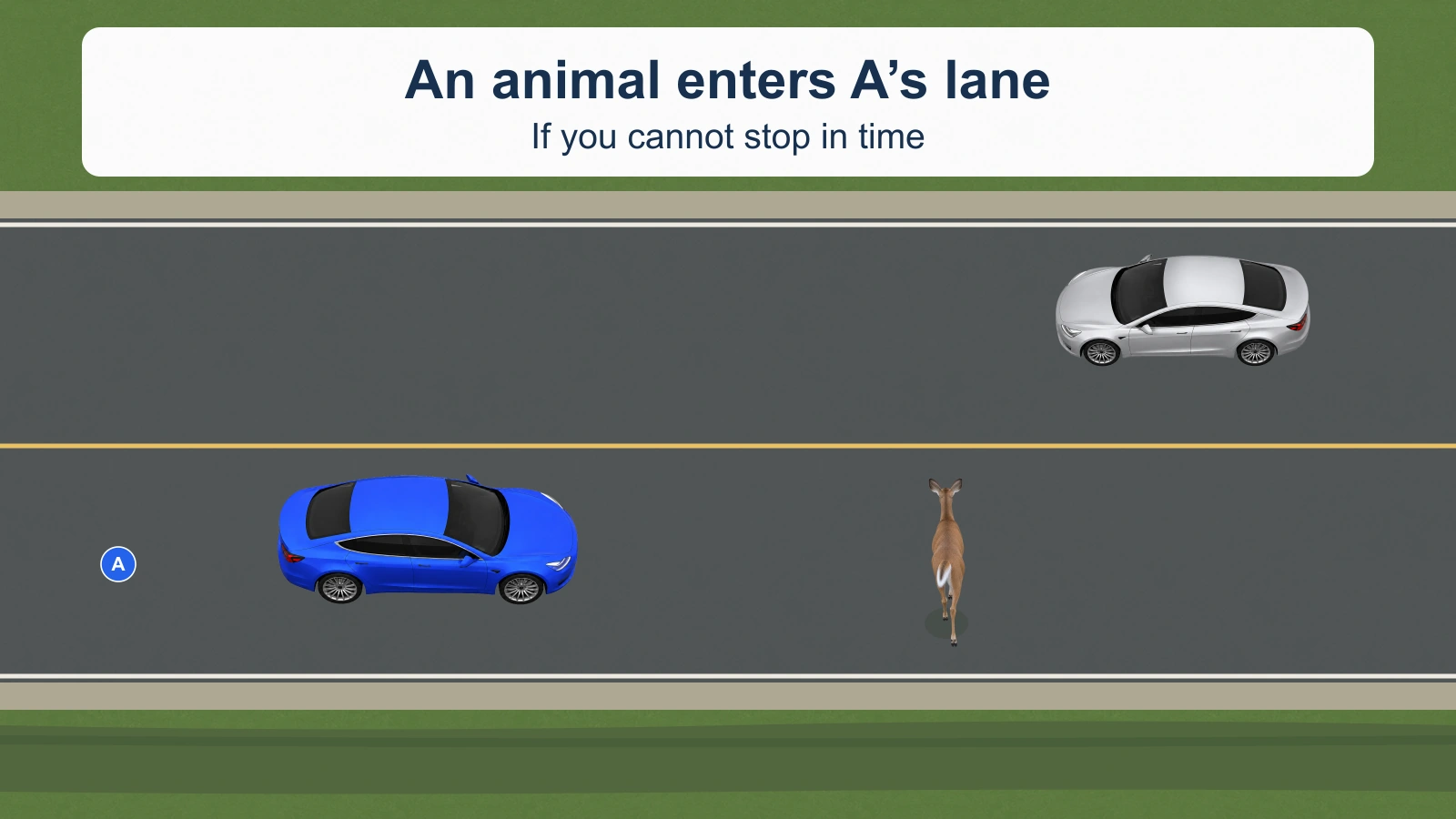 An animal enters the laneA deer suddenly enters A's lane. There is oncoming traffic to the left and a ditch to the right. What should A do immediately?Try this question
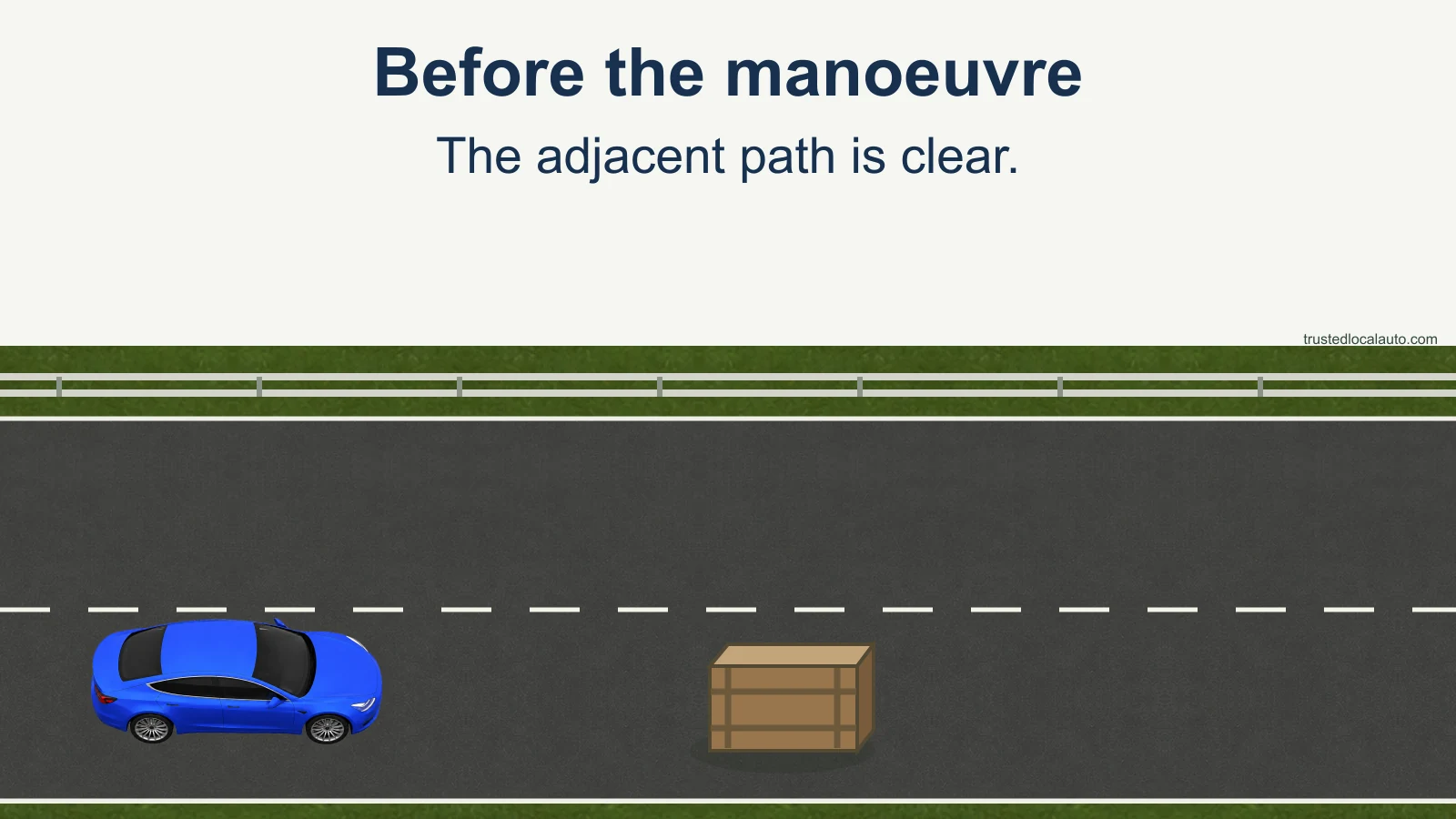 After steering around an obstacleYou have steered around an obstacle into a clear path and counter-steered to stop the sideways change in direction. What should you do before a separate second steering manoeuvre?Try this question
26 text questions
More questions in this topic
- Your vehicle has functioning ABS and you must brake hard while steering toward a clear escape path. How should you use the brake pedal?
- When a vehicle approaches from the opposite direction, what is the minimum distance in advance by which a driver must switch off a spotlamp?
- Blowing snow blends the sky, horizon and ground together. You have slowed down but still cannot see far enough ahead to continue safely. What should you do?
- You need to brake urgently and have a clear, straight path in which to slow. What vehicle position should you aim to maintain?
- You are approaching a curve on a slippery road. When should you make the main reduction in speed?
- Heavy rain begins and the road becomes slippery, but you can still continue safely at a reduced speed. How should you use the controls?
- Which approach best accounts for SGI's guidance about wildlife-collision risk?
- Which preparation best follows SGI's advice before winter driving conditions arrive?
- You were driving a vehicle involved in a collision that must be reported to police. What information must you provide for the accident report?
- Why can black ice be difficult to recognize on a road?
- While you brake, the brake warning light comes on and much more pedal pressure is needed to slow the vehicle. What may this indicate?
- A vehicle without ABS skids because braking has locked the wheels. What should the driver do to regain rolling grip and steering response?
- You are using SGI's gentle rocking method to free a vehicle stuck in deep snow. The drive wheels start spinning. What should you do before changing direction?
- What should you understand if a skid has progressed into a full spin?
- You see a fallen power line across the road ahead and can stop before reaching it. Which action follows Saskatchewan electrical-safety guidance?
- In a vehicle without ABS, what is the aim of threshold braking?
- After a collision in poor visibility, you are uninjured and can safely reach your undamaged vehicle's controls. How can you help warn approaching traffic?
- While you brake, the brake warning light comes on, and you need much more pedal pressure to slow down. Which statement is correct? Hard
- You see a fallen power line across the road ahead. Your car has not touched it, and you can stop before you reach it. Under Saskatchewan electrical-safety guidance, what is the minimum distance to keep between the line and you, your car and other people? Hard
- A fallen power line lies across the road, and your car has already touched it. There is no fire or other immediate danger. What should you do? Hard
- Your vehicle has ABS, and it works. You must brake hard while you steer toward a clear escape path. How should you use the brake pedal? Hard
- At night on an undivided Saskatchewan highway, your high beams are on. An oncoming vehicle that you saw earlier is now 120 m away. At what minimum distance ahead of that vehicle did the rule require you to change to low beams? Hard
- At night on an undivided Saskatchewan highway, a vehicle approaches from the opposite direction. Which pair of minimum distances before that vehicle is correct? Hard
- You use SGI's gentle rocking method to free your car from deep snow. The drive wheels start to spin, so you stop accelerating and hold the car with the brake. When may you shift between forward and reverse? Hard
- At night on an unlit road, you see an unclear shape on the road ahead in your headlights. You cannot yet tell what it is. What does SGI advise? Hard
- Blowing snow blends the sky, horizon and ground. You have already slowed down. SGI's poor-visibility guidance gives a limit of forward view: if you still cannot see that far ahead, find a safe place and get off the road. What is that limit? Hard
Saskatchewan Class 7
More Class 7 topics
Road rules · 10 topics
- Licensing & Test Readiness50 questions
- Observation, Speed & Space48 questions
- Intersections & Right-of-Way22 questions
- Turns, Lanes, Passing & Merging31 questions
- Parking, Reversing & Roadside Stops14 questions
- Sharing the Road18 questions
- Freeways & High-Speed Roads4 questions
- School Zones, Railways & Work Areas11 questions
- Weather, Visibility & Emergencies32 questions · This topic
- Vehicle Safety, Documents & Towing25 questions
Each question page shows the answer, the explanation and the official source of the question.